One of the things I am learning, and appreciate, about the Spiritual Exercises of St. Ignatius of Loyola is that it begins with the premise, in the First Principle and Foundation, that God’s love for each one of us, individually, is endless and unconditional. We have unique gifts and talents, along with our deepest desires, that God wants us to realize and fulfill, to the ultimate purpose of living with God forever. A person making the Exercises is invited to spend time in this First Principle and Foundation, considering this love, before moving on to the other “weeks”. It is only then that we look at how our response to God’s love has been impacted by the sin in our lives, how to follow Jesus more closely, a consideration of Jesus’ passion and death and then the joy of the Resurrection.
Today is Divine Mercy Sunday, the Second Sunday of Easter. I enjoy the gospel of Thomas’ encounter with Jesus, Jesus’ greeting of “Peace” in a room full of his frightened apostles, men that abandoned him, and the prayers of Divine Mercy, but I think I haven’t been approaching the day quite right. I hope it makes sense as you read this.
I found a quote by Thomas Merton to reflect on while trying to look at Mercy a new way. It’s from his book “No Man is an Island”.
“But the man who is not afraid to admit everything that he sees to be wrong with himself, and yet recognizes that he may be the object of God’s love precisely because of his shortcomings, can begin to be sincere. His sincerity is based on confidence, not in his own illusions about himself, but in the endless, unfailing mercy of God.”
Last week, on Holy Thursday, as I traveled to various parishes to visit their Altars of Repose, I found myself contemplating the prayer of Jesus before his arrest and the brutal treatment of sentencing and crucifixion. I prayed, “I am so sorry. Can you forgive us for how we treated you?” I instantly heard, in my mind, an answer to that prayer. “You are forgetting, I already have, that’s what Good Friday was all about.” Wow. It changed my prayers and reflections on Good Friday, Holy Saturday and Easter and I have been contemplating it all week.
Yesterday in the Modern Mystics class I am participating in, Fr. Ron Rolheiser gifted us with his presentation on priest, writer and theologian Henri Nouwen, “The Light of Tenderness”. During the presentation he said, speaking of Nouwen’s writing, that “the heart is stronger than our wounds”. He said that Nouwen believed that we have to live our wounds vs. think about them, we have to take them from our head to our heart and live them so they don’t destroy us. I understood this to mean, for me, that we accept and learn from our wounds instead of rationalizing them, finding people to blame for them or continuing to dwell in them.
We can do this, it occurred to me, only if we believe in that “unfailing mercy of God” that Merton spoke of. I can remain in the posture of constantly trying to understand why I did what I did, keep asking for forgiveness, for the mistakes I have made, over and over again, or I can accept that Mercy and move on. Instead of dwelling on the reason I seek Mercy, I can share the joy of experiencing that Mercy in my life. Otherwise, it seems, I haven’t truly believed in the gift of Jesus’ death and resurrection or the gift of God’s Mercy.
There is immense freedom in knowing that God knows exactly who I am and who I have been. I don’t have to pretend it was anything else. God’s mercy is inexhaustible, precisely because of God’s love and despite my failed attempts to live as a loving human person to others.
I am going to continue to spend some time with this as we celebrate the Feast of Divine Mercy. I invite you to also consider how we might accept that Mercy more fully and move on with the intention of living with more love and compassion, because that great love and mercy has been gifted to us.
Peace, Deena
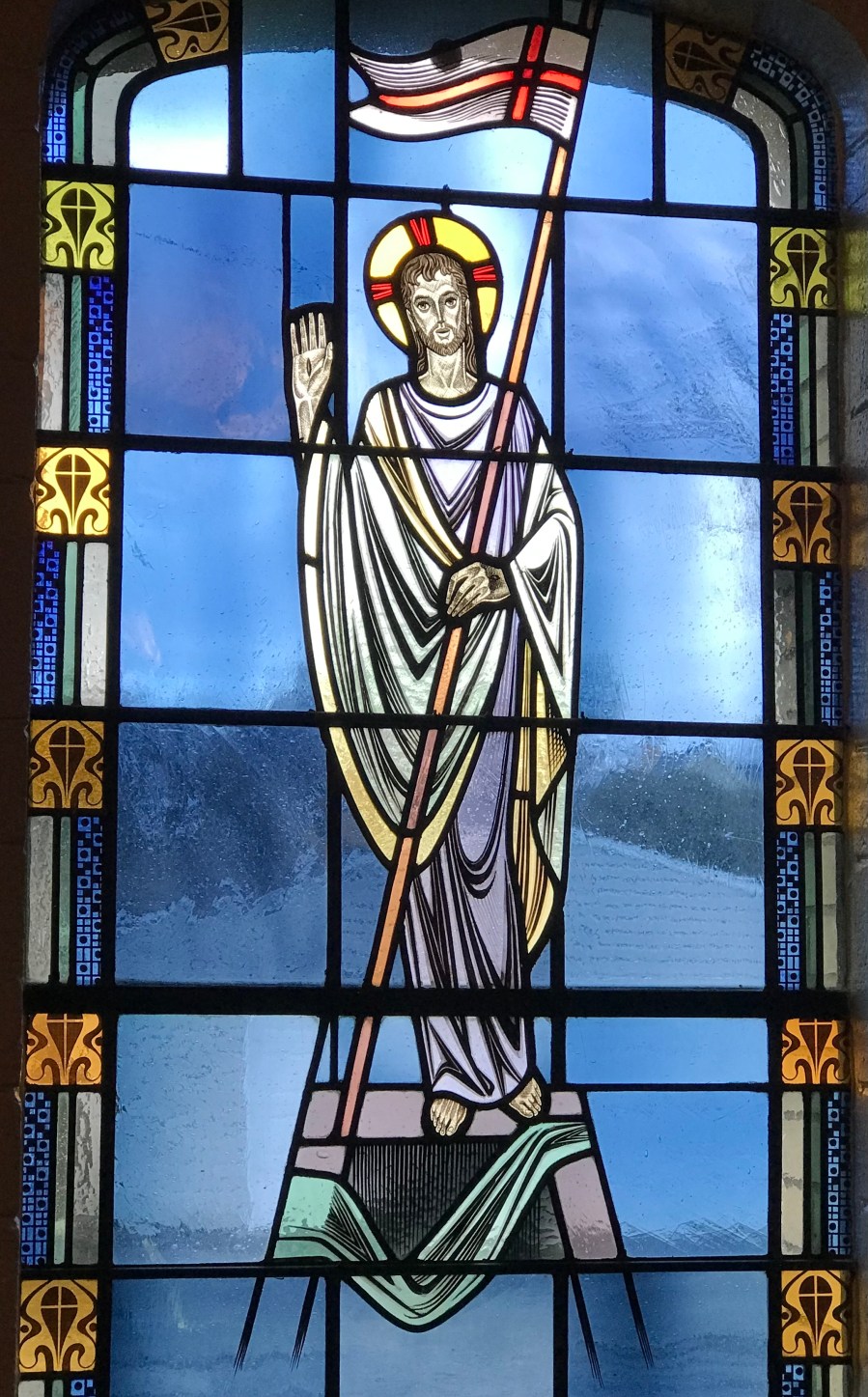
Photo: Our Resurrection Window at Holy Family Church, Oglesby.
 Deena Pavinato - Journeys
Thank you for sharing your own experience and the words of Thomas Merton. I always loved how Merton described God in his book “The Sign of Jonas” as “mercy within mercy within mercy.” That too sums up what you were trying to say in this reflection. Thanks also for sharing the image of the Resurrection from your church’s windows. It is stunning. One can do a great Visio Divina with it!
LikeLike