Featured

Crowding out the chaos

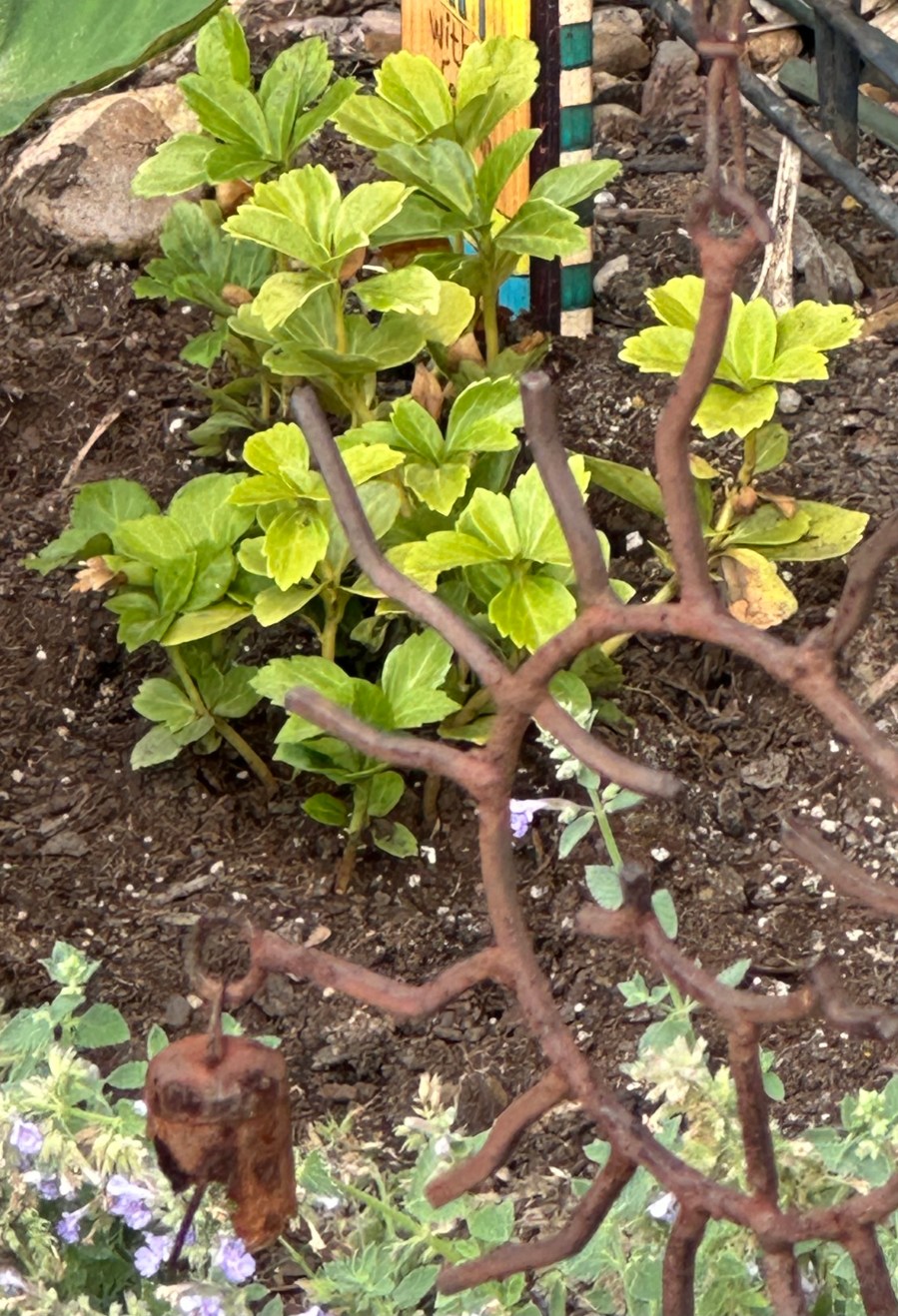
My brother and I own the duplex that I live in. We have a tenant renting the other side. I have several plants in the flower beds on that side of the building but I have not planted as many as I have on my side and I don’t take the time to care for it as well as mine. For the past couple of years the weeds have been atrocious. I have tried rock, heavy mulch (lots and lots of heavy mulch!), landscape paper, but the soil is just lousy. The weeds seem to thrive in it. I have been putting off getting over on that side to clear the weeds again. Friday I decided I needed to get out there again, but I had a new idea. I purchased some ground cover, as I have in many areas of my flower beds, and planted to see if it will eventually grow and crowd out the weeds. I only completed a small section and I really wanted different ground cover than the ones I found, but it’s a start!

Planting the new ground cover is fresh on my mind this morning as I reflected on the Gospel reading for the Nineteenth Sunday in Ordinary Time. Matthew’s second accounting of the storm at sea has the apostles in the boat, alone without Jesus, as a storm brews and overwhelms them. In this version, they see Jesus in the distance as he walks toward them on the water. We are all familiar with Peter calling out to Jesus, Peter walking out to him on the water, but then begins to sink as he takes his eyes off Jesus. Our pastor, Fr. Paul Carlson, shared an insightful homily of the two storm versions in Matthew’s gospel and the need to keep our focus on Jesus as we navigate the storms and turbulent waters of this world. He reminded us that as followers of Jesus, “we need to be able to walk on the difficult seas [in life], but not be swallowed up by them.”

It’s not easy some days. The noise and turbulence of the world can overwhelm us just as the sea did to the apostles in the gospel. The weeds can take over and crowd out the good plants, in our spirit and soul, unless we replace the weeds with better plants. We need to blanket the soil of our minds and hearts with quiet time of prayer, reflection, and soul time with God. We are able to keep our eyes on Jesus, and less on the world, by who and what we devote our attention to.

I’m not sure if it’s age, or wisdom, but I find myself cherishing the quiet, alone time at home, or at church, more than I ever have in past years. Whether reading, listening to podcasts, gardening, stitching and reflecting, or simply in quiet prayer, it’s easier to be at peace. Perhaps it isn’t what I am turning toward but what I am turning away from. Likely, it’s a combination of both. Regardless, life is more serene and tranquil when I do so.

At this point in my writing journey of publishing this blog every Sunday for over three years, I have to check titles to make sure I haven’t used it before. This by itself is a task in creativity. I searched and found a previous post titled, “Clearing the Weeds”. I reread it and was reminded of a somatic technique called SNAP that author, and mindfulness teacher, Julie Potiker, developed. In the blog I share the meaning of the acronym, and briefly how to use the technique, to manage difficult emotions and move through situations with more ease and peace. I had forgotten about it, and in addition to prayer and contemplation, this simple technique is a great way to recenter in moments of stress. You can click here to read that post:https://deenapavinato.com/2025/06/22/clearing-the-weeds/.

This week I encourage you to find ways, that are helpful to you, when you need to clear the weeds in your own inner landscape. Find ways to be still. Then check in and see if it makes a difference in your day and your outlook.

Wishing you abundant peace, Deena

Today’s image: One of the small areas of pachysandra, a ground cover (Japanese Spurge), in my flower beds, that my friend Kathy and I fell in love with at Anderson Japanese Gardens in Rockford and have been adding to our flower beds this year. It’s growing nicely and next year I will be sure to add more to both sides of the duplex.

Featured

On the lookout for peace

During the Covid pandemic years I took several online classes, retreats and programs. One of those was a Women’s Mystics School offered by Spiritual Wanderlust, an online community supporting aspects of the interior life and exploring wisdom teachers in the contemplative tradition, modern psychology, philosophy and spirituality. It was always my favorite Saturday of the month to listen to and learn from the speakers invited to present to us. In 2022, we looked at the life and writings of modern mystic, Etty Hillesum.

Etty was a Dutch Jewish woman killed in the concentration camps in 1943. Etty was a well-educated woman who suffered from severe depression and sought help from her analyst, Julius Spier, who became her mentor, friend and lover. Spier encouraged her to keep a journal or diary. Those writings were published after her death in “An Interrupted Life and Letters from Westerbork.” Etty wrote reflections on things she read by Carl Jung and Rainer Maria Rilke. She wrote about her relationship with Spier. She wrote of her inner world. During the German occupation, Etty refused to go into hiding. She was forced to go to Westerbork, one of the transition camps, for Dutch Jews. From June to September 1943 she writes from Westerbork before being transferred herself to Auschwitz before being killed in November at the age of 29 years old.

What I found striking during our study of Etty’s writing was how she attempted to look at the situation she was facing, the trains and the faces of those being boarded on them, the German guards, and her own perspective and relationship to a God who dwelled deep within her. She tried to find and give love, build community, in the little ways she could while helping others in the transition camp. She focused on living fully, holding suffering and beauty simultaneously, despite the conditions she was facing. She didn’t focus on a God, external, in the midst of the turmoil in her country and the world. Rather, she experienced God in the deepest, richest parts of her being, and found rest and shelter there.

I was reminded of this study a couple of weeks ago, reading an article on Hillesum by Richard Rohr and the Center for Action and Contemplation. Rohr shared several of Etty’s writing in his reflection. They seem relevant for me today.

Etty reflects on the war she is seeing around her and writes, “Why is there war?… Because I and my neighbor and everyone else do not have enough love. Yet we could fight war and all the excrescences by releasing, each day, the love that is shackled inside of us, and giving it a chance to live.” We don’t have to look to war torn countries. All we need do is look to our current government and how our legislative representatives interact with each other and those they disagree with.

In today’s Gospel for the Eighteenth Sunday in Ordinary Time, (Matthew 14: 14-21) Jesus is “moved with pity” seeing the crowds following him, seeking guidance and his teaching. In the famous scene, the apostles are concerned for the thousands gathering around them, needing food, and asks Jesus to spend them away. Jesus initially responds to their request by saying that the apostles don’t need to send them away, but to feed them. They, of course, resist and say what they have is not enough. Jesus then feeds the crowds and abundant leftovers are gathered.

How often do we resist and say that we are just one person, we don’t have enough (time, resources, confidence) to make a difference in the world?

Even on a smaller, more personal level, Hillesum writes that we fight so many small battles, within, each day, that sap our energy. She offers instead that we must “not allow ourselves to become infested with thousands of petty fears and worries, so many motions of no confidence in God…. Ultimately, we have just one moral duty: to reclaim large areas of peace in ourselves, more and more peace, and reflect it towards others. And the more peace there is in us, the more peace there will also be in our troubled world.”

Silencing those small voices that insist on promoting unrest within can be challenging. Add social media to the mix and the voices seeking to drown out peace get louder and louder. So, I might be missing out on an update from a friend, or local area news, but reducing the amount of time I spend on social media, or on the news, saves the little bit of peace I can control.

Hillesum writes, speaking to God, “One thing is becoming increasingly clear to me: that You cannot help us, that we must help You to help ourselves. And that is all we can manage these days and also all that really matters: that we safeguard that little piece of You, God, in ourselves. And perhaps in others as well… You cannot help us, but we must help You and defend your dwelling place inside us to the last.”

This week I choose to be more on the lookout for peace than unrest and for small ways that I can make a difference with my humble fish and loaves.

Wishing you abundant peace, Deena

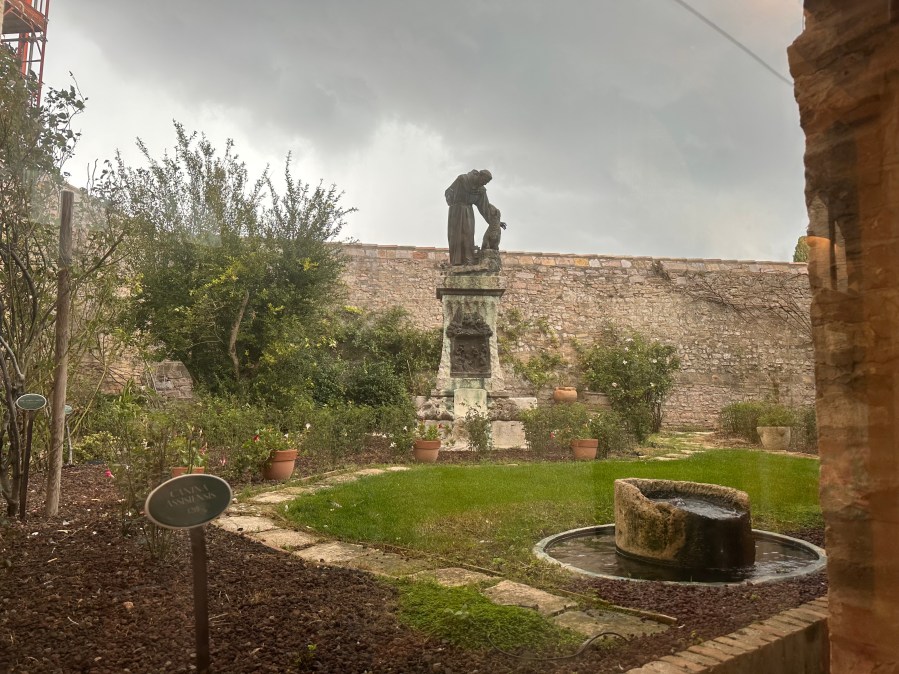
Image: St. Francis statue, a garden in Assisi.

Featured

Calming the mind

Last weekend was the most delicious pause to stitch and learn from designers, and those with a presence, in the stitching world. It was filled with lots of laughs and mutual support, which I am finding to be the hallmark of the stitching community. Last September I saw a Halloween chart and decided I was going to learn to cross stitch. I had never purchased a piece of fabric or floss for stitching. I have become obsessed with my new hobby. I love learning tips and tricks, of course. But more than anything else I love hearing the journeys of stitchers and creators that I follow. The husband and wife team of Artsy Housewife, Gigi the designer, delight me with their stitching and stories. Stephanie, a competent designer and owner of Lindy Stitches (an online store for all things stitching), shared a self-deprecating video of her 10 biggest design flops this week, not to solicit support or sales, but to share her thoughts for those who might be trying their hand at designing charts. As usual, she had me laughing! I am constantly amazed at the wisdom of Jacob de Graaf, a designer from the Netherlands, who is an expert on antique samplers. His own designs are influenced by Quaker samplers and designs from the Netherlands and Scandinavia. I have selected two (what am I thinking?!) designs for my August birthday stitch and as part of a stitch along he will be leading. The list of designers, makers, and regular stitchers like me, who share their insights, journeys and projects, that I watch and learn from is endless.

But, the best part of stitching is the quiet, steady, peaceful flow state I enter each and every night as I work on projects. Other concerns, or mindless chatter, fall into the background. Each stitch becomes a tiny win for the day. They are little victories that release feel good hormones like dopamine. Knitting and crocheting do the same for those engaging in those crafts, also said to support emotional regulation and good brain chemistry. As our brains lock into the single task at hand, the brain gets focused and feels safe. I am changing and growing with each project I stitch, not only in confidence but also a sense of who I am as a person. I began learning about the neurological reactions of crafting, journaling and drawing, and the impact on our overall well-being, when I began experimenting with and studying neurographic art last year. By focusing on the process of drawing simple lines and curves, we calm down and relieve stress. This alone can help us find solutions to issues we might be dealing with.

My prayer and contemplative practice has slowed down and become more centered as well. It has become easier to quiet the mind when it is racing. I can pray as I stitch – each stitch, each breath, clear a space to listen more attentively.

Another practice I was introduced to this summer was helpful as well. As I have shared, and written, I am a Benedictine Oblate. Generally each day, besides praying the psalms, I try to read The Rule of St. Benedict, which guides our daily living in the principles of stability, mindful work, and hospitality to others (welcoming the Christ in all persons). The Rule is broken down into small nuggets, or chapters, for each day of the year. There are many excellent commentaries on The Rule, which studying as an Oblate, help us find relevance for living in the modern world.

I was gifted a version of The Rule, “Suscipe me, Domine” compiled by a men’s monastic community in Norcia, Italy. I read one of the reflections on “Unceasing Prayer in the Rule of St. Benedict” that has significantly transformed my prayer life. Many of us are familiar with the “Jesus Prayer” prayed by the Desert Fathers and early Christian monks as a way to practice continuous prayer. It is certainly a version that I could have chosen. The reflection stated that St. John Cassian, who had a significant impact on St. Benedict’s writing of The Rule, advocates one prayer, “an all-purpose invocation” that can and should be prayed by monastics at all times, as transition from personal prayer to communal prayer, for those in an abbey or monastery. Cassian’s recommended verse was “O God, come to my assistance. Lord, make haste to help me.” This is a typical verse recited, or chanted, as the opening line for specific “hours” of prayer, such as Morning and Evening Prayer, in the Liturgy of the Hours. I began using this verse at various times of the day – when I sat down to pray but didn’t want to pray standard prayers or intercessory prayers, when my mind was racing with a concern that I wanted to quiet, during weekly Adoration in front of the Blessed Sacrament, and at 3 or 4 a.m. when I wake and sense that my mind wants to begin to spin out of control. Breathing slowly and repeating this simple prayer has been powerful! I would encourage anyone with “monkey mind” to give it a try. I’d love to hear your experience after practicing it awhile.

Lastly, finding ways to slow down and tune into our breath can be an amazingly simple practice to bring calm into your day. Whether stitching, praying a simple mantra, or sitting quietly in a chair paying attention to the breath, I am confident you will introduce more moments of peace into your day.

If you would like to learn more about breath practice, my friend Kate Brown, and her teacher, Valerie Sorrentino, will be offering a free live Zoom experience this week, Room To Breath, on Thursday, July 30th at 6 p.m. CT. You do not have to have previous breath work experience to participate. You will learn more about intentional breathing and two simple practices from Valerie’s program. I hope you will join me there! I will provide the link below (for those on social media, you may have to click the link to my website to access it).

I wish you a week that is steady, calm and full of peaceful moments, Deena

Click here for link to Room To Breathe

Today’s image: One of my 9-month patriotic stitch alongs, Remember the Ladies as part of America the Beautiful, by designer, Teresa Kogut.

Featured

Taking a Sunday pause

I hope you are having a great weekend. I am attending a virtual stitch event and trying to keep up with watering the plants in all this heat. I have been contemplating different topics for this week. As I was looking through my photos for an image to match, I saw this one and it just said “pause” to me.

Stay safe if you are being impacted by the air quality from the fires in Canada. Please keep all those more directly impacted and fighting the fires in your thoughts and prayers.

Wishing you a peaceful week, Deena

Featured

Cultivating growth

I planted a new shrub this Spring. I was looking for a full sun plant, for the flower bed in the south of my duplex, that gets direct sun morning until late afternoon. The Potentilla fruticosa ‘Jefman’, or Mandarin Tango Potentilla, was a vibrant green when I planted it and I anxiously awaited the vibrant orange-yellow flowers promised during the summer. I know there is some adjustment time but began to be concerned as I noticed signs that it was not thriving as well as the Japanese Pieris I planted at the same time on the West side of the duplex, protected from the sun by neighboring building. As the weather warmed I decided to move it to the West side, to a section shaded even more than the Pieris. I hoped that the new environment would be the right place to flourish and grow. You can see in today’s image that it seems much happier in this new location.

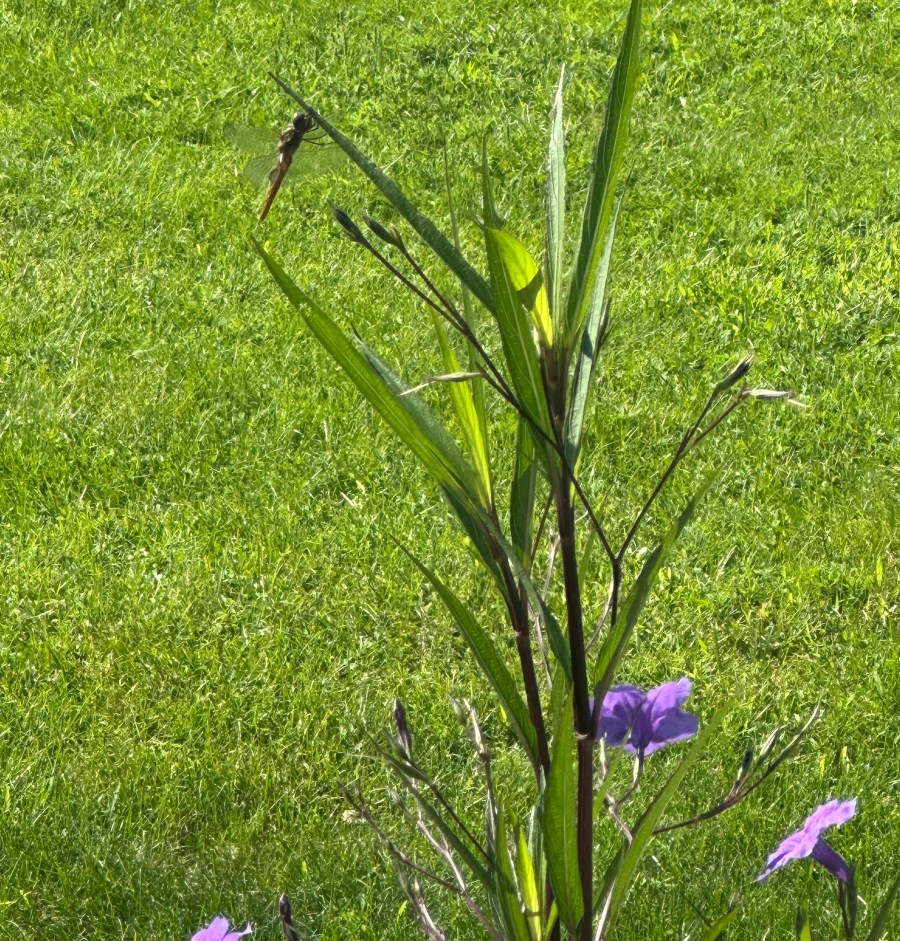
Some of the flowering plants I have in pots love the hot days and direct sun. My favorite summer plant, Ruellia brittoniana (also called Desert Petunia, Mexican Petunia or Purple Showers), recommended by Tad, owner of Seatonville Greenhouse a few years ago, will produce and drop gorgeous purple flowers every day. While it loves the heat and sun, it requires daily watering, sometimes twice. Gardening experts will advise to water deep but not daily, but I have learned that it depends on the plant. Each variety requires different care.

Today’s Gospel, for the Fifteenth Sunday in Ordinary Time, is the familiar gospel of the sower and the seeds. Jesus shares the parable of the farmer that scatters seed, seeds falling on the path with no soil to sprout, rocky soil not deep enough to establish roots and encourage growth, thorny soil that choked out the tender seed growth, and rich soil that allowed for growth and abundant crops. Of course, it’s a lovely analogy for our spiritual lives and the soil we tend to allow a vibrant relationship with Christ.

We are the gardeners of our lives. We choose, consciously or not, the environment that will allow for growth or choke it off. The things we think, the content we consume (online or written word), the people we choose to spend our time with, and the time and energy we allow for learning new things become the garden of our future. Some days might feel like nothing is progressing, circumstances might look and feel like failure, but perhaps we just need to tend to the “soil” to encourage growth, like my Potentilla needed a new area to allow for growth.

We need the right soil, sunlight, mindset and circle of friends to support us on our journey of becoming who we want to be and what we hope our lives will become. I have always been an introvert (at the heart of who I really am, regardless of activities and involvements) and I know people perceive that I am becoming even more so. But as I reflect on it, I believe it is just being more selective about the things and people I spend time with. I want to do things and be with people that add value on my journey, and allow me to do the same for them.

I am carefully watching some weeds creeping up on some flowers in a flower bed. I hurt my wrist, after a fall in the flower beds earlier this week, so I have to tend to healing but I know that if I don’t get those weeds removed soon they will choke off the other plants. What are you spending your time on? Are they activities that inspire you and lift your spirits? Take stock of the people you are surrounding yourself with, are they supporting and encouraging you?

Seeing the results you want in your life takes attention, time and daily care. Check in on your “garden”, how’s it doing?

Wishing you abundant peace and growth this week, Deena

Featured

An ongoing hope

I have been so inspired this weekend by services, celebrations, and writings regarding our nation’s 250th anniversary that it seemed more fitting to write my “Sunday blog” today, Saturday, the 4th of July. As I drove on the highway Friday evening, traveling home in the rain, watching nature’s fireworks in the form of lightening, I reflected on the Interfaith Service that I watched on Friday morning. I was so moved by the content I wanted to revisit it this morning, sharing thoughts on it, as well as Pope Leo XIV’s letter to the American people. You can watch the entire service from Washington National Cathedral on YouTube. It is worth the time to watch, as you are able. I will provide the link, along with one to Pope Leo’s letter, below.

Today on July 4th, Pope Leo XIV, issued a letter to the American people on the semiquincentennial. He said this anniversary “marks that defining moment in the history of the United States of America, July 4, 1776, that gave enduring voice to the ideals of liberty, equality, the pursuit of happiness, justice and democratic self-government. For two and a half centuries, generations of Americans have worked together to carry these principles forward — through sacrifice, service, innovation and civic participation. This anniversary stands as an invitation not only to celebrate the nation’s remarkable journey, but also to reflect upon the responsibilities that the sons and daughters of this country bear to one another, and to the generations who will inherit the nation that is being shaped today.” Pope Leo spoke of the importance of our many rights and freedoms, the right to religious freedom, the right to and support of the dignity of all human life, and continued efforts in support of the common good, building a world where there is a “commitment to the promise of freedom, justice, opportunity and democracy.”

Pope Leo also said, “Defending human life also includes welcoming, protecting and assisting immigrants, whose hopes, sacrifices and contribution have formed part of the history of this country from its very beginning. In every generation, those who have arrived seeking freedom, opportunity and a place to belong have helped to shape the nation’s character. To receive them with compassion and generosity is not only an act of charity, but also a recognition of the dignity that belongs to every human person.”

I am not naive to the fact that there have been issues with open borders in our country. I respect the fact, and the process, that allowed my grandparents and great grandparents come through and register at Ellis Island. But I cannot comprehend situations like the Venezuelan couple, who both worked at Amazon, whose son learned martial arts last summer, being detained and deported. They applied for asylum in the US and complied with the US Immigration check-in and processes. In June, they were advised to leave, by August 15, or be detained. They opted to leave but then were detained anyway during a check-in last week. The husband was sent to a separate detention facility than his wife and son, in Venezuela. That building was destroyed in the earthquake and he was killed. We must continue to fight for a more just and charitable way to support those seeking a better life in the United States. We are so much better than this!

Reverend Randolph Marshall Hollerith, the Dean of the Washington National Cathedral, said in his opening of the Interfaith Service on July 3, 2026, that the service seeks to celebrate 250 years of the American experiment, “to lift up the hope and promise of our nation, and to remember those who have given so much for the freedoms we now enjoy but to be honest about the promises of this nation that are still unfulfilled.” He said that “the American experiment is an ongoing project and that all of us together have work to do.” The entire service was a commemoration of good as well as less than desirable moments in our country’s history and treatment of others. It reflected with hope on the dreams that we began with and the goals that we continue to fight for.

I was moved by the opening entrance with a woman playing a moving Native American flute composition. It was acknowledged that the Cathedral was built on land that belonged to Native peoples and the Great Spirit prayer was offered that we “seek strength, not to be superior to my brother, but to fight my greatest enemy, myself.”

The majestic Star Spangled Banner, along with other prayers and speeches or written documents by Americans over the course of 250 years were poignant, not avoiding difficult topics in our history, but by remembering them celebrating our constant pursuit of justice and a better way for all in our continual quest for life, liberty and pursuit of happiness.

I was moved deeply by segments of the speech by Lyndon B. Johnson to Congress, on March 15, 1965, called “The American Promise.” I remember vividly this time in our history, my young moral and social conscience being formed by what I was hearing in the news. But I did not have a sense of the depth of the change that President Johnson was calling for in our country. President Johnson began, condemning the violent acts in Selma, and said, “Our mission is at once the oldest and the most basic of this country: to right wrong, to do justice, to serve man. In our time we have come to live with moments of great crisis. Our lives have been marked with debate about great issues; issues of war and peace, issues of prosperity and depression. But rarely in any time does an issue lay bare the secret heart of America itself. Rarely are we met with a challenge, not to our growth or abundance, our welfare or our security, but rather to the values and the purposes and the meaning of our beloved Nation.”

It reminded me that in our 250 years we have had many times of upheaval, times of despair and hardship, and yet, a call to seek a nobler way of living together and living up to the ideals on which we were founded. What we do, together as a nation, has so much more to do than personal gain, national economic success, or superiority over other countries. We set a standard for others, personally and internationally. Johnson said in this speech, “For with a country as with a person, ‘What is a man profited, if he shall gain the whole world, and lose his own soul?'”

The founding words of our country still stand as a test for us today. We may have moved past the (to some degree) of North/South, black/white problem of the 1960’s that LBJ was addressing but we must move beyond right/left and Democrat/Republican, hostilities of our own day, in support of “a promise to every citizen that he shall share in the dignity of man. This dignity cannot be found in a man’s possessions; it cannot be found in his power, or in his position. It really rests on his right to be treated as a man equal in opportunity to all others. It says that he shall share in freedom, he shall choose his leaders, educate his children, and provide for his family according to his ability and his merits as a human being. To apply any other test–to deny a man his hopes because of his color or race, his religion or the place of his birth–is not only to do injustice, it is to deny America and to dishonor the dead who gave their lives for American freedom.”

If we each desired to live our lives to the ideals that we remember today, to each of the goals that President Johnson ended his speech with (“I want to be a President who…”), and with a continued hope in freedom for all, I hope and believe we will see a change in the mood in our country and a unity that we have experienced in the past. Idealistic? Perhaps. But I would rather live my life with that hope and dream. I hope we can join together in that pursuit.

Happy 4th of July! Deena

Link to Interfaith Service at Washington National Cathedral: https://www.youtube.com/live/zunAWyeyYVw?si=8FuB3nkZ9LORe1ds

Link to Pope Leo XIV’s letter to the American People: https://www.vatican.va/content/leo-xiv/en/letters/2026/documents/20260625-lettera-anniversario-usa.html

Image: One of my finished blocks in a 9-month patriotic stitch-a-long project, designed by Teresa Kogut. I am currently working on the Liberty Bell.

Featured

Embracing the questions

A couple of years ago while pondering the persistent question, “what am I going to do with my life”, I finally realized I should stop asking and start living. I laughed and told myself, approaching 70 years of age (not nearly as close to it as I am today), it was time to stop trying to figure that out! Maybe there isn’t an “it” to actually discern in life. Over time, and considerable contemplation, the question morphed into “what am I being called to do, right now – this year or this day?” It’s a minor shift in wording but a huge shift in perspective.

It has felt like a shift to embracing the questions, rather than struggling with them. A fiber artist that I follow shared some thoughts on her own questions and reminded me of a quote by poet, Rainer Marie Rilke, “Be patient toward all that is unsolved in your heart and try to love the questions themselves like locked rooms and like books that are written in a very foreign tongue. Do not now seek the answers, which cannot be given to you because you would not be able to live them. And the point is, to live everything. Live the questions now.”

Deanne concluded her own pondering by saying that she thinks we are all “wonderers”, and that she had yet to meet someone who doesn’t ask questions of life. She said, “And we are all a wonder. And that is what life itself is. It is a wonder too. And so now nearly each day I remind myself to ‘Let the mystery be’ and to ‘Love the questions'”.

I couldn’t agree more!

In a movie, “The Gardener”, that I watched this week, the protagonist facing illness and her mortality, begins to open to beauty around her and to seeing life with new eyes. She is mesmerized by a snake that has shed its skin. She gazes on an agave type plant that only blooms once then dies. She mentions to a mysterious teacher that shows up on her journey, that she feels that death looms around her, she questions when the mortal fear stops. He responds, when you are ready for it to.

It’s easy to get caught up in the struggle and miss the mystery unfolding around us each day. If we are ready to release the grip and tight hold on the questions, then perhaps we are able to see things with curiosity instead. We can find wonder and awe in life unfolding around and for us. As I shared some thoughts on the book, The Practice of the Presence of God by Brother Lawrence, last week, it seems more fitting to be present to what we are called to in each moment. That is what brings peace and contentment in life.

The image I selected for today’s post is a tile of the shell marker pilgrims see on the various Camino paths on “the way” toward Santiago de Compostela. The shell serves as a directional guide letting pilgrims know they are on the right path. For medieval pilgrims, a shell would be a purposeful tool, to drink or eat from. For those of us who follow a Christian path, a shell vessel is often used during the sacrament of baptism, to pour water on the infant or individual being baptized. It is a sign of rebirth and divine protection. I purchased this tile, as well as a sterling shell to wear on a necklace while visiting Santiago de Compostela. They both serve as good reminders to watch for “markers” and continue on “the way” each day.

Wishing you abundant peace, wonder, and awe this week. Deena

Note re the movie The Gardener: before you search for the movie directed by Dabney Day, it was a special online release this week. It was a little bit Devil Wears Prada in the beginning, Hallmark throughout but a few lovely spiritual reflections throughout.

Featured

The practice of peace

Have you found yourself irritated with others, or with life/the world, because events weren’t turning out as you had hoped they would? Maybe it’s more than a hope, but an expectation, that circumstances should be different. We (me!) can stress and worry about situations in life, but frequently find we have little control over it. As a reaction I often retreat, inwardly, or even physically, to my inner being, and home, preferring silence and solitude. My desire is to keep a constant connection with Spirit, throughout the day, focused on the things that really matter instead of the mundane and passing concerns that can consume so much time and energy. Some days are easier than others.

I have to catch myself when the repeated tape of a conversation, or of the behavior of someone else toward me, begins to rewind over and over again. I laughed out loud this morning reading a post by personal development author, life coach, and speaker, Cheryl Richardson, as she described the thoughts going through her mind as she took a shower. She stopped herself and said “Cheryl, come back, there are too many people in this shower with you!” I replied, “Girl, I hear you!” I laughed thinking of the countless times I have been in the same situation.

I have been encouraged in my practice of being in the presence of God, more mindful of Spirit and connection, as an alternative to mindless worry over past or future events, as I have been rereading a book by Brother Lawrence from the 17th century, Practice of the Presence of God. I was encouraged to read this small book in the 1990’s, along with Abandonment to Divine Providence, written in the 18th century, by one of my parish priests. Both have been helpful books on my spiritual journey. Lately, I have been using an updated translation by Ascension Press, which has been much easier than reading the original book I have. The book has gained much popularity after Pope Leo XIV wrote an introduction to a Vatican edition of the book, indicating that this book was one of the books that has shaped his spirituality and awareness of knowing and loving God. Pope Leo has advised that the journey of practicing the presence of God, is an arduous one because we have to renounce all of the other things that seek our attention, so that we can keep our focus centered on God.

And isn’t this the goal of Christian mindfulness, and a practice of centering prayer and contemplation? We desire to turn away from the clamor and noise of the world seeking inner peace and union with the Divine.

Brother Lawrence advises that we turn away from everything that distracts from that union, so that we can be in constant conversation with God. We pause, we turn to and rest in the Divine Presence. Simple but challenging. We seek to empty ourselves of the things of the world, from anything that does not lead to God. Brother Lawrence approached all his duties and responsibilities within the Carmelite monastery in this way, as an opportunity to practice the presence of God.

Just as Brother Lawrence had his tasks to complete, so do we. Practicing the presence of God does not mean we quit work, give up enjoyable hobbies and activities, or retreat to a monastery. I do find it is easier having fewer responsibilities outside of the home, but even those activities become opportunities to serve and be aware of God’s presence as we undergo them and encounter others in the process of doing them. It brings a different perspective to our engagement in them.

While the “practice” Brother Lawrence speaks of reminds me of Ignatian spirituality, finding God in all things and seeking only those things that bring us closer to God, he did not seem to be concerned with guidance from others, except in sacramental confession, or considering consolations and desolations in spirit. He simply returned his gaze to God and to the things that would be pleasing to God, despite any suffering or distraction.

With a similar message, Pope Leo XIV, in his video message to the 50th Summer Youth Conference in Steubenville, Ohio this weekend, encouraged youth to look for peace, for “true and perfect joy”, in the love of God instead of from others, or from social media and other electronics. He pointed to the life of St. Francis, and the peace Francis found, and shared with others, that looked different, and less appealing, to others, until they encountered him. They experienced the peace that he found within, in his relationship with God and a focus on lasting joy and happiness.

I hope that as I continue to practice the presence of God, less concerned with the opinions and actions of others, I will find that same level of peace and joy experienced by Brother Lawrence, Francis, other saints and mystics, and those who have followed them. I pray that this peace is experienced by others who I encounter. It’s a lofty goal to be sure, but one worth remaining committed to.

As always, I wish you abundant peace this week, Deena

Today’s image: a small wall hanging I purchased in Assisi, Italy. Pace e Bene means “peace and all good” or “good peace”.

Featured

Wistful summer memories

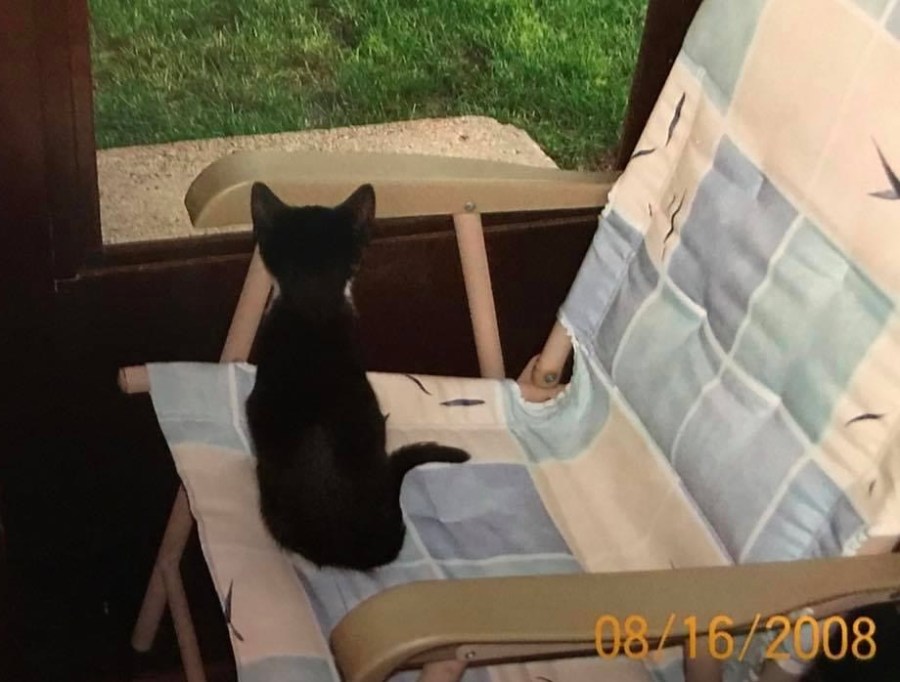
Last night I noticed the first firefly (we called them lightening bugs growing up) of the season. I paused and watched, there was another, and another. I moved to a different window, opened it wide and watched them as they moved around the back yard, around the tree and plants in my flower beds. Soon, my cat, Butters, jumped in the screened window and watched them too. His head darted back and forth as each one lit in the landscape below.

I watched in delight. I inhaled the balmy summer evening air with birds still chirping, but more quietly than earlier in the day. The evening was calm, fewer cars and noise than usual. It was a picture perfect summer night.

I began to reflect on summer evenings of my youth. Nights on the front porch, growing up in a neighborhood where it was common to sit outside and visit. On occasion, after our baths, and dressed in pajamas, we would go for a ride to The Root Beer Stand for an ice cream treat, bugs buzzing under the canopy lights, as a car hop would bring a tray to the car window.

We vacationed in Wisconsin many summers while I was growing up. I can recall only a handful of memories from those summers. I remember the deer we fed by hand. Or the firetruck my father insisted my brothers and I got on so he could take a picture. I exclaimed the leather seat was too hot but he wanted a picture. I still have the photo, legs tucked up near my chin and dress pulled down over my knees. Funny how the picture takes me right back to the feelings I was having.

I attended a local summer camp, Camp Saint Claret (I think we called it Camp Claretknoll). It was a historic summer camp operated by the Claretian Missionaries on the Claretknoll property. The camp was literally a few miles from home but I felt as though we were transported to a different world. I had no idea at the time it was a missionary founded organization. I really can’t recall what we actually did there but thinking of it brings back to memory nights of campfires and scary stories.

I remember my Noni’s garden. Besides her vegetable plants, the garden border was always full of peonies and roses. She loved her garden and I know she planted those seeds in me as well. We would pick dandelion from the yard, so that she could eat the greens in salad, long before the days of chemical treatments on lawns. She taught me about picking and sautéing zucchini flowers.

I love my flowers and adding new varieties to the flower beds each year. But, I gave up gardening vegetables. After my mother died, I lost the joy. I carried on the tradition of planting vegetables, after my father died, which he took on with gusto after my grandmother passed away. Mom and I planted tomatoes, peppers, zucchini and cucumbers. Dad’s garden was always much bigger, priding himself in the lettuce, onions, garlic and sweet corn. Thinking of the garden also evokes lovely memories with my mother, grating zucchini for bread and cooking tomatoes for sauce to use all winter. Perhaps the spark will return one day.

Do you have a favorite summer memory? Or perhaps a summer tradition you grew up with and still share with your family today? I would love to hear it. You can reply in the Facebook or Instagram post, or on my website, so others can enjoy reading it.

Wishing you summer days to savor and that bring you peace. Deena

Image: With my “Noni” in her garden.

Featured

Becoming who I am

Earlier this week I listened to a vlog “The Elegant Haiku” and read the accompanying blog by Michael Kroth. In his video he said something that immediately caught my attention. I stopped the video, backed it up and played it again. I wrote it down in my journal and it’s been on my mind ever since.

Michael said: “What we practice becomes who we are.”

His feature article this week was regarding his journey, learning about and writing haiku, as a daily practice. He began in 2019 as a result of attending a workshop by poet, author, and friend of ours Judith Valente (you have seen her name here in this blog many times). It may have been about the same time that I attended a retreat given by Judith at the Monastery and was also introduced to haiku. Michael decided to make it a practice. I have tried multiple times but give up. I judge, criticize, and analyze. (Frankly it surprises me that I continue to write this blog each week.) Michael’s haiku poetry is very good. He and friends even published a book, Framing the Moment; Haiku Conversations, together after sharing their haiku with each other.

Haiku is a form of Japanese poetry, consisting of three lines, in a format of 5-7-5 syllables. I have seen multiple variations or adaptations but most use this format. It sounds simple but I would invite you to look outside, or at an image, and capture the essence of it, or how it makes you feel, using that format. It challenges us to find just the right words to express a feeling or insight. It calls us to slow down, choose carefully and purposefully. It is way to be present and mindful.

In one of Judith’s latest books, How to be a Contemplative (also mentioned by Michael in his blog), she shares her wisdom about slowing down in our hectic, often distracted, lives. If you are challenged to wind down at all, much less write a three-line haiku, I invite you to explore Judith’s book.

In addition to incorporating a practice, or desire to learn something, in our lives so that it becomes more closely aligned with who we are, I believe it also creates some sort of magnetic attraction to bring more of the same to us. Since reading Michael’s post I have seen and read so many compatible posts, poems, and book titles that encourage me to pursue and stay focused on the things that point me in the direction of who I am becoming and what I desire to have more of in my life.

I have a long list of things that I would love to be better at, that feel like they express who I am or who I want to be. So, I must ask myself why I am not pursuing them more enthusiastically – fear of failure, fear that I can’t ever be those things as proficiently as I want to be, that I will be judged…? If there is one gift of rapidly approaching 70 years of age, I have noticed that I am more easily gravitating toward not caring what other people think. But, there are moments. When I sense that feeling of doing something for approval, versus authentic desire, I think I have to grab myself by the shoulders and say “move on, let it go.”

Michael might be surprised to know that I have saved a little stack of his delightful pieces of mail, that he calls Haiku Drops (today’s image of the envelopes, not his poetry), since “meeting him” at a workshop with Judith. I pull them out from time to time if I need to take a peaceful pause during the day. Other times they just make me smile when I open the drawer I have them in, and see them. My point of sharing that is that our desire to learn and share something with others might be just what they need on any given day. So, if it makes you happy, continue to pursue and practice it, and share it with others!

Wishing you endless moments of being really happy with who you are, and who you are becoming, this week! Deena