Featured

A listening heart

The problem with getting hundreds of emails from authors and speakers that I follow is keeping up with them all. The amount of compelling content to read can be overwhelming each week, so I read some, scan some for the highlights, and then save for later. I recently stopped to read a blog I had saved, written by Eric Clayton, author and Director of Communications for Jesuit Conference of Canada and the United States. I met and began reading Eric’s book and blogs during my time at Ignatian Ministries. He’s a wonderful writer and I am often inspired by his essays in his weekly “Now Discern This“.

The email that I re-read was regarding a trip to the bookstore and advising his daughters that they could pick out one book, not a toy or game. Eric made a selection of three books, from all of their choices, that he thought they might like. The youngest, unamused with the concept of making a decision declared they should get them all. Eric used this as a lesson in making a choice.

Eric goes on to write, to each of us, the beauty of the tools of discernment given to us by St. Ignatius of Loyola. We must understand our limitations, he explains, and understand that we can’t have it all. We use the tools of discernment to help us align our gifts and talents with God’s will for us.

I am grateful for my time at Ignatian Ministries and our use of the Ignatian Discernment tools in every decision we made. The tools of discernment taught by Ignatian Ministries founder, Becky Eldredge, as well as authors such as Eric Clayton, Fr. Timothy Gallagher, Fr. Kevin O’Brien, Fr. Mark Thibodeaux, Fr. William Barry, and countless others, help us tune in to the thoughts and feelings we are having as we pray and make decisions. These tools, first considered by St. Ignatius of Loyola as he was convalescing from a battle injury, help us to identify “good” and “evil” spirits impacting us in our daily lives, as well as movements of consolation and desolation, we are feeling as we consider decisions or ways of responding to particular situations.

These don’t have to be used in huge life changing decisions, such as what job to take, where to move, or whether we are being called to a vocation. They can be used practically, such as Eric’s example of helping his daughters make a book purchase or in our daily prayer.

This past week I began a novena for a specific intention. It wasn’t an intercessory intention for someone in need or as stately as world peace. It was something more closely related to my life. By the third day I began to feel a sense of desolation about my prayer. I brought it to reflection during Adoration and quickly realized I had the plan all figured out. I had my request and the outcome all set. I began to “feel” God respond to me and say, “that might be the right outcome” but “let go, let me handle it. I can see far wider than you can.” At that point I changed my intention to “whatever is best…” I almost immediately felt the desolation change to consolation, and accompanying feelings of peace, calm and a willingness to hand over my request to God.

Becky Eldredge has frequently shared her insights on “Testing Desires” in her workshops. The first step Becky suggests for us helped me this week: Check the source – did it come from God, from my humanness, or from a false spirit? Next, where did the desire leave me?

I could feel in my spirit that my specific prayer was not leading me closer to God. I knew I had to let the outcome go and trust the process. I may not understand completely what I may be led to, but I feel better praying for what is best and for an outcome that will help me be the person God created me to be, rather than what I think is best for me in this moment.

If you would like a free resource on the Steps of Discernment, you can download it from Ignatian Ministries (IM) website or search the IM blog, Into the Deep, for articles on discernment, consolation or desolation. Another amazing resource, for all things Ignatian, is IgnatianSpirituality.com.

I wish you abundant peace and calm as you go forward into this new week! Deena

Photo: prayer candles at a church in Orvieto Italy.

Featured

Guides on the journey

Our Oblate group met this weekend for our monthly prayer and discussion group. One of the questions in our reflection guide was a quote by Esther de Waal (Spiritual writer, Benedictine and Celtic author and scholar) from her book, Living With Contradiction. The quotation referred to respecting our own solitude, revering our identity and recognizing the mystery each of us are, so that we can then recognize that in other people. The reflection question pertained to all the tools (art, music, nature, prayer, meditation, etc) and individuals that have helped us understand who we are and helped us find our direction in life.

One of our Oblates shared a lovely story how being baptized in her childhood, right before receiving her first Communion, gave her greater appreciation for the sacrament, her faith and the journey that she was beginning. It was touching, as we each shared how all of those “tools” helped us in the past and continue to nurture us today.

I left the gathering continuing to bring to mind all those individuals who at different times, and in different ways, have helped shape me as a Catholic, an Oblate, and a devoted follower of Jesus. I pondered how this Lent and Easter Season I have been growing deeper in my understanding of myself as a beloved daughter of God. It’s easy to say the words, listen to them, and read them on paper, but it’s a different story to begin to believe it at a deeper level, at a soul level. To really “know” it.

Eleven years ago today I was beginning a pilgrimage journey to Spain and Portugal. I recall fondly how my friend, and our spiritual director for the trip, shared love and concern for us, desiring that we each grow closer to God spiritually. as we journeyed physically through the beautiful sites we visited. Visiting the sites of favorite saints, such as St. Teresa of Avila, St. John of the Cross and St. James helped me connect on a deeper level with them because it was felt emotionally as well as physically by being in the places they walked, taught or are buried. Those guides, physical and spiritual, forever changed me.

These journeys we take in life, physical, emotional, and spiritual, shape us, for better or worse. I wonder how I might have altered the experience of different times in my life if I had recognized more fully the love that God has for me. How might life have been different if I had a better understanding of the depth of that love, respected myself in my actions because of who I belong to and was more amazed at the mystery of who God created me to be?

It’s easy to get caught up in, or distracted by, all of the events of the world around us. I spotted this in the disciples on the Road to Emmaus in today’s Gospel reading from Luke. Of course, they were surprised when it seemed that Jesus, who they weren’t recognizing at the moment, didn’t seem to be aware of all “the things that have taken place” in Jerusalem over the past three days. As they walked, he taught, guided and then opened their eyes to who he was and how everything in scripture pointed to the fulfillment of centuries of prophecies.

Isn’t it true that when we encounter a true teacher and guide on our journeys that our hearts burn in the same way as they did for the disciples listening to Jesus? Aren’t we stirred to the core when we hear the truth of who we are being called to be in life? Isn’t there a thrill of recognition when we see and hear more than we believed up until that moment? Hopefully we are moved beyond that current place we are in life and desire more, are changed to act in a different way, and desire to live life more aligned with this new way of thinking.

Spend a moment today and reflect on who one of those teachers might have been for you. How have you been transformed as a result of their guidance and care?

I hope and pray that I recognize those teachers presented to me along the way, that I listen and am transformed into being a better person as they guide and inform me. I pray this for you as well.

Wishing you abundant peace this week, Deena

Image: A garden and walkway in Santiago de Compostela, Spain.

Featured

Reasons to hope

Yesterday morning my friend Kathy and I visited a couple of our favorite nurseries to look for a few of the plants that we enjoy in our gardens and pots each year. We are a bit early this year (or weather has us a bit behind here in IL) and, at one of the garden centers, there were not as many plants as we had hoped for but it was a lovely trip nonetheless. They have beautiful paths and gardens to wander, there were signs of life everywhere! Little straight shoots of hostas emerging from their winter rest, an awakening canopy of flowering ground covers, and budding branches on trees, and of course, spring blooms of bluebells, hyacinths and tulips! It’s a magical visit there every time but is a reason to hope as all new growth begins to come to life.

Because I was gone most of the day on Saturday I did not attend Prayer Vigil for Peace called for by Pope Leo XIV in the morning US time. I am immensely grateful for the coverage and that I had the ability to listen to, and pray with, the Vigil on YouTube on Saturday evening.

As a Catholic I believe in the inspiration and guidance of the Holy Spirit, enlightening the cardinals, in their selection of a new Pope. I still recall my delight and surprise last year to learn of our first US pope. Each and every day since then I pray in thanksgiving for the selection of Pope Leo. I can’t imagine a better choice for this time in history. He has, especially in recent weeks, been a voice of reason on the world stage, calling for diplomacy over weapons and force. Given his first words to each of us, last May from the balcony of St. Peter’s, were “Peace be with you all” we might have imagined this tone for his papacy.

I found his words yesterday, April 11, to be courageous and needed, given the current state of tensions in the Middle East and other war impacted areas of our world. But I also found them poetic, profound and emotionally stirring as I listened and then read them (you can read the full reflection here, or if reading on social media, click my blog for the link).

Prayer teaches us how to act. In prayer, our limited human possibilities are joined to the infinite possibilities of God.

True strength is shown in serving life.

We are an immense multitude that rejects war not only in word, but also in deed. Prayer calls us to leave behind whatever violence remains in our hearts and minds. Let us turn to a Kingdom of peace that is built up day by day — in our homes, schools, neighborhoods, and civil and religious communities. A Kingdom that counters polemics and resignation through friendship and a culture of encounter. Let us believe once again in love, moderation and good politics. We must form ourselves and get personally involved, each following our own calling. Everyone has a place in the mosaic of peace!

Brothers and sisters of every language, people and nation: we are one family that weeps, hopes and rises again.

Pope Leo’s words lifted my heart and gave me hope. His words don’t change the current state of the world but I pray that as our voices and prayers for peace rise and become stronger, we plant those seeds around us. We cannot lose hope that together our prayers and voices make a difference!

On this Divine Mercy Sunday, Jesus entered the upper room and said “Peace be with you.” May our voices and our lives share that same message to those we encounter.

Wishing you abundant hope and peace this week, Deena

Image: a cute frog statue in one of the emerging beds at Hornabaker Gardens, Princeton IL.

Featured

We will rise again

Our Lenten observance is over, the days of the Lord’s Passion have drawn to a close and we celebrate the joy of the Risen Lord today. My heart is full and I celebrate this day with great gladness.

This Lenten Journey to the desert was a powerful one for me. I faced sadness, grief, and anger. I found the edge of my limits with certain things and was able to accept them. I stood at the cross and sat at the empty tomb of this world and what it offers us. But I found immense comfort in knowing that these things do not matter, they are not eternal.

During the Easter Proclamation, the Exsultet, at the Easter Vigil, the priest sings that Christ breaks the prison-bars of death and rises victorious from the underworld. That great and glorious victory gives us our hope today. No matter the state of our world, the moral failure of prioritizing conflict over diplomacy, war over peace, and the neglect of those in need, we have hope that it will not endure. The empty tomb gives us that confidence.

My Lenten studies helped me desire greater surrender. My journey with the Desert Fathers in A Different Kind of Fast helped me embrace “the call of the desert to let go, let go and let go some more”, knowing full well that it is a lifelong quest. As our pastor, Fr. Paul Carlson assured us in his profound homilies this Easter weekend, the worries and fears we have in life may not go away, but we can endure and move on with overflowing joy of Mary Magdalene and (“the other”) Mary as they encountered our Risen Lord and then carried that victorious message out to the world.

This morning I was reminded of a song by Peia Luzzi I heard several years ago, We Will Rise Again. I will share the link here but for those reading on social media, you will have to click the link to my blog to listen. It’s lovely. I have pasted a few verses below:

So many times I’ve looked out across the ocean, wondered what is it all for?  

So many times I’ve raised my hands to the sky, I’ve prayed for more.

(and that)  And we will rise again, we will rise again.  My people will rise again, We’ll rise.

I wish you abundant joy and peace on this glorious Easter Day, Deena

Image: A photo of prison bars taken during my pilgrimage to Venice, Italy

Featured

Go deeper

At one point this past week I had the thought, a typical one for me toward the end of Lent, I would like to start Lent over, or I could have done more. But, here we are at Palm Sunday and the beginning of Holy Week. It’s the most solemn and holy week of the liturgical year and gives us the opportunity to enter more deeply into the mysteries of our faith.

Whatever we did, or didn’t do as well as we would have liked, our Lenten practices of increased prayer and devotion, fasting and sharing our resources with those in need, aren’t something that have to stop after Easter next weekend. I might not choose to be as rigorous with fasting and some of the extra devotions, like Stations of the Cross, that may no longer be offered in our parishes, but there are opportunities to continue to let these daily practices open my heart to God and consider the attachments in my life that are a hinderance in my relationship with God.

The Lenten practices that we chose have the intention of clearing away the noise and distraction, in hopes of opening my heart more fully to God. It isn’t a race to simply cross a finish line and congratulate ourselves at the end for a job well done. If I was able to create a space to enter more deeply into relationship with God, why would I close the door now?

Over the past few weeks we have listened carefully to ways in both the Old and New Testaments that people heard and responded to the word of God. To really hear it, versus just listen to it, we internalize it and let it begin to shape who we are and how we show up each day in our encounters with others and in the choices we make in life.

This week gives us further opportunity to reflect on Jesus’ message and the immense sacrifice given in complete love for us. No matter how Lent went for us, we can allow this week to be one of a little more silence and reflection. Attend your parish or church services recalling the Lord’s Supper, Passion and Death on the Cross, and then after sitting in the silence of Holy Saturday, wait to celebrate the joy of Easter Resurrection. Slow down, enter into the holiness of this week. Listen to the scripture readings and reflect on the gifts you have in life and how God has showered love on you and those you love. Reflect on how you can share that Love with those you encounter.

If Lent has not changed us, it’s not too late. This week is our chance to go deeper.

Wishing you abundant graces this Holy Week. Deena

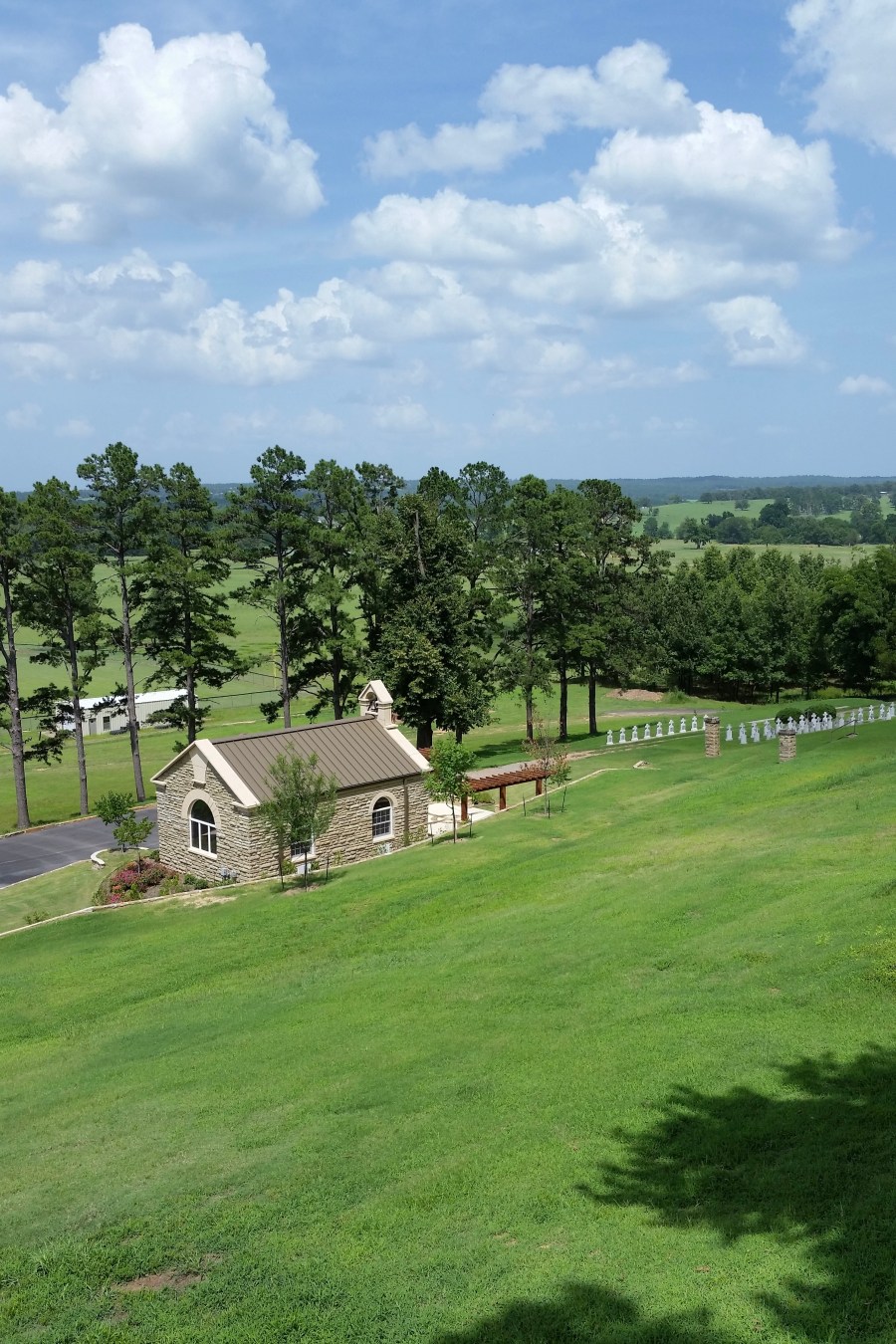
Image: A Station of the Cross on the grounds of Subiaco Abbey in Subiaco, Arkansas visited during a Benedictine Conference.

Featured

A cry before God

This week my 4th Week of Lent journey with a Different Kind of Fast by Christine Valters Painter was to fast from holding it all together and embrace tenderness and vulnerability. I don’t know about you but when you are not feeling 100%, that kind of openness and sensitivity comes even easier. It seemed that no matter where I turned there was a story that resulted in an easy flow of tears. Our practice this week was to resist the demand to keep pushing through when your heart (and in my case this week, also my body) is crying out for a pause.

It seemed this openness attracted even more stories that pulled at my heartstrings and resulted in a pause of compassion and benevolence. A concerning personal update, reasons to stop and assess my all too frequent judgements, a friend’s family member hospitalized and on life support after a fluke accident, prayers for the daughter of a social media friend who became ill while studying in Italy, endless stories of children and families impacted by the war, a cat that was returned to a foster home after the traveling pet owners decided they couldn’t properly care for him (who is expressing his displeasure and fear openly), and another one, locally, who was placed in a shelter due to military relocation. If it wasn’t for the recent death of Bela, I might have considered bringing her home, but tears at PetSmart quickly helped me realize I don’t want to open myself to that kind of attachment again.

Christine Valters Painter shares in our Lenten study, a statement by Orthodox Christian theologian John Chryssavgis: “Tears and weeping indicate a significant frontier in the way of the desert. They bespeak a promise. In fact, they are the only way into the heart.” St. Ignatius of Loyola, Christine states, told us that the tears make us more attentive to the longings of our hearts. In other studies I have learned that St. Monica was known to weep daily for the conversion of her son, St. Augustine. Those tears obviously bore much fruit. St. Catherine of Siena, a personal favorite, was known for her gift of tears that were seen as a sign of her sensitivity and compassion.

I found myself pausing on the verse, as I prayed our Lectio with John 11:32-35, crying with Mary, “Lord, if you had been here, my brother would not have died.” It was a fitting passage for this week because today, the Fifth Sunday of Lent, we heard this gospel of the death and raising of Lazarus. Pope Leo XIV reminded us, today during his Angelus message, that this gospel is an invitation to hear the Lord’s call to new life, reminding us we get lost looking to the world in things that will never bring true happiness, that we are longing, in fact, for the infinite.

After this Angelus message and prayer, Pope Leo once again called for an end to violence, reminding us we cannot remain silent. We cannot ignore, he said, that what is harming those who are impacted by war and violence is harming us all. He urged us to persevere in prayer, reminding us that war is “a scandal to the entire human family and a cry before God.”

It might feel safer to pretend it isn’t happening and imagine that life is just fine, ignoring the news and tragedies occurring in the lives of our brothers and sisters. Or we can risk the compassion of Jesus, weeping at the death of his friend, embracing tenderness and vulnerability for those in need. We share our tears with those shed by others and make a cry before God for peace in our lives, personal and global.

I pray for peace in our hearts and in our world. Deena

Image: A photo I took of a stained glass window of our Lady with the body of Jesus being removed from the cross, in the chapel above the Holy Stairs, Scala Santa, in Rome. These stairs are believed to be the stairs leading up to the praetorium of Pontius Pilate in Jerusalem that Jesus had to climb several times before his death.

Featured

Pray for peace

I begin by stating that I understand and support the notion that we create internal peace by staying out of negative and political social media posts, staying away from the news except to remain informed, or worrying about a war that we have absolutely no control over.

I get it, I really do. I am trying hard to create peace internally and in my small sphere of influence. I continue to write in my journal, as I have for months, that each day is going to be my peaceful day and I focus on that goal each day.

But when I see a little boy crying in a Lebanese hospital because he was bombed and saw his father in pieces before him, I also know we cannot hide from the reality of what this evil war is doing to innocent people. There are times we must speak out and defy what is happening. It is not making our country safer, richer or better off. I don’t need to share all the information about what is happening each day and how much it is costing our country. You can read that on your own.

I join Pope Leo XIV appealing to “those responsible for this conflict: cease fire!” I join him in asking each of us to look at what is happening with the eyes of Jesus. In today’s gospel for the Fourth Sunday of Lent Jesus cures the blind man. We can open our eyes or keep them shut. Pope Leo also said, “It takes a vigilant, careful and prophetic faith to open eyes to the darkness of the world and bring the light of the Gospel to them through commitment to peace, justice and solidarity.”

Speak up when you can. Support those in need in whatever way you are able. Vote to make a difference.

Most importantly, let us pray for peace in our world.

Deena

Featured

A fragrant, pleasing offering

I have seen the cloud of incense, representing our prayers, burn and move in interesting ways around the altar in our church. During the incensation, after exposing the Blessed Sacrament, the incense rises to the great high ceilings, lifting our prayers. Impacted by heat or air conditioning, air coming into the sanctuary from opening doors, etc. it can often create a cloud around the altar and monstrance.

The other night, during Adoration, the incense took on a life of its own, and a symbolism, that was quite moving for me.

The cloud hovered around the altar and the monstrance, creating a thin veil, inviting me to see beyond the physical to the reality of what was present before me. It sanctified the space for the Divine Presence with us. It slowly moved to the ambo, the pulpit, where the Word of God is proclaimed, as if to say, as the apostles heard in today’s Gospel, Listen to him. Then, it turned and drifted to sanctify our presence there. The cloud drifted out toward the pews, at the perfect height of those of us present and kneeling in this sacred space. It moved slowly from the altar, over each of us, as it moved towards the back of the church.

The Jewish Tabernacle, or Mishkan (dwelling place), initially portable, moved to more permanent structures with the building of Jewish synagogues. The scrolls are now housed in the Ark, the Aron Kodesh, while the building itself can be viewed as the Mishkan. In Exodus, the Jewish people were instructed to build an altar of acacia wood in the Mishkan which would create a pleasing altar for the burning of incense. Everything in the Tabernacle, each piece of furniture and the way it was constructed, represented intimacy with God. The altar of incense then represented the prayers of the people rising, in intimacy with and love of God.

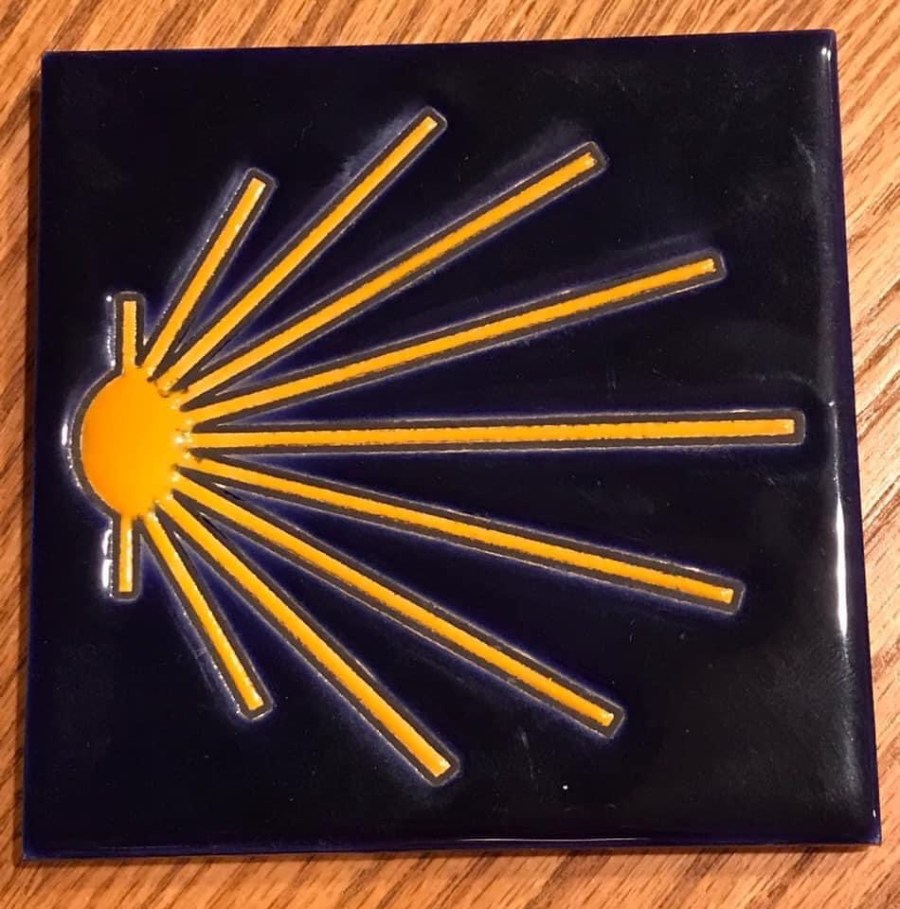
The large thurible, or Botafumeiro, at the Cathedral in Santiago de Compostela was not swung during my visit to Spain but I have seen videos of it during special liturgical feasts. It is swung to purify the air, participants and symbolize the prayers of the people rising to God. If pilgrims happen to arrive to the Cathedral on these special holy days, after walking the Camino, I envision the incense sanctifying their journeys, lifting and receiving all the intimate and personal prayers said during their pilgrimage.

In the book of Revelation we also hear of bowls of incense. The angel was “given much incense to offer with the prayers of all the saints on the golden altar before the throne and the smoke of the incense, with the prayers of the saints, rose before God from the hand of the angel.” It’s a beautiful image to consider the continual burning of incense, representing the prayers of the communion of the saints, small “s”, each person in the eternal presence of God.

As I reflected on the background of incense, and the scriptural references of our prayers like incense, I thought about our Lenten prayers and practices as fragrant and pleasing offerings to God. I pray to become a more pleasing “Mishkan”, a dwelling place, and enter into greater intimacy and union with God.

I pray that your journeys continue to be fruitful and meaningful as we begin this Second Week of Lent. Deena

Image: A picture I took of the great Botafumeiro in the Cathedral in Santiago de Compostela, Spain, visited during my pilgrimage.

Featured

Start with a dream and dream big

I love the Opening ceremonies of the Olympics, and the Winter 2026 Opening Ceremonies did not disappoint (ok, it’s in Milan and Cortina, so I might be a bit biased). I loved it all – Andrea Bocelli, the dove image and message of peace, the adorable Italian hand gesture lesson, the all female color guard in Armani suits, the colorful flowing paint tubes, dancing composers and, (seriously? How creative and representative of Italy!), giant colorful moka pots, I was thrilled.

Beginning with a sequence of the winter athletes watching their younger selves practicing their sport was an inspiring first segment for the Ceremonies! Having watched young people grow into adulthood, in my own family, with their specific goals and ambitions, and achieve those dreams is equally inspiring. I paused to reflect how some people are so inspired at a young age to pursue a goal, and the relentless practice to accomplish it. It’s a gift to be so confident and determined.

On Friday I was reminded that we are all encouraged to dream big. A reflection by Monk Mindset challenged me to consider that we would never tell a young child to dream mediocre dreams, to aspire to goals that are “less than” what they might desire. We don’t tell a child, or at least I hope we don’t, not to dream big because it is grandiose or presumptuous to want to accomplish something in life. My niece’s 7 year old has mentioned she wants to be a Lego Master. So why not?! She’s immensely talented at it and there are such individuals called Lego Masters in the world. Whether that comes to pass or it morphs into some other creative, and equally talented, skillset of planning, designing and creating, it doesn’t matter. I want to encourage her to believe in that dream! I would not dare to tell her to focus on something less exciting!

Fr. John of Monk Mindset continued to suggest that we might spend some time in prayer and discernment about the deepest desires in our hearts. It reminds me so much of Ignatian Spirituality and the notion that God is discovered when we spend time reflecting on the desires of the heart. In true discernment, we explore those desires that are ordered toward God, that lead to greater faith, hope and love of God. In that discernment we will uncover something that God might intend us to desire and pursue. When we have identified a spiritually noble and ambitious dream, then we have to courage to ask God to aid us as we run confidently toward it.

These dreams would not be petty desires or visions of grandiose and self-promoting accomplishments. Fr. John reminded that we need to be open to and allow room for purification and alteration of those desires toward the will of God in our lives. In prayer and contemplation, we weed out the disordered attachments and desires and seek those that best use our gifts and talents to serve God and others. I always thought, why would God want me to be an accountant when my heart does not move in that direction. So I don’t have to fear asking God what ways I can best serve.

I was also reminded, seeing a recent post from Hay House, that Louise Hay, an author and founder of Hay House Publishing, began her life’s work late in life. After a divorce and cancer diagnosis she began to write and at the age of 62 opened her publishing company, which remains a leader in the world of self-help and personal fulfillment publications. Do I desire to open a publishing house or author several books? No, but perhaps some of the other ideas that I lay in bed and dream of deserve a bit more reflection, prayer and discernment.

We can all make a difference in the world by using our gifts and talents. What are your dreams that lay dormant? Spend some time this week and reflect on ways that your future might be as grand as God imagines for you.

One of the best commercials I have seen so far is by Toyota with young girls repeating positive affirmations from their father in a car. The tag line is “Every destination has a beginning.” What’s your destination?

Wishing you abundant peace and joy this week, Deena

Image: created in Canva

Featured

The journey of peace

In today’s Gospel from Matthew (Matthew 5: 1-12a), Jesus gathers his apostles, and the growing crowd of disciples and followers, and shares the familiar Beatitudes with them – these words shared are a radical blueprint for the heart for those of us searching for answers. Although I’ve heard these verses many times, they spoke to me with a new weight this year. Ever since the Vigil Mass on Saturday, words like ‘peacemakers,’ ‘persecuted for righteousness,’ and ‘hunger and thirst’ have been nudging me to spend more time with them. What am I being called to do? How might I move beyond hearing the words and make them become a part of my life? What is my role to help embody the words at a time when our world needs more light and peace? I don’t have the answers, so I have gathered a few favorite quotes from many that I respect and turn to for wisdom, with a prayer that they might help me understand the words Jesus is calling us to live. I also share a personal example at the end of how we are invited to reflect on our own journeys.

As a Benedictine Oblate, I begin with St. Benedict and the peace he advocates in our daily living of The Rule, from the Prologue: “Let peace be your quest and aim.”

Pope Leo XIV, yesterday in his address to participants at the “Political Innovation Hackathon: One Humanity, One Planet” Conference, said “there can be no peace while humanity wages war against itself—by discarding the weak, excluding the poor, and remaining indifferent to refugees and the oppressed.” He said “Only those who care for the least among us are capable of accomplishing what is truly great.” He urged the young people to seek peace always.

Dorothy Day: “If peace is to be built, it must start with the individual. It is built brick by brick.”

St. Mother Theresa: “If we have no peace, it is because we have forgotten that we belong to each other.”

Anthony deMello: “Peace is not the absence of conflict, it is the ability to handle conflict by peaceful means.”

Thomas Merton: “We are not at peace with others because we are not at peace with ourselves, and we are not at peace with ourselves because we are not at peace with God.”

Thich Nhat Hahn: “Peace in every step.”

Lastly, I share the personal experience from my reflection during Adoration this past Wednesday on the Buddhist monks walking for peace. I prayed to let their walk continue to plant seeds of peace in my heart. That they might encourage me to spread a message of peace in my own way. I contemplated the number of people they are influencing by their walk and their daily messages. I continue to write in my journal each morning, “Today is going to be my peaceful day.” I paused and thought about others, like the Peace Pilgrim, who have journeyed for peace. Then God reminded me he has a sense of humor and is listening to all these silent prayers and yearnings.

I reached down and picked up my copy of the new book, Encounter Grace: Moments of Hope, Joy and Peace, by mentor and friend, Becky Eldredge. I opened and turned to pages 36 and 37 and read the two reflections “A Call” and “Healing Power”. In “A Call”, Becky wrote that we are invited to pray for the grace of getting to know Jesus more intimately as we journey through the Spiritual Exercises of St. Ignatius of Loyola. “It means not only hearing the call to follow Jesus but also to WALK with him and be there working with him.” Then in “Healing Power”, Becky reflected on the ways that Jesus healed others and the impact it had on her. She invites us to consider that it is through our connection with Jesus in our “inner chapel” that “his power moves from him to us.” When we do that, we “encounter Jesus the same way Jesus encountered people tangibly when he was WALKING around the earth.” (Using caps for both quotes here is my emphasis.) I laughed out loud, quietly because I was in Adoration, but I thanked God for reminding me of Jesus’ constant effort to be and share peace. I can turn to scripture just as easily as I can turn to YouTube to see where the monks are walking today.

So today, in whatever way is most helpful for you, consider how you are and might be sharing a message of peace to those around you. We all need it so desperately.

Wishing you abundant peace this week, Deena

Image: A photo of a banner at Subiaco Abbey in Subiaco, Arkansas taken during an Oblate conference.