Featured

The gift of water

I have been on many amazing vacations and business trips that have taken me to beautiful locations and scenery. It would be difficult to select one from them. But if I had to pin down a reason that some rank higher than others, it might be because of water. Coronado Island, CA and the Pacific Ocean. Towns along Lake Michigan on the Michigan side. Florida’s Gulf Coast. Lakeside homes. The sea at Nettuno, Italy.

Traveling the Inside Passage from Vancouver, British Columbia up to ports such as Ketchikan, Alaska is definitely on the top 5 list. I was reminded of this trip this week seeing posts of a similar cruise being taken by a former colleague and his wife, especially Friday as they also journeyed the Inside Passage. Suddenly I was transported to the top of my cruise ship.

Mom and I were settling in our cabin, as were our traveling companions, Pat and Laurie, in the cabin next door. We had a balcony but as I looked outside and saw the trees and water, I needed to see more. I told her I was going to run up to the top deck to explore. The trees felt close enough to touch and I wanted to experience more of it. Many others were coming up to the top deck as well. But no one was talking out loud, everyone was whispering. Reverent of the landscape. It was as if we would break the scene if we spoke aloud. I suddenly had tears in my eyes and was captivated by the magnificent beauty and the silence. The large cruise ship moved slowly. You could hear the water beneath us. I saw trees sway and a small waterfall here and there. It was breathtaking! The phrase “God’s country” came to mind.

The slow, relaxed pace of a vacation, or the good sense to be mindful of a stunning location, help us experience the beauty of our world. A glimpse of a deer in a backyard. Geese or ducks slowly navigating on the water. An eagle overhead. The hummingbirds at my purple flowers this week. All moments that say “slow down, take it in, it may be gone in a moment.” When we allow ourselves to slow down and be conscious, we experience that moment with a heightened sense of presence, focus and intentionality.

We are currently in the “Season of Creation”, an annual global celebration to care for the Earth, which runs from September 1 through October 4, ending on the Feast of St. Francis. First proposed by the Eastern Orthodox Church, it was welcomed into the Catholic Church by Pope Francis and has been promoted by the Laudato Si Movement. The Season of Creation is “a time to renew our relationship with our Creator and all creation through celebration, conversion, and commitment together. During the Season of Creation, we join our sisters and brothers in the ecumenical family in prayer and action for our common home.” The theme for this year is Living Water. The vision drawn from the scripture passage of Ezekiel 47: 1-12, encourages us to look at the ways we use water and to consider our human responsibility to care for it and ensure fair and equitable access to clean water to all the citizens of our world.

When you visit the ocean or a large lake it seems impossible to imagine that 2.1 billion people in the world lack access to clean, safely managed drinking water. Pope Leo XIV’s September prayer invites us to pray for the resource of water, to care for it, and for equal access to water for all. I have added a YouTube link to the prayer below.

We are invited to show our concern for water, by fixing pipe leaks, taking shorter showers, not running water when not in use (comment from me, for me, not keeping the water running while the toothbrush is in my mouth and not under the water!) and avoiding the pollution of drains and rivers. I can reflect on the inconvenience of not having water when a city pipe bursts or hydrants are being cleaned. I have to wait a bit, but I certainly don’t have to walk to fill a bucket to bring home for use for the day.

Fr. Cristóbal Fones, International Director of the Pope’s Worldwide Prayer Network, reminds us, in a press release, that water is one of the great essentials of life. The Pope’s September prayer intention “invites us to think deeply about creation, to safeguard it, and to look with God’s eyes on those who today have to walk for miles to obtain a bit of clean water, and to convert what we see into concrete actions that demonstrate moderation, care, and solidarity.” “No one should live without water, and no one should die because they lack water.”

Watch the short 4-minute video as Pope Leo asks us to pray for “The Care of Water” here.

This week, or perhaps continuing through the remainder of September until the Feast of St. Francis, I invite you to be mindful of your use of water, appreciating the gift of choosing hot or cold running water, or savoring a refreshing glass after coming in from the heat.

Wishing you a week of gratitude and abundance, Deena

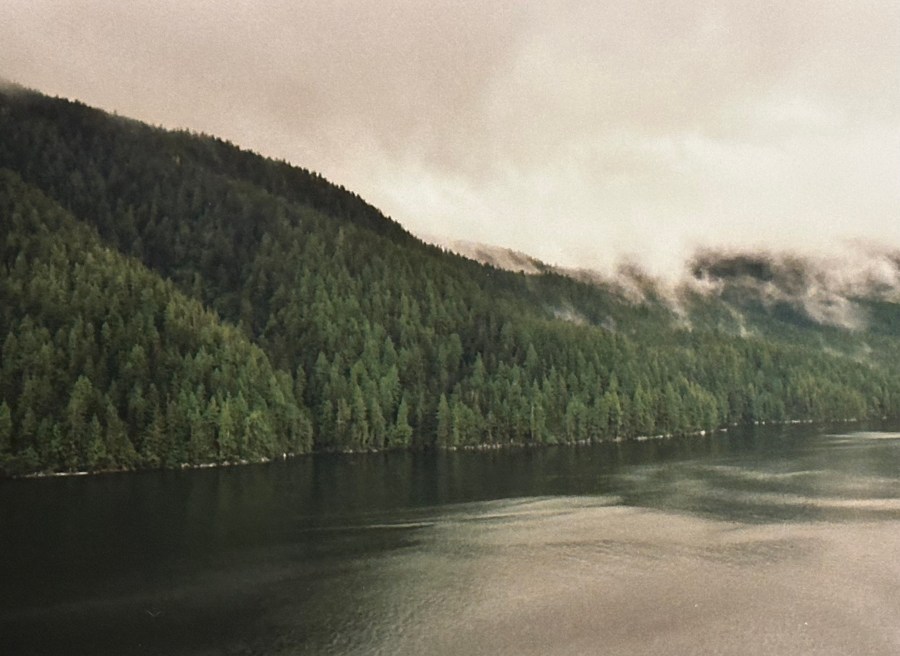
Images: A side view from top deck of cruise ship moving through the Inside Passage.

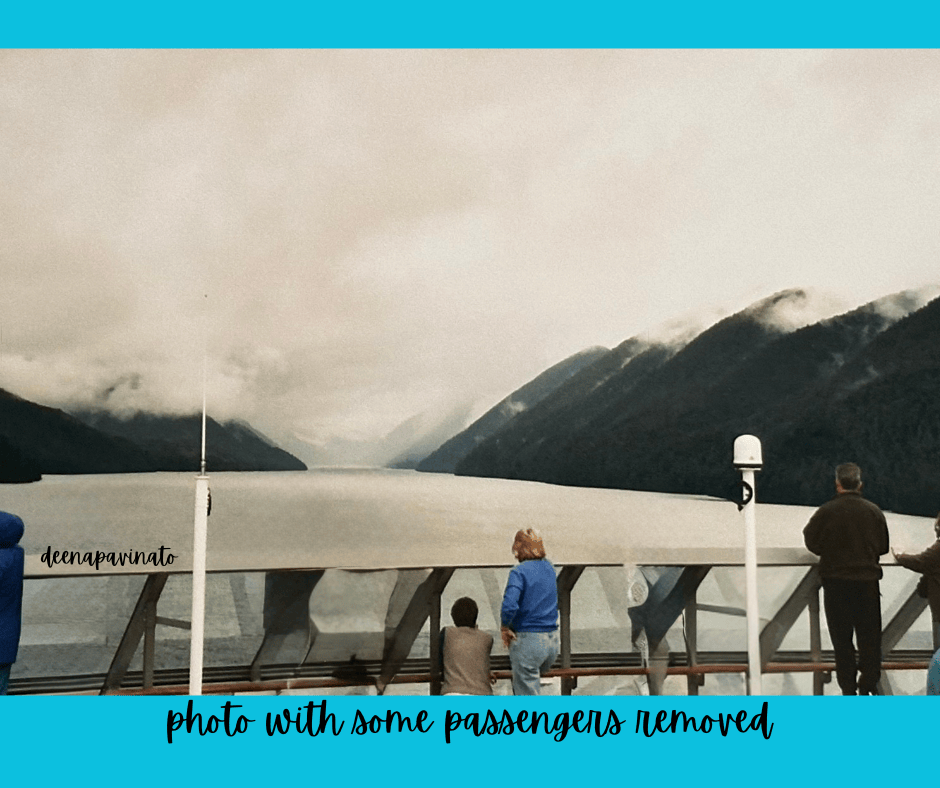
Another below, with passengers whose faces could be seen removed, looking straight ahead through the Passage.

Featured

Holy labor and holy rest

Idleness is the enemy of the soul. Therefore the community should have specified periods for manual labor as well as for prayerful reading. Chapter 48 – Daily Manual Labor, The Rule of St. Benedict

The purpose of work in the monastery is to serve the community and fulfill all the tasks for the daily operations of the monastery. Tasks such as kitchen duty and being porter of the door are outlined by St. Benedict. But in all aspects of The Rule, there is always room for adaptation due to weather, the season of the year, or the age or “fainthearted” nature of the person performing the work. I love this about The Rule. There are guidelines but a wise abbot or prioress knows we all have different capabilities and endurance levels.

There have been times that I have viewed my work as fulfilling a purpose and serving a common good. Perhaps I was helping people by making their work lives easier by offering customer support or solving problems for them. Honestly, there are also times that I questioned what the value of that work was in the larger scheme of things. How I viewed the value of my work was probably closely correlated to how happy I was in the role. I would definitely make different decisions about work I was engaged in given the chance to do it over again.

But it’s also important to remember that I might not see the entire picture or purpose for the work I was doing, or the lives I might have impacted, by my presence there.

I read a newsletter earlier this week by an author I follow, Laura Kelly Fanucci, “Work Without End, Amen”, that reminded me of this important perspective. Fanucci offered a new piece of information, to me, about Bishop Ken Untener that I admired during my years living in Michigan. Laura shared that these lines written by Bishop Untener are often attributed to Bishop Oscar Romero because of a Christmas address given by Pope Francis, and a paper written by Cardinal Basil Hume. The lack of clarity ended up aligning the words with Romero.

Untener wrote: “We may never see the end results, but that is the difference between the master builder and the worker.”

Fanucci concluded, “I can picture both brother bishops shrugging. Who cares? What matters is the work. What matters is the mystery that Jesus called the Kingdom of God or the Kingdom of Heaven or the life of the world to come. What matters is that we got to be here at all. What matters is that we get to roll up our sleeves again and dig into the dirty dishes of being human. What matters is the work without end. Amen.”

This week I lamented the passing of poet, novelist and environmental activist, Wendell Berry. I am so grateful for his extensive writing and recorded talks, but his voice will be missed. In light of Labor Day, and the subject of my blog this week, I share these words by Berry:

Teach me work that honors Thy work, the true economies of goods and words, to make my arts compatible with the songs of local birds.

Teach me patience beyond work and, beyond patience, the blest Sabbath of Thy unresting love which lights all things and gives rest.

Let us seek to find value in our labor each day, whether it is caring for our families (and pets) at home, serving our parish community, assisting as a volunteer at an agency helping others, or still actively engaged in paid employment. Our work becomes an extension of our prayer when we try to serve and praise God in how we view those daily tasks. May we also seek to refresh and nourish our spirits by taking time to rest in the Love that is surpasses all of our human endeavors.

Wishing you deep and soulful rest this Labor Day weekend. Deena

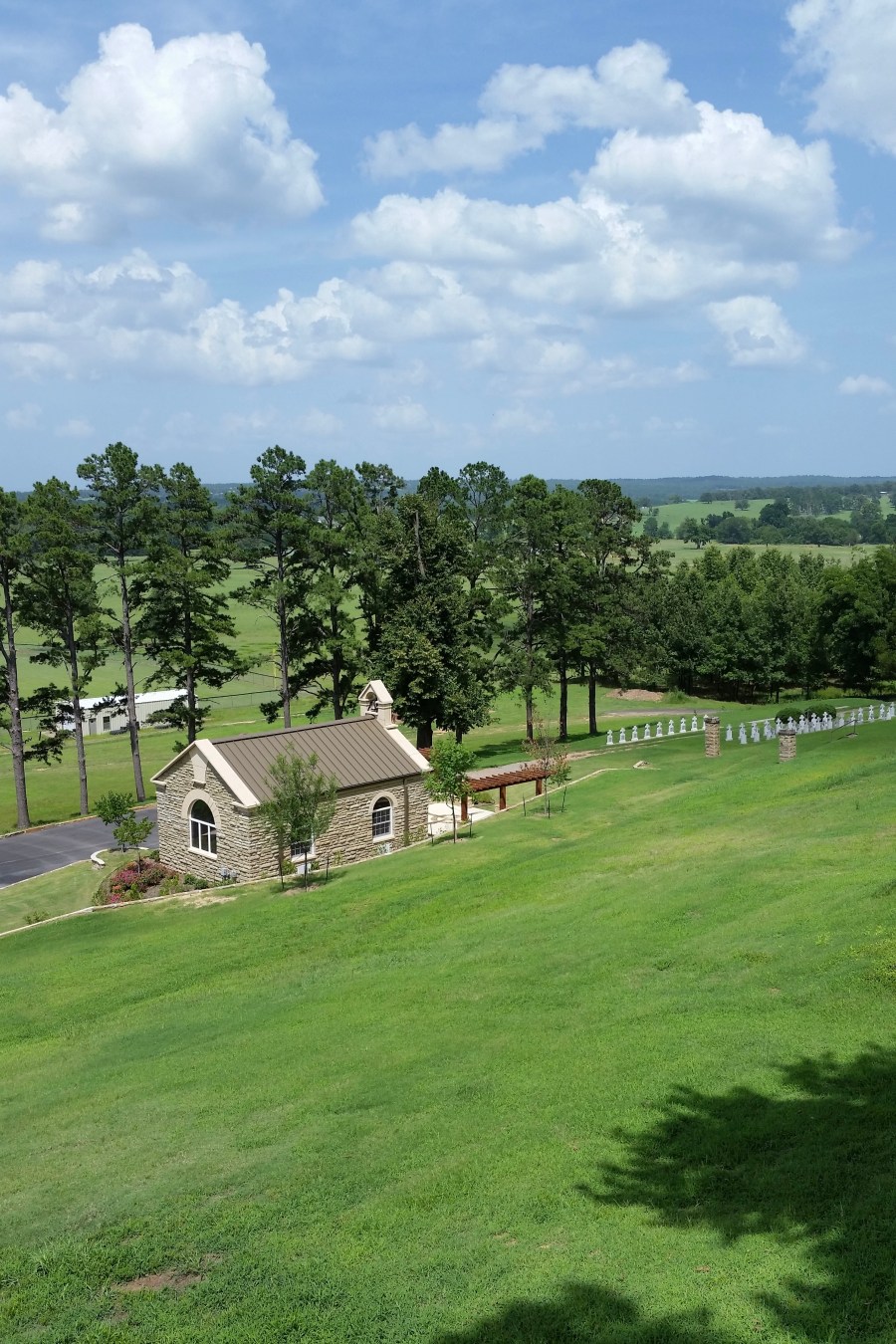
Image: a small chapel on the grounds of Subiaco Abbey, Arkansas

Featured

It’s a delicate balance

Turning 70 can definitely have an impact on your perspective in life.

It has given me the opportunity to reflect and be grateful for the friendships I have and the ability to spend more time with and appreciating them. I have, for the most part, everything I need and have decided I want to simplify in many areas of life. I can also relax the longing to figure out “what I want to do with my life”.

It makes each day seem even more precious.

I have been impacted, as so many of you have, by the images from Nepal. People who were sitting on a bus at the border crossing, or walking in the streets of their village, swept away by the flash flooding. Fortunately, there are stories of survival but for so many the loss is inconceivable. Friday night we also learned, in our Illinois Valley area, of the tragic loss of a young boy in a car accident, with the mother and brother surviving. Again, lives changed in an instant.

Regardless of our age or situation, each day is a gift.

This morning I read an article by a needlework artist who shared some thoughts after attending a Vince Gill concert. She’s a big fan so is aware of the goals he has, such as 50 years into his career, taking on a project to create 12 extended play releases. One might ask Gill, why not relax and begin to take it easy? She wrote that when Gill was questioned about it, he replied that “he doesn’t have as many years left to be creative — so it matters to him more than ever.  And then he said he’s having the time of his life, just having a ball with it.” She used his story as an analogy, encouraging us to “learn a new stitch” or “start a new canvas” or “become the artist you’ve always wanted to be”.

I have always had the tendency to put off things – I can’t do this until … one more class, one more book, one more technique, etc “before I am ready”. My friend Kate taught a class this week, The One More Thing Trap, that encouraged us to look at all the “one more things” we tell ourselves that have to happen before we can be the person we want to be. When we do that we lose the ability to feel present and connected to where we are right now. Note: you can still access the replay to this free class by registering for Kate’s class here.

My cross stitch, and other art projects, have become a beautiful metaphor for living life. They have become a living reflection of my journey. Taking life more slowly and deliberately. Living and acting with intention. Trying bold new projects. Simply having fun. Each day is like a project, taking it one stitch at a time.

Regardless of your age, 30 or 80, my wish is that this week you enjoy the moments as they come along. Be present. Be adventuresome. Savor them.

Wishing you abundant joy, Deena

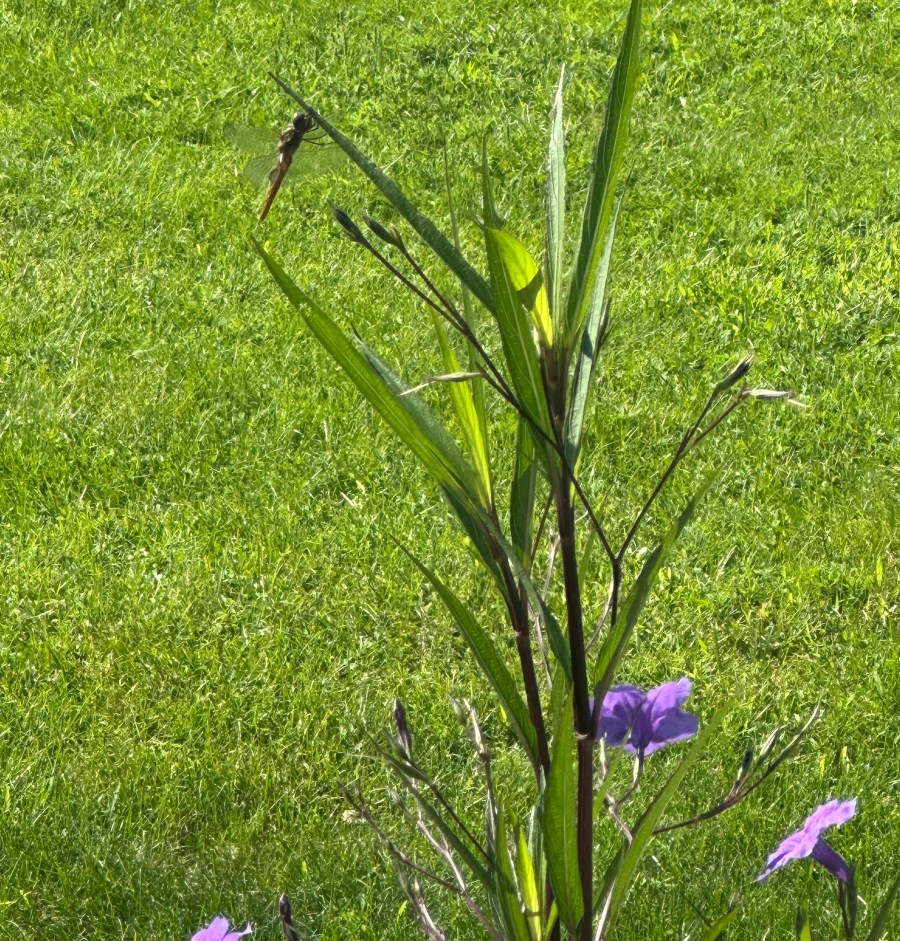
Today’s image: I noticed a dragonfly on my “purple showers” the other day. He was simply sitting on to the edge of the leaf. Moving with the wind as it swayed. I wondered if he was stuck. After several minutes, he flew away. He reminded me to land lightly, settle softly, and enjoy the moment.

Featured

Grateful anyway

I received Kate Bowler’s newsletter on August 12 titled “Why I’m Anti-Gratitude” and I have been on a gratitude practice recovery journey since. Now, first of all, if you have visited this blog before you know I am a fan of Kate Bowler. She’s a wonderful author, podcaster, speaker and professor at Duke University. I have her books and listen to her podcasts. So, this likely won’t change my overall opinion of Kate’s work. She began her newsletter sharing that she began a gratitude practice when she was recovering from a serious illness (Kate is a cancer survivor), and that it helped. But, she went on to say that the wellness industry has turned gratitude into a guaranteed cure for suffering and a “strategy for controlling life and our emotions. Another optimization project we can fail (or succeed!) at.” Simple, she suggests, write 3 blessings a day and you’ll never be sad again, concluding that it’s simply not true. She states that it has become a way to refuse that life is BOTH beautiful and hard.

Ok, I get that.

I paused. I questioned whether my daily practice was making a difference. I judged my current ongoing list of gratitude bullets (on that particular day my list was up to #1440) that I began after reading another author, Mary deTurris Poust’s practice of numbering and keeping the gratitude list going as a way to acknowledge the countless blessings in our lives. I wanted to go to Kate’s Substack account and comment that I don’t think most of us see gratitude simplistically, as a magic bullet for happiness. Instead I considered the study she quoted, that there wasn’t a positive benefit in those participants who journaled gratitude over those who did not. She teaches at Duke after all!

But it just didn’t settle with me. I couldn’t let it go. I believe being grateful does make a difference in our outlook and perspective in life.

Fortunately at the same time, one of the Facebook groups I am part of, facilitated by my Young Living Essential Oils manager organization and Brenda Schuler, our “Diamond” leader, began a 10-day Gratitude Reset Experience. Each day she has posted the benefits of practicing gratitude and rewiring our brains to focus on positive events and circumstances in our lives.

Our energy matches what we focus on. I believe this.

On July 12 Br. David Steindl-Rast turned 100 years old. He has long been a voice, known as the “Grandfather of Gratitude, for the transformative power of gratitude. His TED talk in 2013 tells us that it isn’t that happy people are grateful but rather grateful people that are happier. His 2017 YouTube video, A Grateful Day, has been one of my favorite reminders of the gift of each day. As founder of Grateful Living, Br. David and his organization, are committed to sharing the benefits, and practice, of gratefulness and the impact it can have on our lives and our world.

Dr. Arthur Brooks, a well-known author and podcaster, recently shared his 5 step process toward living a more grateful life. Also a professor (Vanderbilt University), Dr. Brooks says we are living in a “happiness crisis”. He writes and speaks extensively about finding happiness and meaning in today’s world by incorporating simple practices and attitudes into our daily way of thinking and being.

There are countless others. As I reminded myself of these respected teachers and scholars, I reflected that they aren’t suggesting we ignore the hardships in life. They aren’t saying do “this…” and your life will turn around and all difficulties will disappear. But I do believe they are suggesting that we are able to cope with and move through those times much easier when we have a foundation of gratitude for the blessings in our lives.

My faith does this as well. God doesn’t promise a life that is free from any worry or concern. However, I believe that I will be sustained during them. I was reassured as we prayed today’s Collect for the Twentieth Sunday in Ordinary Time: “O God, who have prepared for those who love you good things which no eye can see, fill our hearts, we pray, with the warmth of your love, so that, loving you in all things and above all things, we may attain your promises, which surpass every human desire.”

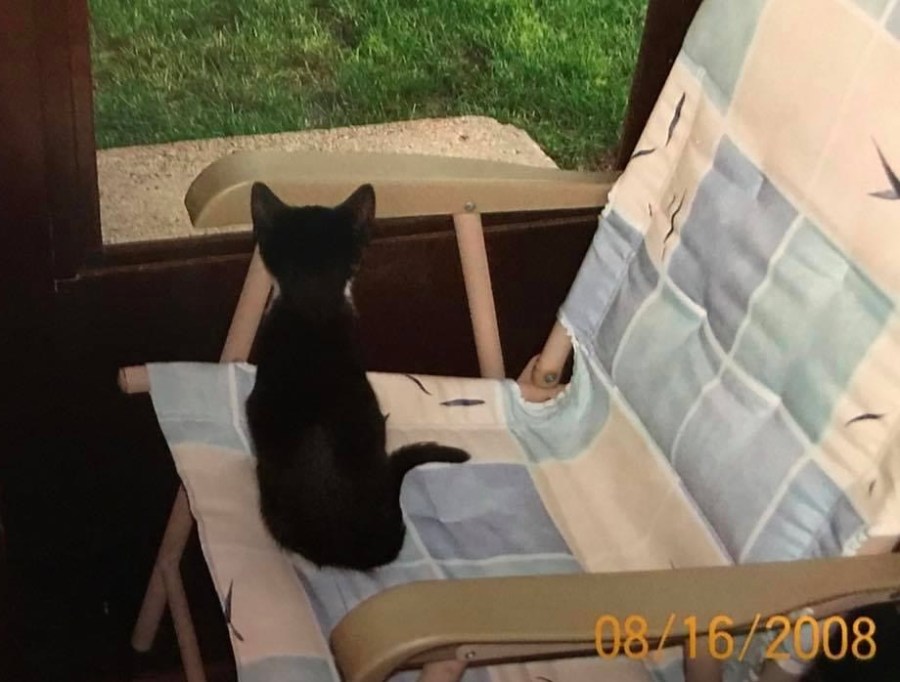
Today’s image is a picture of little Bela on the day he found me. While the pain of losing him this past February remains intense, I am grateful for the years we had together and all the joy and laughter he brought into my life.

Difficult and challenging moments will show up, that’s a given.

Be grateful anyway. Peace, Deena

Featured

Crowding out the chaos

My brother and I own the duplex that I live in. We have a tenant renting the other side. I have several plants in the flower beds on that side of the building but I have not planted as many as I have on my side and I don’t take the time to care for it as well as mine. For the past couple of years the weeds have been atrocious. I have tried rock, heavy mulch (lots and lots of heavy mulch!), landscape paper, but the soil is just lousy. The weeds seem to thrive in it. I have been putting off getting over on that side to clear the weeds again. Friday I decided I needed to get out there again, but I had a new idea. I purchased some ground cover, as I have in many areas of my flower beds, and planted to see if it will eventually grow and crowd out the weeds. I only completed a small section and I really wanted different ground cover than the ones I found, but it’s a start!

Planting the new ground cover is fresh on my mind this morning as I reflected on the Gospel reading for the Nineteenth Sunday in Ordinary Time. Matthew’s second accounting of the storm at sea has the apostles in the boat, alone without Jesus, as a storm brews and overwhelms them. In this version, they see Jesus in the distance as he walks toward them on the water. We are all familiar with Peter calling out to Jesus, Peter walking out to him on the water, but then begins to sink as he takes his eyes off Jesus. Our pastor, Fr. Paul Carlson, shared an insightful homily of the two storm versions in Matthew’s gospel and the need to keep our focus on Jesus as we navigate the storms and turbulent waters of this world. He reminded us that as followers of Jesus, “we need to be able to walk on the difficult seas [in life], but not be swallowed up by them.”

It’s not easy some days. The noise and turbulence of the world can overwhelm us just as the sea did to the apostles in the gospel. The weeds can take over and crowd out the good plants, in our spirit and soul, unless we replace the weeds with better plants. We need to blanket the soil of our minds and hearts with quiet time of prayer, reflection, and soul time with God. We are able to keep our eyes on Jesus, and less on the world, by who and what we devote our attention to.

I’m not sure if it’s age, or wisdom, but I find myself cherishing the quiet, alone time at home, or at church, more than I ever have in past years. Whether reading, listening to podcasts, gardening, stitching and reflecting, or simply in quiet prayer, it’s easier to be at peace. Perhaps it isn’t what I am turning toward but what I am turning away from. Likely, it’s a combination of both. Regardless, life is more serene and tranquil when I do so.

At this point in my writing journey of publishing this blog every Sunday for over three years, I have to check titles to make sure I haven’t used it before. This by itself is a task in creativity. I searched and found a previous post titled, “Clearing the Weeds”. I reread it and was reminded of a somatic technique called SNAP that author, and mindfulness teacher, Julie Potiker, developed. In the blog I share the meaning of the acronym, and briefly how to use the technique, to manage difficult emotions and move through situations with more ease and peace. I had forgotten about it, and in addition to prayer and contemplation, this simple technique is a great way to recenter in moments of stress. You can click here to read that post:https://deenapavinato.com/2025/06/22/clearing-the-weeds/.

This week I encourage you to find ways, that are helpful to you, when you need to clear the weeds in your own inner landscape. Find ways to be still. Then check in and see if it makes a difference in your day and your outlook.

Wishing you abundant peace, Deena

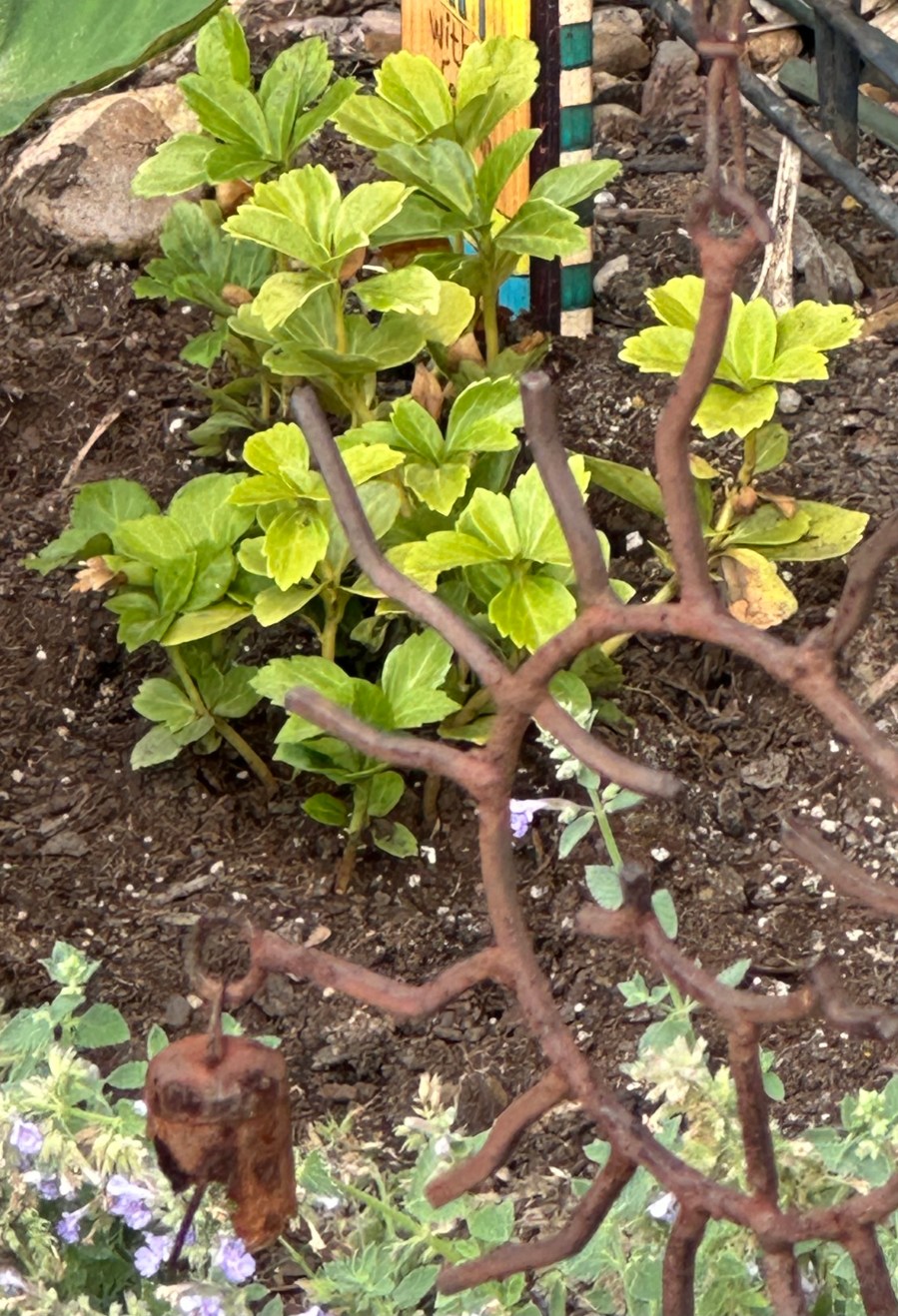
Today’s image: One of the small areas of pachysandra, a ground cover (Japanese Spurge), in my flower beds, that my friend Kathy and I fell in love with at Anderson Japanese Gardens in Rockford and have been adding to our flower beds this year. It’s growing nicely and next year I will be sure to add more to both sides of the duplex.

Featured

On the lookout for peace

During the Covid pandemic years I took several online classes, retreats and programs. One of those was a Women’s Mystics School offered by Spiritual Wanderlust, an online community supporting aspects of the interior life and exploring wisdom teachers in the contemplative tradition, modern psychology, philosophy and spirituality. It was always my favorite Saturday of the month to listen to and learn from the speakers invited to present to us. In 2022, we looked at the life and writings of modern mystic, Etty Hillesum.

Etty was a Dutch Jewish woman killed in the concentration camps in 1943. Etty was a well-educated woman who suffered from severe depression and sought help from her analyst, Julius Spier, who became her mentor, friend and lover. Spier encouraged her to keep a journal or diary. Those writings were published after her death in “An Interrupted Life and Letters from Westerbork.” Etty wrote reflections on things she read by Carl Jung and Rainer Maria Rilke. She wrote about her relationship with Spier. She wrote of her inner world. During the German occupation, Etty refused to go into hiding. She was forced to go to Westerbork, one of the transition camps, for Dutch Jews. From June to September 1943 she writes from Westerbork before being transferred herself to Auschwitz before being killed in November at the age of 29 years old.

What I found striking during our study of Etty’s writing was how she attempted to look at the situation she was facing, the trains and the faces of those being boarded on them, the German guards, and her own perspective and relationship to a God who dwelled deep within her. She tried to find and give love, build community, in the little ways she could while helping others in the transition camp. She focused on living fully, holding suffering and beauty simultaneously, despite the conditions she was facing. She didn’t focus on a God, external, in the midst of the turmoil in her country and the world. Rather, she experienced God in the deepest, richest parts of her being, and found rest and shelter there.

I was reminded of this study a couple of weeks ago, reading an article on Hillesum by Richard Rohr and the Center for Action and Contemplation. Rohr shared several of Etty’s writing in his reflection. They seem relevant for me today.

Etty reflects on the war she is seeing around her and writes, “Why is there war?… Because I and my neighbor and everyone else do not have enough love. Yet we could fight war and all the excrescences by releasing, each day, the love that is shackled inside of us, and giving it a chance to live.” We don’t have to look to war torn countries. All we need do is look to our current government and how our legislative representatives interact with each other and those they disagree with.

In today’s Gospel for the Eighteenth Sunday in Ordinary Time, (Matthew 14: 14-21) Jesus is “moved with pity” seeing the crowds following him, seeking guidance and his teaching. In the famous scene, the apostles are concerned for the thousands gathering around them, needing food, and asks Jesus to spend them away. Jesus initially responds to their request by saying that the apostles don’t need to send them away, but to feed them. They, of course, resist and say what they have is not enough. Jesus then feeds the crowds and abundant leftovers are gathered.

How often do we resist and say that we are just one person, we don’t have enough (time, resources, confidence) to make a difference in the world?

Even on a smaller, more personal level, Hillesum writes that we fight so many small battles, within, each day, that sap our energy. She offers instead that we must “not allow ourselves to become infested with thousands of petty fears and worries, so many motions of no confidence in God…. Ultimately, we have just one moral duty: to reclaim large areas of peace in ourselves, more and more peace, and reflect it towards others. And the more peace there is in us, the more peace there will also be in our troubled world.”

Silencing those small voices that insist on promoting unrest within can be challenging. Add social media to the mix and the voices seeking to drown out peace get louder and louder. So, I might be missing out on an update from a friend, or local area news, but reducing the amount of time I spend on social media, or on the news, saves the little bit of peace I can control.

Hillesum writes, speaking to God, “One thing is becoming increasingly clear to me: that You cannot help us, that we must help You to help ourselves. And that is all we can manage these days and also all that really matters: that we safeguard that little piece of You, God, in ourselves. And perhaps in others as well… You cannot help us, but we must help You and defend your dwelling place inside us to the last.”

This week I choose to be more on the lookout for peace than unrest and for small ways that I can make a difference with my humble fish and loaves.

Wishing you abundant peace, Deena

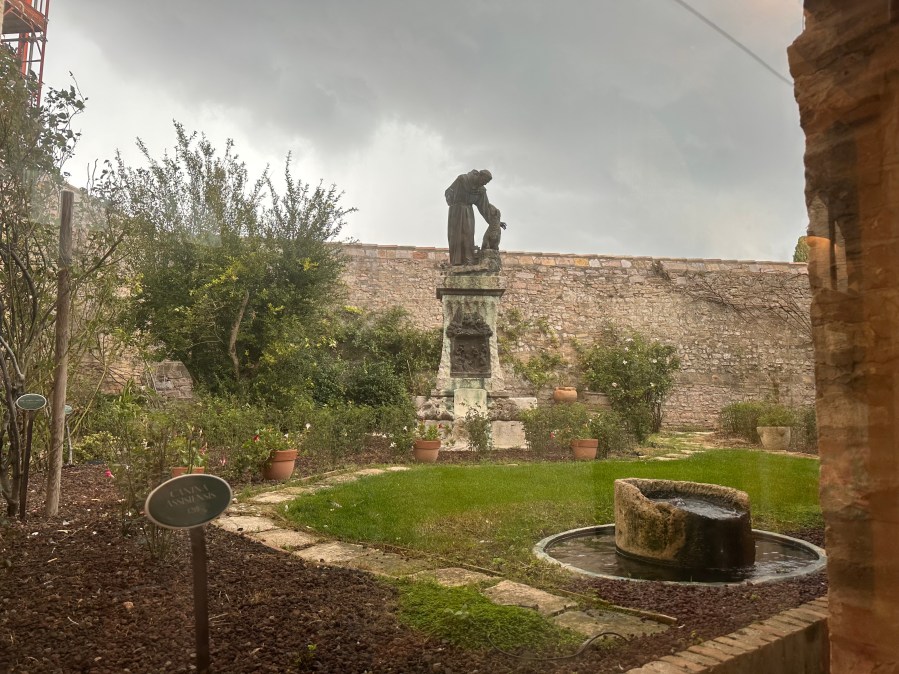
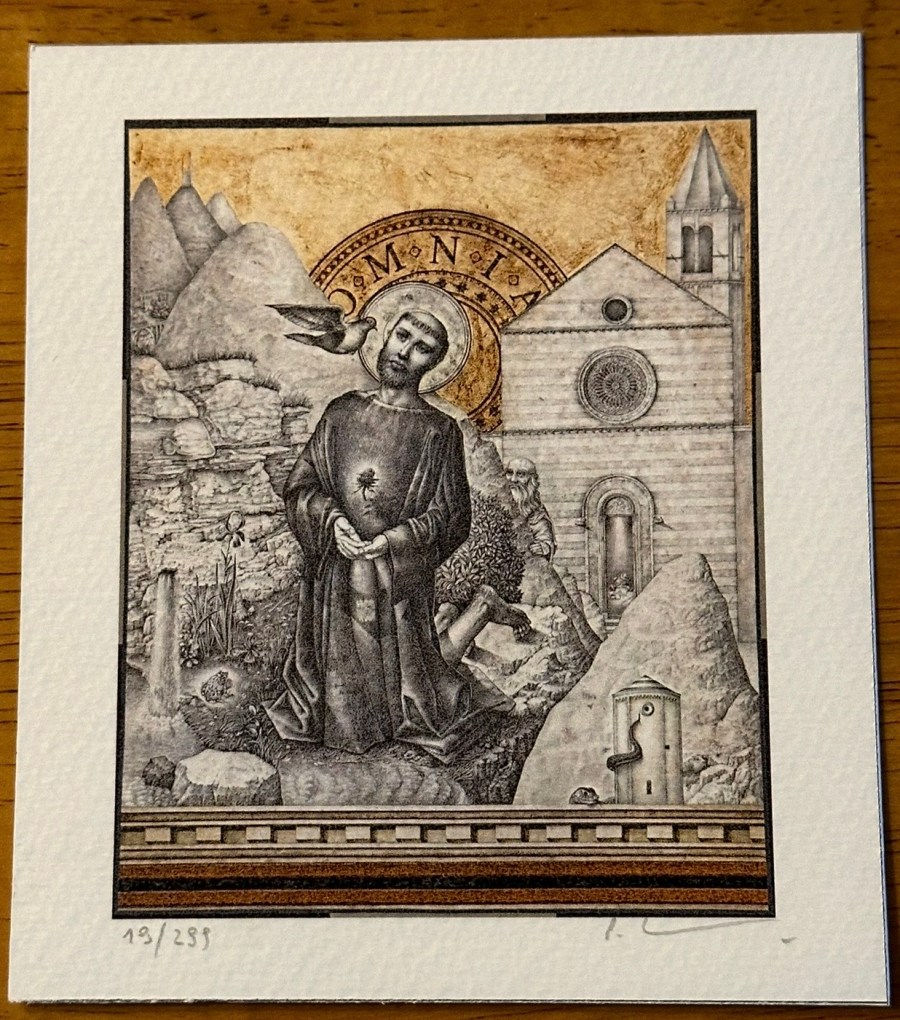
Image: St. Francis statue, a garden in Assisi.

Featured

Embracing the questions

A couple of years ago while pondering the persistent question, “what am I going to do with my life”, I finally realized I should stop asking and start living. I laughed and told myself, approaching 70 years of age (not nearly as close to it as I am today), it was time to stop trying to figure that out! Maybe there isn’t an “it” to actually discern in life. Over time, and considerable contemplation, the question morphed into “what am I being called to do, right now – this year or this day?” It’s a minor shift in wording but a huge shift in perspective.

It has felt like a shift to embracing the questions, rather than struggling with them. A fiber artist that I follow shared some thoughts on her own questions and reminded me of a quote by poet, Rainer Marie Rilke, “Be patient toward all that is unsolved in your heart and try to love the questions themselves like locked rooms and like books that are written in a very foreign tongue. Do not now seek the answers, which cannot be given to you because you would not be able to live them. And the point is, to live everything. Live the questions now.”

Deanne concluded her own pondering by saying that she thinks we are all “wonderers”, and that she had yet to meet someone who doesn’t ask questions of life. She said, “And we are all a wonder. And that is what life itself is. It is a wonder too. And so now nearly each day I remind myself to ‘Let the mystery be’ and to ‘Love the questions'”.

I couldn’t agree more!

In a movie, “The Gardener”, that I watched this week, the protagonist facing illness and her mortality, begins to open to beauty around her and to seeing life with new eyes. She is mesmerized by a snake that has shed its skin. She gazes on an agave type plant that only blooms once then dies. She mentions to a mysterious teacher that shows up on her journey, that she feels that death looms around her, she questions when the mortal fear stops. He responds, when you are ready for it to.

It’s easy to get caught up in the struggle and miss the mystery unfolding around us each day. If we are ready to release the grip and tight hold on the questions, then perhaps we are able to see things with curiosity instead. We can find wonder and awe in life unfolding around and for us. As I shared some thoughts on the book, The Practice of the Presence of God by Brother Lawrence, last week, it seems more fitting to be present to what we are called to in each moment. That is what brings peace and contentment in life.

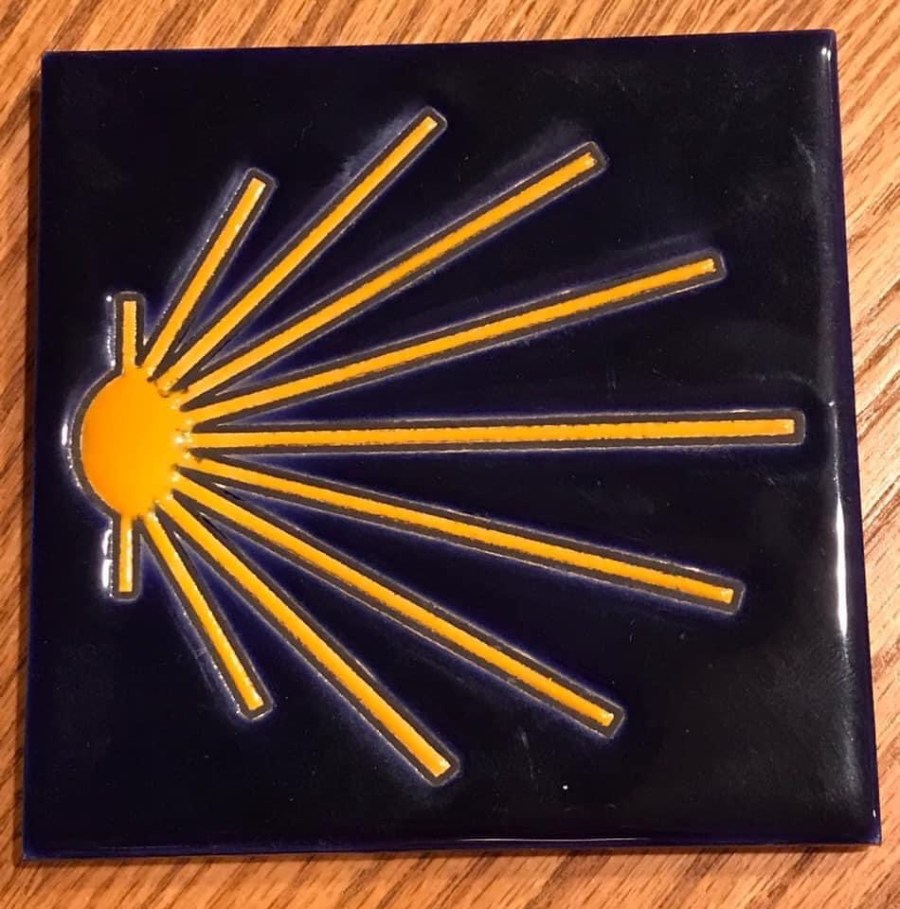
The image I selected for today’s post is a tile of the shell marker pilgrims see on the various Camino paths on “the way” toward Santiago de Compostela. The shell serves as a directional guide letting pilgrims know they are on the right path. For medieval pilgrims, a shell would be a purposeful tool, to drink or eat from. For those of us who follow a Christian path, a shell vessel is often used during the sacrament of baptism, to pour water on the infant or individual being baptized. It is a sign of rebirth and divine protection. I purchased this tile, as well as a sterling shell to wear on a necklace while visiting Santiago de Compostela. They both serve as good reminders to watch for “markers” and continue on “the way” each day.

Wishing you abundant peace, wonder, and awe this week. Deena

Note re the movie The Gardener: before you search for the movie directed by Dabney Day, it was a special online release this week. It was a little bit Devil Wears Prada in the beginning, Hallmark throughout but a few lovely spiritual reflections throughout.

Featured

The practice of peace

Have you found yourself irritated with others, or with life/the world, because events weren’t turning out as you had hoped they would? Maybe it’s more than a hope, but an expectation, that circumstances should be different. We (me!) can stress and worry about situations in life, but frequently find we have little control over it. As a reaction I often retreat, inwardly, or even physically, to my inner being, and home, preferring silence and solitude. My desire is to keep a constant connection with Spirit, throughout the day, focused on the things that really matter instead of the mundane and passing concerns that can consume so much time and energy. Some days are easier than others.

I have to catch myself when the repeated tape of a conversation, or of the behavior of someone else toward me, begins to rewind over and over again. I laughed out loud this morning reading a post by personal development author, life coach, and speaker, Cheryl Richardson, as she described the thoughts going through her mind as she took a shower. She stopped herself and said “Cheryl, come back, there are too many people in this shower with you!” I replied, “Girl, I hear you!” I laughed thinking of the countless times I have been in the same situation.

I have been encouraged in my practice of being in the presence of God, more mindful of Spirit and connection, as an alternative to mindless worry over past or future events, as I have been rereading a book by Brother Lawrence from the 17th century, Practice of the Presence of God. I was encouraged to read this small book in the 1990’s, along with Abandonment to Divine Providence, written in the 18th century, by one of my parish priests. Both have been helpful books on my spiritual journey. Lately, I have been using an updated translation by Ascension Press, which has been much easier than reading the original book I have. The book has gained much popularity after Pope Leo XIV wrote an introduction to a Vatican edition of the book, indicating that this book was one of the books that has shaped his spirituality and awareness of knowing and loving God. Pope Leo has advised that the journey of practicing the presence of God, is an arduous one because we have to renounce all of the other things that seek our attention, so that we can keep our focus centered on God.

And isn’t this the goal of Christian mindfulness, and a practice of centering prayer and contemplation? We desire to turn away from the clamor and noise of the world seeking inner peace and union with the Divine.

Brother Lawrence advises that we turn away from everything that distracts from that union, so that we can be in constant conversation with God. We pause, we turn to and rest in the Divine Presence. Simple but challenging. We seek to empty ourselves of the things of the world, from anything that does not lead to God. Brother Lawrence approached all his duties and responsibilities within the Carmelite monastery in this way, as an opportunity to practice the presence of God.

Just as Brother Lawrence had his tasks to complete, so do we. Practicing the presence of God does not mean we quit work, give up enjoyable hobbies and activities, or retreat to a monastery. I do find it is easier having fewer responsibilities outside of the home, but even those activities become opportunities to serve and be aware of God’s presence as we undergo them and encounter others in the process of doing them. It brings a different perspective to our engagement in them.

While the “practice” Brother Lawrence speaks of reminds me of Ignatian spirituality, finding God in all things and seeking only those things that bring us closer to God, he did not seem to be concerned with guidance from others, except in sacramental confession, or considering consolations and desolations in spirit. He simply returned his gaze to God and to the things that would be pleasing to God, despite any suffering or distraction.

With a similar message, Pope Leo XIV, in his video message to the 50th Summer Youth Conference in Steubenville, Ohio this weekend, encouraged youth to look for peace, for “true and perfect joy”, in the love of God instead of from others, or from social media and other electronics. He pointed to the life of St. Francis, and the peace Francis found, and shared with others, that looked different, and less appealing, to others, until they encountered him. They experienced the peace that he found within, in his relationship with God and a focus on lasting joy and happiness.

I hope that as I continue to practice the presence of God, less concerned with the opinions and actions of others, I will find that same level of peace and joy experienced by Brother Lawrence, Francis, other saints and mystics, and those who have followed them. I pray that this peace is experienced by others who I encounter. It’s a lofty goal to be sure, but one worth remaining committed to.

As always, I wish you abundant peace this week, Deena

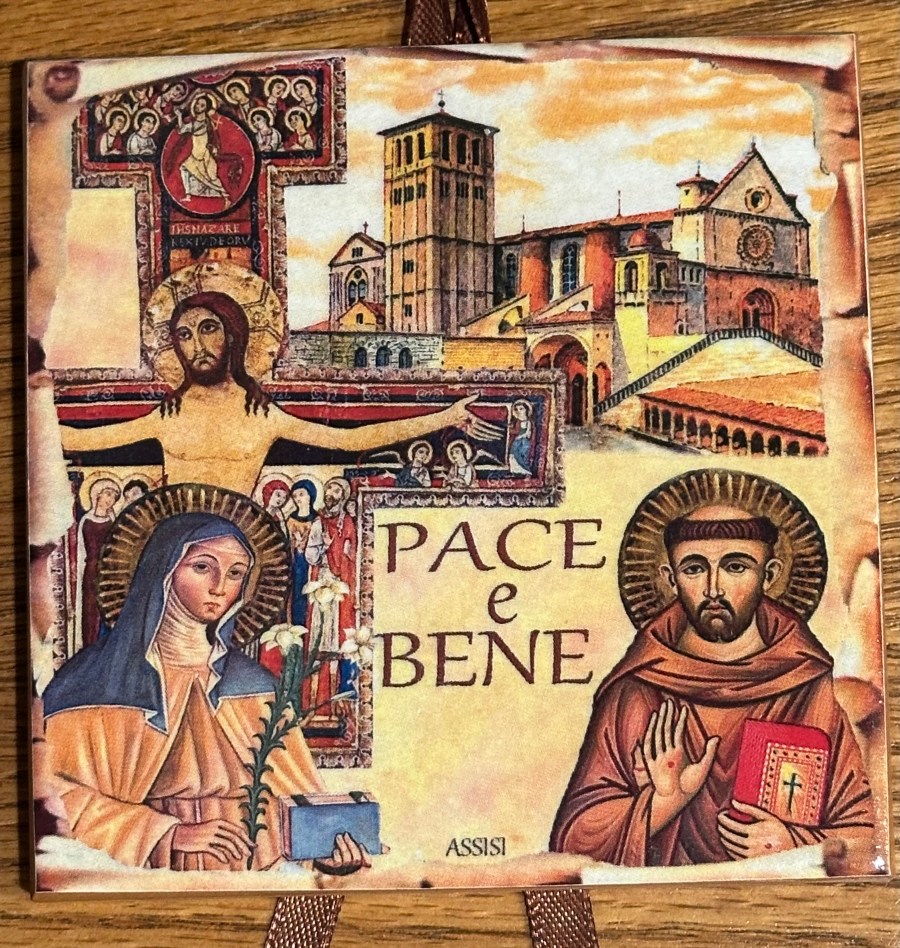
Today’s image: a small wall hanging I purchased in Assisi, Italy. Pace e Bene means “peace and all good” or “good peace”.

Featured

Wistful summer memories

Last night I noticed the first firefly (we called them lightening bugs growing up) of the season. I paused and watched, there was another, and another. I moved to a different window, opened it wide and watched them as they moved around the back yard, around the tree and plants in my flower beds. Soon, my cat, Butters, jumped in the screened window and watched them too. His head darted back and forth as each one lit in the landscape below.

I watched in delight. I inhaled the balmy summer evening air with birds still chirping, but more quietly than earlier in the day. The evening was calm, fewer cars and noise than usual. It was a picture perfect summer night.

I began to reflect on summer evenings of my youth. Nights on the front porch, growing up in a neighborhood where it was common to sit outside and visit. On occasion, after our baths, and dressed in pajamas, we would go for a ride to The Root Beer Stand for an ice cream treat, bugs buzzing under the canopy lights, as a car hop would bring a tray to the car window.

We vacationed in Wisconsin many summers while I was growing up. I can recall only a handful of memories from those summers. I remember the deer we fed by hand. Or the firetruck my father insisted my brothers and I got on so he could take a picture. I exclaimed the leather seat was too hot but he wanted a picture. I still have the photo, legs tucked up near my chin and dress pulled down over my knees. Funny how the picture takes me right back to the feelings I was having.

I attended a local summer camp, Camp Saint Claret (I think we called it Camp Claretknoll). It was a historic summer camp operated by the Claretian Missionaries on the Claretknoll property. The camp was literally a few miles from home but I felt as though we were transported to a different world. I had no idea at the time it was a missionary founded organization. I really can’t recall what we actually did there but thinking of it brings back to memory nights of campfires and scary stories.

I remember my Noni’s garden. Besides her vegetable plants, the garden border was always full of peonies and roses. She loved her garden and I know she planted those seeds in me as well. We would pick dandelion from the yard, so that she could eat the greens in salad, long before the days of chemical treatments on lawns. She taught me about picking and sautéing zucchini flowers.

I love my flowers and adding new varieties to the flower beds each year. But, I gave up gardening vegetables. After my mother died, I lost the joy. I carried on the tradition of planting vegetables, after my father died, which he took on with gusto after my grandmother passed away. Mom and I planted tomatoes, peppers, zucchini and cucumbers. Dad’s garden was always much bigger, priding himself in the lettuce, onions, garlic and sweet corn. Thinking of the garden also evokes lovely memories with my mother, grating zucchini for bread and cooking tomatoes for sauce to use all winter. Perhaps the spark will return one day.

Do you have a favorite summer memory? Or perhaps a summer tradition you grew up with and still share with your family today? I would love to hear it. You can reply in the Facebook or Instagram post, or on my website, so others can enjoy reading it.

Wishing you summer days to savor and that bring you peace. Deena

Image: With my “Noni” in her garden.

Featured

Becoming who I am

Earlier this week I listened to a vlog “The Elegant Haiku” and read the accompanying blog by Michael Kroth. In his video he said something that immediately caught my attention. I stopped the video, backed it up and played it again. I wrote it down in my journal and it’s been on my mind ever since.

Michael said: “What we practice becomes who we are.”

His feature article this week was regarding his journey, learning about and writing haiku, as a daily practice. He began in 2019 as a result of attending a workshop by poet, author, and friend of ours Judith Valente (you have seen her name here in this blog many times). It may have been about the same time that I attended a retreat given by Judith at the Monastery and was also introduced to haiku. Michael decided to make it a practice. I have tried multiple times but give up. I judge, criticize, and analyze. (Frankly it surprises me that I continue to write this blog each week.) Michael’s haiku poetry is very good. He and friends even published a book, Framing the Moment; Haiku Conversations, together after sharing their haiku with each other.

Haiku is a form of Japanese poetry, consisting of three lines, in a format of 5-7-5 syllables. I have seen multiple variations or adaptations but most use this format. It sounds simple but I would invite you to look outside, or at an image, and capture the essence of it, or how it makes you feel, using that format. It challenges us to find just the right words to express a feeling or insight. It calls us to slow down, choose carefully and purposefully. It is way to be present and mindful.

In one of Judith’s latest books, How to be a Contemplative (also mentioned by Michael in his blog), she shares her wisdom about slowing down in our hectic, often distracted, lives. If you are challenged to wind down at all, much less write a three-line haiku, I invite you to explore Judith’s book.

In addition to incorporating a practice, or desire to learn something, in our lives so that it becomes more closely aligned with who we are, I believe it also creates some sort of magnetic attraction to bring more of the same to us. Since reading Michael’s post I have seen and read so many compatible posts, poems, and book titles that encourage me to pursue and stay focused on the things that point me in the direction of who I am becoming and what I desire to have more of in my life.

I have a long list of things that I would love to be better at, that feel like they express who I am or who I want to be. So, I must ask myself why I am not pursuing them more enthusiastically – fear of failure, fear that I can’t ever be those things as proficiently as I want to be, that I will be judged…? If there is one gift of rapidly approaching 70 years of age, I have noticed that I am more easily gravitating toward not caring what other people think. But, there are moments. When I sense that feeling of doing something for approval, versus authentic desire, I think I have to grab myself by the shoulders and say “move on, let it go.”

Michael might be surprised to know that I have saved a little stack of his delightful pieces of mail, that he calls Haiku Drops (today’s image of the envelopes, not his poetry), since “meeting him” at a workshop with Judith. I pull them out from time to time if I need to take a peaceful pause during the day. Other times they just make me smile when I open the drawer I have them in, and see them. My point of sharing that is that our desire to learn and share something with others might be just what they need on any given day. So, if it makes you happy, continue to pursue and practice it, and share it with others!

Wishing you endless moments of being really happy with who you are, and who you are becoming, this week! Deena