Featured

The practice of peace

Have you found yourself irritated with others, or with life/the world, because events weren’t turning out as you had hoped they would? Maybe it’s more than a hope, but an expectation, that circumstances should be different. We (me!) can stress and worry about situations in life, but frequently find we have little control over it. As a reaction I often retreat, inwardly, or even physically, to my inner being, and home, preferring silence and solitude. My desire is to keep a constant connection with Spirit, throughout the day, focused on the things that really matter instead of the mundane and passing concerns that can consume so much time and energy. Some days are easier than others.

I have to catch myself when the repeated tape of a conversation, or of the behavior of someone else toward me, begins to rewind over and over again. I laughed out loud this morning reading a post by personal development author, life coach, and speaker, Cheryl Richardson, as she described the thoughts going through her mind as she took a shower. She stopped herself and said “Cheryl, come back, there are too many people in this shower with you!” I replied, “Girl, I hear you!” I laughed thinking of the countless times I have been in the same situation.

I have been encouraged in my practice of being in the presence of God, more mindful of Spirit and connection, as an alternative to mindless worry over past or future events, as I have been rereading a book by Brother Lawrence from the 17th century, Practice of the Presence of God. I was encouraged to read this small book in the 1990’s, along with Abandonment to Divine Providence, written in the 18th century, by one of my parish priests. Both have been helpful books on my spiritual journey. Lately, I have been using an updated translation by Ascension Press, which has been much easier than reading the original book I have. The book has gained much popularity after Pope Leo XIV wrote an introduction to a Vatican edition of the book, indicating that this book was one of the books that has shaped his spirituality and awareness of knowing and loving God. Pope Leo has advised that the journey of practicing the presence of God, is an arduous one because we have to renounce all of the other things that seek our attention, so that we can keep our focus centered on God.

And isn’t this the goal of Christian mindfulness, and a practice of centering prayer and contemplation? We desire to turn away from the clamor and noise of the world seeking inner peace and union with the Divine.

Brother Lawrence advises that we turn away from everything that distracts from that union, so that we can be in constant conversation with God. We pause, we turn to and rest in the Divine Presence. Simple but challenging. We seek to empty ourselves of the things of the world, from anything that does not lead to God. Brother Lawrence approached all his duties and responsibilities within the Carmelite monastery in this way, as an opportunity to practice the presence of God.

Just as Brother Lawrence had his tasks to complete, so do we. Practicing the presence of God does not mean we quit work, give up enjoyable hobbies and activities, or retreat to a monastery. I do find it is easier having fewer responsibilities outside of the home, but even those activities become opportunities to serve and be aware of God’s presence as we undergo them and encounter others in the process of doing them. It brings a different perspective to our engagement in them.

While the “practice” Brother Lawrence speaks of reminds me of Ignatian spirituality, finding God in all things and seeking only those things that bring us closer to God, he did not seem to be concerned with guidance from others, except in sacramental confession, or considering consolations and desolations in spirit. He simply returned his gaze to God and to the things that would be pleasing to God, despite any suffering or distraction.

With a similar message, Pope Leo XIV, in his video message to the 50th Summer Youth Conference in Steubenville, Ohio this weekend, encouraged youth to look for peace, for “true and perfect joy”, in the love of God instead of from others, or from social media and other electronics. He pointed to the life of St. Francis, and the peace Francis found, and shared with others, that looked different, and less appealing, to others, until they encountered him. They experienced the peace that he found within, in his relationship with God and a focus on lasting joy and happiness.

I hope that as I continue to practice the presence of God, less concerned with the opinions and actions of others, I will find that same level of peace and joy experienced by Brother Lawrence, Francis, other saints and mystics, and those who have followed them. I pray that this peace is experienced by others who I encounter. It’s a lofty goal to be sure, but one worth remaining committed to.

As always, I wish you abundant peace this week, Deena

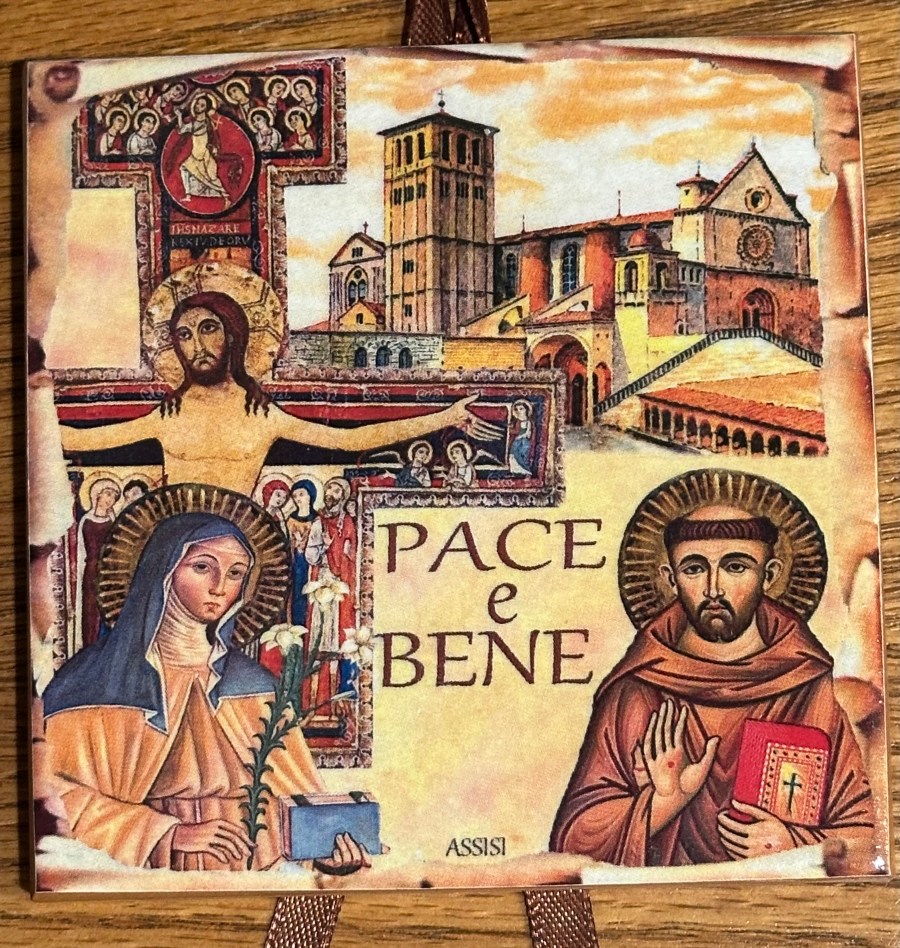
Today’s image: a small wall hanging I purchased in Assisi, Italy. Pace e Bene means “peace and all good” or “good peace”.

Featured

Wistful summer memories

Last night I noticed the first firefly (we called them lightening bugs growing up) of the season. I paused and watched, there was another, and another. I moved to a different window, opened it wide and watched them as they moved around the back yard, around the tree and plants in my flower beds. Soon, my cat, Butters, jumped in the screened window and watched them too. His head darted back and forth as each one lit in the landscape below.

I watched in delight. I inhaled the balmy summer evening air with birds still chirping, but more quietly than earlier in the day. The evening was calm, fewer cars and noise than usual. It was a picture perfect summer night.

I began to reflect on summer evenings of my youth. Nights on the front porch, growing up in a neighborhood where it was common to sit outside and visit. On occasion, after our baths, and dressed in pajamas, we would go for a ride to The Root Beer Stand for an ice cream treat, bugs buzzing under the canopy lights, as a car hop would bring a tray to the car window.

We vacationed in Wisconsin many summers while I was growing up. I can recall only a handful of memories from those summers. I remember the deer we fed by hand. Or the firetruck my father insisted my brothers and I got on so he could take a picture. I exclaimed the leather seat was too hot but he wanted a picture. I still have the photo, legs tucked up near my chin and dress pulled down over my knees. Funny how the picture takes me right back to the feelings I was having.

I attended a local summer camp, Camp Saint Claret (I think we called it Camp Claretknoll). It was a historic summer camp operated by the Claretian Missionaries on the Claretknoll property. The camp was literally a few miles from home but I felt as though we were transported to a different world. I had no idea at the time it was a missionary founded organization. I really can’t recall what we actually did there but thinking of it brings back to memory nights of campfires and scary stories.

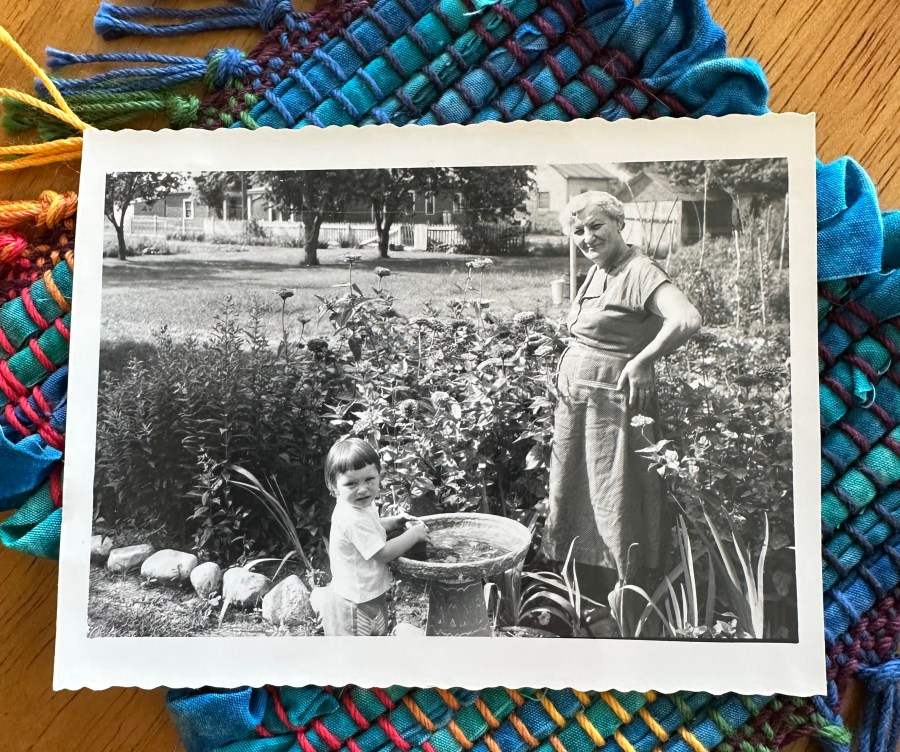
I remember my Noni’s garden. Besides her vegetable plants, the garden border was always full of peonies and roses. She loved her garden and I know she planted those seeds in me as well. We would pick dandelion from the yard, so that she could eat the greens in salad, long before the days of chemical treatments on lawns. She taught me about picking and sautéing zucchini flowers.

I love my flowers and adding new varieties to the flower beds each year. But, I gave up gardening vegetables. After my mother died, I lost the joy. I carried on the tradition of planting vegetables, after my father died, which he took on with gusto after my grandmother passed away. Mom and I planted tomatoes, peppers, zucchini and cucumbers. Dad’s garden was always much bigger, priding himself in the lettuce, onions, garlic and sweet corn. Thinking of the garden also evokes lovely memories with my mother, grating zucchini for bread and cooking tomatoes for sauce to use all winter. Perhaps the spark will return one day.

Do you have a favorite summer memory? Or perhaps a summer tradition you grew up with and still share with your family today? I would love to hear it. You can reply in the Facebook or Instagram post, or on my website, so others can enjoy reading it.

Wishing you summer days to savor and that bring you peace. Deena

Image: With my “Noni” in her garden.

Featured

Becoming who I am

Earlier this week I listened to a vlog “The Elegant Haiku” and read the accompanying blog by Michael Kroth. In his video he said something that immediately caught my attention. I stopped the video, backed it up and played it again. I wrote it down in my journal and it’s been on my mind ever since.

Michael said: “What we practice becomes who we are.”

His feature article this week was regarding his journey, learning about and writing haiku, as a daily practice. He began in 2019 as a result of attending a workshop by poet, author, and friend of ours Judith Valente (you have seen her name here in this blog many times). It may have been about the same time that I attended a retreat given by Judith at the Monastery and was also introduced to haiku. Michael decided to make it a practice. I have tried multiple times but give up. I judge, criticize, and analyze. (Frankly it surprises me that I continue to write this blog each week.) Michael’s haiku poetry is very good. He and friends even published a book, Framing the Moment; Haiku Conversations, together after sharing their haiku with each other.

Haiku is a form of Japanese poetry, consisting of three lines, in a format of 5-7-5 syllables. I have seen multiple variations or adaptations but most use this format. It sounds simple but I would invite you to look outside, or at an image, and capture the essence of it, or how it makes you feel, using that format. It challenges us to find just the right words to express a feeling or insight. It calls us to slow down, choose carefully and purposefully. It is way to be present and mindful.

In one of Judith’s latest books, How to be a Contemplative (also mentioned by Michael in his blog), she shares her wisdom about slowing down in our hectic, often distracted, lives. If you are challenged to wind down at all, much less write a three-line haiku, I invite you to explore Judith’s book.

In addition to incorporating a practice, or desire to learn something, in our lives so that it becomes more closely aligned with who we are, I believe it also creates some sort of magnetic attraction to bring more of the same to us. Since reading Michael’s post I have seen and read so many compatible posts, poems, and book titles that encourage me to pursue and stay focused on the things that point me in the direction of who I am becoming and what I desire to have more of in my life.

I have a long list of things that I would love to be better at, that feel like they express who I am or who I want to be. So, I must ask myself why I am not pursuing them more enthusiastically – fear of failure, fear that I can’t ever be those things as proficiently as I want to be, that I will be judged…? If there is one gift of rapidly approaching 70 years of age, I have noticed that I am more easily gravitating toward not caring what other people think. But, there are moments. When I sense that feeling of doing something for approval, versus authentic desire, I think I have to grab myself by the shoulders and say “move on, let it go.”

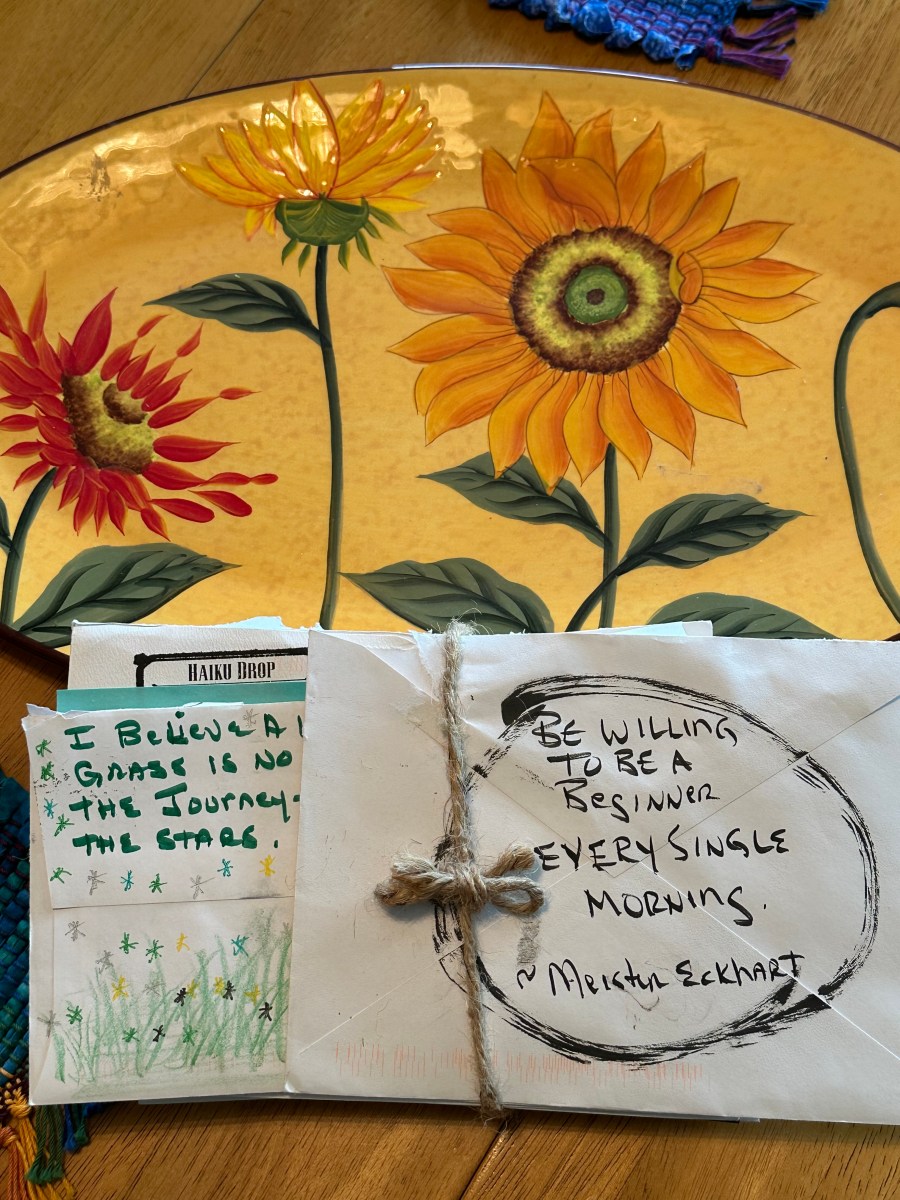
Michael might be surprised to know that I have saved a little stack of his delightful pieces of mail, that he calls Haiku Drops (today’s image of the envelopes, not his poetry), since “meeting him” at a workshop with Judith. I pull them out from time to time if I need to take a peaceful pause during the day. Other times they just make me smile when I open the drawer I have them in, and see them. My point of sharing that is that our desire to learn and share something with others might be just what they need on any given day. So, if it makes you happy, continue to pursue and practice it, and share it with others!

Wishing you endless moments of being really happy with who you are, and who you are becoming, this week! Deena

Featured

A listening heart

The problem with getting hundreds of emails from authors and speakers that I follow is keeping up with them all. The amount of compelling content to read can be overwhelming each week, so I read some, scan some for the highlights, and then save for later. I recently stopped to read a blog I had saved, written by Eric Clayton, author and Director of Communications for Jesuit Conference of Canada and the United States. I met and began reading Eric’s book and blogs during my time at Ignatian Ministries. He’s a wonderful writer and I am often inspired by his essays in his weekly “Now Discern This“.

The email that I re-read was regarding a trip to the bookstore and advising his daughters that they could pick out one book, not a toy or game. Eric made a selection of three books, from all of their choices, that he thought they might like. The youngest, unamused with the concept of making a decision declared they should get them all. Eric used this as a lesson in making a choice.

Eric goes on to write, to each of us, the beauty of the tools of discernment given to us by St. Ignatius of Loyola. We must understand our limitations, he explains, and understand that we can’t have it all. We use the tools of discernment to help us align our gifts and talents with God’s will for us.

I am grateful for my time at Ignatian Ministries and our use of the Ignatian Discernment tools in every decision we made. The tools of discernment taught by Ignatian Ministries founder, Becky Eldredge, as well as authors such as Eric Clayton, Fr. Timothy Gallagher, Fr. Kevin O’Brien, Fr. Mark Thibodeaux, Fr. William Barry, and countless others, help us tune in to the thoughts and feelings we are having as we pray and make decisions. These tools, first considered by St. Ignatius of Loyola as he was convalescing from a battle injury, help us to identify “good” and “evil” spirits impacting us in our daily lives, as well as movements of consolation and desolation, we are feeling as we consider decisions or ways of responding to particular situations.

These don’t have to be used in huge life changing decisions, such as what job to take, where to move, or whether we are being called to a vocation. They can be used practically, such as Eric’s example of helping his daughters make a book purchase or in our daily prayer.

This past week I began a novena for a specific intention. It wasn’t an intercessory intention for someone in need or as stately as world peace. It was something more closely related to my life. By the third day I began to feel a sense of desolation about my prayer. I brought it to reflection during Adoration and quickly realized I had the plan all figured out. I had my request and the outcome all set. I began to “feel” God respond to me and say, “that might be the right outcome” but “let go, let me handle it. I can see far wider than you can.” At that point I changed my intention to “whatever is best…” I almost immediately felt the desolation change to consolation, and accompanying feelings of peace, calm and a willingness to hand over my request to God.

Becky Eldredge has frequently shared her insights on “Testing Desires” in her workshops. The first step Becky suggests for us helped me this week: Check the source – did it come from God, from my humanness, or from a false spirit? Next, where did the desire leave me?

I could feel in my spirit that my specific prayer was not leading me closer to God. I knew I had to let the outcome go and trust the process. I may not understand completely what I may be led to, but I feel better praying for what is best and for an outcome that will help me be the person God created me to be, rather than what I think is best for me in this moment.

If you would like a free resource on the Steps of Discernment, you can download it from Ignatian Ministries (IM) website or search the IM blog, Into the Deep, for articles on discernment, consolation or desolation. Another amazing resource, for all things Ignatian, is IgnatianSpirituality.com.

I wish you abundant peace and calm as you go forward into this new week! Deena

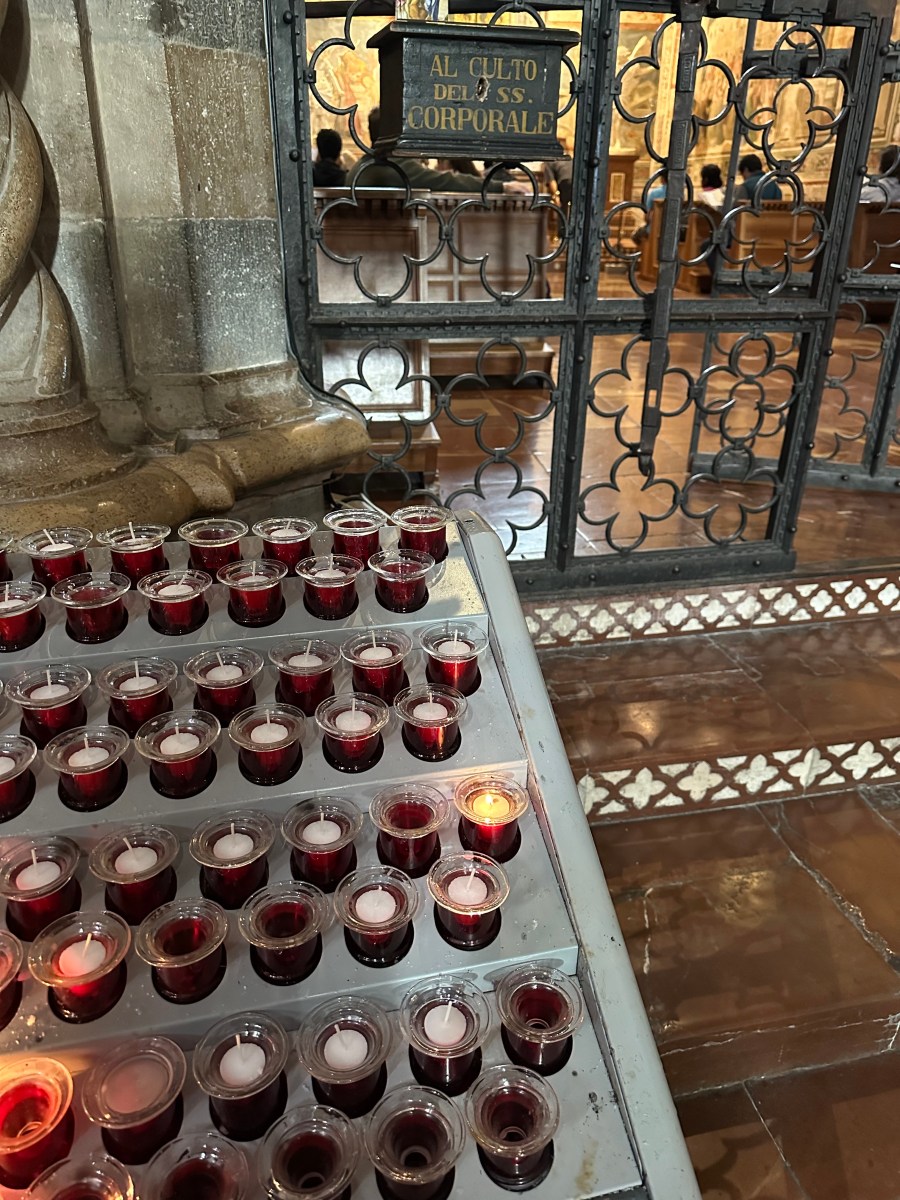
Photo: prayer candles at a church in Orvieto Italy.

Featured

Guides on the journey

Our Oblate group met this weekend for our monthly prayer and discussion group. One of the questions in our reflection guide was a quote by Esther de Waal (Spiritual writer, Benedictine and Celtic author and scholar) from her book, Living With Contradiction. The quotation referred to respecting our own solitude, revering our identity and recognizing the mystery each of us are, so that we can then recognize that in other people. The reflection question pertained to all the tools (art, music, nature, prayer, meditation, etc) and individuals that have helped us understand who we are and helped us find our direction in life.

One of our Oblates shared a lovely story how being baptized in her childhood, right before receiving her first Communion, gave her greater appreciation for the sacrament, her faith and the journey that she was beginning. It was touching, as we each shared how all of those “tools” helped us in the past and continue to nurture us today.

I left the gathering continuing to bring to mind all those individuals who at different times, and in different ways, have helped shape me as a Catholic, an Oblate, and a devoted follower of Jesus. I pondered how this Lent and Easter Season I have been growing deeper in my understanding of myself as a beloved daughter of God. It’s easy to say the words, listen to them, and read them on paper, but it’s a different story to begin to believe it at a deeper level, at a soul level. To really “know” it.

Eleven years ago today I was beginning a pilgrimage journey to Spain and Portugal. I recall fondly how my friend, and our spiritual director for the trip, shared love and concern for us, desiring that we each grow closer to God spiritually. as we journeyed physically through the beautiful sites we visited. Visiting the sites of favorite saints, such as St. Teresa of Avila, St. John of the Cross and St. James helped me connect on a deeper level with them because it was felt emotionally as well as physically by being in the places they walked, taught or are buried. Those guides, physical and spiritual, forever changed me.

These journeys we take in life, physical, emotional, and spiritual, shape us, for better or worse. I wonder how I might have altered the experience of different times in my life if I had recognized more fully the love that God has for me. How might life have been different if I had a better understanding of the depth of that love, respected myself in my actions because of who I belong to and was more amazed at the mystery of who God created me to be?

It’s easy to get caught up in, or distracted by, all of the events of the world around us. I spotted this in the disciples on the Road to Emmaus in today’s Gospel reading from Luke. Of course, they were surprised when it seemed that Jesus, who they weren’t recognizing at the moment, didn’t seem to be aware of all “the things that have taken place” in Jerusalem over the past three days. As they walked, he taught, guided and then opened their eyes to who he was and how everything in scripture pointed to the fulfillment of centuries of prophecies.

Isn’t it true that when we encounter a true teacher and guide on our journeys that our hearts burn in the same way as they did for the disciples listening to Jesus? Aren’t we stirred to the core when we hear the truth of who we are being called to be in life? Isn’t there a thrill of recognition when we see and hear more than we believed up until that moment? Hopefully we are moved beyond that current place we are in life and desire more, are changed to act in a different way, and desire to live life more aligned with this new way of thinking.

Spend a moment today and reflect on who one of those teachers might have been for you. How have you been transformed as a result of their guidance and care?

I hope and pray that I recognize those teachers presented to me along the way, that I listen and am transformed into being a better person as they guide and inform me. I pray this for you as well.

Wishing you abundant peace this week, Deena

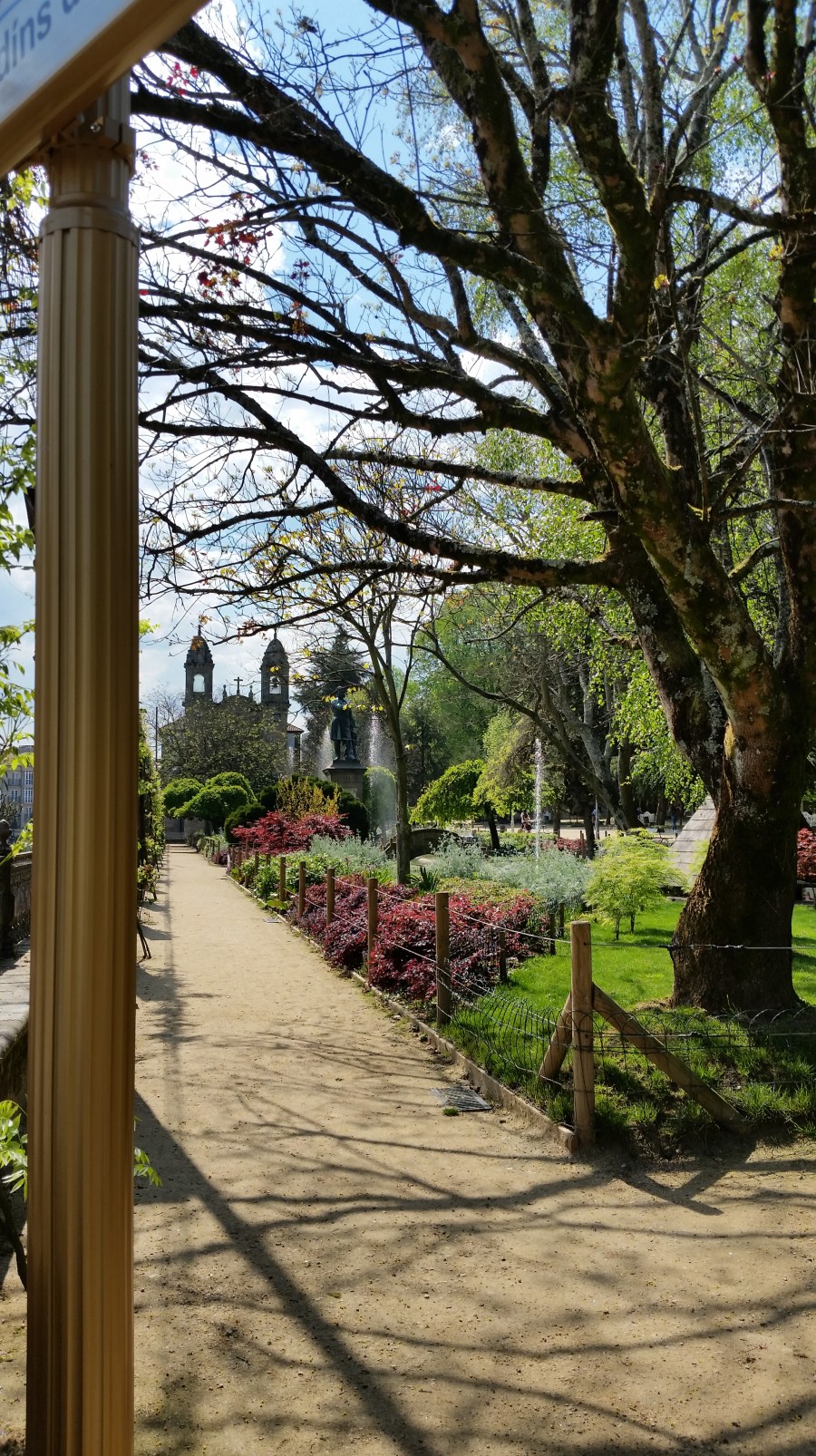
Image: A garden and walkway in Santiago de Compostela, Spain.

Featured

Go deeper

At one point this past week I had the thought, a typical one for me toward the end of Lent, I would like to start Lent over, or I could have done more. But, here we are at Palm Sunday and the beginning of Holy Week. It’s the most solemn and holy week of the liturgical year and gives us the opportunity to enter more deeply into the mysteries of our faith.

Whatever we did, or didn’t do as well as we would have liked, our Lenten practices of increased prayer and devotion, fasting and sharing our resources with those in need, aren’t something that have to stop after Easter next weekend. I might not choose to be as rigorous with fasting and some of the extra devotions, like Stations of the Cross, that may no longer be offered in our parishes, but there are opportunities to continue to let these daily practices open my heart to God and consider the attachments in my life that are a hinderance in my relationship with God.

The Lenten practices that we chose have the intention of clearing away the noise and distraction, in hopes of opening my heart more fully to God. It isn’t a race to simply cross a finish line and congratulate ourselves at the end for a job well done. If I was able to create a space to enter more deeply into relationship with God, why would I close the door now?

Over the past few weeks we have listened carefully to ways in both the Old and New Testaments that people heard and responded to the word of God. To really hear it, versus just listen to it, we internalize it and let it begin to shape who we are and how we show up each day in our encounters with others and in the choices we make in life.

This week gives us further opportunity to reflect on Jesus’ message and the immense sacrifice given in complete love for us. No matter how Lent went for us, we can allow this week to be one of a little more silence and reflection. Attend your parish or church services recalling the Lord’s Supper, Passion and Death on the Cross, and then after sitting in the silence of Holy Saturday, wait to celebrate the joy of Easter Resurrection. Slow down, enter into the holiness of this week. Listen to the scripture readings and reflect on the gifts you have in life and how God has showered love on you and those you love. Reflect on how you can share that Love with those you encounter.

If Lent has not changed us, it’s not too late. This week is our chance to go deeper.

Wishing you abundant graces this Holy Week. Deena

Image: A Station of the Cross on the grounds of Subiaco Abbey in Subiaco, Arkansas visited during a Benedictine Conference.

Featured

A fragrant, pleasing offering

I have seen the cloud of incense, representing our prayers, burn and move in interesting ways around the altar in our church. During the incensation, after exposing the Blessed Sacrament, the incense rises to the great high ceilings, lifting our prayers. Impacted by heat or air conditioning, air coming into the sanctuary from opening doors, etc. it can often create a cloud around the altar and monstrance.

The other night, during Adoration, the incense took on a life of its own, and a symbolism, that was quite moving for me.

The cloud hovered around the altar and the monstrance, creating a thin veil, inviting me to see beyond the physical to the reality of what was present before me. It sanctified the space for the Divine Presence with us. It slowly moved to the ambo, the pulpit, where the Word of God is proclaimed, as if to say, as the apostles heard in today’s Gospel, Listen to him. Then, it turned and drifted to sanctify our presence there. The cloud drifted out toward the pews, at the perfect height of those of us present and kneeling in this sacred space. It moved slowly from the altar, over each of us, as it moved towards the back of the church.

The Jewish Tabernacle, or Mishkan (dwelling place), initially portable, moved to more permanent structures with the building of Jewish synagogues. The scrolls are now housed in the Ark, the Aron Kodesh, while the building itself can be viewed as the Mishkan. In Exodus, the Jewish people were instructed to build an altar of acacia wood in the Mishkan which would create a pleasing altar for the burning of incense. Everything in the Tabernacle, each piece of furniture and the way it was constructed, represented intimacy with God. The altar of incense then represented the prayers of the people rising, in intimacy with and love of God.

The large thurible, or Botafumeiro, at the Cathedral in Santiago de Compostela was not swung during my visit to Spain but I have seen videos of it during special liturgical feasts. It is swung to purify the air, participants and symbolize the prayers of the people rising to God. If pilgrims happen to arrive to the Cathedral on these special holy days, after walking the Camino, I envision the incense sanctifying their journeys, lifting and receiving all the intimate and personal prayers said during their pilgrimage.

In the book of Revelation we also hear of bowls of incense. The angel was “given much incense to offer with the prayers of all the saints on the golden altar before the throne and the smoke of the incense, with the prayers of the saints, rose before God from the hand of the angel.” It’s a beautiful image to consider the continual burning of incense, representing the prayers of the communion of the saints, small “s”, each person in the eternal presence of God.

As I reflected on the background of incense, and the scriptural references of our prayers like incense, I thought about our Lenten prayers and practices as fragrant and pleasing offerings to God. I pray to become a more pleasing “Mishkan”, a dwelling place, and enter into greater intimacy and union with God.

I pray that your journeys continue to be fruitful and meaningful as we begin this Second Week of Lent. Deena

Image: A picture I took of the great Botafumeiro in the Cathedral in Santiago de Compostela, Spain, visited during my pilgrimage.

Featured

Led into the desert

In life we are led to places we don’t want to go. I have struggled with a thousand questions this week, none of them with life-giving answers that help me in my grief. The desert provides a vast and stark landscape, with few distractions, so we have room for answers to emerge. I am learning that the answers will have to emerge, in their own time, they do not break through as a result of my willing it. Perhaps that is why we are given the symbolic period of 40 days in our own Lenten journeys to mirror the days that Jesus was led into the desert to pray, fast and be tempted. We need time to “rediscover what our hearts truly desire when the distractions fall away” as so beautifully stated in the opening of the Laudato Si’ reflection for the First Sunday of Lent.

What I desired for Lent was to enter a desert time to be free of the distractions that were filling my time with things other than prayer and reflection. Now the distraction of all my questions is consuming my time, impacting the desire for prayer and reflection, even more than going out for coffee would have done.

Given the temptation of changing this situation, just like a rock into a loaf of bread, I would probably say “yes”, change it. I would not be strong enough to resist the temptation. I want Lent to be different than it is.

If you are finding you have a similar mindset as you look at the distractions in your own life – wishing to change circumstances to be a person more centered in prayer and meditation, to be a person of peace and lovingkindness and more compassionate towards others, to want to give more of your time to those in need – you are not alone. I hope for each of us that the desire for these good works is in itself a grace. As also stated in the reflection by Laudato Si’, the distorted desire for the things (my add – of the world, more fleeting in nature) that are pleasing becomes a distraction, they fragment us, not free us.

This weekend in my journaling and reflection I read something written by Rainer Maria Rilke that I am trying to sit with. He invites us to “have patience with everything unresolved” in our hearts and to love the questions. “Don’t search for the answers, which could not be given now, because you would not be able to live them. The point is, to live everything.” I must have hope in that, to live with the questions so that the answers slowly emerge as part of living into them. Just as I have hoped by writing my “peaceful day” statement every day for months is a slow drip of water smoothing the jagged edges of my heart, I have hope in this guidance by Rilke.

Let each day be what it is. Lean into the questions. Hold hope that they are all part of a larger transformation taking place.

Wishing you a week of peace and hope, Deena

Image created in Canva

Featured

Lenten solitude

When I started this post last weekend I had decided that journeying to the desert, both spiritually, and physically was a way to grow closer to God. Spiritually Lent is full of images of the desert and of turning away from the temptations of the world. Physically I had decided to “stay in” during these 40 days, to not spend money on coffee or dinners out, in the hopes to clear more time and space for prayer. Never in my imagination did I think the beginning of Lent would also be an emotional journey of emptiness, exposure and piercing loneliness.

As I said goodbye to my sweet boy, Bela, yesterday, I have been in a place where the sun is scorching and there is no protection from the winds of grief as they stir up minute upon minute. There is no cover and no place to hide. The ashes this morning certainly had a different symbolism and reminder of how fleeting life can be. For some, the (almost) 18 years I have cared for Bela may not seem fleeting. For others, the grief may not be understandable for “just a pet”. But from the first moment Bela chose me and this home, he has been so much more. But that may be a story for a different day, when I can find the joy in telling it.

Preparing for Lent initially, I reflected on the Covid pandemic and how sheltering in place was like a journey to the desert. We had to leave behind our routines and stay home. We ordered judiciously, or ventured out rarely, to prevent unnecessary trips to the store or for delivery people. I helped set up our online parish evening litanies and live-streamed Masses. I attended other virtual retreats and prayer events. It became a time, for me, full of the richest spiritual blessings and graces, at a time of so much pain and fear for others. I was not blind to the difficulties for others, but as an introvert (yes, really!) I relished staying home and participating in virtual events. I had the cats for company. I had more time to contemplate life and my faith and I treasured the depth of experience that I was having.

Like the Desert Fathers and Mothers who opted out of normal activities and retreated outwardly to the desert so that they could retreat inwardly toward God, I desire the same kind of solitude during these 40 days of Lent. It’s not a complete withdrawal because I can and will attend Masses, Stations of the Cross, as well as other Lenten prayer and scripture groups in person. I will be facilitating a Lenten group discussion as we read and pray with Crux, by Ascension Press (see note below). But, what began as a desire to be more intentional in that quiet time changed dramatically yesterday. It is a different quiet time that I am receiving than what I desired. What remains though, is time for personal prayer and reflection, a space to lean into scripture searching for words of comfort, and to practice mindful breathing and being present to each moment, even if that moment is filled with grief and a call to surrender to the crashing waves of those feelings.

If you choose to be intentional about the experience of Lent, I would ask what one thing you would like to retreat from during these 40 days? Would it be possible to do that, by carving out the space for more personal time for prayer and reflection? How might you change Lent from simply focusing on the discipline of “giving something up” to a change in your relationship with the distractions of world? I would love to hear from you and how it goes for you during Lent.

Also, a word of thanks to all of you who took the time to reach out via text or to comment on my post about Bela this morning. I haven’t been able to read them yet, but just seeing the updates has brought comfort. I think I will be able to read them tomorrow, until then, I am so grateful!

Wishing you a holy Lent with time to be open and receptive to the voice of the Spirit, Deena

As a note, Crux is available on the Ascension Press app with a discounted rate of $4.99 for 90 days of access. There are daily videos with Fr. Columba Jordan, Lenten challenges, prayers and reflections.

Image: a bird that Bela and I were watching from the window on Saturday. He seemed so peaceful by himself, a fitting image for my Lenten journey.

Featured

Guide our feet into the way of peace

In the very first paragraph of the Introduction of Joan Chittister’s book, The Monastic Heart, she asks “Where do we go now as individuals to find our way out of the shadows and toward a new light?” She says that each of us have within a desire to be more of ourselves, to figure out what is being asked of us when the “pressures of our time seem insoluble and our inherent energy begins to fray.” Her answer to these problems of the world, or the unsettled spaces within our spirit, is monastic living. “Monasticism is the single-hearted search for what matters in life.”

But don’t despair, you don’t have to run off to a monastery to live a life guided by monastic principles. You do it where you are, as you are, but guided by different values.

Granted that isn’t always easy. As a Benedictine Oblate, I have promised to live by monastic values and The Rule of St. Benedict. But, this week has tested my ability to see Christ in the other, to allow solitude to bring calm and clarity when inside my thoughts and feelings are tumbling, and to be thoughtful in speech, knowing what to say and when to say it. Thankfully support comes from many places, most especially during this Christmas season.

Christine Valters Paintner, author and online abbess of Abbey of the Arts, described the “inner monk” in her weekly email this morning. Christine said “The ‘inner monk’ seeks God as the source of all being, searches for a mystical connection to the divine source, longs for what is most essential in life, and cultivates this through a commitment to spiritual practice. The monk is nourished through silence and a commitment to see everything as sacred.” Reminders such as these, to see the world from a contemplative perspective, to find mystery, wonder and awe in daily life, are critical for me, as I attempt to maintain a balance of being informed but not being pulled down in a pit of despondency and hopelessness.

I don’t have blinders on by any means. As a monastic, a Benedictine Oblate, we aren’t called to that. But, I can only watch a limited amount of news (or videos as the case was this week) before I feel it getting too heavy for my spirit. I have chosen updates from sources I trust. I prefer these updates from political historians, like Heather Cox Richardson, or award winning journalist, who worked for 60 Minutes and National Geographic, Jeff Newton. People that have the experience to back their perspective. Although I will also admit to enjoyed the clever, daily updates from Pasture Politics, a farm from Upstate New York. I have no idea of his background, (will admit it’s closer to my political views and not unbiased), but it’s innovative and captivating.

Joan Chittister, in The Monastic Heart, says that “every moment of social tension needs a peacemaker.” But the “truth is that only one thing can really bring peace: the commitment not to destroy other people’s sense of self, of dignity, of value in the name of truth.” That makes keeping up on social media difficult. Every post brings deep and cutting responses, full of malice, contempt and an attempt to demean versus state an opposing opinion. It’s sad. It’s uncalled for. It will not bring peace.

This past two months I found another source of inspiration for compassion and peace, besides my daily prayer and reflection. My friend Maribeth shared with me the journey of the Buddhist monks (@walkforpeaceusa on Facebook) walking a 120 day, 2,300-mile journey from Fort Worth, Texas (the home of their monastery) to Washington D.C. Their only goal is to raise awareness of peace, loving kindness and compassion. It is not to raise money, to convert people to Buddhism, or to mention any specific national event or ideology. I listen to their talks daily and have never once heard an unkind or judgmental statement. This week I had a deeply personal involvement with their journey. Two weeks ago, when Mari and I saw that they would be nearing her home in South Carolina, I asked her if she was going to attend. We began following their daily schedule. I encouraged her to attend, and hoped she would. I said given more time to plan, and care for my cats at home, I would have picked up and flown to make the journey with her. She did attend and after capturing videos and special moments at the Saluda County Courthouse, and accepting a peace bracelet for me from a monk, she admitted to me that the only reason she attended was for me, but was glad that she did have the opportunity to be with them. My heart was overflowing with gratitude for the gift of her friendship and for the ability for both of us to encounter the monks, even if my presence with her was virtual.

It hasn’t altered my Christian beliefs, but it has enriched them. Venerable Bhikkhu Pannakara suggests a practice, in his daily teachings, that I have incorporated into my daily journaling. It is a simple practice. It is to begin the day by writing (with pen and paper, not just thinking or typing it), “Today is going to be my peaceful day.” It is simple, easy but powerful. It helps me desire peace before being exposed to or consuming the thoughts of others or letting thoughts of worry or fear hijack my day.

Imagine if our first thoughts were of peace and if we wished for others what the monks wish for all in each and every post they make on social media; May we be mindful in everything we do throughout the day. May you and all beings be well, happy and at peace.

By the way, a local news channel recorded the Saluda talk. It’s a bit soft and hard to hear at the beginning but well worth sticking with it. It is a wonderful summary of all they are sharing on their journey. You can find it by clicking here. This was the event that Maribeth attended.

As I pray each morning in the Benedictus, I wish and pray “In the tender compassion of our God, the dawn from on high shall break upon us, to shine on those who dwell in darkness and the shadow of death, and to guide our feet into the way of peace.” Amen.

Wishing you abundant peace and happiness this week, Deena