The sacred now

This week has been a week of memories yet poignant reminders to appreciate the gift of each present moment.

I visited the cemetery on Saturday to place my annual geraniums on the gravesites of my parents and grandparents. As I trimmed away the taller grasses close to the tombstones, where the caretaker had not mowed, I thought of past Mother’s Days. I wished that this weekend’s could be different. I had my silent conversations regarding all the recent family activities and updates, especially Genevieve’s (my niece Maureen’s daughter) First Communion on Sunday. My mother would be delighted to witness this special event.

Last Sunday, returning from the aromatherapy conference I attended, I learned that a woman, very dear to me, one of our daily “morning Mass ladies” and a neighborhood mom while I was growing up, suffered a massive stroke and remains in hospice care while her family waits for her to let go of her physical body (at the time of this writing, but our dear friend passed peacefully late Saturday evening). The week prior, she advised me that our routine Wednesday morning breakfast was back in place, paused during Lent and a few other activities, and asked me if I wanted to join them. I replied that I was busy getting ready for the conference and was trying to get things done before the four days of driving back and forth to the venue. She smiled and said, “Ok, next week then!”

There was no “next week” outing this week. I have asked myself over and over if that hour would have impacted my ability to be ready to go to the conference. The answer is always no, I would have gotten things done regardless.

Thursday I was shocked to hear of the death of a high school friend, losing her long battle with cancer. At one of our past reunions, in remission and positive as she always was, she honestly remarked that each day is a gift and that she doesn’t take any day for granted. I am confident she lived that way. I always enjoyed her family updates on social media, especially the joy she experienced in her grandchildren.

I am so sad for the families of each of those women, facing a Mother’s Day different than last year. I am absolutely confident that both of them will be welcomed into a life free of pain and discomfort, experiencing the Love and Light that the rest of us hope one day to dwell in. Yet in the joy of contemplating their eternal homecoming, there is sadness and loss for those left behind. For those of us who have lost our moms, we know the melancholy that dwells within as we see others celebrating. It changes with time, but it doesn’t go away.

For those of you who still have your mothers, treasure the time you have, even with the minor disagreements. You are probably more like them than you might care to think about. Be independent and be your own person, but be kind.

For those of you who are mothers, grandmothers, or stepmothers, enjoy your time with your families. Be grateful that you have another day to watch your loved ones step out into lives of their own. Whether you agree or disagree, you likely helped them gain the confidence to try new things. Be proud of that!

It seems so cliche to say that each moment is sacred and that we have to treasure the “here and now”. Some weeks it feels more true than others. I hope that we honor the memories of yesterday that we enjoyed, or learned from. I also hope we inhabit each moment of today as if it might be our last, turning our current moments into living memories.

Happy Mother’s Day to all of you that are mothers, stepmothers, and grandmothers!

Until next week, wishing you abundant love and peace. Deena

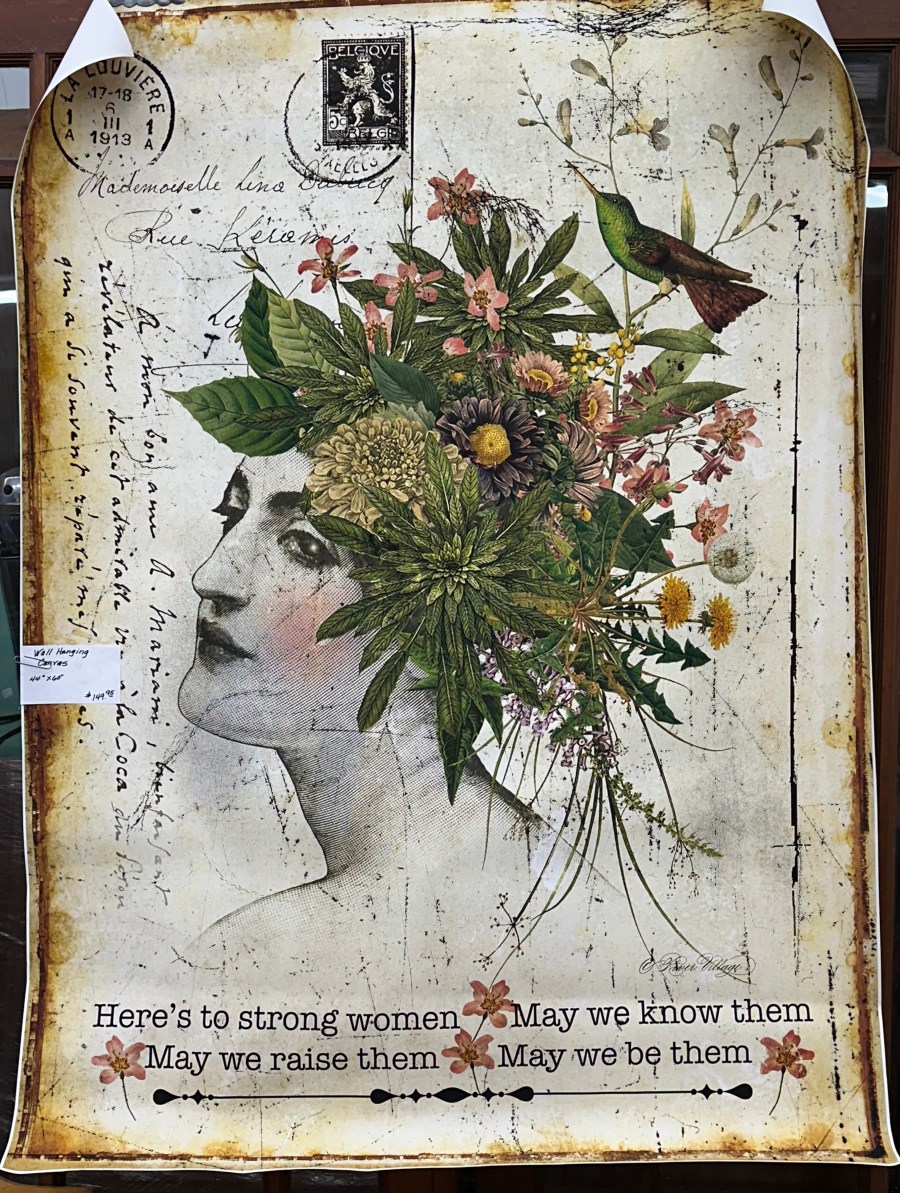
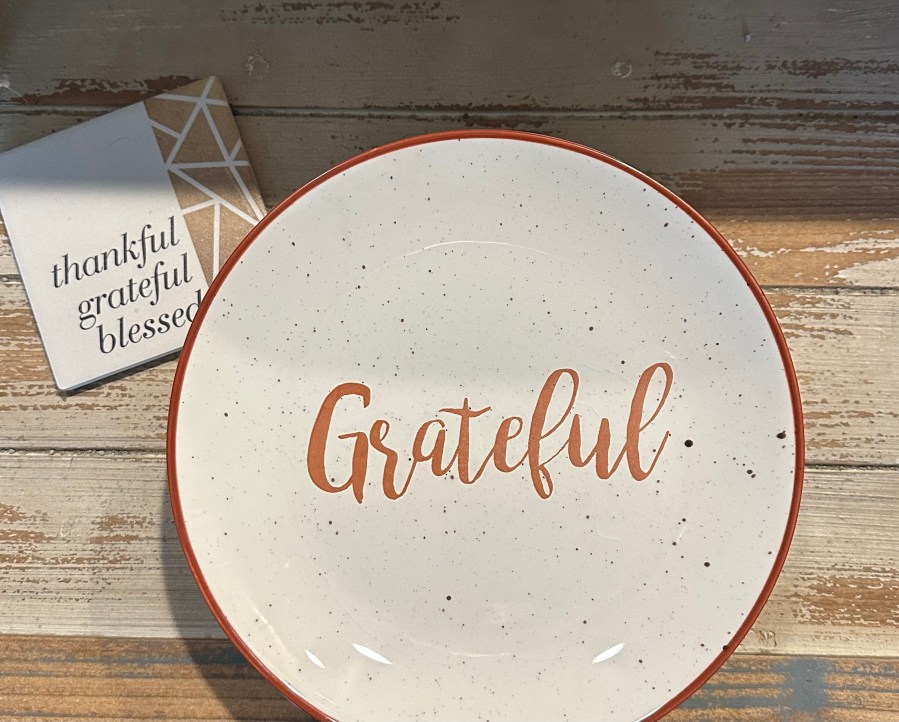
Image: A canvas wall banner in the unique shop that I did social media work for last Fall and early Winter. It’s a lovely reminder to be, know and remember the strong women in our lives.

Featured

Offline and in tune

This weekend, as we begin this new month of May, I am on the team and participating in an aromatherapy retreat – Rooted in Wisdom, Rising in Light, hosted by my friend, Kate Brown. The speakers are skilled in their individual areas of expertise and are offering insightful and compelling insights. We are learning and experiencing many interesting new concepts and tools/processes for grounding, balancing, and raising our energy. My talk, Thursday evening, was using an experiential process of drawing neurographic art, which can help create new neural pathways to reduce stress, alter ingrained and rigid thinking, reduce stress, and promote more flexible thinking. It was entitled, Shaping your Future: Using Art and Creativity to Vision the Life You Desire. (Kate and I created a blend of Orange, Peppermint and Geranium essential oils which help with openness, clarity, harmony and heart-centeredness which we used while drawing.)

The retreat participants are staying at a lovely venue in Northern Illinois, a little over an hour north and west of my home. I opted to drive back and forth for a couple of reasons, so the days have been pretty long. As a result, I have only been online long enough to check in, create posts for the parish social media pages, Kate’s business page and read a few that pop up while I am logged in.

In all of our sessions we are talking about honoring our energy and boundaries, respecting our needs (like sleep!) and reclaiming parts of ourselves that we have have set aside while we were attending to other things and people.

As I got home Saturday evening, with a vast array of topics I could write about swirling around in my mind, I decided that taking a break this week was what I really needed.

I invite you to think about times that you keep going when what you really want to do is pause, take a break and attend to your own needs. Once you are of those situations, consider whether you could go offline, take that pause, and just tune in to your own spirit and well-being.

Take a moment, you deserve it!

Wishing you rest this week in whatever ways you need it, Deena

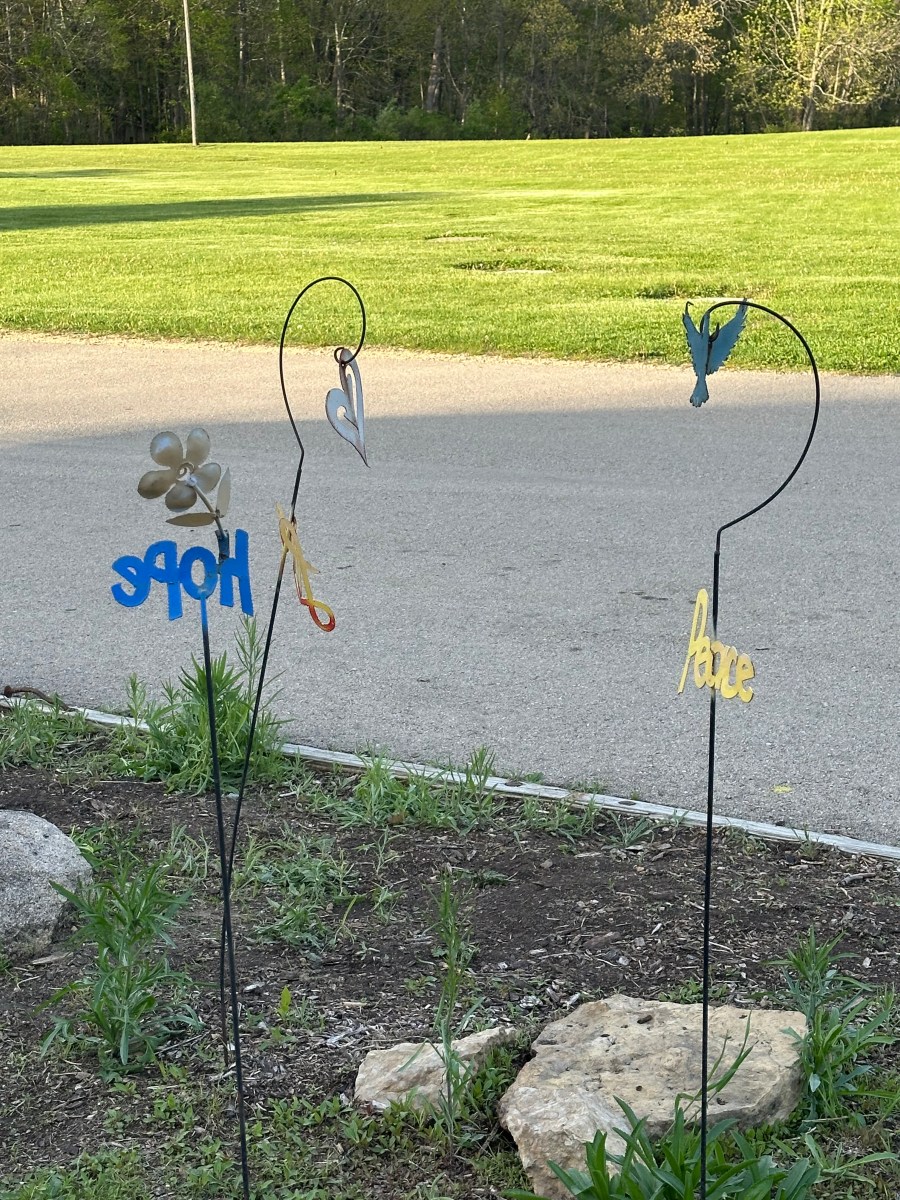
Image: Peace hope and love at Stronghold Retreat Center, Oregon IL

Featured

A listening heart

The problem with getting hundreds of emails from authors and speakers that I follow is keeping up with them all. The amount of compelling content to read can be overwhelming each week, so I read some, scan some for the highlights, and then save for later. I recently stopped to read a blog I had saved, written by Eric Clayton, author and Director of Communications for Jesuit Conference of Canada and the United States. I met and began reading Eric’s book and blogs during my time at Ignatian Ministries. He’s a wonderful writer and I am often inspired by his essays in his weekly “Now Discern This“.

The email that I re-read was regarding a trip to the bookstore and advising his daughters that they could pick out one book, not a toy or game. Eric made a selection of three books, from all of their choices, that he thought they might like. The youngest, unamused with the concept of making a decision declared they should get them all. Eric used this as a lesson in making a choice.

Eric goes on to write, to each of us, the beauty of the tools of discernment given to us by St. Ignatius of Loyola. We must understand our limitations, he explains, and understand that we can’t have it all. We use the tools of discernment to help us align our gifts and talents with God’s will for us.

I am grateful for my time at Ignatian Ministries and our use of the Ignatian Discernment tools in every decision we made. The tools of discernment taught by Ignatian Ministries founder, Becky Eldredge, as well as authors such as Eric Clayton, Fr. Timothy Gallagher, Fr. Kevin O’Brien, Fr. Mark Thibodeaux, Fr. William Barry, and countless others, help us tune in to the thoughts and feelings we are having as we pray and make decisions. These tools, first considered by St. Ignatius of Loyola as he was convalescing from a battle injury, help us to identify “good” and “evil” spirits impacting us in our daily lives, as well as movements of consolation and desolation, we are feeling as we consider decisions or ways of responding to particular situations.

These don’t have to be used in huge life changing decisions, such as what job to take, where to move, or whether we are being called to a vocation. They can be used practically, such as Eric’s example of helping his daughters make a book purchase or in our daily prayer.

This past week I began a novena for a specific intention. It wasn’t an intercessory intention for someone in need or as stately as world peace. It was something more closely related to my life. By the third day I began to feel a sense of desolation about my prayer. I brought it to reflection during Adoration and quickly realized I had the plan all figured out. I had my request and the outcome all set. I began to “feel” God respond to me and say, “that might be the right outcome” but “let go, let me handle it. I can see far wider than you can.” At that point I changed my intention to “whatever is best…” I almost immediately felt the desolation change to consolation, and accompanying feelings of peace, calm and a willingness to hand over my request to God.

Becky Eldredge has frequently shared her insights on “Testing Desires” in her workshops. The first step Becky suggests for us helped me this week: Check the source – did it come from God, from my humanness, or from a false spirit? Next, where did the desire leave me?

I could feel in my spirit that my specific prayer was not leading me closer to God. I knew I had to let the outcome go and trust the process. I may not understand completely what I may be led to, but I feel better praying for what is best and for an outcome that will help me be the person God created me to be, rather than what I think is best for me in this moment.

If you would like a free resource on the Steps of Discernment, you can download it from Ignatian Ministries (IM) website or search the IM blog, Into the Deep, for articles on discernment, consolation or desolation. Another amazing resource, for all things Ignatian, is IgnatianSpirituality.com.

I wish you abundant peace and calm as you go forward into this new week! Deena

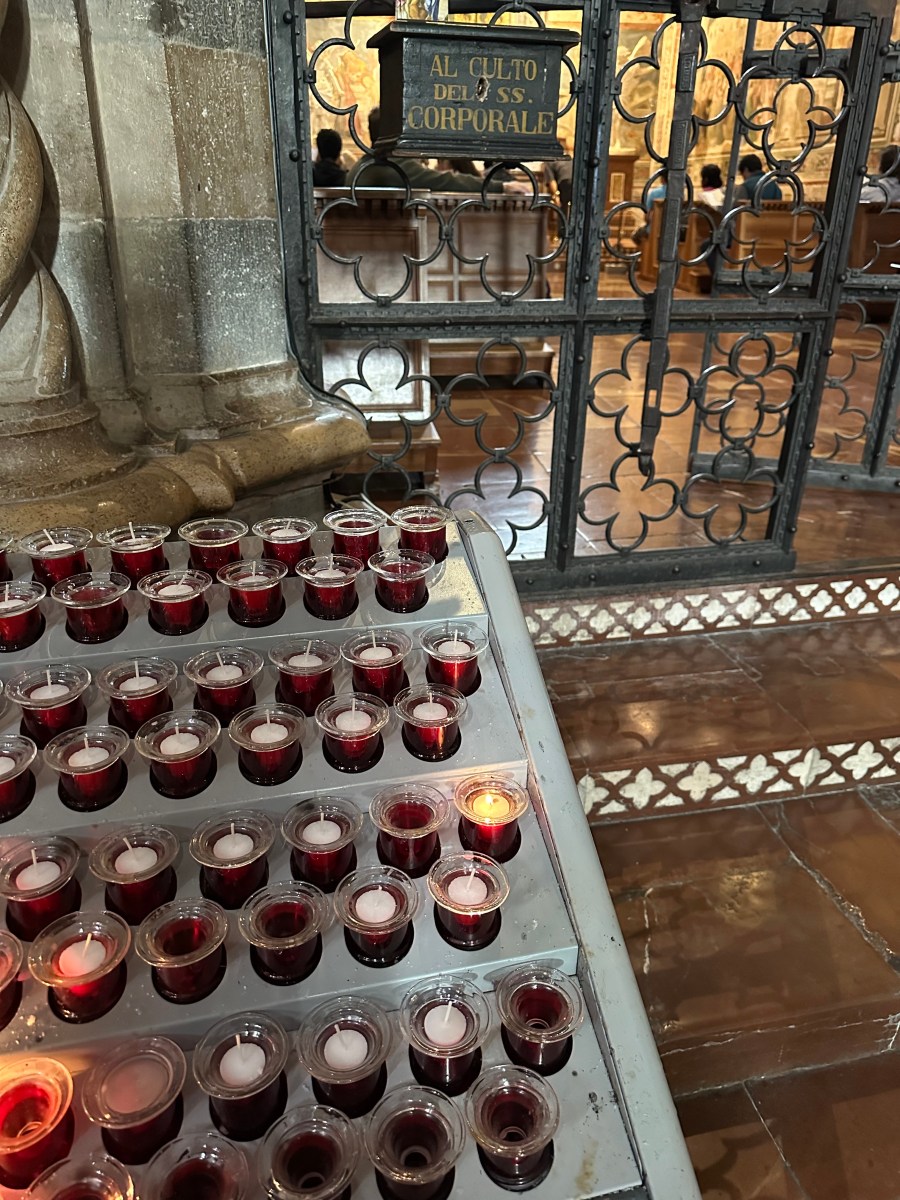
Photo: prayer candles at a church in Orvieto Italy.

Featured

A fragrant, pleasing offering

I have seen the cloud of incense, representing our prayers, burn and move in interesting ways around the altar in our church. During the incensation, after exposing the Blessed Sacrament, the incense rises to the great high ceilings, lifting our prayers. Impacted by heat or air conditioning, air coming into the sanctuary from opening doors, etc. it can often create a cloud around the altar and monstrance.

The other night, during Adoration, the incense took on a life of its own, and a symbolism, that was quite moving for me.

The cloud hovered around the altar and the monstrance, creating a thin veil, inviting me to see beyond the physical to the reality of what was present before me. It sanctified the space for the Divine Presence with us. It slowly moved to the ambo, the pulpit, where the Word of God is proclaimed, as if to say, as the apostles heard in today’s Gospel, Listen to him. Then, it turned and drifted to sanctify our presence there. The cloud drifted out toward the pews, at the perfect height of those of us present and kneeling in this sacred space. It moved slowly from the altar, over each of us, as it moved towards the back of the church.

The Jewish Tabernacle, or Mishkan (dwelling place), initially portable, moved to more permanent structures with the building of Jewish synagogues. The scrolls are now housed in the Ark, the Aron Kodesh, while the building itself can be viewed as the Mishkan. In Exodus, the Jewish people were instructed to build an altar of acacia wood in the Mishkan which would create a pleasing altar for the burning of incense. Everything in the Tabernacle, each piece of furniture and the way it was constructed, represented intimacy with God. The altar of incense then represented the prayers of the people rising, in intimacy with and love of God.

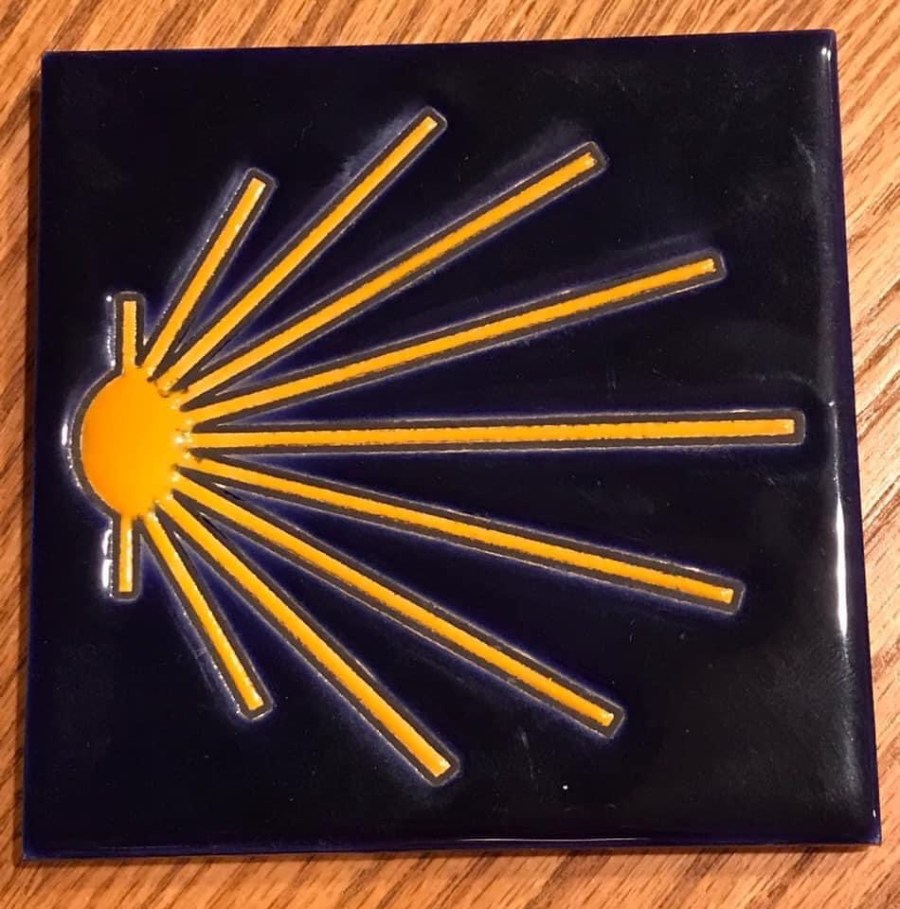
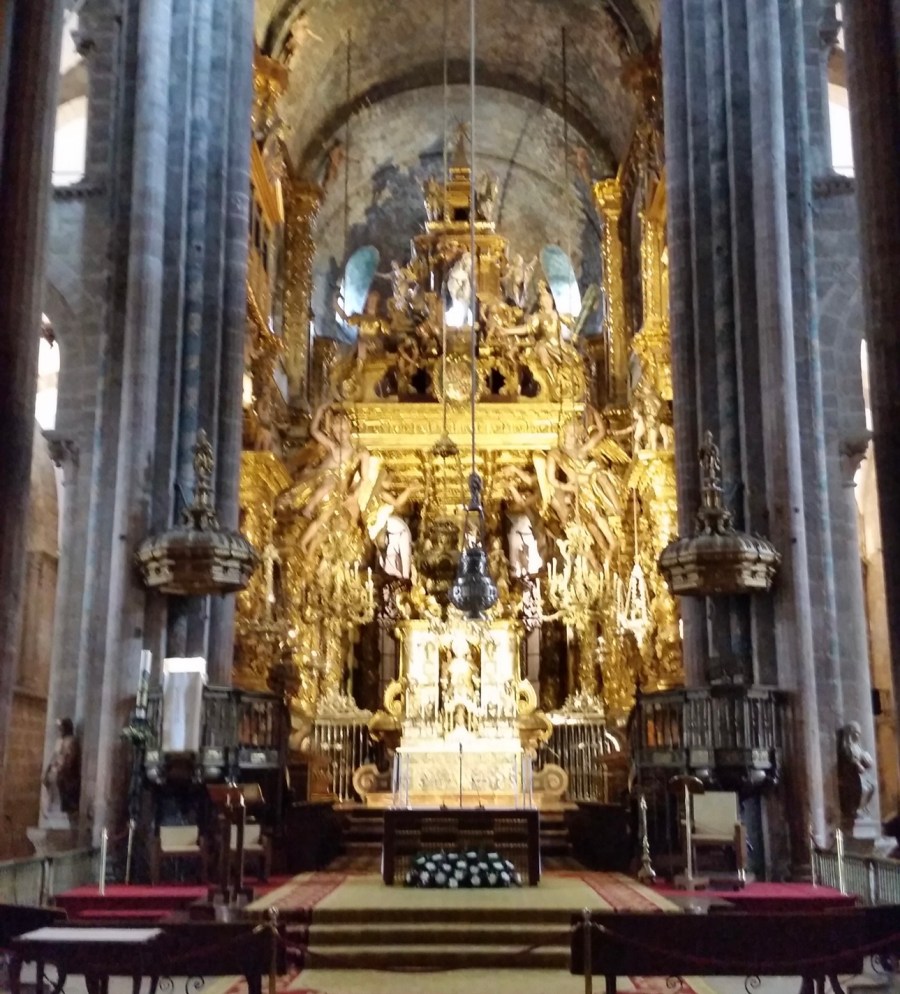
The large thurible, or Botafumeiro, at the Cathedral in Santiago de Compostela was not swung during my visit to Spain but I have seen videos of it during special liturgical feasts. It is swung to purify the air, participants and symbolize the prayers of the people rising to God. If pilgrims happen to arrive to the Cathedral on these special holy days, after walking the Camino, I envision the incense sanctifying their journeys, lifting and receiving all the intimate and personal prayers said during their pilgrimage.

In the book of Revelation we also hear of bowls of incense. The angel was “given much incense to offer with the prayers of all the saints on the golden altar before the throne and the smoke of the incense, with the prayers of the saints, rose before God from the hand of the angel.” It’s a beautiful image to consider the continual burning of incense, representing the prayers of the communion of the saints, small “s”, each person in the eternal presence of God.

As I reflected on the background of incense, and the scriptural references of our prayers like incense, I thought about our Lenten prayers and practices as fragrant and pleasing offerings to God. I pray to become a more pleasing “Mishkan”, a dwelling place, and enter into greater intimacy and union with God.

I pray that your journeys continue to be fruitful and meaningful as we begin this Second Week of Lent. Deena

Image: A picture I took of the great Botafumeiro in the Cathedral in Santiago de Compostela, Spain, visited during my pilgrimage.

Featured

Start with a dream and dream big

I love the Opening ceremonies of the Olympics, and the Winter 2026 Opening Ceremonies did not disappoint (ok, it’s in Milan and Cortina, so I might be a bit biased). I loved it all – Andrea Bocelli, the dove image and message of peace, the adorable Italian hand gesture lesson, the all female color guard in Armani suits, the colorful flowing paint tubes, dancing composers and, (seriously? How creative and representative of Italy!), giant colorful moka pots, I was thrilled.

Beginning with a sequence of the winter athletes watching their younger selves practicing their sport was an inspiring first segment for the Ceremonies! Having watched young people grow into adulthood, in my own family, with their specific goals and ambitions, and achieve those dreams is equally inspiring. I paused to reflect how some people are so inspired at a young age to pursue a goal, and the relentless practice to accomplish it. It’s a gift to be so confident and determined.

On Friday I was reminded that we are all encouraged to dream big. A reflection by Monk Mindset challenged me to consider that we would never tell a young child to dream mediocre dreams, to aspire to goals that are “less than” what they might desire. We don’t tell a child, or at least I hope we don’t, not to dream big because it is grandiose or presumptuous to want to accomplish something in life. My niece’s 7 year old has mentioned she wants to be a Lego Master. So why not?! She’s immensely talented at it and there are such individuals called Lego Masters in the world. Whether that comes to pass or it morphs into some other creative, and equally talented, skillset of planning, designing and creating, it doesn’t matter. I want to encourage her to believe in that dream! I would not dare to tell her to focus on something less exciting!

Fr. John of Monk Mindset continued to suggest that we might spend some time in prayer and discernment about the deepest desires in our hearts. It reminds me so much of Ignatian Spirituality and the notion that God is discovered when we spend time reflecting on the desires of the heart. In true discernment, we explore those desires that are ordered toward God, that lead to greater faith, hope and love of God. In that discernment we will uncover something that God might intend us to desire and pursue. When we have identified a spiritually noble and ambitious dream, then we have to courage to ask God to aid us as we run confidently toward it.

These dreams would not be petty desires or visions of grandiose and self-promoting accomplishments. Fr. John reminded that we need to be open to and allow room for purification and alteration of those desires toward the will of God in our lives. In prayer and contemplation, we weed out the disordered attachments and desires and seek those that best use our gifts and talents to serve God and others. I always thought, why would God want me to be an accountant when my heart does not move in that direction. So I don’t have to fear asking God what ways I can best serve.

I was also reminded, seeing a recent post from Hay House, that Louise Hay, an author and founder of Hay House Publishing, began her life’s work late in life. After a divorce and cancer diagnosis she began to write and at the age of 62 opened her publishing company, which remains a leader in the world of self-help and personal fulfillment publications. Do I desire to open a publishing house or author several books? No, but perhaps some of the other ideas that I lay in bed and dream of deserve a bit more reflection, prayer and discernment.

We can all make a difference in the world by using our gifts and talents. What are your dreams that lay dormant? Spend some time this week and reflect on ways that your future might be as grand as God imagines for you.

One of the best commercials I have seen so far is by Toyota with young girls repeating positive affirmations from their father in a car. The tag line is “Every destination has a beginning.” What’s your destination?

Wishing you abundant peace and joy this week, Deena

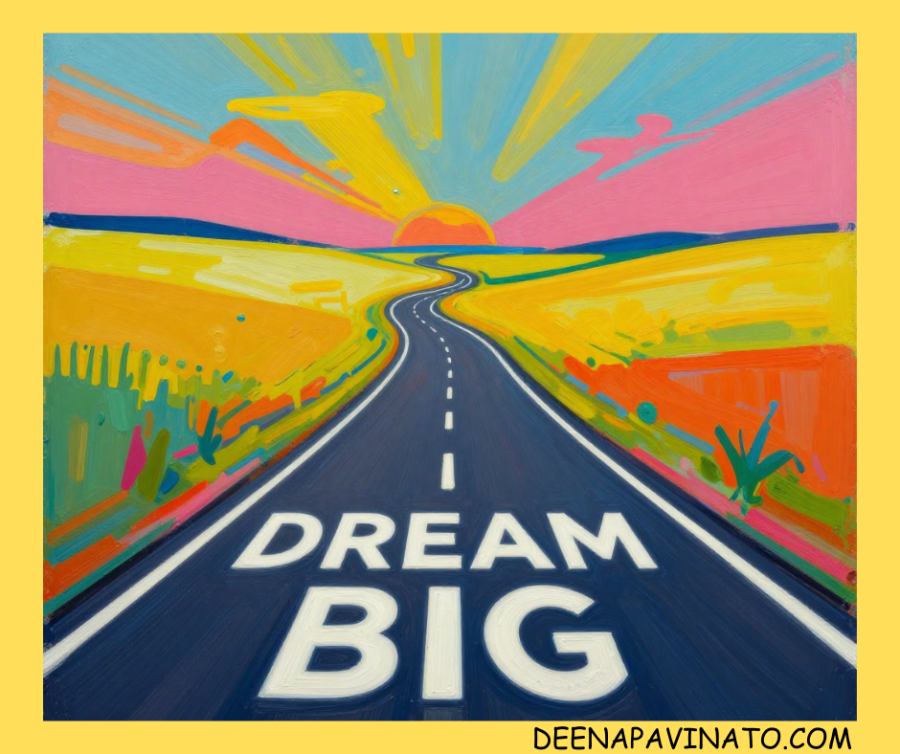
Image: created in Canva

Featured

The journey of peace

In today’s Gospel from Matthew (Matthew 5: 1-12a), Jesus gathers his apostles, and the growing crowd of disciples and followers, and shares the familiar Beatitudes with them – these words shared are a radical blueprint for the heart for those of us searching for answers. Although I’ve heard these verses many times, they spoke to me with a new weight this year. Ever since the Vigil Mass on Saturday, words like ‘peacemakers,’ ‘persecuted for righteousness,’ and ‘hunger and thirst’ have been nudging me to spend more time with them. What am I being called to do? How might I move beyond hearing the words and make them become a part of my life? What is my role to help embody the words at a time when our world needs more light and peace? I don’t have the answers, so I have gathered a few favorite quotes from many that I respect and turn to for wisdom, with a prayer that they might help me understand the words Jesus is calling us to live. I also share a personal example at the end of how we are invited to reflect on our own journeys.

As a Benedictine Oblate, I begin with St. Benedict and the peace he advocates in our daily living of The Rule, from the Prologue: “Let peace be your quest and aim.”

Pope Leo XIV, yesterday in his address to participants at the “Political Innovation Hackathon: One Humanity, One Planet” Conference, said “there can be no peace while humanity wages war against itself—by discarding the weak, excluding the poor, and remaining indifferent to refugees and the oppressed.” He said “Only those who care for the least among us are capable of accomplishing what is truly great.” He urged the young people to seek peace always.

Dorothy Day: “If peace is to be built, it must start with the individual. It is built brick by brick.”

St. Mother Theresa: “If we have no peace, it is because we have forgotten that we belong to each other.”

Anthony deMello: “Peace is not the absence of conflict, it is the ability to handle conflict by peaceful means.”

Thomas Merton: “We are not at peace with others because we are not at peace with ourselves, and we are not at peace with ourselves because we are not at peace with God.”

Thich Nhat Hahn: “Peace in every step.”

Lastly, I share the personal experience from my reflection during Adoration this past Wednesday on the Buddhist monks walking for peace. I prayed to let their walk continue to plant seeds of peace in my heart. That they might encourage me to spread a message of peace in my own way. I contemplated the number of people they are influencing by their walk and their daily messages. I continue to write in my journal each morning, “Today is going to be my peaceful day.” I paused and thought about others, like the Peace Pilgrim, who have journeyed for peace. Then God reminded me he has a sense of humor and is listening to all these silent prayers and yearnings.

I reached down and picked up my copy of the new book, Encounter Grace: Moments of Hope, Joy and Peace, by mentor and friend, Becky Eldredge. I opened and turned to pages 36 and 37 and read the two reflections “A Call” and “Healing Power”. In “A Call”, Becky wrote that we are invited to pray for the grace of getting to know Jesus more intimately as we journey through the Spiritual Exercises of St. Ignatius of Loyola. “It means not only hearing the call to follow Jesus but also to WALK with him and be there working with him.” Then in “Healing Power”, Becky reflected on the ways that Jesus healed others and the impact it had on her. She invites us to consider that it is through our connection with Jesus in our “inner chapel” that “his power moves from him to us.” When we do that, we “encounter Jesus the same way Jesus encountered people tangibly when he was WALKING around the earth.” (Using caps for both quotes here is my emphasis.) I laughed out loud, quietly because I was in Adoration, but I thanked God for reminding me of Jesus’ constant effort to be and share peace. I can turn to scripture just as easily as I can turn to YouTube to see where the monks are walking today.

So today, in whatever way is most helpful for you, consider how you are and might be sharing a message of peace to those around you. We all need it so desperately.

Wishing you abundant peace this week, Deena

Image: A photo of a banner at Subiaco Abbey in Subiaco, Arkansas taken during an Oblate conference.

Featured

In the beginning

The Center for Action and Contemplation in New Mexico, published a series this past week on Creation. Each week, Fr. Richard Rohr’s (Franciscan priest and founder of CAC) writings, as well as those of other writers, poets and theologians, are shared in a daily blog. Each day, this week, has challenged me to reflect on creation as an ongoing act of God’s love. Recent events have weighed heavily on some of us. Yet, in the midst of turmoil, there have also been moments of great peace and tranquility, solidarity and hope. Those stories might be harder to find, but they are there.

If you read the Bible, especially the early stories in Genesis, it’s a mess! Lies, deception, betrayal, thousands of Israelites defeated in battle, and exile. We know these stories were passed down to preserve an ancient heritage and the wisdom gleaned through that history. These words carry a truth that despite all of the sin and error committed by our early families in faith, an ultimate truth remains. As Fr. Richard wrote, this story shared through generations “is saying that everything is grace, everything is gift, everything comes from God. God is the one who makes something out of nothing and gives it to us, not only then, but now. God created both the natural universe and our own human nature, and all of it is good. All of it is to be enjoyed, if we can receive it as a gift.”

Brian McLaren’s article in the series invited us to remember that all of creation is good and that in that creation, all matter and each person, are part of the story and are different branches on the tree of life. Later in the week, theologian Elizabeth Johnson shared a more poetic perspective, that existence itself is an ongoing act of God’s love, and that “without the ongoing creative power of God at every moment, all would collapse into … an unimaginable no-thing.” She stated the “Creator gives with great affection; creatures receive. Nothing in the great world would exist but for this constant relationship.”

We are rereading the newer (2010) translation of Sr. Joan Chittister’s commentary on The Rule of St. Benedict in our monthly Oblate gatherings. Sr Joan, in the section on the Prologue of The Rule, which has guided monastics for well over 1,500 years, proposes that in “failing to respond to God everywhere God is around us, we may lose the power of God that is in us.” We have all been failed by the things of this world, the people in our lives, leaders both personal, local and national, security in our work and our homes, things that will not ultimately satisfy us. God is the only “lifeline” when nothing else fulfills and satisfies, and when the world feels to be imploding, it is comforting to remember the source of all goodness continues to create out of love for us.

I do not suggest that a solution is ignorance of current events. I am inspired by those who choose to more actively represent, and speak out for, the just and equitable principles that our country was founded and has been guided by. But when I feel myself reacting with rage and condemnation, I remember the words I reflect on each morning and evening, from the venerable monks walking for peace, unless we have peace in our hearts, we will never have peace in the world. So I pause, mindful of the present moment, and turn inward. I reflect on the warmth of the sun through the window, the tea in my mug, and I send a silent prayer, a prayer for peace in my being and a peaceful solution to what is happening in our country.

I can’t think of a better way to pray for and reflect on the drastic change needed in our country today, than on the eve of Martin Luther King Jr. Day, to share one of his most famous quotes, “Darkness cannot drive out darkness, only light can do that.”

May we be light. May we embody peace. May we be a seed in the ongoing act of creation. May we be a source of inspiration to those seeking answers in a world that will never provide them at the deepest level. Amen.

Wishing you abundant peace and hope this week, Deena

Photo: A recent sunset, a visible sign of the glory of creation.

Featured

Guide our feet into the way of peace

In the very first paragraph of the Introduction of Joan Chittister’s book, The Monastic Heart, she asks “Where do we go now as individuals to find our way out of the shadows and toward a new light?” She says that each of us have within a desire to be more of ourselves, to figure out what is being asked of us when the “pressures of our time seem insoluble and our inherent energy begins to fray.” Her answer to these problems of the world, or the unsettled spaces within our spirit, is monastic living. “Monasticism is the single-hearted search for what matters in life.”

But don’t despair, you don’t have to run off to a monastery to live a life guided by monastic principles. You do it where you are, as you are, but guided by different values.

Granted that isn’t always easy. As a Benedictine Oblate, I have promised to live by monastic values and The Rule of St. Benedict. But, this week has tested my ability to see Christ in the other, to allow solitude to bring calm and clarity when inside my thoughts and feelings are tumbling, and to be thoughtful in speech, knowing what to say and when to say it. Thankfully support comes from many places, most especially during this Christmas season.

Christine Valters Paintner, author and online abbess of Abbey of the Arts, described the “inner monk” in her weekly email this morning. Christine said “The ‘inner monk’ seeks God as the source of all being, searches for a mystical connection to the divine source, longs for what is most essential in life, and cultivates this through a commitment to spiritual practice. The monk is nourished through silence and a commitment to see everything as sacred.” Reminders such as these, to see the world from a contemplative perspective, to find mystery, wonder and awe in daily life, are critical for me, as I attempt to maintain a balance of being informed but not being pulled down in a pit of despondency and hopelessness.

I don’t have blinders on by any means. As a monastic, a Benedictine Oblate, we aren’t called to that. But, I can only watch a limited amount of news (or videos as the case was this week) before I feel it getting too heavy for my spirit. I have chosen updates from sources I trust. I prefer these updates from political historians, like Heather Cox Richardson, or award winning journalist, who worked for 60 Minutes and National Geographic, Jeff Newton. People that have the experience to back their perspective. Although I will also admit to enjoyed the clever, daily updates from Pasture Politics, a farm from Upstate New York. I have no idea of his background, (will admit it’s closer to my political views and not unbiased), but it’s innovative and captivating.

Joan Chittister, in The Monastic Heart, says that “every moment of social tension needs a peacemaker.” But the “truth is that only one thing can really bring peace: the commitment not to destroy other people’s sense of self, of dignity, of value in the name of truth.” That makes keeping up on social media difficult. Every post brings deep and cutting responses, full of malice, contempt and an attempt to demean versus state an opposing opinion. It’s sad. It’s uncalled for. It will not bring peace.

This past two months I found another source of inspiration for compassion and peace, besides my daily prayer and reflection. My friend Maribeth shared with me the journey of the Buddhist monks (@walkforpeaceusa on Facebook) walking a 120 day, 2,300-mile journey from Fort Worth, Texas (the home of their monastery) to Washington D.C. Their only goal is to raise awareness of peace, loving kindness and compassion. It is not to raise money, to convert people to Buddhism, or to mention any specific national event or ideology. I listen to their talks daily and have never once heard an unkind or judgmental statement. This week I had a deeply personal involvement with their journey. Two weeks ago, when Mari and I saw that they would be nearing her home in South Carolina, I asked her if she was going to attend. We began following their daily schedule. I encouraged her to attend, and hoped she would. I said given more time to plan, and care for my cats at home, I would have picked up and flown to make the journey with her. She did attend and after capturing videos and special moments at the Saluda County Courthouse, and accepting a peace bracelet for me from a monk, she admitted to me that the only reason she attended was for me, but was glad that she did have the opportunity to be with them. My heart was overflowing with gratitude for the gift of her friendship and for the ability for both of us to encounter the monks, even if my presence with her was virtual.

It hasn’t altered my Christian beliefs, but it has enriched them. Venerable Bhikkhu Pannakara suggests a practice, in his daily teachings, that I have incorporated into my daily journaling. It is a simple practice. It is to begin the day by writing (with pen and paper, not just thinking or typing it), “Today is going to be my peaceful day.” It is simple, easy but powerful. It helps me desire peace before being exposed to or consuming the thoughts of others or letting thoughts of worry or fear hijack my day.

Imagine if our first thoughts were of peace and if we wished for others what the monks wish for all in each and every post they make on social media; May we be mindful in everything we do throughout the day. May you and all beings be well, happy and at peace.

By the way, a local news channel recorded the Saluda talk. It’s a bit soft and hard to hear at the beginning but well worth sticking with it. It is a wonderful summary of all they are sharing on their journey. You can find it by clicking here. This was the event that Maribeth attended.

As I pray each morning in the Benedictus, I wish and pray “In the tender compassion of our God, the dawn from on high shall break upon us, to shine on those who dwell in darkness and the shadow of death, and to guide our feet into the way of peace.” Amen.

Wishing you abundant peace and happiness this week, Deena

Featured

Go by another way

I sat down this morning to do social media work I have been hired to do, before starting this blog, and I heard a bird calling. It wasn’t the typical wrens or sparrows of the morning. It was clearly not cardinals or blue jays I hear in adjacent neighborhood trees. It’s too early for robins. It was distinct, different. I immediately got up to find it, in the front yard, or in my backyard tree. I couldn’t find it but I kept looking as it kept calling out. It stopped me from doing anything else, I couldn’t resist the invitation.

I wonder, as I reflect on the wise men in today’s Epiphany story, if these magi had the same urgency to respond to the unique star they were seeing, seeking the important event it was foretelling. It’s easy to ignore those inner promptings, whether as simple as the little bird I heard, or as illuminating as a distant star. We pass them off as impractical ideas or a passing flights of fancy.

Sometimes the way will find you, even if you go another way.

This Fall I listened to a talk, either by Fr. Bonafice Hicks or Sr. Miriam Heidland (my journal notes weren’t clear as I looked back), and a reference to a new book by Bishop Eric Varden on Chastity and how chastity, and Bishop Varden’s description of chastity, speak of a reconciliation of senses and a love of beauty. I had listened to Bishop Varden online in the past, and enjoy his teaching, so I ordered it immediately. Once it arrived, and I attempted reading, I quickly realized I was in over my head. I set it aside. I picked it up again at a later date and came to the same conclusion, I was not going to get the point so easily captured by the review I listened to.

During a recent homily, my pastor spoke of Bishop Varden, so Friday I dropped off the book, thinking he might enjoy reading it and would certainly be a better student of the concepts than I was. I consider myself fairly adept at spiritual literature and theological teaching. Not an intellectual, but also not completely amateur to spiritual reading. After all, St. Teresa of Avila, St. Catherine of Siena, St. John of the Cross aren’t kindergarten reading and I enjoy spending time with their writings. I handed over the book as well as any hope of being able to understand it.

Friday night I was listening to a daily session of Minute Monk on the Hallow app, led by John Cannon, founder of Monk Mindset (a website but also a paid app released in 2025). The reflection was given by Fr. John on the Feast of Saints Basil and Gregory. He began talking about the Tools of Good Works in the Rule of St. Benedict and the love of chastity. He described chastity, not as an absence of sin, but as a good desire, a virtue, a mark of a human being fully alive. He then referenced Bishop Varden’s book on Chastity. I literally laughed out loud given that I handed over the book earlier in the day.

Ok, God I am listening, I exclaimed. Where are you leading me?

The summary was an excellent one, much like the one that led me to order the book in the Fall. Fr. John continued to describe chastity not as a list of do’s and don’ts but as an re-establishment of wholeness. It restores our senses to see and truly love, is a marker of integrity and allows us to see the world in truth, to have a contemplative spirit. It leads us to be more clearly attuned to our ultimate purpose of loving God and others.

For clarification for those who might be confused about chastity versus celibacy (a vow or state of being to remain unmarried and chaste), chastity is a broader virtue of having fidelity, sexually, to one’s state in life, whether being married or unmarried.

The instance wasn’t for me a reminder of living a chaste life, but instead was a reminder of living a contemplative life, focused on love and compassion for others (Compassion is my chosen “word” for 2026). It was a reminder that being free of other responsibilities, I have desired a life dedicated to prayer, contemplation and monastic virtues. But lately I have questioned how I have been living that commitment. How deep is my love of others when I react harshly, with judgment, to those I encounter? Am I seeing Christ in the other?

This morning, the USCCB social media pages, released a reflection on the Feast of the Epiphany by the Most Rev. Ronald Hicks, Archbishop-designate of New York and Bishop of Joliet. Even though he is Bishop in the nearby Diocese of Joliet, I have learned more about him recently as he has been introduced to the people of New York. He talked about how his experience of living in Central America transformed him, his experience of the people and the culture, changed him. He said that when he encounter Jesus and his word, in scripture, and the sacraments, when we care for others, we go home by another way. We are changed and we are challenged to carry that Light, that we have experienced, out to others.

Let it be so.

Wishing you a week of abundant hope and joy, Deena

Image: a photo of a sunset, a moment of beauty.

Featured

We wait in peace – Second Sunday of Advent

Today is the Second Sunday of Advent and our candle lit today is the candle of Peace. The candle represents the peace that Christ brings to our world. In our time of Advent preparation we are invited to slow down and reflect on our lives. We contemplate and search for the peace that only Christ can bring.

Are you slowing down? Do you feel peace? I have to admit it is taking a conscious effort for me to slow down and savor the Advent season. I am behind my, probably unimportant and self-established, goals of where I wanted to be at this point in December. Rushing and to do lists can take over and get me frazzled in just a second if I let them. To resist that unrest I stop for little moments, and practices, in my day to remind myself to pause, such as reading and reflecting on many of the resources I shared with you the week prior to Advent (see the post for November 23 if you need some ideas). If I feel the anxiety rise or I find my mind wandering in prayer, or at Mass, I stop and repeat “Jesus, my soul waits for you in stillness” (a phrase repeated this Advent in the Hallow app Pray 25 program). Just a slow focused breath with that simple prayer can help reclaim calm in the moment.

Stepping outside can help too. I had to drive to my cousin’s veterinary clinic this week to pick up meds for Butters, and as much as I fretted over the drive each way, it gave me drive time to listen to one of the Advent programs, to pray, and just look at the fields and the sky. I caught sight of a cloud iridescence, a sun prism, as the sun bounced against ice crystals in the air and clouds. Then a skein of geese flew overhead happily on their way to a field or water. The brightness of the sun against the snow covered fields lifted my spirits from worry and concern. It was an unanticipated hour of calm in my day. You may not feel like you have time to take a drive, or simply a walk, but it might just be what you need!

As we listen, or read, the daily scriptures this month we journey with the Old Testament prophecies of the coming Messiah and on Wednesday of next week (December 17, the beginning of my favorite part of Advent, the “O Antiphons”) we listen to the infancy narratives as we recall the journey of Mary and Joseph to Bethlehem. All of these are meant to help us recall the historical event of the birth of Jesus but also an annual, and personal, review in preparation for the Second Coming of the Christ.

I pray that these scriptures over the next two weeks help you enter into a few moments of peace rather than anxiety, calm versus disquietude. Let us slow down and remember what we are preparing for.

Wishing you abundant peace this week, Deena