Featured

The practice of peace

Have you found yourself irritated with others, or with life/the world, because events weren’t turning out as you had hoped they would? Maybe it’s more than a hope, but an expectation, that circumstances should be different. We (me!) can stress and worry about situations in life, but frequently find we have little control over it. As a reaction I often retreat, inwardly, or even physically, to my inner being, and home, preferring silence and solitude. My desire is to keep a constant connection with Spirit, throughout the day, focused on the things that really matter instead of the mundane and passing concerns that can consume so much time and energy. Some days are easier than others.

I have to catch myself when the repeated tape of a conversation, or of the behavior of someone else toward me, begins to rewind over and over again. I laughed out loud this morning reading a post by personal development author, life coach, and speaker, Cheryl Richardson, as she described the thoughts going through her mind as she took a shower. She stopped herself and said “Cheryl, come back, there are too many people in this shower with you!” I replied, “Girl, I hear you!” I laughed thinking of the countless times I have been in the same situation.

I have been encouraged in my practice of being in the presence of God, more mindful of Spirit and connection, as an alternative to mindless worry over past or future events, as I have been rereading a book by Brother Lawrence from the 17th century, Practice of the Presence of God. I was encouraged to read this small book in the 1990’s, along with Abandonment to Divine Providence, written in the 18th century, by one of my parish priests. Both have been helpful books on my spiritual journey. Lately, I have been using an updated translation by Ascension Press, which has been much easier than reading the original book I have. The book has gained much popularity after Pope Leo XIV wrote an introduction to a Vatican edition of the book, indicating that this book was one of the books that has shaped his spirituality and awareness of knowing and loving God. Pope Leo has advised that the journey of practicing the presence of God, is an arduous one because we have to renounce all of the other things that seek our attention, so that we can keep our focus centered on God.

And isn’t this the goal of Christian mindfulness, and a practice of centering prayer and contemplation? We desire to turn away from the clamor and noise of the world seeking inner peace and union with the Divine.

Brother Lawrence advises that we turn away from everything that distracts from that union, so that we can be in constant conversation with God. We pause, we turn to and rest in the Divine Presence. Simple but challenging. We seek to empty ourselves of the things of the world, from anything that does not lead to God. Brother Lawrence approached all his duties and responsibilities within the Carmelite monastery in this way, as an opportunity to practice the presence of God.

Just as Brother Lawrence had his tasks to complete, so do we. Practicing the presence of God does not mean we quit work, give up enjoyable hobbies and activities, or retreat to a monastery. I do find it is easier having fewer responsibilities outside of the home, but even those activities become opportunities to serve and be aware of God’s presence as we undergo them and encounter others in the process of doing them. It brings a different perspective to our engagement in them.

While the “practice” Brother Lawrence speaks of reminds me of Ignatian spirituality, finding God in all things and seeking only those things that bring us closer to God, he did not seem to be concerned with guidance from others, except in sacramental confession, or considering consolations and desolations in spirit. He simply returned his gaze to God and to the things that would be pleasing to God, despite any suffering or distraction.

With a similar message, Pope Leo XIV, in his video message to the 50th Summer Youth Conference in Steubenville, Ohio this weekend, encouraged youth to look for peace, for “true and perfect joy”, in the love of God instead of from others, or from social media and other electronics. He pointed to the life of St. Francis, and the peace Francis found, and shared with others, that looked different, and less appealing, to others, until they encountered him. They experienced the peace that he found within, in his relationship with God and a focus on lasting joy and happiness.

I hope that as I continue to practice the presence of God, less concerned with the opinions and actions of others, I will find that same level of peace and joy experienced by Brother Lawrence, Francis, other saints and mystics, and those who have followed them. I pray that this peace is experienced by others who I encounter. It’s a lofty goal to be sure, but one worth remaining committed to.

As always, I wish you abundant peace this week, Deena

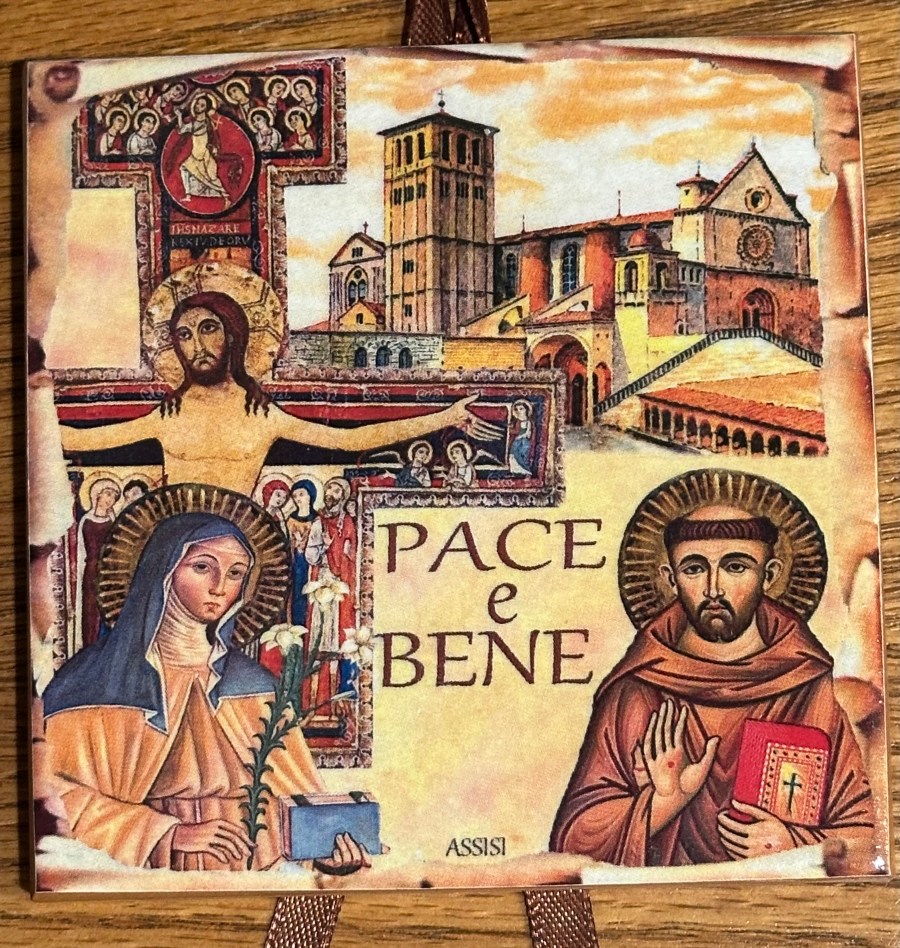
Today’s image: a small wall hanging I purchased in Assisi, Italy. Pace e Bene means “peace and all good” or “good peace”.

Featured

A listening heart

The problem with getting hundreds of emails from authors and speakers that I follow is keeping up with them all. The amount of compelling content to read can be overwhelming each week, so I read some, scan some for the highlights, and then save for later. I recently stopped to read a blog I had saved, written by Eric Clayton, author and Director of Communications for Jesuit Conference of Canada and the United States. I met and began reading Eric’s book and blogs during my time at Ignatian Ministries. He’s a wonderful writer and I am often inspired by his essays in his weekly “Now Discern This“.

The email that I re-read was regarding a trip to the bookstore and advising his daughters that they could pick out one book, not a toy or game. Eric made a selection of three books, from all of their choices, that he thought they might like. The youngest, unamused with the concept of making a decision declared they should get them all. Eric used this as a lesson in making a choice.

Eric goes on to write, to each of us, the beauty of the tools of discernment given to us by St. Ignatius of Loyola. We must understand our limitations, he explains, and understand that we can’t have it all. We use the tools of discernment to help us align our gifts and talents with God’s will for us.

I am grateful for my time at Ignatian Ministries and our use of the Ignatian Discernment tools in every decision we made. The tools of discernment taught by Ignatian Ministries founder, Becky Eldredge, as well as authors such as Eric Clayton, Fr. Timothy Gallagher, Fr. Kevin O’Brien, Fr. Mark Thibodeaux, Fr. William Barry, and countless others, help us tune in to the thoughts and feelings we are having as we pray and make decisions. These tools, first considered by St. Ignatius of Loyola as he was convalescing from a battle injury, help us to identify “good” and “evil” spirits impacting us in our daily lives, as well as movements of consolation and desolation, we are feeling as we consider decisions or ways of responding to particular situations.

These don’t have to be used in huge life changing decisions, such as what job to take, where to move, or whether we are being called to a vocation. They can be used practically, such as Eric’s example of helping his daughters make a book purchase or in our daily prayer.

This past week I began a novena for a specific intention. It wasn’t an intercessory intention for someone in need or as stately as world peace. It was something more closely related to my life. By the third day I began to feel a sense of desolation about my prayer. I brought it to reflection during Adoration and quickly realized I had the plan all figured out. I had my request and the outcome all set. I began to “feel” God respond to me and say, “that might be the right outcome” but “let go, let me handle it. I can see far wider than you can.” At that point I changed my intention to “whatever is best…” I almost immediately felt the desolation change to consolation, and accompanying feelings of peace, calm and a willingness to hand over my request to God.

Becky Eldredge has frequently shared her insights on “Testing Desires” in her workshops. The first step Becky suggests for us helped me this week: Check the source – did it come from God, from my humanness, or from a false spirit? Next, where did the desire leave me?

I could feel in my spirit that my specific prayer was not leading me closer to God. I knew I had to let the outcome go and trust the process. I may not understand completely what I may be led to, but I feel better praying for what is best and for an outcome that will help me be the person God created me to be, rather than what I think is best for me in this moment.

If you would like a free resource on the Steps of Discernment, you can download it from Ignatian Ministries (IM) website or search the IM blog, Into the Deep, for articles on discernment, consolation or desolation. Another amazing resource, for all things Ignatian, is IgnatianSpirituality.com.

I wish you abundant peace and calm as you go forward into this new week! Deena

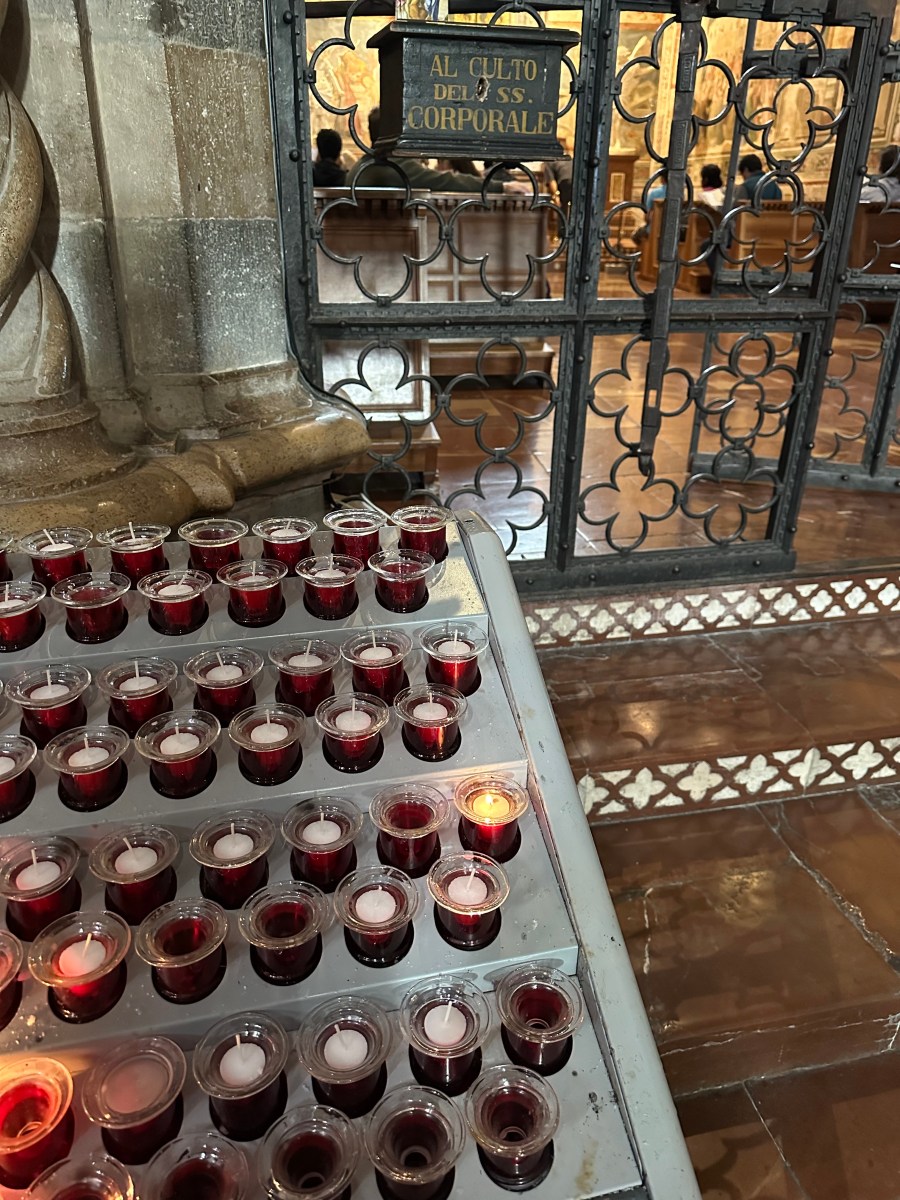
Photo: prayer candles at a church in Orvieto Italy.

Featured

Guides on the journey

Our Oblate group met this weekend for our monthly prayer and discussion group. One of the questions in our reflection guide was a quote by Esther de Waal (Spiritual writer, Benedictine and Celtic author and scholar) from her book, Living With Contradiction. The quotation referred to respecting our own solitude, revering our identity and recognizing the mystery each of us are, so that we can then recognize that in other people. The reflection question pertained to all the tools (art, music, nature, prayer, meditation, etc) and individuals that have helped us understand who we are and helped us find our direction in life.

One of our Oblates shared a lovely story how being baptized in her childhood, right before receiving her first Communion, gave her greater appreciation for the sacrament, her faith and the journey that she was beginning. It was touching, as we each shared how all of those “tools” helped us in the past and continue to nurture us today.

I left the gathering continuing to bring to mind all those individuals who at different times, and in different ways, have helped shape me as a Catholic, an Oblate, and a devoted follower of Jesus. I pondered how this Lent and Easter Season I have been growing deeper in my understanding of myself as a beloved daughter of God. It’s easy to say the words, listen to them, and read them on paper, but it’s a different story to begin to believe it at a deeper level, at a soul level. To really “know” it.

Eleven years ago today I was beginning a pilgrimage journey to Spain and Portugal. I recall fondly how my friend, and our spiritual director for the trip, shared love and concern for us, desiring that we each grow closer to God spiritually. as we journeyed physically through the beautiful sites we visited. Visiting the sites of favorite saints, such as St. Teresa of Avila, St. John of the Cross and St. James helped me connect on a deeper level with them because it was felt emotionally as well as physically by being in the places they walked, taught or are buried. Those guides, physical and spiritual, forever changed me.

These journeys we take in life, physical, emotional, and spiritual, shape us, for better or worse. I wonder how I might have altered the experience of different times in my life if I had recognized more fully the love that God has for me. How might life have been different if I had a better understanding of the depth of that love, respected myself in my actions because of who I belong to and was more amazed at the mystery of who God created me to be?

It’s easy to get caught up in, or distracted by, all of the events of the world around us. I spotted this in the disciples on the Road to Emmaus in today’s Gospel reading from Luke. Of course, they were surprised when it seemed that Jesus, who they weren’t recognizing at the moment, didn’t seem to be aware of all “the things that have taken place” in Jerusalem over the past three days. As they walked, he taught, guided and then opened their eyes to who he was and how everything in scripture pointed to the fulfillment of centuries of prophecies.

Isn’t it true that when we encounter a true teacher and guide on our journeys that our hearts burn in the same way as they did for the disciples listening to Jesus? Aren’t we stirred to the core when we hear the truth of who we are being called to be in life? Isn’t there a thrill of recognition when we see and hear more than we believed up until that moment? Hopefully we are moved beyond that current place we are in life and desire more, are changed to act in a different way, and desire to live life more aligned with this new way of thinking.

Spend a moment today and reflect on who one of those teachers might have been for you. How have you been transformed as a result of their guidance and care?

I hope and pray that I recognize those teachers presented to me along the way, that I listen and am transformed into being a better person as they guide and inform me. I pray this for you as well.

Wishing you abundant peace this week, Deena

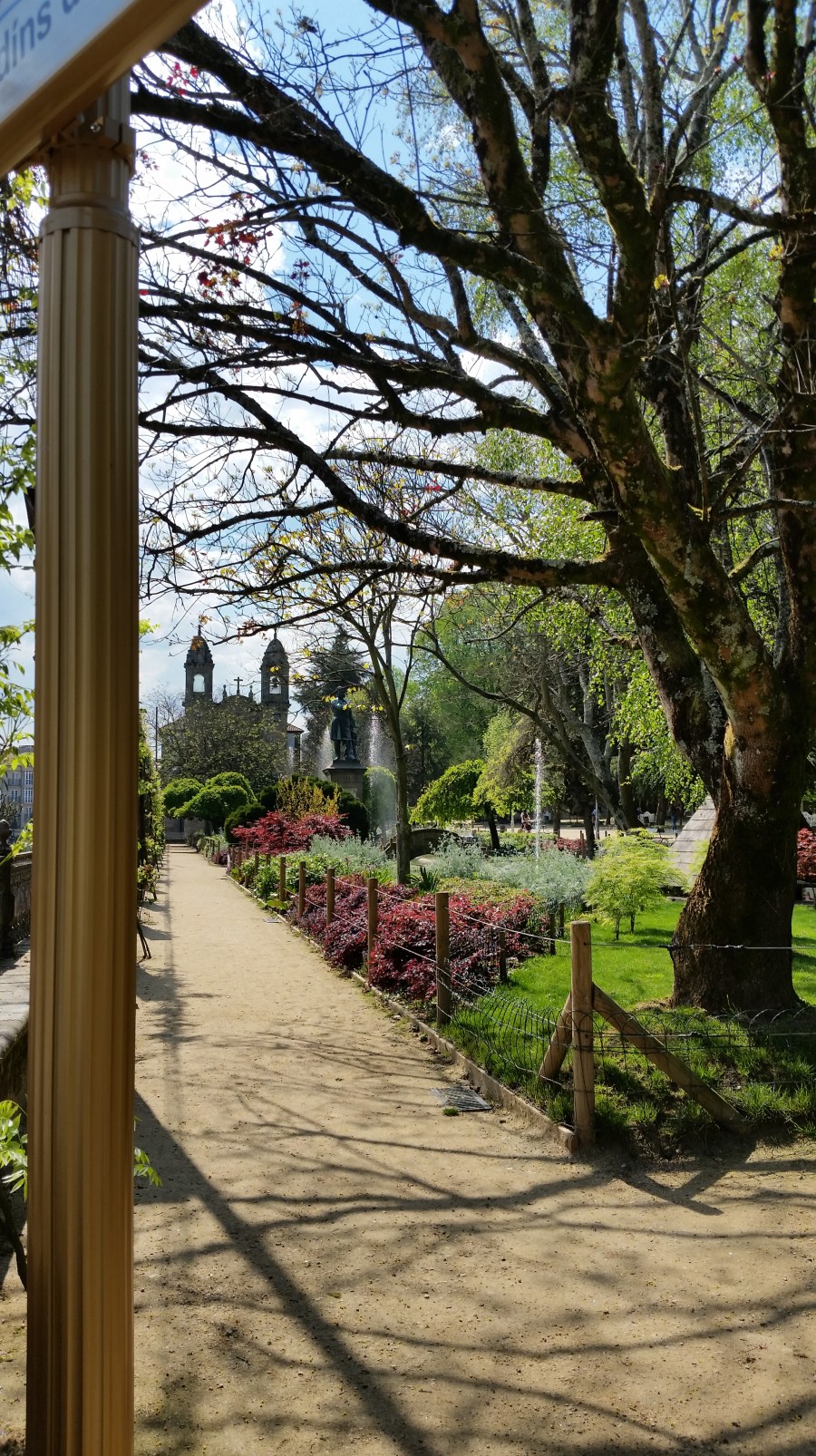
Image: A garden and walkway in Santiago de Compostela, Spain.

Featured

Reasons to hope

Yesterday morning my friend Kathy and I visited a couple of our favorite nurseries to look for a few of the plants that we enjoy in our gardens and pots each year. We are a bit early this year (or weather has us a bit behind here in IL) and, at one of the garden centers, there were not as many plants as we had hoped for but it was a lovely trip nonetheless. They have beautiful paths and gardens to wander, there were signs of life everywhere! Little straight shoots of hostas emerging from their winter rest, an awakening canopy of flowering ground covers, and budding branches on trees, and of course, spring blooms of bluebells, hyacinths and tulips! It’s a magical visit there every time but is a reason to hope as all new growth begins to come to life.

Because I was gone most of the day on Saturday I did not attend Prayer Vigil for Peace called for by Pope Leo XIV in the morning US time. I am immensely grateful for the coverage and that I had the ability to listen to, and pray with, the Vigil on YouTube on Saturday evening.

As a Catholic I believe in the inspiration and guidance of the Holy Spirit, enlightening the cardinals, in their selection of a new Pope. I still recall my delight and surprise last year to learn of our first US pope. Each and every day since then I pray in thanksgiving for the selection of Pope Leo. I can’t imagine a better choice for this time in history. He has, especially in recent weeks, been a voice of reason on the world stage, calling for diplomacy over weapons and force. Given his first words to each of us, last May from the balcony of St. Peter’s, were “Peace be with you all” we might have imagined this tone for his papacy.

I found his words yesterday, April 11, to be courageous and needed, given the current state of tensions in the Middle East and other war impacted areas of our world. But I also found them poetic, profound and emotionally stirring as I listened and then read them (you can read the full reflection here, or if reading on social media, click my blog for the link).

Prayer teaches us how to act. In prayer, our limited human possibilities are joined to the infinite possibilities of God.

True strength is shown in serving life.

We are an immense multitude that rejects war not only in word, but also in deed. Prayer calls us to leave behind whatever violence remains in our hearts and minds. Let us turn to a Kingdom of peace that is built up day by day — in our homes, schools, neighborhoods, and civil and religious communities. A Kingdom that counters polemics and resignation through friendship and a culture of encounter. Let us believe once again in love, moderation and good politics. We must form ourselves and get personally involved, each following our own calling. Everyone has a place in the mosaic of peace!

Brothers and sisters of every language, people and nation: we are one family that weeps, hopes and rises again.

Pope Leo’s words lifted my heart and gave me hope. His words don’t change the current state of the world but I pray that as our voices and prayers for peace rise and become stronger, we plant those seeds around us. We cannot lose hope that together our prayers and voices make a difference!

On this Divine Mercy Sunday, Jesus entered the upper room and said “Peace be with you.” May our voices and our lives share that same message to those we encounter.

Wishing you abundant hope and peace this week, Deena

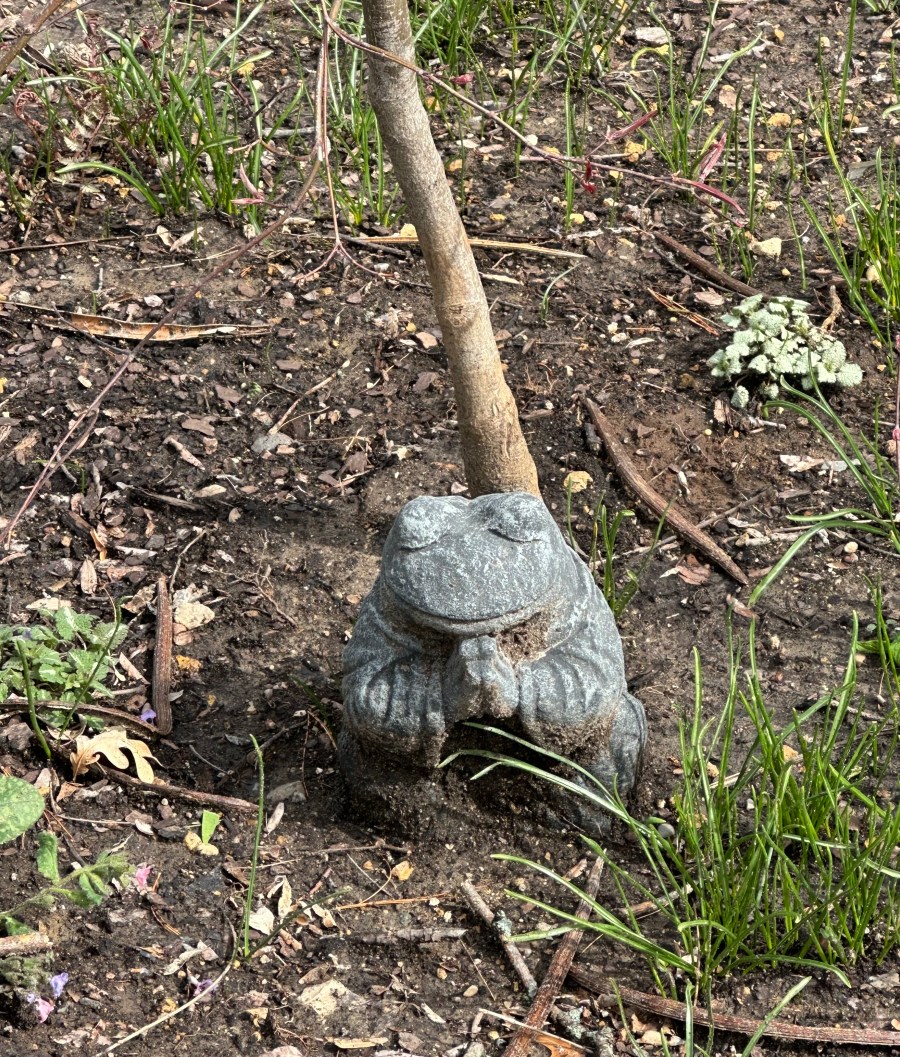
Image: a cute frog statue in one of the emerging beds at Hornabaker Gardens, Princeton IL.

Featured

Go deeper

At one point this past week I had the thought, a typical one for me toward the end of Lent, I would like to start Lent over, or I could have done more. But, here we are at Palm Sunday and the beginning of Holy Week. It’s the most solemn and holy week of the liturgical year and gives us the opportunity to enter more deeply into the mysteries of our faith.

Whatever we did, or didn’t do as well as we would have liked, our Lenten practices of increased prayer and devotion, fasting and sharing our resources with those in need, aren’t something that have to stop after Easter next weekend. I might not choose to be as rigorous with fasting and some of the extra devotions, like Stations of the Cross, that may no longer be offered in our parishes, but there are opportunities to continue to let these daily practices open my heart to God and consider the attachments in my life that are a hinderance in my relationship with God.

The Lenten practices that we chose have the intention of clearing away the noise and distraction, in hopes of opening my heart more fully to God. It isn’t a race to simply cross a finish line and congratulate ourselves at the end for a job well done. If I was able to create a space to enter more deeply into relationship with God, why would I close the door now?

Over the past few weeks we have listened carefully to ways in both the Old and New Testaments that people heard and responded to the word of God. To really hear it, versus just listen to it, we internalize it and let it begin to shape who we are and how we show up each day in our encounters with others and in the choices we make in life.

This week gives us further opportunity to reflect on Jesus’ message and the immense sacrifice given in complete love for us. No matter how Lent went for us, we can allow this week to be one of a little more silence and reflection. Attend your parish or church services recalling the Lord’s Supper, Passion and Death on the Cross, and then after sitting in the silence of Holy Saturday, wait to celebrate the joy of Easter Resurrection. Slow down, enter into the holiness of this week. Listen to the scripture readings and reflect on the gifts you have in life and how God has showered love on you and those you love. Reflect on how you can share that Love with those you encounter.

If Lent has not changed us, it’s not too late. This week is our chance to go deeper.

Wishing you abundant graces this Holy Week. Deena

Image: A Station of the Cross on the grounds of Subiaco Abbey in Subiaco, Arkansas visited during a Benedictine Conference.

Featured

The journey of peace

In today’s Gospel from Matthew (Matthew 5: 1-12a), Jesus gathers his apostles, and the growing crowd of disciples and followers, and shares the familiar Beatitudes with them – these words shared are a radical blueprint for the heart for those of us searching for answers. Although I’ve heard these verses many times, they spoke to me with a new weight this year. Ever since the Vigil Mass on Saturday, words like ‘peacemakers,’ ‘persecuted for righteousness,’ and ‘hunger and thirst’ have been nudging me to spend more time with them. What am I being called to do? How might I move beyond hearing the words and make them become a part of my life? What is my role to help embody the words at a time when our world needs more light and peace? I don’t have the answers, so I have gathered a few favorite quotes from many that I respect and turn to for wisdom, with a prayer that they might help me understand the words Jesus is calling us to live. I also share a personal example at the end of how we are invited to reflect on our own journeys.

As a Benedictine Oblate, I begin with St. Benedict and the peace he advocates in our daily living of The Rule, from the Prologue: “Let peace be your quest and aim.”

Pope Leo XIV, yesterday in his address to participants at the “Political Innovation Hackathon: One Humanity, One Planet” Conference, said “there can be no peace while humanity wages war against itself—by discarding the weak, excluding the poor, and remaining indifferent to refugees and the oppressed.” He said “Only those who care for the least among us are capable of accomplishing what is truly great.” He urged the young people to seek peace always.

Dorothy Day: “If peace is to be built, it must start with the individual. It is built brick by brick.”

St. Mother Theresa: “If we have no peace, it is because we have forgotten that we belong to each other.”

Anthony deMello: “Peace is not the absence of conflict, it is the ability to handle conflict by peaceful means.”

Thomas Merton: “We are not at peace with others because we are not at peace with ourselves, and we are not at peace with ourselves because we are not at peace with God.”

Thich Nhat Hahn: “Peace in every step.”

Lastly, I share the personal experience from my reflection during Adoration this past Wednesday on the Buddhist monks walking for peace. I prayed to let their walk continue to plant seeds of peace in my heart. That they might encourage me to spread a message of peace in my own way. I contemplated the number of people they are influencing by their walk and their daily messages. I continue to write in my journal each morning, “Today is going to be my peaceful day.” I paused and thought about others, like the Peace Pilgrim, who have journeyed for peace. Then God reminded me he has a sense of humor and is listening to all these silent prayers and yearnings.

I reached down and picked up my copy of the new book, Encounter Grace: Moments of Hope, Joy and Peace, by mentor and friend, Becky Eldredge. I opened and turned to pages 36 and 37 and read the two reflections “A Call” and “Healing Power”. In “A Call”, Becky wrote that we are invited to pray for the grace of getting to know Jesus more intimately as we journey through the Spiritual Exercises of St. Ignatius of Loyola. “It means not only hearing the call to follow Jesus but also to WALK with him and be there working with him.” Then in “Healing Power”, Becky reflected on the ways that Jesus healed others and the impact it had on her. She invites us to consider that it is through our connection with Jesus in our “inner chapel” that “his power moves from him to us.” When we do that, we “encounter Jesus the same way Jesus encountered people tangibly when he was WALKING around the earth.” (Using caps for both quotes here is my emphasis.) I laughed out loud, quietly because I was in Adoration, but I thanked God for reminding me of Jesus’ constant effort to be and share peace. I can turn to scripture just as easily as I can turn to YouTube to see where the monks are walking today.

So today, in whatever way is most helpful for you, consider how you are and might be sharing a message of peace to those around you. We all need it so desperately.

Wishing you abundant peace this week, Deena

Image: A photo of a banner at Subiaco Abbey in Subiaco, Arkansas taken during an Oblate conference.

Featured

Make me an instrument of your peace

It’s hard to find words. But I have one, Enough! I saw a post this morning that calmly pleaded, if you have a platform use it. Mine is a small platform but I want to share my prayers and hopes.

I pray for peace. I pray for the people of Minnesota and an elimination of the fear and injustice they are experiencing. I pray for children, like 12 year old Max with a soccer medal around his neck, crying to his mother that another boy told him he was going to be arrested, because they look different even if they were born in the US (and I share Max’ tearful sentiment, “it’s just not nice”). I pray for other states that are beginning to experience the same insane use of discrimination. I pray for our country and a restoration of the values we have held dear for so long. I pray for the honest police, military and elected officials who desire to uphold the laws of our country. I pray for leaders, religious and civil, to step up and do what is right. I pray for a restoration of respect between other countries and the United States. I pray for each of us as we struggle to find a balance between staying informed, knowing what and when to speak up, and still maintain respect, peace and hope in our hearts and minds and with each other.

Please know that this is no longer, if it ever was, about legal deportations. We’ve had those conducted by past administrations and not heard about them. Why? Because each person was given due process. This is also not about legit law enforcement and military doing their jobs. I watched law enforcement calmly arrest clergy and interfaith leaders who were protesting at the Minneapolis-St. Paul airport on Friday. I did not see guns drawn, pepper spray or harassment. This is about unlawful and unjust discrimination and bigotry. It has to stop.

So, today, I turn to one of my favorite prayers, attributed to St. Francis of Assisi. I pray it so that the words make a home in my heart and mind so that then I can, in turn, sow love, pardon, faith, hope, light and joy in my small way.

Lord, make me an instrument of your peace:
where there is hatred, let me sow love;
where there is injury, pardon;
where there is doubt, faith;
where there is despair, hope;
where there is darkness, light;
where there is sadness, joy. 

O divine Master, grant that I may not so much seek
to be consoled as to console,
to be understood as to understand,
to be loved as to love.
For it is in giving that we receive, 
it is in pardoning that we are pardoned, 
and it is in dying that we are born to eternal life.
Amen.

Please dear God, hear our prayers.

I wish you abundant peace, hope and calm this week. Deena

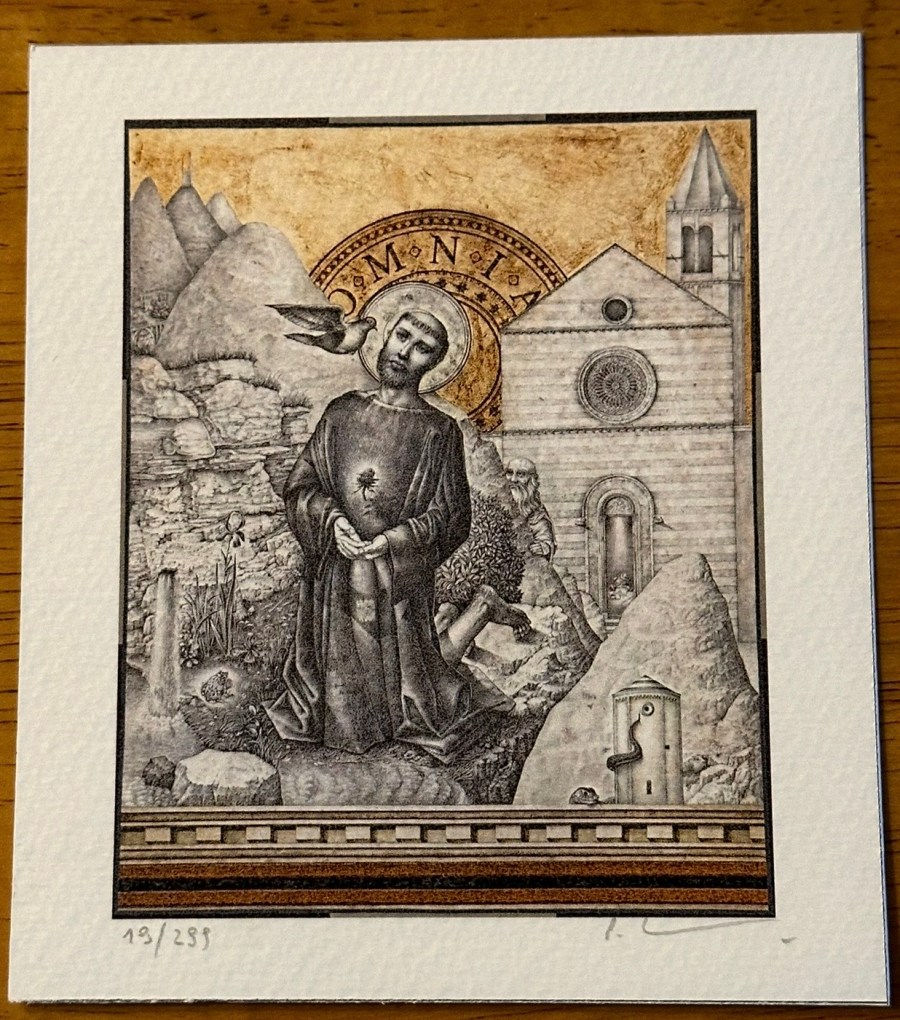
Image: art of St. Francis taken during my pilgrimage to Assisi.

Featured

Guide our feet into the way of peace

In the very first paragraph of the Introduction of Joan Chittister’s book, The Monastic Heart, she asks “Where do we go now as individuals to find our way out of the shadows and toward a new light?” She says that each of us have within a desire to be more of ourselves, to figure out what is being asked of us when the “pressures of our time seem insoluble and our inherent energy begins to fray.” Her answer to these problems of the world, or the unsettled spaces within our spirit, is monastic living. “Monasticism is the single-hearted search for what matters in life.”

But don’t despair, you don’t have to run off to a monastery to live a life guided by monastic principles. You do it where you are, as you are, but guided by different values.

Granted that isn’t always easy. As a Benedictine Oblate, I have promised to live by monastic values and The Rule of St. Benedict. But, this week has tested my ability to see Christ in the other, to allow solitude to bring calm and clarity when inside my thoughts and feelings are tumbling, and to be thoughtful in speech, knowing what to say and when to say it. Thankfully support comes from many places, most especially during this Christmas season.

Christine Valters Paintner, author and online abbess of Abbey of the Arts, described the “inner monk” in her weekly email this morning. Christine said “The ‘inner monk’ seeks God as the source of all being, searches for a mystical connection to the divine source, longs for what is most essential in life, and cultivates this through a commitment to spiritual practice. The monk is nourished through silence and a commitment to see everything as sacred.” Reminders such as these, to see the world from a contemplative perspective, to find mystery, wonder and awe in daily life, are critical for me, as I attempt to maintain a balance of being informed but not being pulled down in a pit of despondency and hopelessness.

I don’t have blinders on by any means. As a monastic, a Benedictine Oblate, we aren’t called to that. But, I can only watch a limited amount of news (or videos as the case was this week) before I feel it getting too heavy for my spirit. I have chosen updates from sources I trust. I prefer these updates from political historians, like Heather Cox Richardson, or award winning journalist, who worked for 60 Minutes and National Geographic, Jeff Newton. People that have the experience to back their perspective. Although I will also admit to enjoyed the clever, daily updates from Pasture Politics, a farm from Upstate New York. I have no idea of his background, (will admit it’s closer to my political views and not unbiased), but it’s innovative and captivating.

Joan Chittister, in The Monastic Heart, says that “every moment of social tension needs a peacemaker.” But the “truth is that only one thing can really bring peace: the commitment not to destroy other people’s sense of self, of dignity, of value in the name of truth.” That makes keeping up on social media difficult. Every post brings deep and cutting responses, full of malice, contempt and an attempt to demean versus state an opposing opinion. It’s sad. It’s uncalled for. It will not bring peace.

This past two months I found another source of inspiration for compassion and peace, besides my daily prayer and reflection. My friend Maribeth shared with me the journey of the Buddhist monks (@walkforpeaceusa on Facebook) walking a 120 day, 2,300-mile journey from Fort Worth, Texas (the home of their monastery) to Washington D.C. Their only goal is to raise awareness of peace, loving kindness and compassion. It is not to raise money, to convert people to Buddhism, or to mention any specific national event or ideology. I listen to their talks daily and have never once heard an unkind or judgmental statement. This week I had a deeply personal involvement with their journey. Two weeks ago, when Mari and I saw that they would be nearing her home in South Carolina, I asked her if she was going to attend. We began following their daily schedule. I encouraged her to attend, and hoped she would. I said given more time to plan, and care for my cats at home, I would have picked up and flown to make the journey with her. She did attend and after capturing videos and special moments at the Saluda County Courthouse, and accepting a peace bracelet for me from a monk, she admitted to me that the only reason she attended was for me, but was glad that she did have the opportunity to be with them. My heart was overflowing with gratitude for the gift of her friendship and for the ability for both of us to encounter the monks, even if my presence with her was virtual.

It hasn’t altered my Christian beliefs, but it has enriched them. Venerable Bhikkhu Pannakara suggests a practice, in his daily teachings, that I have incorporated into my daily journaling. It is a simple practice. It is to begin the day by writing (with pen and paper, not just thinking or typing it), “Today is going to be my peaceful day.” It is simple, easy but powerful. It helps me desire peace before being exposed to or consuming the thoughts of others or letting thoughts of worry or fear hijack my day.

Imagine if our first thoughts were of peace and if we wished for others what the monks wish for all in each and every post they make on social media; May we be mindful in everything we do throughout the day. May you and all beings be well, happy and at peace.

By the way, a local news channel recorded the Saluda talk. It’s a bit soft and hard to hear at the beginning but well worth sticking with it. It is a wonderful summary of all they are sharing on their journey. You can find it by clicking here. This was the event that Maribeth attended.

As I pray each morning in the Benedictus, I wish and pray “In the tender compassion of our God, the dawn from on high shall break upon us, to shine on those who dwell in darkness and the shadow of death, and to guide our feet into the way of peace.” Amen.

Wishing you abundant peace and happiness this week, Deena

Featured

Go by another way

I sat down this morning to do social media work I have been hired to do, before starting this blog, and I heard a bird calling. It wasn’t the typical wrens or sparrows of the morning. It was clearly not cardinals or blue jays I hear in adjacent neighborhood trees. It’s too early for robins. It was distinct, different. I immediately got up to find it, in the front yard, or in my backyard tree. I couldn’t find it but I kept looking as it kept calling out. It stopped me from doing anything else, I couldn’t resist the invitation.

I wonder, as I reflect on the wise men in today’s Epiphany story, if these magi had the same urgency to respond to the unique star they were seeing, seeking the important event it was foretelling. It’s easy to ignore those inner promptings, whether as simple as the little bird I heard, or as illuminating as a distant star. We pass them off as impractical ideas or a passing flights of fancy.

Sometimes the way will find you, even if you go another way.

This Fall I listened to a talk, either by Fr. Bonafice Hicks or Sr. Miriam Heidland (my journal notes weren’t clear as I looked back), and a reference to a new book by Bishop Eric Varden on Chastity and how chastity, and Bishop Varden’s description of chastity, speak of a reconciliation of senses and a love of beauty. I had listened to Bishop Varden online in the past, and enjoy his teaching, so I ordered it immediately. Once it arrived, and I attempted reading, I quickly realized I was in over my head. I set it aside. I picked it up again at a later date and came to the same conclusion, I was not going to get the point so easily captured by the review I listened to.

During a recent homily, my pastor spoke of Bishop Varden, so Friday I dropped off the book, thinking he might enjoy reading it and would certainly be a better student of the concepts than I was. I consider myself fairly adept at spiritual literature and theological teaching. Not an intellectual, but also not completely amateur to spiritual reading. After all, St. Teresa of Avila, St. Catherine of Siena, St. John of the Cross aren’t kindergarten reading and I enjoy spending time with their writings. I handed over the book as well as any hope of being able to understand it.

Friday night I was listening to a daily session of Minute Monk on the Hallow app, led by John Cannon, founder of Monk Mindset (a website but also a paid app released in 2025). The reflection was given by Fr. John on the Feast of Saints Basil and Gregory. He began talking about the Tools of Good Works in the Rule of St. Benedict and the love of chastity. He described chastity, not as an absence of sin, but as a good desire, a virtue, a mark of a human being fully alive. He then referenced Bishop Varden’s book on Chastity. I literally laughed out loud given that I handed over the book earlier in the day.

Ok, God I am listening, I exclaimed. Where are you leading me?

The summary was an excellent one, much like the one that led me to order the book in the Fall. Fr. John continued to describe chastity not as a list of do’s and don’ts but as an re-establishment of wholeness. It restores our senses to see and truly love, is a marker of integrity and allows us to see the world in truth, to have a contemplative spirit. It leads us to be more clearly attuned to our ultimate purpose of loving God and others.

For clarification for those who might be confused about chastity versus celibacy (a vow or state of being to remain unmarried and chaste), chastity is a broader virtue of having fidelity, sexually, to one’s state in life, whether being married or unmarried.

The instance wasn’t for me a reminder of living a chaste life, but instead was a reminder of living a contemplative life, focused on love and compassion for others (Compassion is my chosen “word” for 2026). It was a reminder that being free of other responsibilities, I have desired a life dedicated to prayer, contemplation and monastic virtues. But lately I have questioned how I have been living that commitment. How deep is my love of others when I react harshly, with judgment, to those I encounter? Am I seeing Christ in the other?

This morning, the USCCB social media pages, released a reflection on the Feast of the Epiphany by the Most Rev. Ronald Hicks, Archbishop-designate of New York and Bishop of Joliet. Even though he is Bishop in the nearby Diocese of Joliet, I have learned more about him recently as he has been introduced to the people of New York. He talked about how his experience of living in Central America transformed him, his experience of the people and the culture, changed him. He said that when he encounter Jesus and his word, in scripture, and the sacraments, when we care for others, we go home by another way. We are changed and we are challenged to carry that Light, that we have experienced, out to others.

Let it be so.

Wishing you a week of abundant hope and joy, Deena

Image: a photo of a sunset, a moment of beauty.

Featured

The story of our families

I have been reflecting this morning on the journey of my grandparents from Italy to Ellis Island, then on to Illinois. My grandmother was born, on this day, December 28, in 1898. She met my grandfather during the war. He traveled here first to get a job and then my grandmother came after. They had three children here. My grandmother lived, caring for her young children after my grandfather’s death, by first working in a factory and then in later years sewing for others. My other grandparents lived in the area as well, after migrating from Slovakia. My great-grandfather died in the Cherry Mine Disaster in 1909, when my grandfather was a young boy. The family name was changed for ease of describing who people were and where they came from while they worked, so the last name on one of the few tombstones in the Cherry Cemetery represents the area in Slovakia that he came from and then the name that became our family name here in the United States.

During the holidays I also recalled so many wonderful family occasions with aunts and uncles that are no longer with us. All families with struggles and accomplishments, just like any other family. My mother and father worked hard, in a variety of occupations, to provide for us. We moved from Illinois to upstate New York then back to Illinois again as my father followed his career and then desire to open his own business. My mom, a nurse, ceased her career to work alongside my father for over 25 years.

I am sure you have similar stories and history. Parents trying to provide for and do the best that they can for their children. Perfect? No, not by any means. But the family that we are one with and come from, the families that make us who we are, for better, or motivated to change. If you don’t know, or haven’t shared your family story, make a point to do so. There are so many details that I wish I had now, but they are gone with the memories of those who held them. But I am grateful for countless images captured in photos, like the one I share today, before we stored everything on our phones.

Today we celebrate the Feast of Holy Family, a young family also journeying in life, with Joseph doing his best to care for his little family. December 28 also recalls the death of the Holy Innocents, the young boys massacred because of a cruel and jealous king who couldn’t stand the thought of someone having more authority than him. The message that Joseph received, to flee to Egypt, saved Jesus from this horrible persecution.

Today, Pope Leo XIV reminded us that the world “has its ‘Herods,’ its myths of success at any cost, of unscrupulous power, of empty and superficial well-being, and it often pays the price in the form of loneliness, despair, divisions and conflicts.” He asked us to pray for all families suffering due to war and violent conflicts. We can pause and pray for all those families who, like our own families, are trying to find a better place in the world to live and flourish.

So today, reflect on the family that helped form you into the person you are today. Tell stories and share memories, so that they are passed on. If you are lucky enough to have them, spend time with old photos and recall family celebrations and gatherings.

Then as Pope Francis wished in his 2020 encyclical, Fratelli Tutti, “Let us dream, then, as a single human family, as fellow travelers sharing the same flesh, as children of the same earth which is our common home, each of us bringing the richness of his or her beliefs and convictions, each of us with his or her own voice, brothers and sisters all.” (No. 8).

Wishing you abundant joy and peace with the family memories that you hold, Deena