Featured

It’s a delicate balance

Turning 70 can definitely have an impact on your perspective in life.

It has given me the opportunity to reflect and be grateful for the friendships I have and the ability to spend more time with and appreciating them. I have, for the most part, everything I need and have decided I want to simplify in many areas of life. I can also relax the longing to figure out “what I want to do with my life”.

It makes each day seem even more precious.

I have been impacted, as so many of you have, by the images from Nepal. People who were sitting on a bus at the border crossing, or walking in the streets of their village, swept away by the flash flooding. Fortunately, there are stories of survival but for so many the loss is inconceivable. Friday night we also learned, in our Illinois Valley area, of the tragic loss of a young boy in a car accident, with the mother and brother surviving. Again, lives changed in an instant.

Regardless of our age or situation, each day is a gift.

This morning I read an article by a needlework artist who shared some thoughts after attending a Vince Gill concert. She’s a big fan so is aware of the goals he has, such as 50 years into his career, taking on a project to create 12 extended play releases. One might ask Gill, why not relax and begin to take it easy? She wrote that when Gill was questioned about it, he replied that “he doesn’t have as many years left to be creative — so it matters to him more than ever.  And then he said he’s having the time of his life, just having a ball with it.” She used his story as an analogy, encouraging us to “learn a new stitch” or “start a new canvas” or “become the artist you’ve always wanted to be”.

I have always had the tendency to put off things – I can’t do this until … one more class, one more book, one more technique, etc “before I am ready”. My friend Kate taught a class this week, The One More Thing Trap, that encouraged us to look at all the “one more things” we tell ourselves that have to happen before we can be the person we want to be. When we do that we lose the ability to feel present and connected to where we are right now. Note: you can still access the replay to this free class by registering for Kate’s class here.

My cross stitch, and other art projects, have become a beautiful metaphor for living life. They have become a living reflection of my journey. Taking life more slowly and deliberately. Living and acting with intention. Trying bold new projects. Simply having fun. Each day is like a project, taking it one stitch at a time.

Regardless of your age, 30 or 80, my wish is that this week you enjoy the moments as they come along. Be present. Be adventuresome. Savor them.

Wishing you abundant joy, Deena

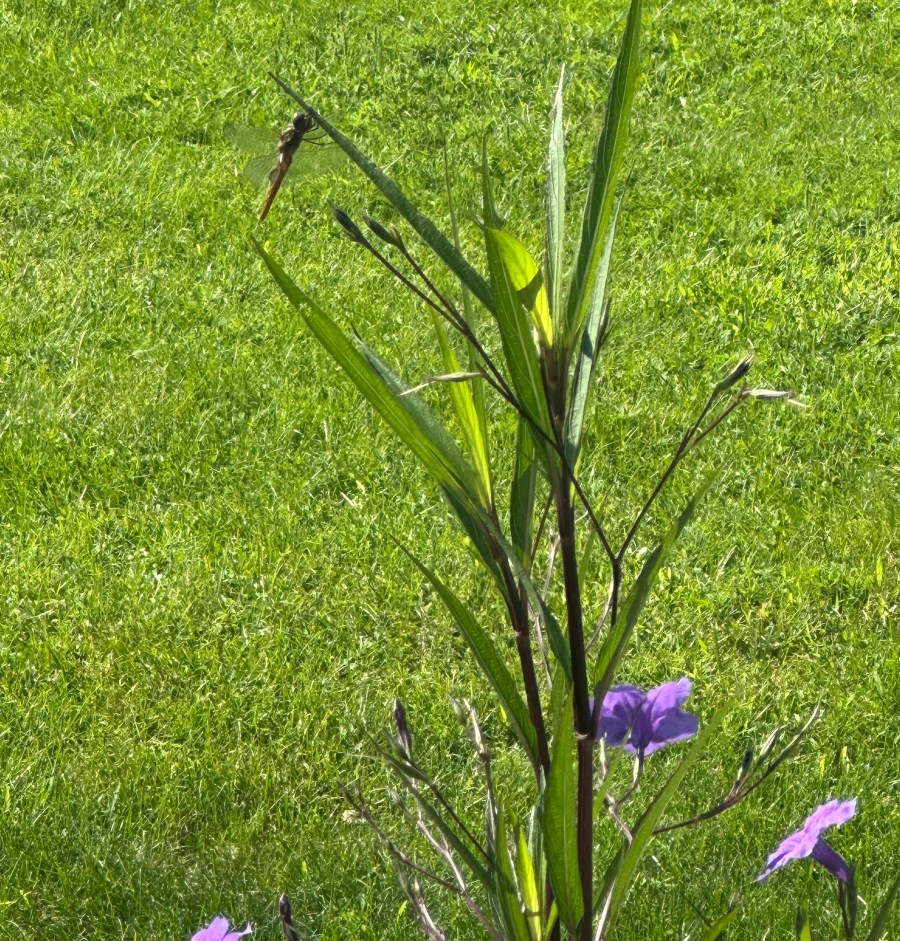
Today’s image: I noticed a dragonfly on my “purple showers” the other day. He was simply sitting on to the edge of the leaf. Moving with the wind as it swayed. I wondered if he was stuck. After several minutes, he flew away. He reminded me to land lightly, settle softly, and enjoy the moment.

Featured

Be open and keep learning

One of the things I am most enjoying about my new hobby and passion for cross stitch is that there is so much to learn. Groups I am in share tips and tricks for stitching on various fabrics or ideas and ways to mix colors for floss (thread) that you don’t have in your “stash” or to make a pattern your own style. I can’t think of a day in the past 11 months that I haven’t learned something from watching another stitcher.

One of my favorite designers, and floss tube creators, is Jacob de Graaf of Modern Folk Embroidery. He’s a multidisciplinary artist but an expert in traditional style, period reproduction, Quaker and Dutch/Frisian samplers. As we are journeying through a stitch-along for the month of August working on our Fast Frisian sampler, Jacob has been sharing his sampler collection and the research he has done to learn about the young girls that stitched the samplers, the schools or orphanages they attended, and the families and villages that they grew up in.

The past two weeks, in our daily stitching videos, he has taken us on a journey to various cities in the Netherlands to visit art museums, landmarks, and the quaint 600-year-old-city that he grew up in. It has an historic canal, a waterway that was a thoroughfare, that connected Friesland to Germany. Because of that, his town received their “city” status. Jacob took us to lakes, gardens and a lovely working windmill. I will probably never visit the Netherlands so I have been soaking up the sites and information he has shared with us.

In today’s image I have shared my progress on our sampler, as well as the desired end result showing Jacob’s chart and design. I am behind on my Frisian samplers as well as other “stitch-alongs”, due to a lot of birthday celebrating this week, for which I have no regrets and am grateful for the opportunity to celebrate with friends. Hopefully I will catch up this week. But as another floss-tuber said this week regarding her stitch-along, there are no stitching police, do what you can and have fun. Great advice for life as well.

Today, in his Angelus address for the Twenty-First Sunday in Ordinary Time, Pope Leo XIV reminded us to remain open and resist the temptation to think that we have learned all we need to about our faith. Pope Leo reflected on Matthew’s Gospel and Jesus’ question to the disciples, “But who do you say that I am?” Pope Leo suggested that Jesus calls us to give a personal response to this question, to continually rediscover our relationship with Jesus in the Gospels, reviewing and renewing the choices we make each day to be sure they are consistent with the faith we profess to believe.

If we attended Catholic schools, or religious education programs, we might be tempted to believe that we have learned everything we need to live a Christian life. I have found in the many books I read, or retreats I have attended, that my relationship with Christ is ever changing. My most common prayer during weekly Adoration is, “what do you want me to know or see today?” I am often surprised by the answers or insight I receive in prayer.

Pope Leo offered us these questions as suggestions to pray with: “Who is the Lord for me? Do I truly know him? What is his Gospel asking of me today? What steps and what choices am I called to make?”

Maybe there is a book you have seen that would offer some time for quiet reflection each day. Perhaps a retreat or Day of Reflection. Sometimes they are virtual, so you don’t actually have to take time to get away, although I do believe there is great benefit in removing ourselves from the daily distraction of being at home, with tasks to be done attempting to grab our attention. Our parish, as many do, will begin adult education programs for those interested in learning more about the Catholic faith, in preparation for receiving the Sacraments at Easter, but are open to those who want to rediscover and learn more about the practices of our faith. Check with your own parish, even if you have been away for a while, if that sounds interesting to you. Certainly you are welcome at Holy Family Parish if you don’t have a parish you call “home”.

This week think of an area of your life that you have grown complacent. How might you learn something new and gain some knowledge about it? Perhaps you are feeling called to grow deeper in your faith life.

I’d love to hear about it in the comments if you wish to share what that might be or what you learned.

Wishing you abundant peace and joy this week, Deena

Featured

Grateful anyway

I received Kate Bowler’s newsletter on August 12 titled “Why I’m Anti-Gratitude” and I have been on a gratitude practice recovery journey since. Now, first of all, if you have visited this blog before you know I am a fan of Kate Bowler. She’s a wonderful author, podcaster, speaker and professor at Duke University. I have her books and listen to her podcasts. So, this likely won’t change my overall opinion of Kate’s work. She began her newsletter sharing that she began a gratitude practice when she was recovering from a serious illness (Kate is a cancer survivor), and that it helped. But, she went on to say that the wellness industry has turned gratitude into a guaranteed cure for suffering and a “strategy for controlling life and our emotions. Another optimization project we can fail (or succeed!) at.” Simple, she suggests, write 3 blessings a day and you’ll never be sad again, concluding that it’s simply not true. She states that it has become a way to refuse that life is BOTH beautiful and hard.

Ok, I get that.

I paused. I questioned whether my daily practice was making a difference. I judged my current ongoing list of gratitude bullets (on that particular day my list was up to #1440) that I began after reading another author, Mary deTurris Poust’s practice of numbering and keeping the gratitude list going as a way to acknowledge the countless blessings in our lives. I wanted to go to Kate’s Substack account and comment that I don’t think most of us see gratitude simplistically, as a magic bullet for happiness. Instead I considered the study she quoted, that there wasn’t a positive benefit in those participants who journaled gratitude over those who did not. She teaches at Duke after all!

But it just didn’t settle with me. I couldn’t let it go. I believe being grateful does make a difference in our outlook and perspective in life.

Fortunately at the same time, one of the Facebook groups I am part of, facilitated by my Young Living Essential Oils manager organization and Brenda Schuler, our “Diamond” leader, began a 10-day Gratitude Reset Experience. Each day she has posted the benefits of practicing gratitude and rewiring our brains to focus on positive events and circumstances in our lives.

Our energy matches what we focus on. I believe this.

On July 12 Br. David Steindl-Rast turned 100 years old. He has long been a voice, known as the “Grandfather of Gratitude, for the transformative power of gratitude. His TED talk in 2013 tells us that it isn’t that happy people are grateful but rather grateful people that are happier. His 2017 YouTube video, A Grateful Day, has been one of my favorite reminders of the gift of each day. As founder of Grateful Living, Br. David and his organization, are committed to sharing the benefits, and practice, of gratefulness and the impact it can have on our lives and our world.

Dr. Arthur Brooks, a well-known author and podcaster, recently shared his 5 step process toward living a more grateful life. Also a professor (Vanderbilt University), Dr. Brooks says we are living in a “happiness crisis”. He writes and speaks extensively about finding happiness and meaning in today’s world by incorporating simple practices and attitudes into our daily way of thinking and being.

There are countless others. As I reminded myself of these respected teachers and scholars, I reflected that they aren’t suggesting we ignore the hardships in life. They aren’t saying do “this…” and your life will turn around and all difficulties will disappear. But I do believe they are suggesting that we are able to cope with and move through those times much easier when we have a foundation of gratitude for the blessings in our lives.

My faith does this as well. God doesn’t promise a life that is free from any worry or concern. However, I believe that I will be sustained during them. I was reassured as we prayed today’s Collect for the Twentieth Sunday in Ordinary Time: “O God, who have prepared for those who love you good things which no eye can see, fill our hearts, we pray, with the warmth of your love, so that, loving you in all things and above all things, we may attain your promises, which surpass every human desire.”

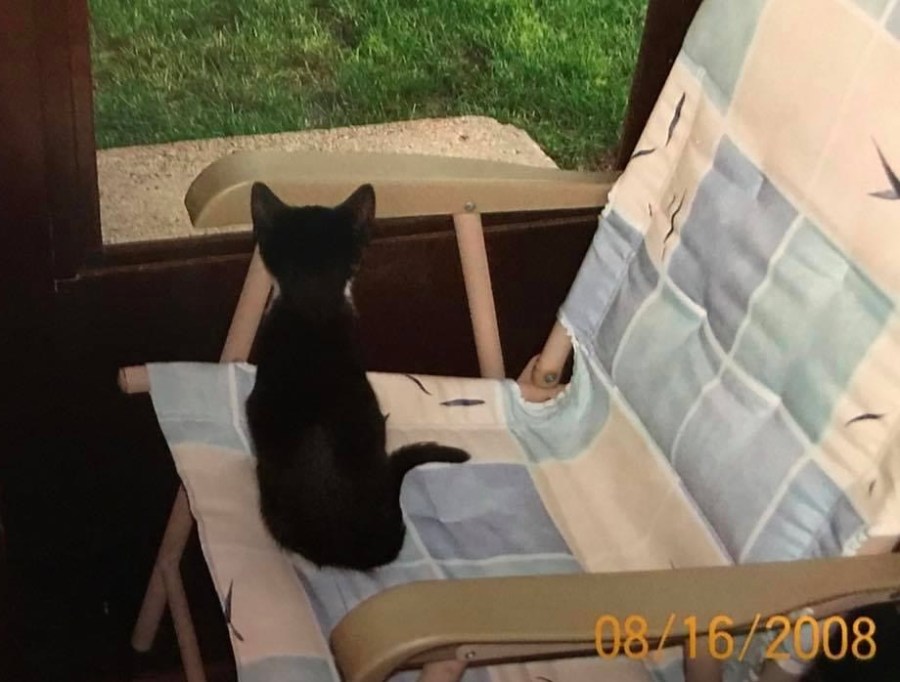
Today’s image is a picture of little Bela on the day he found me. While the pain of losing him this past February remains intense, I am grateful for the years we had together and all the joy and laughter he brought into my life.

Difficult and challenging moments will show up, that’s a given.

Be grateful anyway. Peace, Deena

Featured

Crowding out the chaos

My brother and I own the duplex that I live in. We have a tenant renting the other side. I have several plants in the flower beds on that side of the building but I have not planted as many as I have on my side and I don’t take the time to care for it as well as mine. For the past couple of years the weeds have been atrocious. I have tried rock, heavy mulch (lots and lots of heavy mulch!), landscape paper, but the soil is just lousy. The weeds seem to thrive in it. I have been putting off getting over on that side to clear the weeds again. Friday I decided I needed to get out there again, but I had a new idea. I purchased some ground cover, as I have in many areas of my flower beds, and planted to see if it will eventually grow and crowd out the weeds. I only completed a small section and I really wanted different ground cover than the ones I found, but it’s a start!

Planting the new ground cover is fresh on my mind this morning as I reflected on the Gospel reading for the Nineteenth Sunday in Ordinary Time. Matthew’s second accounting of the storm at sea has the apostles in the boat, alone without Jesus, as a storm brews and overwhelms them. In this version, they see Jesus in the distance as he walks toward them on the water. We are all familiar with Peter calling out to Jesus, Peter walking out to him on the water, but then begins to sink as he takes his eyes off Jesus. Our pastor, Fr. Paul Carlson, shared an insightful homily of the two storm versions in Matthew’s gospel and the need to keep our focus on Jesus as we navigate the storms and turbulent waters of this world. He reminded us that as followers of Jesus, “we need to be able to walk on the difficult seas [in life], but not be swallowed up by them.”

It’s not easy some days. The noise and turbulence of the world can overwhelm us just as the sea did to the apostles in the gospel. The weeds can take over and crowd out the good plants, in our spirit and soul, unless we replace the weeds with better plants. We need to blanket the soil of our minds and hearts with quiet time of prayer, reflection, and soul time with God. We are able to keep our eyes on Jesus, and less on the world, by who and what we devote our attention to.

I’m not sure if it’s age, or wisdom, but I find myself cherishing the quiet, alone time at home, or at church, more than I ever have in past years. Whether reading, listening to podcasts, gardening, stitching and reflecting, or simply in quiet prayer, it’s easier to be at peace. Perhaps it isn’t what I am turning toward but what I am turning away from. Likely, it’s a combination of both. Regardless, life is more serene and tranquil when I do so.

At this point in my writing journey of publishing this blog every Sunday for over three years, I have to check titles to make sure I haven’t used it before. This by itself is a task in creativity. I searched and found a previous post titled, “Clearing the Weeds”. I reread it and was reminded of a somatic technique called SNAP that author, and mindfulness teacher, Julie Potiker, developed. In the blog I share the meaning of the acronym, and briefly how to use the technique, to manage difficult emotions and move through situations with more ease and peace. I had forgotten about it, and in addition to prayer and contemplation, this simple technique is a great way to recenter in moments of stress. You can click here to read that post:https://deenapavinato.com/2025/06/22/clearing-the-weeds/.

This week I encourage you to find ways, that are helpful to you, when you need to clear the weeds in your own inner landscape. Find ways to be still. Then check in and see if it makes a difference in your day and your outlook.

Wishing you abundant peace, Deena

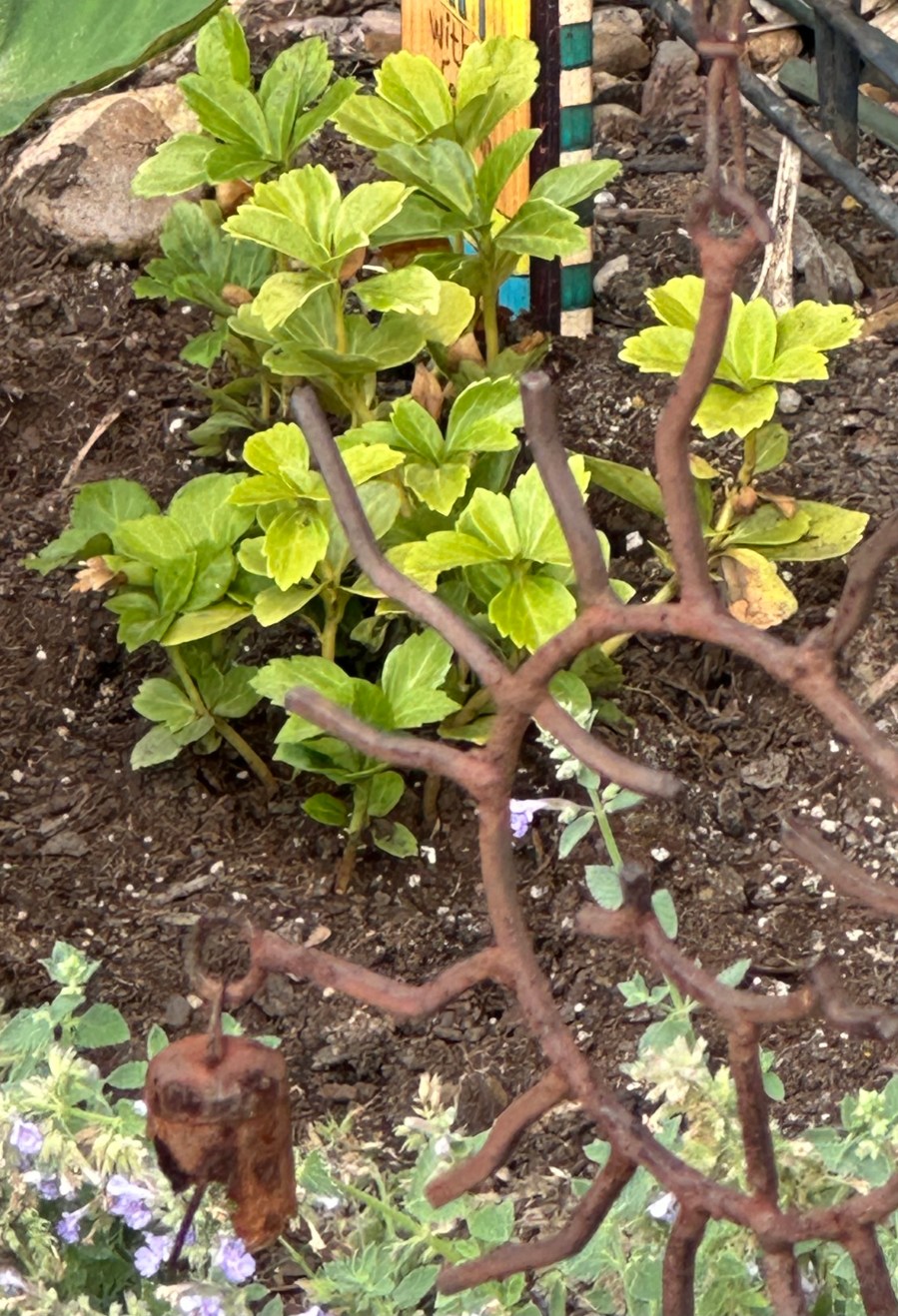
Today’s image: One of the small areas of pachysandra, a ground cover (Japanese Spurge), in my flower beds, that my friend Kathy and I fell in love with at Anderson Japanese Gardens in Rockford and have been adding to our flower beds this year. It’s growing nicely and next year I will be sure to add more to both sides of the duplex.

Featured

Cultivating growth

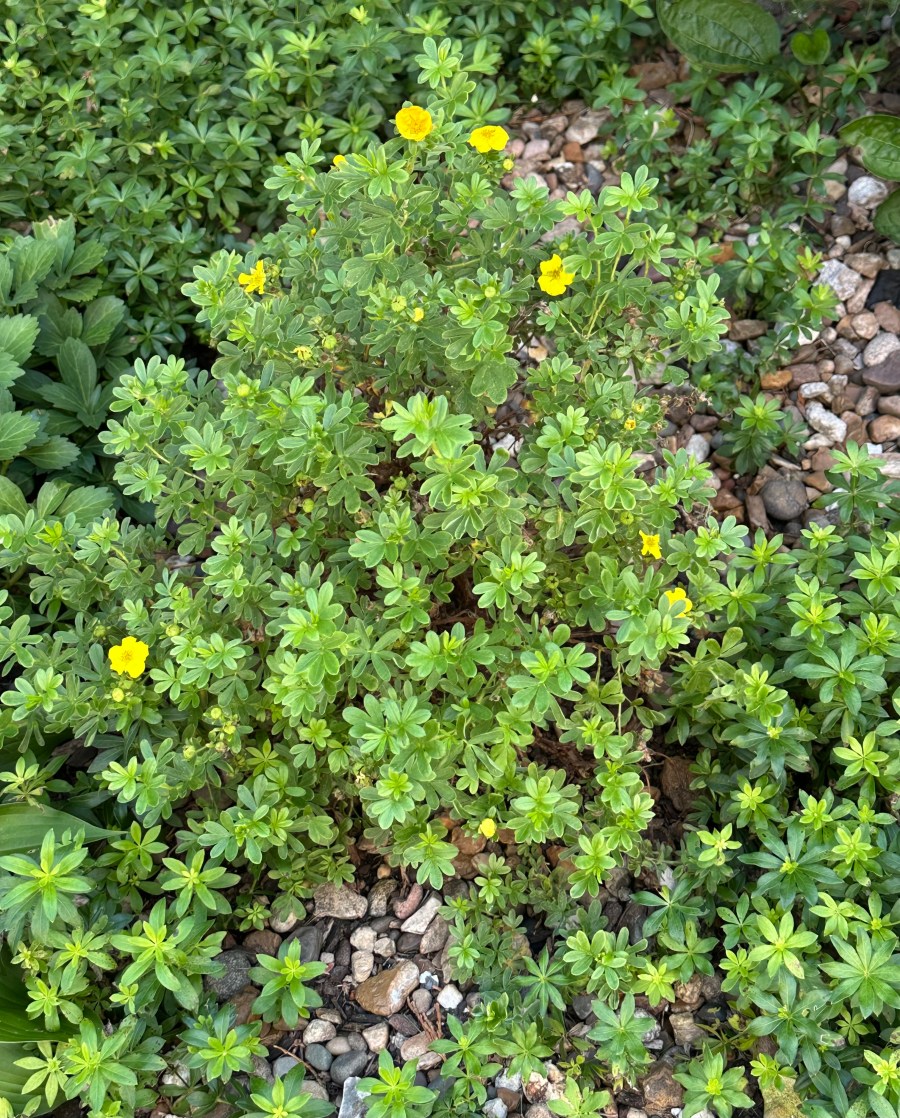
I planted a new shrub this Spring. I was looking for a full sun plant, for the flower bed in the south of my duplex, that gets direct sun morning until late afternoon. The Potentilla fruticosa ‘Jefman’, or Mandarin Tango Potentilla, was a vibrant green when I planted it and I anxiously awaited the vibrant orange-yellow flowers promised during the summer. I know there is some adjustment time but began to be concerned as I noticed signs that it was not thriving as well as the Japanese Pieris I planted at the same time on the West side of the duplex, protected from the sun by neighboring building. As the weather warmed I decided to move it to the West side, to a section shaded even more than the Pieris. I hoped that the new environment would be the right place to flourish and grow. You can see in today’s image that it seems much happier in this new location.

Some of the flowering plants I have in pots love the hot days and direct sun. My favorite summer plant, Ruellia brittoniana (also called Desert Petunia, Mexican Petunia or Purple Showers), recommended by Tad, owner of Seatonville Greenhouse a few years ago, will produce and drop gorgeous purple flowers every day. While it loves the heat and sun, it requires daily watering, sometimes twice. Gardening experts will advise to water deep but not daily, but I have learned that it depends on the plant. Each variety requires different care.

Today’s Gospel, for the Fifteenth Sunday in Ordinary Time, is the familiar gospel of the sower and the seeds. Jesus shares the parable of the farmer that scatters seed, seeds falling on the path with no soil to sprout, rocky soil not deep enough to establish roots and encourage growth, thorny soil that choked out the tender seed growth, and rich soil that allowed for growth and abundant crops. Of course, it’s a lovely analogy for our spiritual lives and the soil we tend to allow a vibrant relationship with Christ.

We are the gardeners of our lives. We choose, consciously or not, the environment that will allow for growth or choke it off. The things we think, the content we consume (online or written word), the people we choose to spend our time with, and the time and energy we allow for learning new things become the garden of our future. Some days might feel like nothing is progressing, circumstances might look and feel like failure, but perhaps we just need to tend to the “soil” to encourage growth, like my Potentilla needed a new area to allow for growth.

We need the right soil, sunlight, mindset and circle of friends to support us on our journey of becoming who we want to be and what we hope our lives will become. I have always been an introvert (at the heart of who I really am, regardless of activities and involvements) and I know people perceive that I am becoming even more so. But as I reflect on it, I believe it is just being more selective about the things and people I spend time with. I want to do things and be with people that add value on my journey, and allow me to do the same for them.

I am carefully watching some weeds creeping up on some flowers in a flower bed. I hurt my wrist, after a fall in the flower beds earlier this week, so I have to tend to healing but I know that if I don’t get those weeds removed soon they will choke off the other plants. What are you spending your time on? Are they activities that inspire you and lift your spirits? Take stock of the people you are surrounding yourself with, are they supporting and encouraging you?

Seeing the results you want in your life takes attention, time and daily care. Check in on your “garden”, how’s it doing?

Wishing you abundant peace and growth this week, Deena

Featured

The practice of peace

Have you found yourself irritated with others, or with life/the world, because events weren’t turning out as you had hoped they would? Maybe it’s more than a hope, but an expectation, that circumstances should be different. We (me!) can stress and worry about situations in life, but frequently find we have little control over it. As a reaction I often retreat, inwardly, or even physically, to my inner being, and home, preferring silence and solitude. My desire is to keep a constant connection with Spirit, throughout the day, focused on the things that really matter instead of the mundane and passing concerns that can consume so much time and energy. Some days are easier than others.

I have to catch myself when the repeated tape of a conversation, or of the behavior of someone else toward me, begins to rewind over and over again. I laughed out loud this morning reading a post by personal development author, life coach, and speaker, Cheryl Richardson, as she described the thoughts going through her mind as she took a shower. She stopped herself and said “Cheryl, come back, there are too many people in this shower with you!” I replied, “Girl, I hear you!” I laughed thinking of the countless times I have been in the same situation.

I have been encouraged in my practice of being in the presence of God, more mindful of Spirit and connection, as an alternative to mindless worry over past or future events, as I have been rereading a book by Brother Lawrence from the 17th century, Practice of the Presence of God. I was encouraged to read this small book in the 1990’s, along with Abandonment to Divine Providence, written in the 18th century, by one of my parish priests. Both have been helpful books on my spiritual journey. Lately, I have been using an updated translation by Ascension Press, which has been much easier than reading the original book I have. The book has gained much popularity after Pope Leo XIV wrote an introduction to a Vatican edition of the book, indicating that this book was one of the books that has shaped his spirituality and awareness of knowing and loving God. Pope Leo has advised that the journey of practicing the presence of God, is an arduous one because we have to renounce all of the other things that seek our attention, so that we can keep our focus centered on God.

And isn’t this the goal of Christian mindfulness, and a practice of centering prayer and contemplation? We desire to turn away from the clamor and noise of the world seeking inner peace and union with the Divine.

Brother Lawrence advises that we turn away from everything that distracts from that union, so that we can be in constant conversation with God. We pause, we turn to and rest in the Divine Presence. Simple but challenging. We seek to empty ourselves of the things of the world, from anything that does not lead to God. Brother Lawrence approached all his duties and responsibilities within the Carmelite monastery in this way, as an opportunity to practice the presence of God.

Just as Brother Lawrence had his tasks to complete, so do we. Practicing the presence of God does not mean we quit work, give up enjoyable hobbies and activities, or retreat to a monastery. I do find it is easier having fewer responsibilities outside of the home, but even those activities become opportunities to serve and be aware of God’s presence as we undergo them and encounter others in the process of doing them. It brings a different perspective to our engagement in them.

While the “practice” Brother Lawrence speaks of reminds me of Ignatian spirituality, finding God in all things and seeking only those things that bring us closer to God, he did not seem to be concerned with guidance from others, except in sacramental confession, or considering consolations and desolations in spirit. He simply returned his gaze to God and to the things that would be pleasing to God, despite any suffering or distraction.

With a similar message, Pope Leo XIV, in his video message to the 50th Summer Youth Conference in Steubenville, Ohio this weekend, encouraged youth to look for peace, for “true and perfect joy”, in the love of God instead of from others, or from social media and other electronics. He pointed to the life of St. Francis, and the peace Francis found, and shared with others, that looked different, and less appealing, to others, until they encountered him. They experienced the peace that he found within, in his relationship with God and a focus on lasting joy and happiness.

I hope that as I continue to practice the presence of God, less concerned with the opinions and actions of others, I will find that same level of peace and joy experienced by Brother Lawrence, Francis, other saints and mystics, and those who have followed them. I pray that this peace is experienced by others who I encounter. It’s a lofty goal to be sure, but one worth remaining committed to.

As always, I wish you abundant peace this week, Deena

Today’s image: a small wall hanging I purchased in Assisi, Italy. Pace e Bene means “peace and all good” or “good peace”.

Featured

A seed is just a seed

This is my favorite time of year in the Illinois Valley. We had late cold and rain this Spring, so it may appear to be a bit behind the last couple of years, but the baby corn, like the field in today’s blog image, are starting to sprout. I just love these little green leaves emerging from the ground. They make my heart happy!

Inside each tiny seed, the embryo of the plant has everything it needs to grow and transform into a mature plant. But each seed remains dormant until it has the right conditions of sun, oxygen, the right temperature and warmth, and moisture to activate and cause the seed to germinate. The seeds have a life force within them, that is dormant, until the right conditions appear to cause growth. (Farmers and scientists, please forgive my overly simplistic explanation.)

Seeing these plants beginning to grow this past week, I reflected again on the spirit, or life force, within all things. This life force is “viriditas”, or “greening power”, coined by St. Hildegard of Bingen, that I mentioned in last week’s blog. My reflection and study led me to review several articles again, especially one by Nameeta Renu, theology scholar and author of numerous articles on consecrated life, “Why St. Hildegards’s spirituality of ‘viriditas’ is so extraordinary”, on a site I follow, Global Sisters Report (see note below on GSR).

Hildegard, Benedictine abbess, mystic, healer, artist and scholar, saw the living power of light, from God, in all of creation. Her art and writings reflected this “greenness” in all things. But Hildegard’s concept of greening power wasn’t a study of ecology. She wrote that the soul within each person is the green life-force of the flesh. If we, as human beings, neglect our “inner greening”, if we lose the “sap of life”, carelessness about the things that are important in life, or if we experience the “drought of our indolence,” our soul power begins to “fade and dry up”.

Today is Holy Trinity Sunday. We reflect on the dynamic Love between Father, Son and Holy Spirit. We attempt to grasp how that Love is then shared with us. Hildegard would talk about the Holy Spirit as this green “sap” within us. Like trees, the Holy Spirit is the juicy green, moist, creative life within us. Is it alive or dried up?

So a seed is just a seed, or is it? It is pure potential. It is potential waiting for the right conditions to nurture it so that it can develop in a way that it becomes what it was made to be, in the image and likeness of the plant that created the seed in the first place. Or as Hildegard wrote, “Every creature is a glittering, glistening mirror of Divinity”. We were created in the Divine image of God. We are beloved sons and daughters.

So I pause to ask myself this week if I am nurturing and watering that seed within? Am I living to my potential, daring to declare who I am (also a thought from Hildegard)? What else does my spirit need to become fully alive, lush and green? I hope my thoughts prompt you to consider the same.

Wishing you a week, and a new month, that is thriving, vibrant and full of growth! Deena

Note: Global Sisters Report is an independent, nonprofit source of news and information about Catholic sisters and the critical issues facing the people they serve. They send daily email updates or you can visit their site, Global Sisters Report. You can also find a direct link on National Catholic Reporter.

Featured

Spiritus Sanctus

Most of us have an image of God the Father that we grew up with, for some, a kindly grandfather, and for others, a stern judge. Jesus is even easier to imagine because of countless gospel stories, movies or even series, like The Chosen. But as soon as we think we understand either one of them, we are wrong. Our mental depictions are limited and cannot possibly grasp the entirety of who God is and the Love poured out for us. So we cling to ideas that are helpful or move us in some way. Describing the Holy Spirit is even more difficult. I once heard a priest admit that preaching on Holy Trinity Sunday is one of the more challenging theological concepts to preach on.

The Church teaches us that we only come to know and believe in Jesus because of the Holy Spirit. The Catechism of the Catholic Church tells us that the Holy Spirit is the soul of the Mystical Body of Christ (i.e., the Church, each of us as believers). The Catechism says that the Holy Spirit is “the principle of every vital and truly saving action in each part of the Body” (CCC 798)

But if you are like me, that is too lofty. I need images, analogies, music and poetry to help me grasp more difficult constructs. Each year on Pentecost Sunday, which we celebrate today, I find myself in a familiar place, with a deep desire to know and understand the Holy Spirit better, asking the Spirit to help me grow in knowledge and wisdom.

I would like to share some of the thoughts, shared in prayer or written word, that I have found helpful for this Solemnity in the Church. I can’t promise that they will guide you to a better understanding of the Holy Spirit. I believe we have to ask and pray for the gifts of wisdom, understanding, knowledge and counsel. But maybe, just as Jesus entered the locked upper room in which the apostles, and the women close to him waited and prayed, the door will be unlocked and we will emerge with a bit more peace, faith and courage to see where and how we are being guided in life.

St Augustine’s Holy Spirit Prayer: Breathe in me, O Holy Spirit, that my thoughts may all be holy. Act in me, O Holy Spirit, that my work, too, may be holy…

Pentecost Prayer from Days of the Lord for the Easter Season: “Open your hearts to the breath of God, his life is grafted to the souls that he touches; May a new people rise from the waters over which hovers the Spirit of your baptism! Let us open our hearts to the breath of God, for he breathes in our mouths, more than we do ourselves!

St. Hildegard’s writing on the Holy Spirit and viriditas, or “greening power.” For Hildegard, the Holy Spirit is the divine life-force that breathes into the universe. It is the ultimate source of energy which brings spiritual and physical health, creativity, and helps us as spiritual beings grow and flourish. Looking at her art, or listening to her chants, help me as I try to connect with this life-force. You can listen to her beautiful Spiritus Sanctus chant as sung by the Benedictine Nuns of the Abbey of St. Hildegard by clicking here.

St. Teresa of Avila (another of my favorite women wisdom guides) said that the Holy Spirit is the “living water” that helps satisfy our thirst and longing for God, the “interior master” that teaches us, guiding our prayer and helping to transform our will to align with God’s.

Litany of the Holy Spirit: “ray of heavenly light, author of all good, source of heavenly water, consuming fire…Holy Spirit, inflame us with the flame of your love…teach us to pray well.”

Pope Leo XIV, Angelus Address today, May 24, said that the Holy Spirit acts like a “mighty wind” to open doors that send us out into the world. He described three doors that the Spirit helps us open. First, faith in God himself, who grants faith and understanding in holy Scripture, which allows us to have a personal encounter with Jesus. I reflect on my experience with Lectio Divina and Imaginative Prayer, which help me hear and respond to Jesus. Second, Pope Leo said that the Church helps us with our fears and anxieties in the face of today’s challenges in the world. It invites us to be open, hospitable and loving to others in the world. Finally, the third door that the Holy Spirit open is the “the door of our heart, helping us to overcome resistance, selfishness, mistrust and prejudice, while enabling us to live as children of God and brothers and sisters to one another. Where the Spirit of the Lord is, fraternity is born among individuals, groups and peoples of the Earth, and all speak the same language of love, which unites and brings harmony despite our differences.”

This week I pray that the Spirit descend upon all of us, like dew in the early morning, refreshing our spirits and souls, helping us to grow in wisdom and understanding. I pray that the doors of fear and worry to be thrown open and replaced with a spirit of trust in God’s abundant love for each of us. I pray that the Spirit, in each of us, help us to be a people of love and care, each with a spirit that cares for the common good and well-being of our neighbors and our planet.

Come Holy Spirit, Come!

Wishing you abundant peace, Deena

Today’s Image: a photo taken in the Vatican of a dove with an olive branch.

The sacred now

This week has been a week of memories yet poignant reminders to appreciate the gift of each present moment.

I visited the cemetery on Saturday to place my annual geraniums on the gravesites of my parents and grandparents. As I trimmed away the taller grasses close to the tombstones, where the caretaker had not mowed, I thought of past Mother’s Days. I wished that this weekend’s could be different. I had my silent conversations regarding all the recent family activities and updates, especially Genevieve’s (my niece Maureen’s daughter) First Communion on Sunday. My mother would be delighted to witness this special event.

Last Sunday, returning from the aromatherapy conference I attended, I learned that a woman, very dear to me, one of our daily “morning Mass ladies” and a neighborhood mom while I was growing up, suffered a massive stroke and remains in hospice care while her family waits for her to let go of her physical body (at the time of this writing, but our dear friend passed peacefully late Saturday evening). The week prior, she advised me that our routine Wednesday morning breakfast was back in place, paused during Lent and a few other activities, and asked me if I wanted to join them. I replied that I was busy getting ready for the conference and was trying to get things done before the four days of driving back and forth to the venue. She smiled and said, “Ok, next week then!”

There was no “next week” outing this week. I have asked myself over and over if that hour would have impacted my ability to be ready to go to the conference. The answer is always no, I would have gotten things done regardless.

Thursday I was shocked to hear of the death of a high school friend, losing her long battle with cancer. At one of our past reunions, in remission and positive as she always was, she honestly remarked that each day is a gift and that she doesn’t take any day for granted. I am confident she lived that way. I always enjoyed her family updates on social media, especially the joy she experienced in her grandchildren.

I am so sad for the families of each of those women, facing a Mother’s Day different than last year. I am absolutely confident that both of them will be welcomed into a life free of pain and discomfort, experiencing the Love and Light that the rest of us hope one day to dwell in. Yet in the joy of contemplating their eternal homecoming, there is sadness and loss for those left behind. For those of us who have lost our moms, we know the melancholy that dwells within as we see others celebrating. It changes with time, but it doesn’t go away.

For those of you who still have your mothers, treasure the time you have, even with the minor disagreements. You are probably more like them than you might care to think about. Be independent and be your own person, but be kind.

For those of you who are mothers, grandmothers, or stepmothers, enjoy your time with your families. Be grateful that you have another day to watch your loved ones step out into lives of their own. Whether you agree or disagree, you likely helped them gain the confidence to try new things. Be proud of that!

It seems so cliche to say that each moment is sacred and that we have to treasure the “here and now”. Some weeks it feels more true than others. I hope that we honor the memories of yesterday that we enjoyed, or learned from. I also hope we inhabit each moment of today as if it might be our last, turning our current moments into living memories.

Happy Mother’s Day to all of you that are mothers, stepmothers, and grandmothers!

Until next week, wishing you abundant love and peace. Deena

Image: A canvas wall banner in the unique shop that I did social media work for last Fall and early Winter. It’s a lovely reminder to be, know and remember the strong women in our lives.

Featured

A listening heart

The problem with getting hundreds of emails from authors and speakers that I follow is keeping up with them all. The amount of compelling content to read can be overwhelming each week, so I read some, scan some for the highlights, and then save for later. I recently stopped to read a blog I had saved, written by Eric Clayton, author and Director of Communications for Jesuit Conference of Canada and the United States. I met and began reading Eric’s book and blogs during my time at Ignatian Ministries. He’s a wonderful writer and I am often inspired by his essays in his weekly “Now Discern This“.

The email that I re-read was regarding a trip to the bookstore and advising his daughters that they could pick out one book, not a toy or game. Eric made a selection of three books, from all of their choices, that he thought they might like. The youngest, unamused with the concept of making a decision declared they should get them all. Eric used this as a lesson in making a choice.

Eric goes on to write, to each of us, the beauty of the tools of discernment given to us by St. Ignatius of Loyola. We must understand our limitations, he explains, and understand that we can’t have it all. We use the tools of discernment to help us align our gifts and talents with God’s will for us.

I am grateful for my time at Ignatian Ministries and our use of the Ignatian Discernment tools in every decision we made. The tools of discernment taught by Ignatian Ministries founder, Becky Eldredge, as well as authors such as Eric Clayton, Fr. Timothy Gallagher, Fr. Kevin O’Brien, Fr. Mark Thibodeaux, Fr. William Barry, and countless others, help us tune in to the thoughts and feelings we are having as we pray and make decisions. These tools, first considered by St. Ignatius of Loyola as he was convalescing from a battle injury, help us to identify “good” and “evil” spirits impacting us in our daily lives, as well as movements of consolation and desolation, we are feeling as we consider decisions or ways of responding to particular situations.

These don’t have to be used in huge life changing decisions, such as what job to take, where to move, or whether we are being called to a vocation. They can be used practically, such as Eric’s example of helping his daughters make a book purchase or in our daily prayer.

This past week I began a novena for a specific intention. It wasn’t an intercessory intention for someone in need or as stately as world peace. It was something more closely related to my life. By the third day I began to feel a sense of desolation about my prayer. I brought it to reflection during Adoration and quickly realized I had the plan all figured out. I had my request and the outcome all set. I began to “feel” God respond to me and say, “that might be the right outcome” but “let go, let me handle it. I can see far wider than you can.” At that point I changed my intention to “whatever is best…” I almost immediately felt the desolation change to consolation, and accompanying feelings of peace, calm and a willingness to hand over my request to God.

Becky Eldredge has frequently shared her insights on “Testing Desires” in her workshops. The first step Becky suggests for us helped me this week: Check the source – did it come from God, from my humanness, or from a false spirit? Next, where did the desire leave me?

I could feel in my spirit that my specific prayer was not leading me closer to God. I knew I had to let the outcome go and trust the process. I may not understand completely what I may be led to, but I feel better praying for what is best and for an outcome that will help me be the person God created me to be, rather than what I think is best for me in this moment.

If you would like a free resource on the Steps of Discernment, you can download it from Ignatian Ministries (IM) website or search the IM blog, Into the Deep, for articles on discernment, consolation or desolation. Another amazing resource, for all things Ignatian, is IgnatianSpirituality.com.

I wish you abundant peace and calm as you go forward into this new week! Deena

Photo: prayer candles at a church in Orvieto Italy.