Idleness is the enemy of the soul. Therefore the community should have specified periods for manual labor as well as for prayerful reading. Chapter 48 – Daily Manual Labor, The Rule of St. Benedict
The purpose of work in the monastery is to serve the community and fulfill all the tasks for the daily operations of the monastery. Tasks such as kitchen duty and being porter of the door are outlined by St. Benedict. But in all aspects of The Rule, there is always room for adaptation due to weather, the season of the year, or the age or “fainthearted” nature of the person performing the work. I love this about The Rule. There are guidelines but a wise abbot or prioress knows we all have different capabilities and endurance levels.
There have been times that I have viewed my work as fulfilling a purpose and serving a common good. Perhaps I was helping people by making their work lives easier by offering customer support or solving problems for them. Honestly, there are also times that I questioned what the value of that work was in the larger scheme of things. How I viewed the value of my work was probably closely correlated to how happy I was in the role. I would definitely make different decisions about work I was engaged in given the chance to do it over again.
But it’s also important to remember that I might not see the entire picture or purpose for the work I was doing, or the lives I might have impacted, by my presence there.
I read a newsletter earlier this week by an author I follow, Laura Kelly Fanucci, “Work Without End, Amen”, that reminded me of this important perspective. Fanucci offered a new piece of information, to me, about Bishop Ken Untener that I admired during my years living in Michigan. Laura shared that these lines written by Bishop Untener are often attributed to Bishop Oscar Romero because of a Christmas address given by Pope Francis, and a paper written by Cardinal Basil Hume. The lack of clarity ended up aligning the words with Romero.
Untener wrote: “We may never see the end results, but that is the difference between the master builder and the worker.”
Fanucci concluded, “I can picture both brother bishops shrugging. Who cares? What matters is the work. What matters is the mystery that Jesus called the Kingdom of God or the Kingdom of Heaven or the life of the world to come. What matters is that we got to be here at all. What matters is that we get to roll up our sleeves again and dig into the dirty dishes of being human. What matters is the work without end. Amen.”
This week I lamented the passing of poet, novelist and environmental activist, Wendell Berry. I am so grateful for his extensive writing and recorded talks, but his voice will be missed. In light of Labor Day, and the subject of my blog this week, I share these words by Berry:
“Teach me work that honors Thy work, the true economies of goods and words, to make my arts compatible with the songs of local birds.
Teach me patience beyond work and, beyond patience, the blest Sabbath of Thy unresting love which lights all things and gives rest.“
Let us seek to find value in our labor each day, whether it is caring for our families (and pets) at home, serving our parish community, assisting as a volunteer at an agency helping others, or still actively engaged in paid employment. Our work becomes an extension of our prayer when we try to serve and praise God in how we view those daily tasks. May we also seek to refresh and nourish our spirits by taking time to rest in the Love that is surpasses all of our human endeavors.
Wishing you deep and soulful rest this Labor Day weekend. Deena
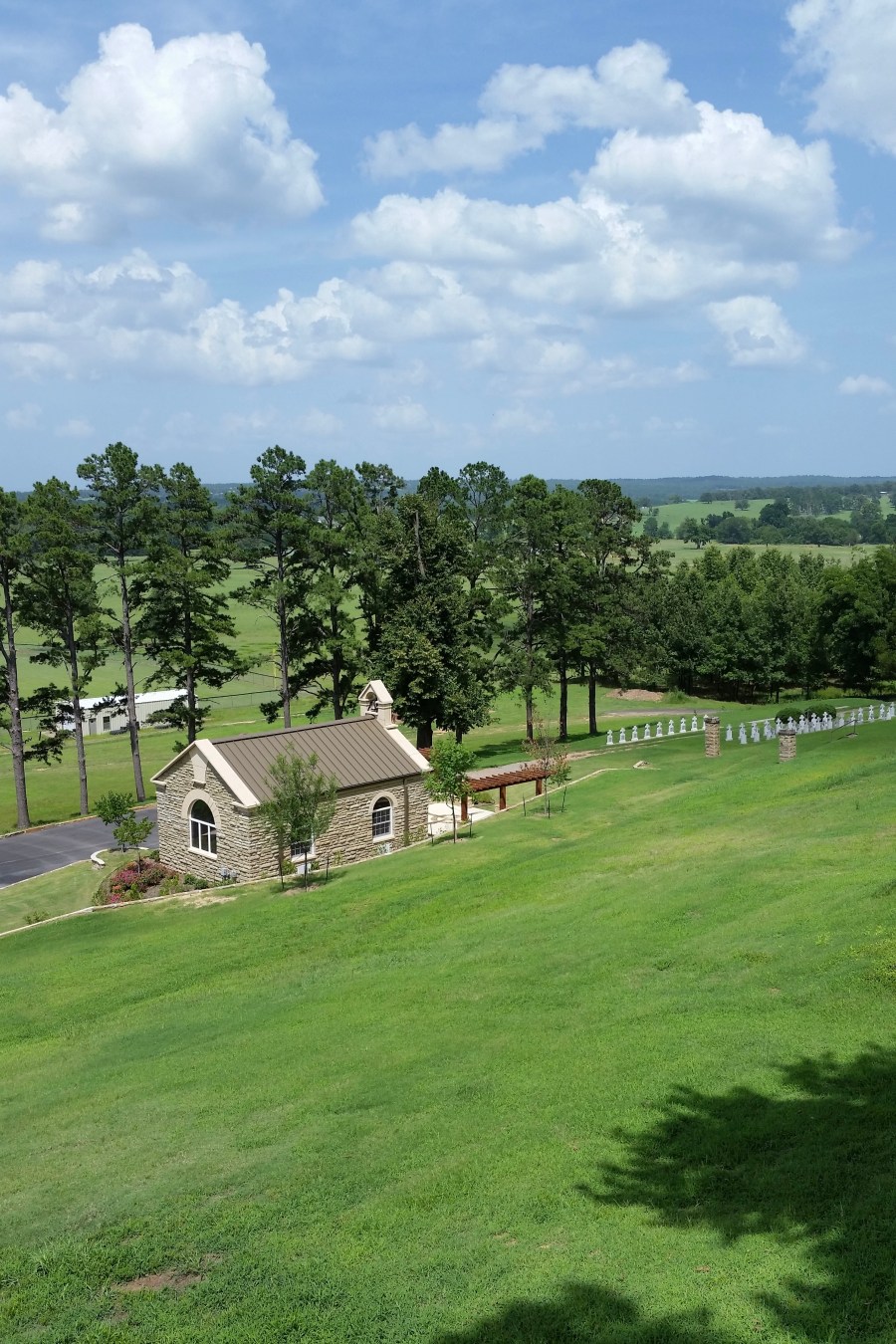
Image: a small chapel on the grounds of Subiaco Abbey, Arkansas

