Seeds that will sprout

I’ve been thinking about the spiritual practice a lot this week. When I think of my own practice, I notice the places that need some change and some nurturing. It’s normal to adjust and change as individuals as our spiritual lives deepen and grow. It’s healthy to notice where we need to tend to them a bit more.

The spiritual practice and what it leads to, a richer inner life and ever growing closeness to God, isn’t just a certain set of actions or habits. It is how it changes and transforms us interiorly. I think it is easy to focus on the external behaviors like going to church, saying a rosary or other prayers given to us by others, to sit in prayerful meditation, kneel in reverence or take a walk in nature. But if a quiet and receptive mind and heart aren’t there, then I would guess that the interior life is stagnant or perhaps even chaotic. We might not think that it is “getting us anywhere”.

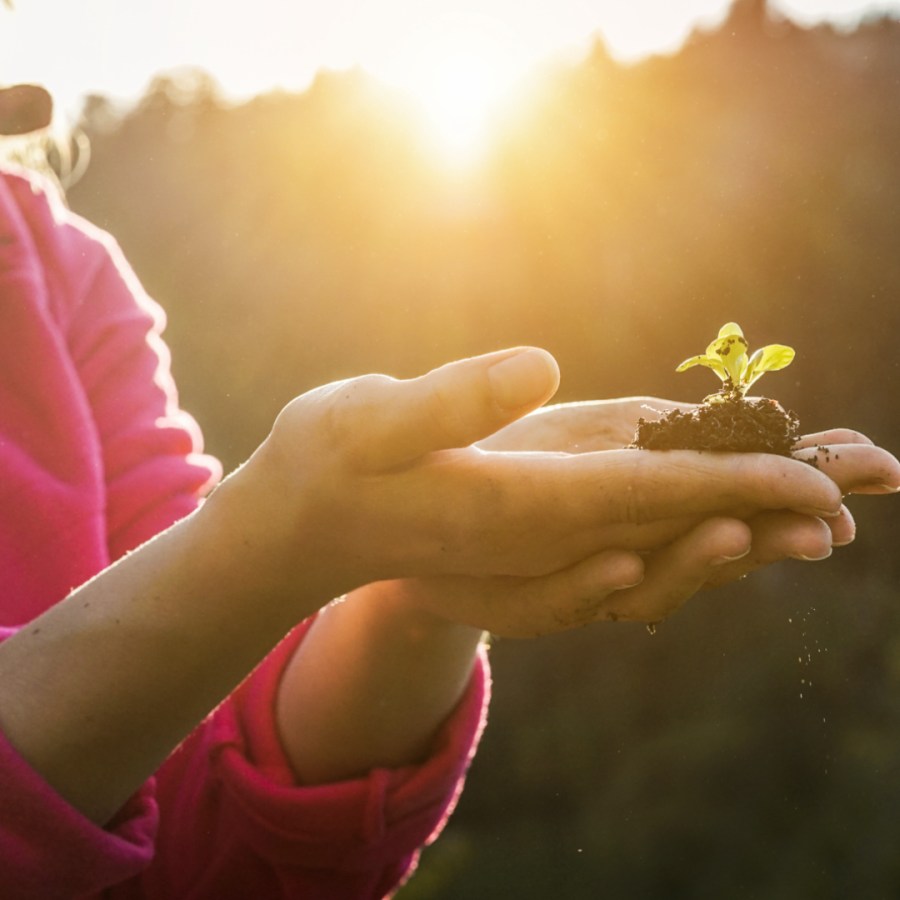
Perhaps we can imagine the spiritual practice like planting seeds. We get the seeds or tiny plant, find the right environment for it to grow with the proper sunlight and we water it. We care for it. But the growth of the plant is outside of our control, we have to wait, continue to care for it and protect it. Ultimately it is a gift. Or even better, a grace that comes from the result of all the actions we have taken.

When we bake, we gather all of our ingredients, we mix them in the appropriate proportions and place those ingredients in the proper environment, an oven at the right temperature, and hope the result is the cake, muffins or cookies we desire. For those of us that bake, we know that sometimes outside factors can influence the end result, too much humidity, old flour, etc. But, the more we use that recipe, and make sure the ingredients are the best we have to use, the more often we are successful.

It isn’t just the ingredients of the cake, or the seeds and soil, that produce the desired outcome. Oh sure, sometimes you can toss a seed and get lucky. But gardening and baking both take practice, a repetition of the right process, over and over again, of doing the work and patient waiting.

The more I use Ignatian Contemplation, or imaginative prayer, the more I see the positive impact it has on my spiritual practice. Ignatian Contemplation, very simply, is placing ourselves in the scripture or story, listening and watching what is unfolding and then imagining our role in the story, what the scripture is saying to us personally. But just like baking and planting, it takes a bit of practice, as well as an open and receptive heart, to allow the scripture to speak to us personally. We listen to what Jesus might be saying to us, in our life, right now, in response to the needs, or graces, we have presented in prayer. Sometimes it is watching and learning from what we are seeing.

This week I imagined myself in the boat with Jesus and the apostles (Mark 4: 35-41) as the storm came upon the boat suddenly, I heard Jesus say “Quiet, Be Still!” to the storm, which caused the wind to cease and the waves to calm down. I knew instantly that my practice was lacking some calm, Jesus was inviting me to quiet my mind more, less talking, more being, in silence, present to the calming presence of Jesus.

If your inner life is feeling a dull or stagnant, maybe a bit unsettled, or in need of a little shift, a simple answer is to spend more time in prayer and reflection. This week sit with the scripture from Mark’s gospel of the blind Bartimaeus (Mark 10: 46-52). Jesus responds to his calls for help, those around Bartimaeus say “Take courage, get up, he is calling you.” He goes to Jesus and Jesus says to him, “What do you want me to do for you?” Bartimaeus replies, “Master, I want to see.”

As you quiet yourself and hear Jesus say, “What do you want me to do for you?”, listen to the words that well up within you regarding your spiritual practice and relationship to Jesus. What do you say to Jesus? What does Jesus say in reply? That just might be the beginning of your next steps, the guidance you are seeking to a more fulfilling spiritual life, which will result in an inner peace that comes from growing closer to God.

Two thoughts that might help come from a great teacher of the interior life, St. Frances de Sales:

One rarely does well what one rarely does.

There is no soil so barren wherein diligent tenderness cannot produce fruit.

I wish you great peace and inner calm this week.

Deena

Image from my PicMonkey account

Advent & Christmas 2023 – O night divine

It’s a dreary Christmas Eve morning, cloudy but the fog of yesterday and last evening has lifted. I have my Advent candles lit for the last time, all the Christmas trees and other decorations lit. The lights bring a welcome and comforting light to the drab day.

We began Advent with one candle and now the four brightly glowing candles remind us of the Light that has come into our world. We can rejoice that on this evening, over 2000 years ago, a Savior was born. The fulfillment of all the Old Testament promises, a promise of hope, came into the world and we too can live in hope. It seems quite poignant to me this year that the Holy Land is not able to celebrate Christmas and cities are filled with refugees seeking a promise of a better life. It accentuates our need for hope and peace. Let the final Advent candle, and the white Christ candle, remind us that there is a promise of Peace that we can cling to.

As we move from Advent later today, considering my time of prayer and reflection, I am always relieved that Christmas is an Octave, an eight day celebration of the birth of Jesus. If the last couple of days leading up to Christmas have been hectic and not enough quiet reflection time, you still have time after tomorrow. Spend time considering whether Advent and Christmas were all that you hoped for. If not, what can you do to change that? What grace can you pray for during the Octave of Christmas?

This year I wrote the Christmas letter for our Ignatian Ministries blog, Into The Deep. I scheduled it to post late this evening and our subscribers will receive the email and link to the blog tomorrow morning. If you have time late this evening (after 10 p.m.) or tomorrow after all the activities with family or friends settles down, I invite you to read it. We are so grateful for all that was birthed with Ignatian Ministries this year, it had lots of unexpected surprises but oh so many graces! Just like Advent is for each of us, we started with our prayers and desires, listened and discerned along the way, and said “yes” to those moments that felt like invitations from God. As in our individual lives, those “yeses” bring us to celebrate Jesus, and our relationship with him, each and every day.

I pray that the Light of the Christ Child illumines and fills your heart and home as we celebrate Christmas.

Peace, Deena

Photo: My Advent candles

Advent 2023 – Comfort not comparison

The first reading from Isaiah for the Second Sunday of Advent begins with the word “Comfort”. I was not feeling comfort yesterday. I having been feeling well this week, and lost my voice. Well, not entirely but I didn’t have as much voice as I needed to proclaim the readings this week as lector for Vigil Mass. I spent Saturday resting and picking up some items to soothe my throat and buy some groceries. I wasn’t shopping or preparing for the holidays as I felt I should have been.

Last night I listened to the Saturday reflection for the Hallow app’s Advent series. The presenter for the series indicated that on Saturdays they would play music to contemplate and rest in. This week’s song was “O Come, O Come Emmanuel” by the Benedictine of Mary, Advent at Ephesus. I instantly felt myself calming down. Advent at Ephesus has been my favorite Advent reflection music since Fr. Gary Blake introduced it to us before Mass or during Holy Hours years ago.

As I calmed down I asked myself whether it was just my disappointment in my voice or something else stirring within. I realized quickly how comparison was weighing me down. Others have shopping done, I haven’t started except for the ideas in my mind. I am receiving Christmas cards and mine aren’t written yet. How did I have time to make cards while working full time and now, working part-time, I have to resort to buying them. Speaking of working, I compare my previous income to my current and I can go in a tailspin of worry. I look at my beautiful decorations and then see posts of bigger trees, prettier lights, cheery mantles and festive table settings. I read Advent reflections, online and in books, and think other writers are more intelligent and profound in their Advent pondering.

St. Peter asks the most important question in the second reading for this week, “Since everything is to be dissolved in this way, what sort of persons ought you to be, conducting yourselves in holiness and devotion….” I don’t think the reading suggests that we give up our holiday celebrations and gift-giving but it does ask us to put things in perspective.

If we aren’t careful we can get lost in the rush during this season, meant to be one of waiting and contemplating. Find time to slow down this week and reflect on the true reason for our joy and celebration. Prioritize your quiet reflection time amidst the other activities. Ignatian Solidarity Network has a lovely online Advent calendar and asked yesterday, “What opportunities exist for you to practice simplicity this week?”

Be grateful for the things you have and the talents you have been given. We are each created as unique and special beings, find comfort in that instead of comparing yourself to someone else. I will try to do the same.

Peace, Deena

Photos:

Cover Image – my reminder “ornament” to find find calm in the midst of chaos

Our Advent wreath at Holy Family Church

Praise and exalt him above all forever

One of my favorite prayers in scripture and the Liturgy of the Hours is the Canticle of Daniel which is prayed on Sunday, as part of Morning Prayer, for Week I and III. Each year, the Canticle is used as the Responsorial Psalm and verses from the book of Daniel are proclaimed as the First Reading at Mass for this final week of the liturgical year (the new year begins with Advent, next Sunday). I am always disappointed because following Thanksgiving and before Advent, it seems our priests take a (well-deserved) break or we don’t have a regular schedule of daily Masses. Fortunately in my area there are several different churches that will have a morning Mass so there is always a church to attend or a Mass to watch live-streamed. The beautiful scripture passages used are of Daniel’s interpretation of King Nebuchadnezzar’s dream, his own vision of the glory of God, and the recitation of the Canticle by the three young men thrown in the fiery furnace because they would not worship the golden image created by the king. Daniel helps us to deeply consider our lives and the choices we make as we bring our year to a close and consider what we might like to focus on or how we want to grow closer to God during Advent.

The scriptures offer us an opportunity to pause and reflect on what is most important in our lives, what “golden images” we place our attention on, and how we serve God in our lives. The Sunday gospel (Matthew 25: 31-46) for Solemnity of Christ the King, asks us to consider whether we will be seen as the sheep or the goats, based on how we cared for other people. (GOAT – not Greatest Of All Times! Thanks to Mary DeTurris Poust, writer and retreat leader, for this reminder in her Give Us This Day reflection.) Did we see and welcome Christ in the other? (The Rule of St. Benedict, Chapter 53) Do we pause to appreciate the gifts we have been given, in our talents, or in the world around us?

Here are a few verses of the Canticle:

Sun and moon, bless the Lord; praise and exalt him above all forever.

Stars of heaven, bless the Lord; praise and exalt him above all forever.

Every shower and dew, bless the Lord; praise and exalt him above all forever.

All you winds, bless the Lord; praise and exalt him above all forever.

Fire and heat, bless the Lord; praise and exalt him above all forever.

Cold and chill, bless the Lord; praise and exalt him above all forever.

Take time this week and open your Bible (or Google it!) to the Canticle of Daniel, Daniel 3:57-88. It’s a beautiful song of praise to God, creator and King of all. I can’t think of a better way to begin each day, then by taking a moment to praise God for all the gifts we have been blessed with, despite the challenges in our lives.

As we prepare to bring this liturgical year to a close, consider whether the things you give attention to each day reflect your priorities and values. How do they reflect your faith?

Wishing you abundant love and peace, Deena

Image from my PicMonkey account

Finding light in the darkness

Sunny days like yesterday and today give me hope. I know it will stay light a little longer, perhaps until 5 or so, instead of 4:30 on dark and cloudy days. I treasure whatever moments of daylight we can get before the evening settles in.

I canceled my cable subscription a couple of months ago. I don’t miss the mindless TV and have other opportunities to catch up on news each day. I have a streaming app for $6/mo and can watch local Chicago news if I am free or something is happening that I want a quick update on. With YouTube and phone news apps, as well as ability to search for anything online, there are ways to stay informed. It is important to stay informed, but not let the news of the world consume or overwhelm us.

After reading a link to The Washington Post from Maria Shriver’s Sunday Paper, I was left confused reading the disagreements between United States, the United Nations, Israel and Hamas over the differences between a humanitarian pause and temporary cease-fire regarding the war in the Middle East. Neither side can agree or is willing to budge for the sake of the lives of innocent civilians. Both were viewed as “tactical pauses” that would result in the continuation of the war and continue to delay the work of those trying to get aid to those impacted by the war as well as continue to negotiate the release of hostages. It can be overwhelming to think about the pain and suffering of all the lives being ravaged by this war.

In a world that feels more and more divisive, with the wars in our world, as well as political and religious dissension looming large in the news, I found comfort in the words I saw in a post yesterday of the first African-American Nobel prize winning author Toni Morrison (1931-2019), written in 2015:

“This is precisely the time when artists go to work. There is no time for despair, no place for self-pity, no need for silence, no room for fear. We speak, we write, we do language. That is how civilizations heal.

I know the world is bruised and bleeding, and though it is important not to ignore its pain, it is also critical to refuse to succumb to its malevolence. Like failure, chaos contains information that can lead to knowledge – even wisdom.

Like art.”

In his Angelus message today from Rome, Pope Francis also offers us words to reflect on, looking to the Gospel for today, from St. Matthew, and the parable of the 10 virgins, 5 prepared and 5 unprepared with their lantern oil, for the arrival of the bridegroom and the wedding feast. The Pope asks us to consider the many ways we are more concerned with the things of the world, our appearance and our image to others, instead of “taking care of the things that cannot be seen…caring for the heart.” He suggests we should not ignore the “oil of inner life” and take time to look at our inner lives, of God’s gaze upon us.

Let us let the chaos in our world, lead us to that time of inner reflection, listening deeply to how God might be calling us to reach out to others in our broken world.

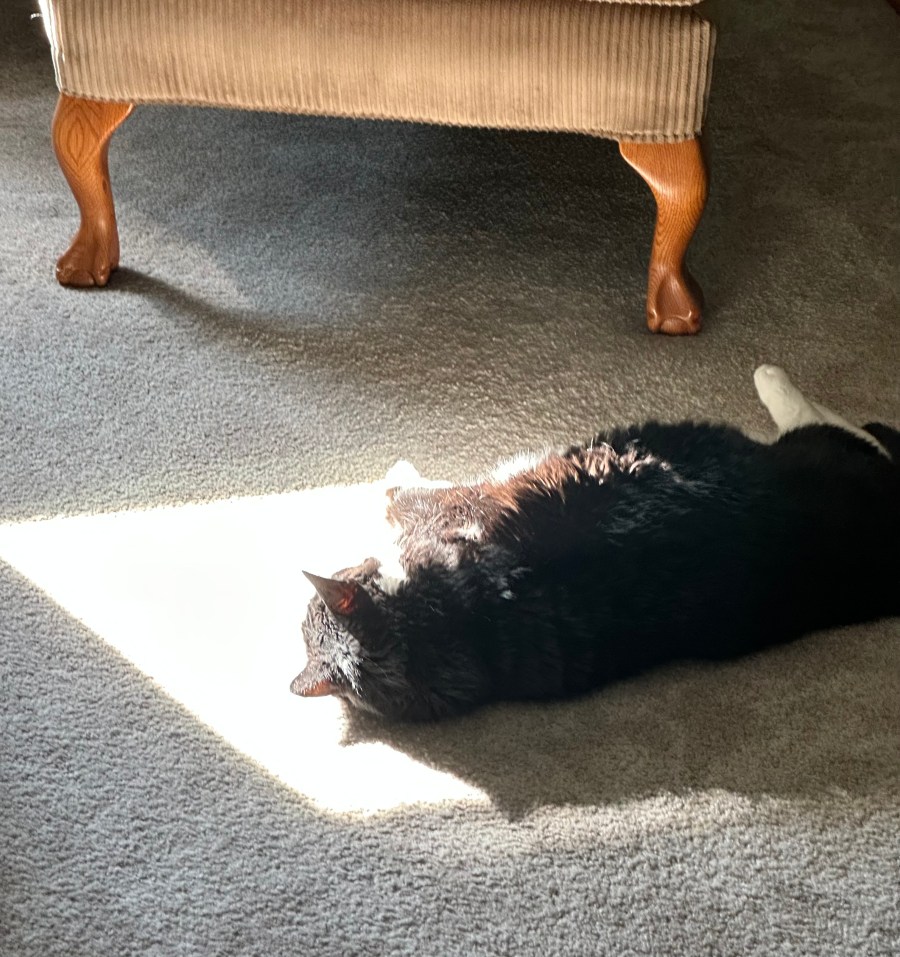
Like Bela in my photo today, look for the light wherever you can find it. Find stories of hope and inspiration. Stay informed but pray for peace and watch for the uplifting stories of those helping others, whether in war ravaged parts of our world, like the Middle East and Ukraine, aid being given to refuges being bused to cities with no homes or job, or those seeking to help those less fortunate in our country – veterans, mentally unstable and the homeless. Keep our inner lanterns replenished with nourishing oil by dedicating time to the matters of the heart and soul, being service to others as much as we are able, and to the things that matter to our spiritual lives.

Abundant blessings, Deena

When it is revealed

On three different occasions this week I was involved in a conversation with someone who said “I could never…” or basically, “I don’t see myself having the talent to”…. I have to admit that in one of those conversations, I was the one saying it.

I picked up my copy of The Word Among Us this morning and saw the November title and theme of “Already and Not Yet.” The editor and president quoted the letter of St. John saying “We are God’s children now; what we shall be has not yet been revealed. We do know that when it is revealed we shall be like him, for we shall see him as he is” (1 John 3:2). I understand that Jeff Smith is talking about the heavenly kingdom, the promises of Baptism and our citizenship in heaven, but it made me pause a moment and think about those conversations this week.

In meetings this week, for Ignatian Ministries, and our continued discernment about the ways we accompany others in their lives of faith, we reflected on where we were at this time last year and how things have been unfolding in a very exciting way. There are days that we are surprised and in awe. There are days we question what lies ahead. The discernment process we engaged in, and our openness to the promptings of the Spirit, allowed us to move forward in faith and trust in what God was revealing to us. I believe we can do that as individuals as well. But we have to be willing to state the grace we are seeking, listen in prayer for the voice of God to respond to us, or fill us with a sense of joy and consolation so that we know we are on the right track, then begin to take action as the opportunities unfold before us.

I think back to last year, as I prepared to begin this blog in Advent, for the beginning of the liturgical year in the Church. I would never have imagined being at the point of publishing 50 posts! I am quite confident I said something to the effect – “what could I possibly have to write about?” Yet each week, an idea or nudging from the Spirit has guided me to a topic to reflect on.

Where might you be limiting yourself by saying words like “I could never…” “I don’t have the talent to…” or “I would love to but…”?

The first step might be as simple as exploring what it might be that you would love to do. I find journaling a helpful way to explore those thoughts and ideas. But I have to make myself actually sit down, consistently, so that the ideas get to the paper! One of the journals I use is a 5 year memory book. I have noticed lately it is filled with statements, for the previous year, regarding the weather that day, appointments I had or friends I visited with. Those are great memories to look back on, but I am going to challenge myself to make more soul statements – what’s on my mind, what would I like more of in my life, what are the important decisions I am faced with? Then as I reflect back next year I will be able to look back at the things that were “already and not yet” moments to see if they have become more tangible in my life experiences.

Join me, in whatever way feels comfortable for you, and let’s see how the year unfolds!

Prayerful and abundant blessings, Deena

Image: A picture from my Italy trip of a mosaic at the Vatican of Jesus calling Peter and Andrew to follow Him.

Life as a pilgrimage

I must admit that I am still a bit tired from my two week pilgrimage to Italy so I have been doing a lot of resting. Butters, one of my cats, seems to enjoy the companionship for little cat naps. He snuggles in close so he can be right next to me, or on an arm or a hand! Perhaps to be sure I don’t leave him again. With that said, I have had a lot of time to think back on our journey and all the sites and cities we visited. It occurred to me at 4 a.m. this morning that our pilgrimage was a perfect analogy for life.

At a time that I was Chair for the Bishop’s Commission on Women for our Diocese we had a similar thought discerning our purpose for the Commission. We wanted to create a resource that would support Catholic women and provide opportunities to journey to places that would inspire and nurture our Catholic faith. We visited shrines in Chicago, Wisconsin, and took an amazing pilgrimage to Spain and Portugal. That theme, of journeying, has never left me, as you have noticed in my selection of the title of this blog series on my website.

Highlights of the Italy trip were always the morning gatherings for coffee before leaving the hotel for the day, our daily Masses in the most beautiful chapels of churches and Basilicas, and our evening dinners together as a group. Stories were shared from adventures that might have been taken apart from the group.

Our trip didn’t lack mishap either; a broken wrist due to a fall in Assisi for one of our pilgrims and another finding a priest, from another tour group from Ireland, that had fallen or died suddenly in a stairwell in Rome.

There were times that we rushed through sites moving on to the next one. Crowds of people, especially in Rome, seemed to arriving, snapping pictures then quickly moving on to the next place. I regret that, at certain sites, we didn’t linger a bit longer to reflect and savor the experience.

My favorite memories were always the quiet pauses for cappuccino, or wine, to savor the aromas and sounds. Last Sunday I sat in a piazza in Assisi listening and watching families gathering after Mass at the Basilica of Santa Chiara (St. Clare). My heart was full observing all that was happening around me.

At the weekly audience we attended on Wednesday, at the Vatican, Pope Francis continued his catechesis on apostolic zeal. Pope Francis spoke of St. Charles de Foucauld as someone that attempted to imitate Christ with his life. He spoke about the importance of lay people in the Church, to be open to the Spirit and to live with compassion, meekness and tenderness. He reminded us that we can evangelize in simple ways, with kindness and a smile for those around us. He speaks with such sincerity and love for the gospel and how we can grow closer to God. I follow Vatican News but read a bit more carefully these two weeks because of the Synod of Bishops, which has been going on in October, and being in Rome. I was captivated seeing so many priests, bishops, and cardinals walking around Vatican City. I pondered the immense weight that the Pope must feel guiding the Church during these turbulent times. I hope you saw the amazing photo I took that day as Pope Francis drove right by us on his way to his chair to speak to us. It was an incredible experience to see him that close and in person. He radiates joy and had an amazing energy and attention for those he drove by.

So it is with life, we rush through too many moments in order to get on to the next one. We have ups and downs, losses and sadness along the way. There are also interludes of pause and rest to savor the moment at hand, family or friends. But I am reminded to build more of them into my day. We have teachers and leaders we can turn to for guidance and inspiration when needed. The saints and mystics are there to show us, by the example of their lives, to keep going despite the hardships and challenges. Even short lives like Blessed Carlos Acutis who died in 2006 at the age of 15, who helped those in need around him around his home and on the way to school and built a website to document Eucharistic miracles, inspire me to use social media to share positive messages.

Lastly a pilgrimage, or life, is only a spiritual experience if I make it so. It can be a collage of moments that I rush through and visit or it can be moments I tune in and listen to the voice of God and what I might need to hear. My prayer is to be transformed by this experience I was so fortunate to have taken, to listen more carefully and move a bit more intentionally, always moving in the direction of greater peace and joy in God.

Photo is a walkway in Assisi. I shared many photos and descriptions of the places we visited but I have hundreds more! I look forward to going through them and sharing them over time. Thank you for commenting that you enjoyed seeing the pictures and reading about them.

Your words are life

Reflecting on today’s gospel (Matthew 21: 28-32) for the Twenty-Sixth Sunday in Ordinary Time, our pastor, Fr. Paul Carlson, spoke of the words of the sons to their father, not matching the deeds. Even though one of the sons didn’t act on the words he spoke, affirming to the father he would follow the request to go work in the vineyard, the words themselves still had value. He, we hope, showed respect and obedience. The son that said he didn’t want to go to the field and work, but changed his mind and went, shows us the value of reflecting on the word or the instruction we hear in the words spoken and letting them impact our behavior. All of the words in scripture point out who Jesus was and what He asks of us, in our own lives. As we reflect on them, and comprehend the words, we allow them impact our behavior, and transform our lives.

How can we integrate this in daily life? As I spent some time reflecting on Fr. Carlson’s homily, I thought about some guided prayers I was recording for work this week. One was a Lectio Divina, another a guided contemplation or imaginative prayer and lastly a prayer using Visio Divina. I am going to talk about two of them, Lectio Divina today and Visio Divina next week, and how these prayer methods of sacred listening or viewing can help us enter into the Word and let the Word enter into us.

Lectio Divina, a common monastic prayer method of praying with Scriptures, means “divine reading”. I learned this almost 30 years ago as I began my formation as an Oblate and it has been, to a greater or lesser degree, a part of my daily prayer. Sometimes I spend more time with Lectio, some days it is a very condensed version. The longer time spent in Lectio is always more fruitful, but life gets in the way. Lectio is simply reading or listening to a particular scripture passage, prayer or poem and letting those words enter our hearts. We read the passage once, and listen for a word or phrase that speaks to us. We read it again and reflect on what God or the Holy Spirit might be trying to say to us in those words. We read it a third time and contemplate the words, or sit in silence with them. Lastly we offer a prayer of gratitude for what we heard or a prayer of intention that rises up as we reflect on what God has asked of us as we have listened to the Word. The fruit of the prayer comes from really listening, with the ear of the heart, to the Word and then letting it impact our thoughts, words and actions.

We all know what it feels like to hear someone say one thing but then behave in a way that is contradictory to what they have spoken. It may not be intentional or malicious, but if the behavior and the action don’t correspond, then it gives us something to consider about the person or our relationship. Seeing this within our own behavior, helps us assess why we aren’t being true to the things that we say are important to us. We can assess, and change, when we see that we aren’t living in alignment with the values we say are important to us.

As our words and actions begin to become one and the same, we become the things we value and that we speak in life. I love the quote that you see on social media posts or in self improvement articles, we become what we think about. Or, another, your mind will believe everything you feed it, so feed it hope, truth and love.

If you have not prayed using Lectio Divina before, try it this week, it only takes a few minutes when praying it alone. Pick a short scripture or poem, it doesn’t have to have a lot of words to be impactful. Ask Spirit to guide your thoughts and speak to you with the words you need to hear. May it bring you peace!

Create joy, Deena

Photo from my PicMonkey account

The gift of friendship

I am writing this on Saturday night, in anticipation of a Sunday afternoon gathering with friends. We are a group of friends that have grown up together. We fondly call our group “The Oglesby Girls”. Most of us grew up in Oglesby and started kindergarten together at Holy Family School, another joined us later in grade school then two others joined in high school.

Sadly, we lost one of our “girls” to cancer. We have shared weddings, the birth of children, the loss of parents, and divorce. We have donated together on large projects for Holy Family Church, even though only three of us remain parishioners because the rest of the group lives out of town. We still manage to get together and celebrate our friendship. The bond of our affection is strong. Many have commented on the steadfastness of our little group when I talk about our gatherings and escapades. Our friendships, and I would also include friendships from high school and those formed in our small rural area, are rare, enduring and admired by others I have encountered in life. Our lives have changed in so many ways but despite 50 years, we still have fun like the girls who headed to Friday night football and basketball games.

I have mentioned recently that I work part time for an online ministry. In the role of Director of Programming for Ignatian Ministries, I work on our community retreats, customer support and the coordination of our weekly blog, which is published on Sunday nights and is shared in an email on Monday morning. Over the past few weeks our core team and supporting “team” members have been writing the blog related to our ministry founding and purpose. I wrote the post, last week, on Community. I shared three examples of scripture quotes and personal experiences that I felt the support of community. As we discerned moving to a non-profit, and ways we want to serve others, one of the founding principles is community, accompanying and supporting others who are seeking the deeper waters of faith.

As I reflect on my small group of friends, I believe that we have embodied all of the aspects of community that I wrote about last week. We have created a space that we know we belong and are always welcomed. We are there to support each other, especially when we experience the difficult losses of family and friends. We encourage each other as we each use our individual gifts in life, regardless of the various paths our lives have taken.

If you are lucky enough to have friendships like this, treasure them! If you didn’t come upon them from childhood or young adult years, perhaps there are friendships that you developed in work or church communities. How can you nurture those friendships? Is there someone you would like to get to know better; someone you feel could be soul friend, someone you could support and you would welcome support from? What step can you take to get to know that person better?

I close with a quote from Thomas Aquinas, “There is nothing on this earth more to be prized than true friendship.” Amen!

Create Joy! Deena

Prosper the work of our hands

This weekend in the United States we celebrate and recognize Labor Day and the efforts of all people who work. We acknowledge the American Labor Movement, and the social and economic achievements of all who have worked since the holiday was established. The Library of Congress says that the first Labor Day was established by the Central Labor Union and was celebrated on a Tuesday in 1882. Then in 1894, Congress enacted the law making Labor Day a national holiday, celebrated on the first Monday in September. Over the years it seems to be more of a final long summer weekend, a demarcation of the end of summer and the beginning of the school year for students. What if we honor and celebrate the work that we do all year on this weekend?

I listened to an interview this week with Bishop Robert Barron on the Word on Fire Show regarding the Theology of Work. It was a wonderful interview talking about the Catholic Church’s teaching on work. I especially loved the story of Bishop Barron’s first job, as a high school student, at Kroch’s and Brentano’s bookstore in Oakbrook, Illinois, and his brother throwing a used copy of A Seven Story Mountain by Thomas Merton at him and how that book ended up being so influential in his life.

Bishop Barron discussed how our work participates in the creativity of God and that if done with loving purpose, work is sanctifying. He talked a little about work before and after “the Fall”, and how we have gotten the idea that work is laborious, with all its negative connotations, but he stated that work is ultimately life-giving and how we “work creation” to make it even more beautiful. I was struck by his statement that God has nothing to gain from us. It’s true, my work doesn’t make God or the world any better, but it can participate in “His causality”. Everything God has created is good, but Aquinas says it doesn’t make it finished, it continues to unfold with our participation in it.

Bishop Barron talked about Pope Leo XIII’s encyclical, Rerum Novarum, and the importance of that writing at a time of horrible conditions for workers. I probably relate more to Pope John Paul II’s encyclical, writing on the anniversary of Rerum Novarum, Laborem Exercens in which he talked about the value of human work. Work has value not because of the work being done but because of the human person that is doing the work. Regardless of the work we are doing, God wants us to invite Him into that work, to prosper (not necessarily financial) the work of our hands.

I reflect on the many jobs, or variations of work, I have done over the years. There wasn’t a weekend growing up, in high school, that my brothers and I didn’t have to work at our family business, waiting on customers, drying off cars after the car wash (the unique spin my father added to the automatic car wash he operated), washing towels (Oh, the towels in the winter!) and working in the little store that had snacks, beer and soda, and a lottery machine. When I had my own little shop, I worked harder than I ever have at any job, cleaning ice cream/yogurt machines at 5:30 in the morning, making soup and washing the floor all before opening for the day, but I can honestly say I have never loved any work as much as that, because it was my business and I took pride in it and enjoyed the customers I served.

Any employment, if just viewed as a job with tasks to complete, will make work tedious. But when we begin to view the efforts of our labor as a use of our gifts and talents, a contribution in some way to the lives of others, even if solely providing for our families, or the way we are adding to, or contributing to creation, perhaps we will see, and feel, the dignity of that work in a new way.

I am fortunate that in all my different jobs and careers, I have always tried to ask “how am I serving God in this work?” It’s a gift now, to be in a ministry position, with Ignatian Ministries, where we constantly, and openly, seek the greater good for the ministry and our gifts, seeking “the magis”, the more, in all we do. This seeking, or reorientation, is available to all of us as we consider the work of our hands.

Don’t forget that we have just entered the Season of Creation, which began on September 1st with the World Day of Prayer for Creation, a season of grace to consider our way of living and renew the relationship between Creator and creation. It will conclude on October 4th, the Feast of St. Francis and the publication of Pope Francis’ follow up to Laudato Si’. As we reflect on the work of our hands, we are called also to consider that our work, or the way we live and consume products each day, does not exploit the earth. It is one of the most significant challenges of our day.

Create joy, Deena

Fill us at daybreak with your mercy,
that all our days we may sing for joy.
Make us glad as many days as you humbled us,
for as many years as we have seen trouble.
Show your deeds to your servants,
your glory to their children.
May the favor of the Lord our God be ours.
Prosper the work of our hands!

Psalm 90

Photo from my PicMonkey account