We’ve all been given unique gifts and talents. One of my least favorite jobs was working, thankfully for only a brief time, in a financial department of the corporation I worked for 23 years. I don’t like working with numbers in that way, invoices and debits/credits. But I found a way to engage my passion for organization and process improvement when working on the invoices for the import process of our business. I will never have a passion for math and numbers, but do love the process of organizing in Excel spreadsheets. In doing so, I was helping streamline the process of invoice reconciliation.
I believe that God desires that we discover and use our talents and gifts to make the world a better place, to help others. I don’t think it makes a difference where we work or the kind of work we do, in the home or outside the home. If we are city workers fixing roads or highways, we hope to make travel easy and safe. If we work in an office, whether health or law office, we hope to help others as they sort through issues they are dealing with. Medical professionals are attempting to help people overcome imbalance and dis-ease. For those of us that teach or write, we hope to share ideas, encourage independent thinking, or help young minds learn skills needed to navigate through life. Government officials should be focused on improving and protecting the lives they have been elected to safeguard. When any of these tasks become more concerned with self and power, we have lessened the degree to which our talents contribute to the value of the whole or the common good.
St. Pope John Paul II wisely stated that a human being expresses themselves by the work they do, that work has dignity. His background as a laborer and his opposition to Communism in Poland gave him a unique perspective as he later (1981) wrote about the value of work in Laborem Exercens. He wrote: “Through work man must earn his daily bread and contribute to the continual advance of science and technology and, above all, to elevating unceasingly the cultural and moral level of the society within which he lives in community with those who belong to the same family.”
One of the aspects of Ignatian Spirituality and the Spiritual Exercises that I love (and am trying to discern more in my life) is how we are uniquely called to express and participate in the work of God in the world. We look at how and where God is inviting us to participate, given the particulars of our lives and desires. We look at our disordered attachments and whether we are truly free to hear and respond to that call. Part of the journey is also to explore the cost and call of discipleship. God’s call can be a radical call, because it may depart from the current views and values that the society in which we live. We may be opposed and belittled. A radical call is not an easy call.
Today, for the Fifth Sunday in Ordinary Time, we hear the Gospel of Luke 5: 1-11, and after pulling in the great haul of fish, Jesus begins the call of the apostles by inviting Peter, James and John to follow him. He invites them to go deeper (see my blog, Duc in altum, Nov. 3, 2024), to respond to a call beyond the lives they were living, and the way they saw themselves, in that moment. He invited them to a new life.
A prayer that has become one of my favorite was one that I learned from one of our teachers in a Diocesan Lay Ministry program I graduated from in the 1990’s. It’s a prayer by St. John Henry Cardinal Newman. I share the first stanza of the prayer here:
God has created me to do him some definite service; He has committed some work to me which he has not committed to another. I have my mission….
I invite you to consider the gifts and talents you have and how you are using them to improve the lives of those around you, those you work with and for, and for the world at large. Have you considered the mission or vocation, in daily living, that you have been called to? You make a difference one way or the other in the lives of those you encounter. What difference do you hope to make?
Wishing you abundant peace, Deena
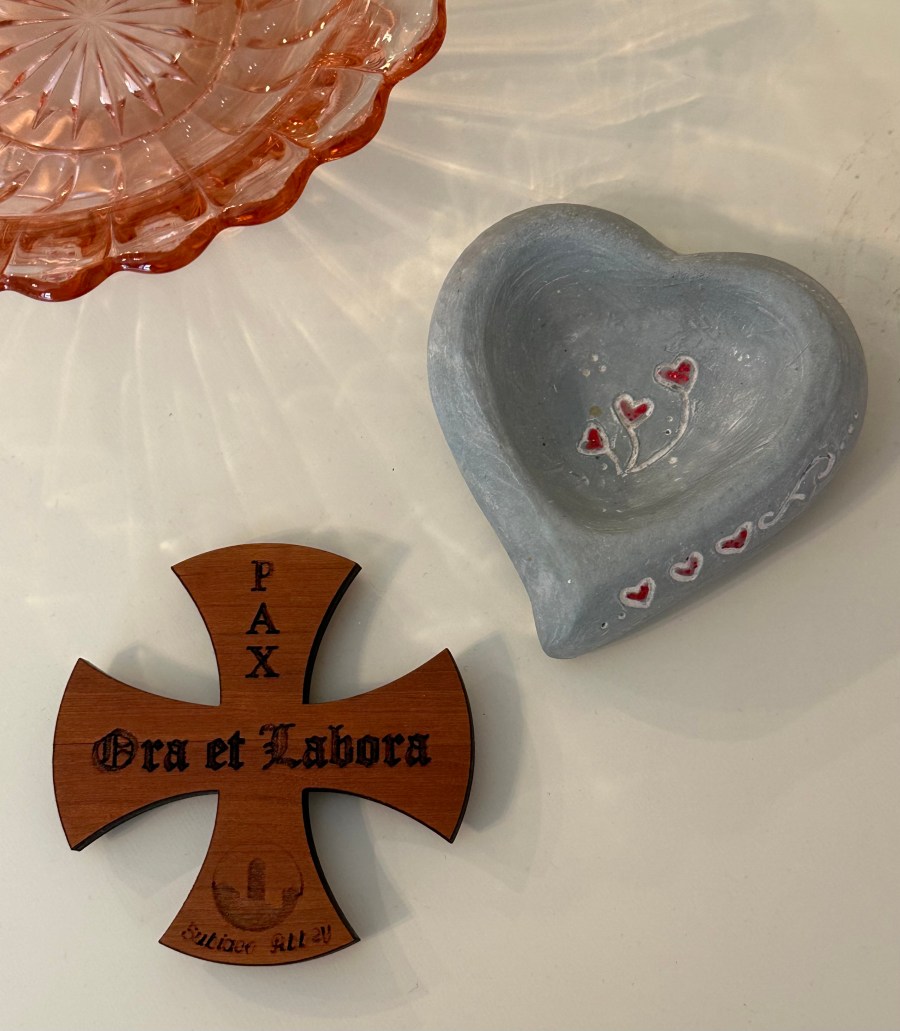
Image: Ora et Labora – The Benedictine motto of Pray and Work
 Deena Pavinato - Journeys