Pruning the vine

This weekend I am attending an aromatherapy workshop/retreat in Northern Illinois. I stepped away from the evening social to write this so that it can post in the morning when we are in our first session. I was talking to my friend Kathy and said, “I don’t think I want to write about the retreat yet, there has been too much to process and I’m not sure what I want to say yet.’ The introvert in me was tired after a full day of being with others and ready to retire, so I stepped away to the quiet of my room. I opened the gospel reading for the Fifth Sunday of Easter, and saw that it is the discourse on the Vine and the branches. I quickly changed my mind about mentioning the retreat.

Jesus tells us, as he uses the analogy of the Vine and branches, that some pruning is required in order to bear fruit. Pruning will separate away the lifeless and dead parts of the vine plant so that the healthy branches can bear fruit. The rest is gathered together and thrown into the fire. If you have ever had a garden, especially if you have grown zucchini or cucumbers, you know that the vines that grow off the main plant can easily get entangled with weeds or with other plants if not cared for. It’s important to watch as the vines or branches begin to grow and produce fruit. If those branches mingle and get wrapped up in another plant or weed, it is possible that the vines will be choked and that the plant won’t produce the fruit that we desire. Jesus tells us a branch, connected to the Vine, will bear more fruit by pruning away the things we don’t want and by caring for the plant we want to grow and produce abundant fruit. The fruit of sharing the life-giving message of Christ with the world, or at least the world that we interact with, will grow with the same attention and proper care as we need to tend our gardens. If we ignore and hope for the best, we probably won’t accomplish the desired outcome.

Meditation and reflection on the Word of God is an important part of making sure we remain connected to that Truth. As a Benedictine Oblate, that daily reflection with the Word is called Lectio Divina, which I have talked about in previous posts. It is by reading, listening and reflecting on the Word that we open our hearts and minds to hear what God has to say to us, what gifts we should use and sometimes, where we should be using those gifts.

As I returned to my room and reflected on a day full of suggestions about self-compassion, rest and mindfulness, care and releasing the negative burdens of the past to make room for a life of joy and bringing that joy and light to others, I thought yes, this too is part of the pruning. Jesus often stepped away from his disciples and others to pray and connect with God, before or after doing his work in the world. That stepping away was life-giving to him as it can be to us.

During Lent I was more intentional in talking about, and integrating in my life, time for prayer, creating a sacred space for prayer, setting aside activities that are not life-giving and making time for the things that are, entering the cave of the heart to be able to listen and discern. I have wondered all weekend why those were activities I was more intentional about during Lent have faded into the background, and have seemed to be overtaken and strangled by weeds of busyness and disordered passions.

Why is it so hard to step away, to spend a few minutes in silence and self care, in order to connect more deeply with the Source of all things? Why will we say yes to endless requests from others but say no to ourselves when we need to nourish and fill our spirit with just a few minutes that might help us listen and respond to that which is most important? When will we realize just how life-giving that time is, and that replenished and nourished, we are able to be a better vehicle of love and light in the world?

Another retreat participant and I took a few minutes after lunch to walk to Stronghold Castle here on the grounds of the Stronghold Camp and Retreat Center. We found bluebells layering the ground on both sides of the path, we listened to the waters of the Rock River just beyond the castle, and our conversation was interrupted by the loud and persistent jabbing of a woodpecker hidden in the tall trees. We allowed ourselves to be renewed by the healing energy of nature and it only took us about 15 minutes!

Take a few minutes today and try to do the same, be nourished by a walk, ponder looking out the window, take a short nap, read the gospel reading cited above regarding the Vine and the branches, and in those activities, connect to God, the source of all goodness. Find time to step away from the routine activities of your day, even if it’s just for 15 minutes.

Be still and listen with hearts and ears open to hear and receive.

May you find abundant peace in your day! Deena

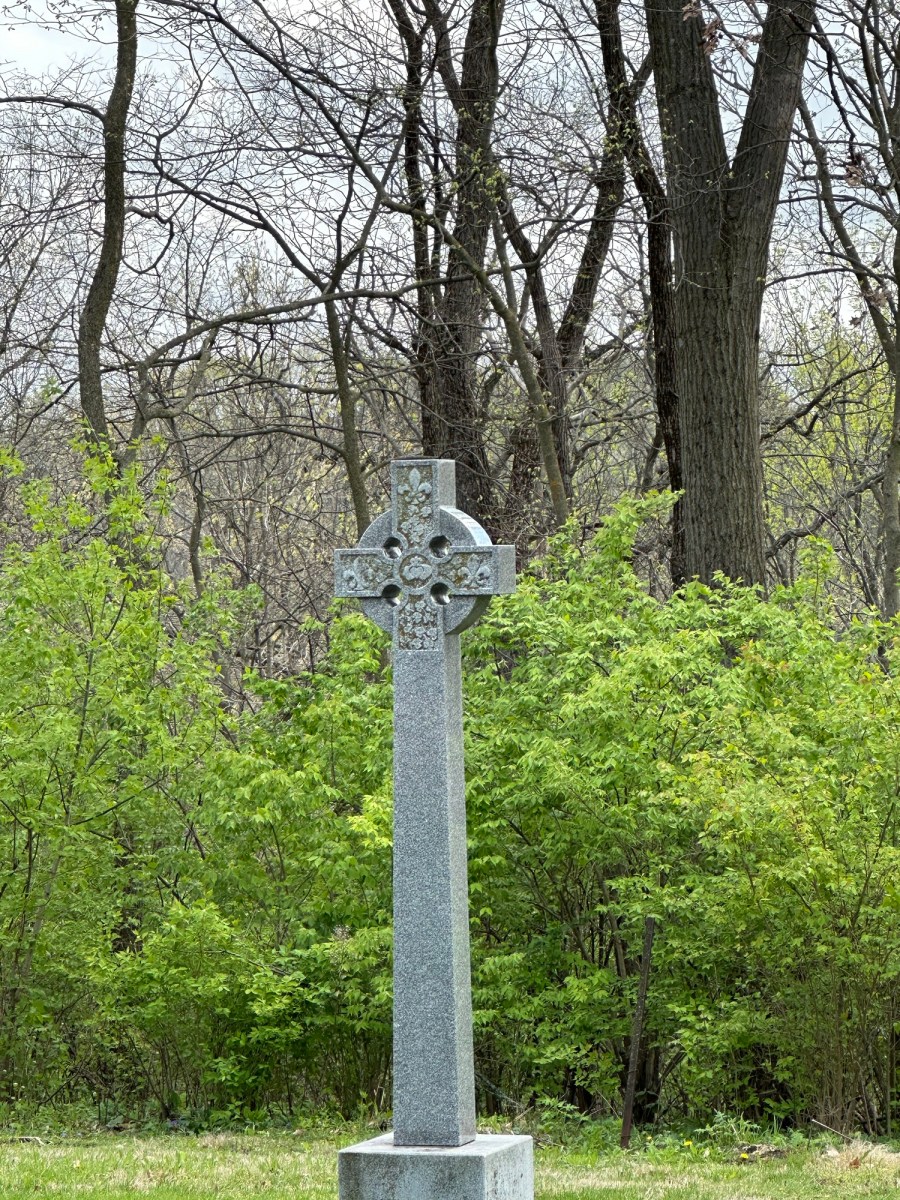
Image: a photo I took at Stronghold Camp and Retreat Center

The light of hope

Hope is being able to see that there is light despite all of the darkness. Desmond Tutu

I have been thinking about hope this week.

Easter is a season of hope. Hope at a deep level, a spiritual level. Hope is the second theological virtue, as opposed to a fruit or gift of the Holy Spirit. It allows us to trust and protects us from despair. But as with all gifts, we must accept it and make it a deliberate part of our lives.

It isn’t hope that a project turns out well or that my plants weren’t impacted by the frost last night. It isn’t hope that the weather will be nice next weekend, and that everything works out, for my friends Kate and Kathy as they host an aromatherapy retreat that I will be attending next weekend. It isn’t hope that the Chicago Cubs win again today. Although those are all great things to hope for! Perhaps they are hope at the level of a wish or a desire for a positive outcome.

Instead I think true hope is faith-filled. It is a trust in the promise of the Resurrection, that my Aunt Gina, who passed away this week, is now at peace and will be reunited with my Uncle Bill. I have hope that peace and justice ultimately triumph over violence and war. I hope that we will wake up and see what we are doing to the planet and begin to treat the earth with respect and love for the gift we have been given. I have hope in God’s love and mercy for all.

Christian author and speaker, Kate Bowler, has a new series, Words to Live By, on the Ritual – Wellbeing Practices app. I listened to her reflection on Hope a couple of times this week. I enjoy her books, her podcast and now these reflections because she looks at life as it really is, the “beautiful and terrible” of it all (Have a Beautiful, Terrible Day! Daily Meditations for the Ups, Downs and In-Between). I was captivated by a quote, by Martin Luther, that she referred to. “Hope changes the one who hopes into what is hoped for.” If we allow hope to change us, we then “lean into a possible future we can’t see yet.”

If I hope for peace, I become more peaceful in my own interactions with others. If I hope for and care for creation, then I make an attempt, in my own small way, to be more conscious of how I use resources, I recycle and buy less plastic. If I trust in God’s love and mercy for me, then I attempt to offer that love and forgiveness to others. I know I won’t do it perfectly but if I hope to see those things in the world, then I must be an active participant in bringing them about.

So I ask, as Kate did ending her reflection, ‘How well do we actively try to find hope in the world? Do we attempt to listen to its whisper and turn down the dial on fear?’

“Blessed are we when we make room for all of it.” (I also recommend Kate’s book of blessings, The Lives We Actually Have: 100 Blessings for Imperfect Days)

“May the God of hope fill you with all joy and peace in believing, so that you may abound in hope by the power of the holy Spirit.” Romans 15:13

Peace to you and days filled with hope, Deena

Image: Picture of a stone mosaic I took during a visit to a monastery.

PS. Before I started writing today’s blog, I looked back at a post last year, in the season of Easter, “Hold on to hope”. If you would like to read it and reflect further on hope, click the image below.

Human dignity and the rights of all

The gospel reading for Saturday in the Second Week of Easter is from the Acts of the Apostles and describes the needs of the growing church and the selection of individuals to assist in the cause of the distribution of goods to those in need, in the case of this scripture reading, widows.

Earlier this week, the Vatican released a final version of the Declaration of the Doctrine of Faith “Dignitas Infinita” on Human Dignity. I read it through a couple of times but need to spend more time with it in prayer and study. It occurred to me, upon reading Saturday morning’s scripture, that from the earliest days of the small community following the teachings of Jesus there has been concern and a need to respond to the needs of others.

Pope Francis requested the additional drafts of Dignitas Infinita because additional attention was needed to address the violation of human rights, in light of his Encyclical Fratelli Tutti in which he stressed the dignity of all persons “beyond all circumstances” and summoned all of us to defend human dignity “regardless of physical, psychological, social, or even moral deficiencies.”

The Declaration provides a biblical foundation for, theological perspective and the position of the Church on human dignity. We see countless examples in the gospel writings where Jesus responds to and elevates the dignity of each person he encounters. We should all follow this example with the same respect for the dignity and needs of each person we encounter in life.

The Declaration is a rich study of the Church’s recognition of the dignity of every person. It also acknowledges grave violations in various forms (not claiming to be a comprehensive list) such as poverty, war, the migrant issue, human trafficking, sexual abuse, violence against women, abortion, surrogacy, euthanasia and assisted suicide, marginalization of people with disabilities, gender theory and sex change, and digital violence. It is a helpful explanation of the Church’s position and I would encourage the document be read in totality versus bits and pieces that the media may choose for any specific agenda.

As mentioned, I need to spend more time studying it, but regardless of my opinions, it is an beneficial attempt by Pope Francis and the Roman Curia to continue to bring the needs of all peoples and situations impacting the dignity of each person to our attention, inviting us all to fight for the protection of that dignity and remember our own, a dignity no one can take from us.

I encourage you to read the Declaration, and whether you agree or not, be well-informed when speaking about the Church’s position for each of these concerns. Let’s also be sure that in any discussion, we support and maintain the dignity of each person whose opinion might be different than our own. We certainly are in need of a lot more of that these days!

In love and mutual respect, Deena

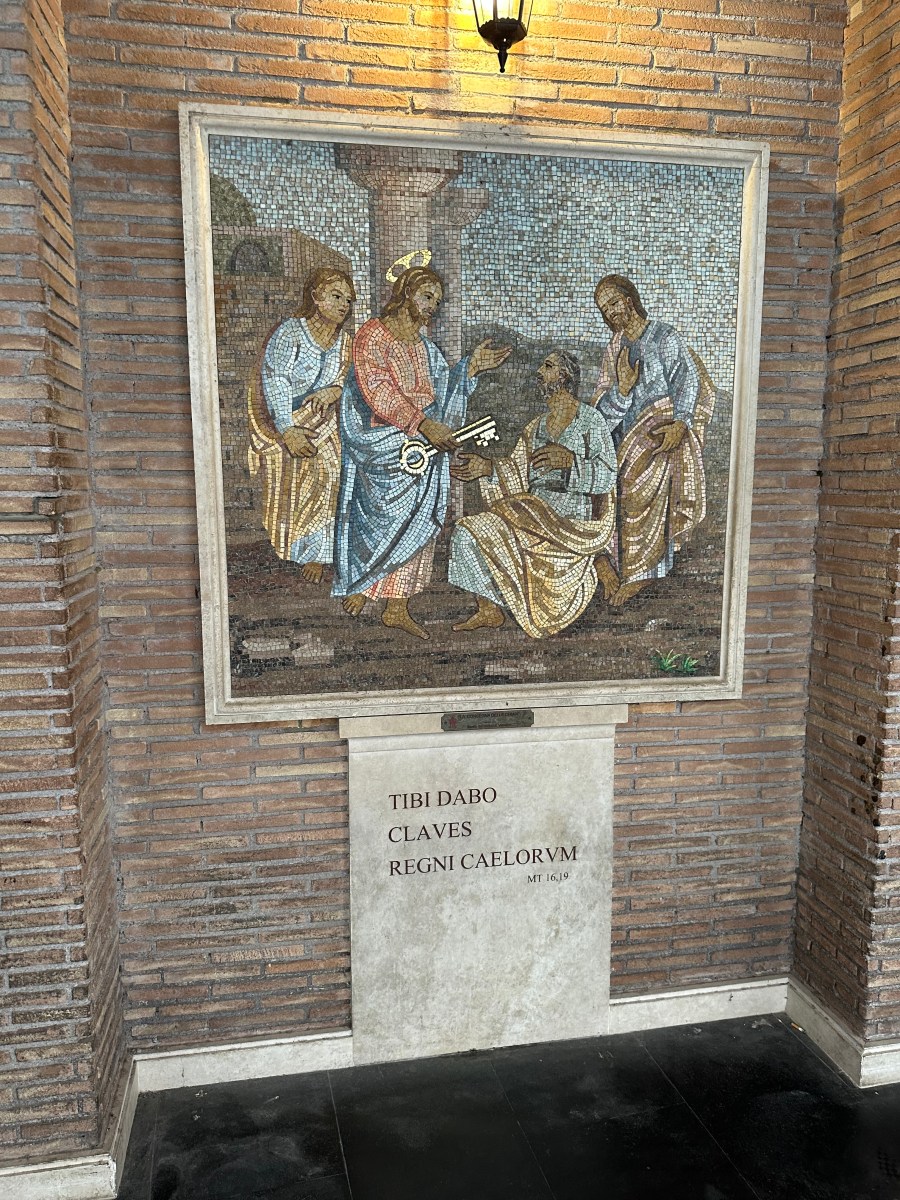
Image: From my trip to Italy, art at the Vatican, Jesus gives the keys to Peter.

Endless, inexhaustible mercy

One of the things I am learning, and appreciate, about the Spiritual Exercises of St. Ignatius of Loyola is that it begins with the premise, in the First Principle and Foundation, that God’s love for each one of us, individually, is endless and unconditional. We have unique gifts and talents, along with our deepest desires, that God wants us to realize and fulfill, to the ultimate purpose of living with God forever. A person making the Exercises is invited to spend time in this First Principle and Foundation, considering this love, before moving on to the other “weeks”. It is only then that we look at how our response to God’s love has been impacted by the sin in our lives, how to follow Jesus more closely, a consideration of Jesus’ passion and death and then the joy of the Resurrection.

Today is Divine Mercy Sunday, the Second Sunday of Easter. I enjoy the gospel of Thomas’ encounter with Jesus, Jesus’ greeting of “Peace” in a room full of his frightened apostles, men that abandoned him, and the prayers of Divine Mercy, but I think I haven’t been approaching the day quite right. I hope it makes sense as you read this.

I found a quote by Thomas Merton to reflect on while trying to look at Mercy a new way. It’s from his book “No Man is an Island”.

“But the man who is not afraid to admit everything that he sees to be wrong with himself, and yet recognizes that he may be the object of God’s love precisely because of his shortcomings, can begin to be sincere. His sincerity is based on confidence, not in his own illusions about himself, but in the endless, unfailing mercy of God.”

Last week, on Holy Thursday, as I traveled to various parishes to visit their Altars of Repose, I found myself contemplating the prayer of Jesus before his arrest and the brutal treatment of sentencing and crucifixion. I prayed, “I am so sorry. Can you forgive us for how we treated you?” I instantly heard, in my mind, an answer to that prayer. “You are forgetting, I already have, that’s what Good Friday was all about.” Wow. It changed my prayers and reflections on Good Friday, Holy Saturday and Easter and I have been contemplating it all week.

Yesterday in the Modern Mystics class I am participating in, Fr. Ron Rolheiser gifted us with his presentation on priest, writer and theologian Henri Nouwen, “The Light of Tenderness”. During the presentation he said, speaking of Nouwen’s writing, that “the heart is stronger than our wounds”. He said that Nouwen believed that we have to live our wounds vs. think about them, we have to take them from our head to our heart and live them so they don’t destroy us. I understood this to mean, for me, that we accept and learn from our wounds instead of rationalizing them, finding people to blame for them or continuing to dwell in them.

We can do this, it occurred to me, only if we believe in that “unfailing mercy of God” that Merton spoke of. I can remain in the posture of constantly trying to understand why I did what I did, keep asking for forgiveness, for the mistakes I have made, over and over again, or I can accept that Mercy and move on. Instead of dwelling on the reason I seek Mercy, I can share the joy of experiencing that Mercy in my life. Otherwise, it seems, I haven’t truly believed in the gift of Jesus’ death and resurrection or the gift of God’s Mercy.

There is immense freedom in knowing that God knows exactly who I am and who I have been. I don’t have to pretend it was anything else. God’s mercy is inexhaustible, precisely because of God’s love and despite my failed attempts to live as a loving human person to others.

I am going to continue to spend some time with this as we celebrate the Feast of Divine Mercy. I invite you to also consider how we might accept that Mercy more fully and move on with the intention of living with more love and compassion, because that great love and mercy has been gifted to us.

Peace, Deena

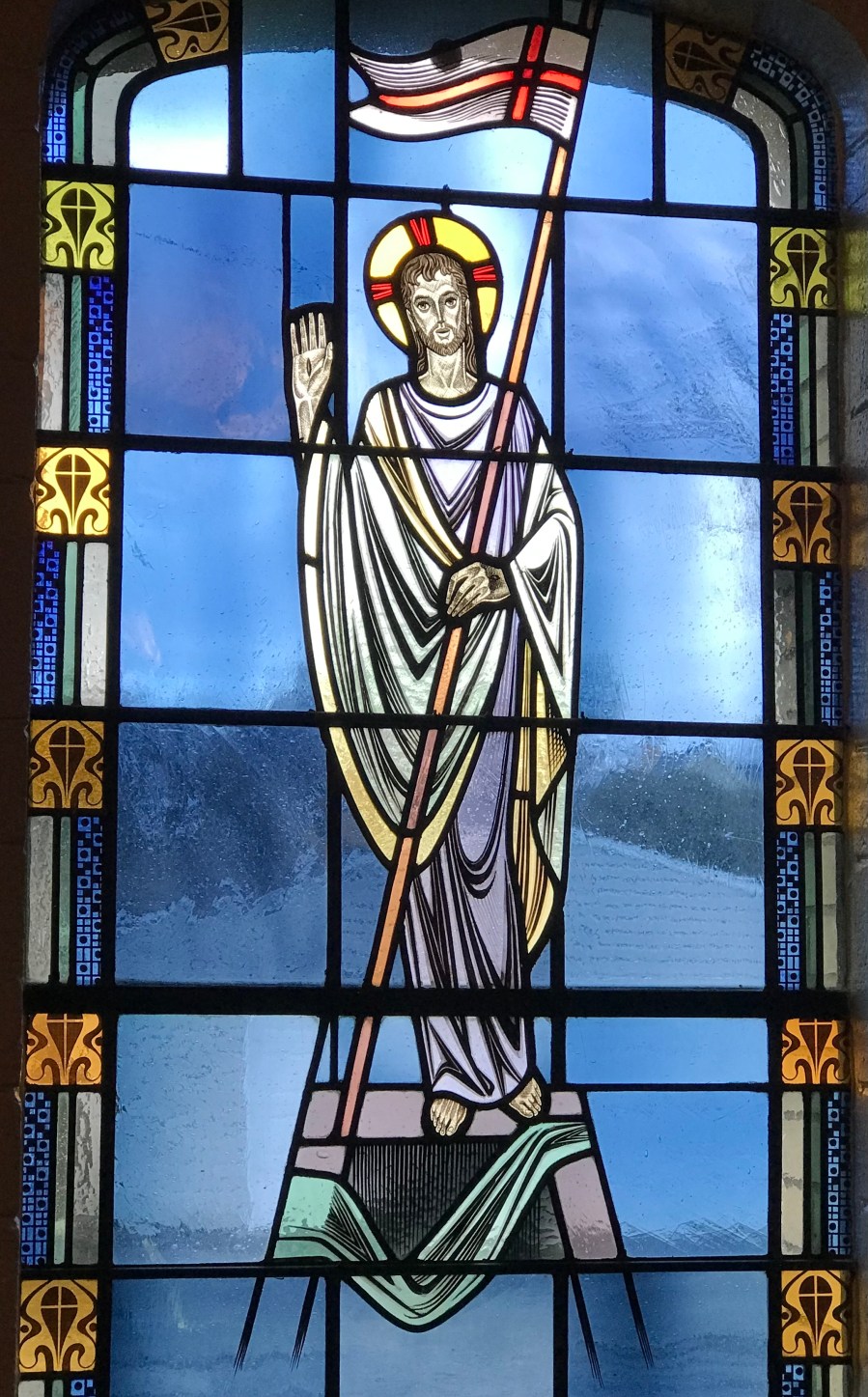
Photo: Our Resurrection Window at Holy Family Church, Oglesby.

O truly blessed night

O truly blessed night

when things of heaven are wed to those of earth

and divine to the human

I am writing this week on Holy Saturday before the Easter Vigil at our parish. The words above are from the Exsultet, or Easter Proclamation, that is sung during the Easter Vigil. It is usually sung by the priest or a deacon, in the dark with candles lit, after lighting the new Easter Candle representing the Light of Christ, before the Liturgy of the Word. If you didn’t listen to it, or read last week’s post, I included a link to a recording of the Exsultet being sung. It is a beautiful part of Easter Vigil.

It’s been a grace-filled Triduum, the holy days of Holy Thursday, Good Friday and Holy Saturday, for me this year. I hope for you as well and that you had a chance to participate in and savor the beauty of these special days. And so our Lent is concluded. We now rejoice!

The difficult days of Holy Thursday and Good Friday, the betrayal of Jesus and the sorrow of Jesus’ arrest, torture and crucifixion are behind us. As in life, we go through challenging times but eventually, I hope, we see things in a new light. It doesn’t always make it easier when we are in those situations, but we trust that we will get through it, that the “Good Fridays” end and the joy of Easter will come.

I read a post, for Holy Saturday, from Conception Abbey, written by Etienne Huard, OSB: “As we reflect on Jesus in the tomb, let us embrace this period of waiting with patience and faith. Let us trust in God’s promise of new life and resurrection, knowing that even in the darkest moments, His light shines through, bringing hope and renewal to all who believe. May this Holy Saturday deepen our appreciation for the Paschal mystery and prepare our hearts to rejoice in the resurrection of our Lord Jesus Christ.”

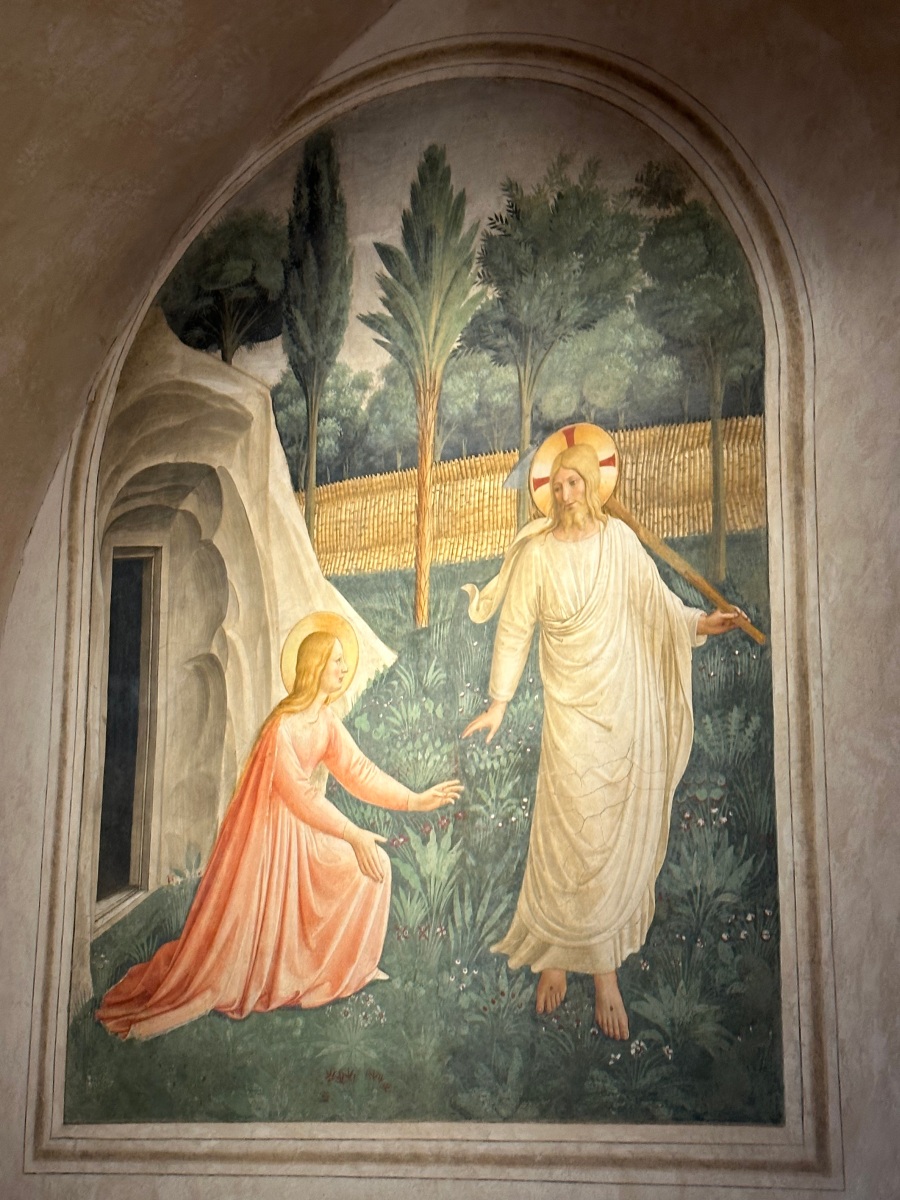
This week I included a photo of one of my favorite frescos from the Museum di San Marco in Florence, Italy painted by Fra Angelico in the rooms of the Dominican convent in the 1400’s. Mary Magdalene encounters Jesus in the garden. In her sorrow, finding the empty tomb, she pleads to know where Jesus’ body has been taken. But then he speaks to her and she sees him, she understands. She knows that the words he spoke, that he would die and rise again, have come to pass.

So on this glorious Easter Day, let us rejoice in the Light of hope that shines for each of us and keep our eyes upon that Light. Let us trust, that regardless of any situations that occur, we can hold on to the hope and peace that we have been promised. The family of poet, author and modern mystic John O’Donohue author a Facebook page of John’s writings. This week they shared a post of Easter Blessings from his book: Walking in Wonder. I was moved by this line, “We were sent to search for the light of Easter in our hearts and when we find it, we are meant to give it away generously.”

I wish you much joy on this Easter Day, as we begin our Easter journey with the Octave of Easter! Easter is 8 days long, lasting until Divine Mercy Sunday next week but the Easter season is 50 days, lasting until Pentecost. We have plenty of time to search for, and rejoice in, the light of Easter!

Peace, hope and joy during this holy Easter season, Deena

Standing at the threshold

Here we are, at the threshold of Holy Week, Palm Sunday. This week, the holiest of all weeks in the church year is our final week of Lent, leading us to Easter. Just as Jesus entered the gates of Jerusalem, we stand at the gate of this special week, prepared to journey with Jesus. Regardless of how our Lent was, how well we did on our Lenten promises, we can embrace this week with intention to enter into the mysteries of Christ’s suffering and death, leading to the Resurrection, the ultimate victory over death for each of us. It is a week of beautiful and moving Church liturgies, I would encourage you to attend as many services this week as you can.

Regardless of your church affiliation, most Christian denominations have Holy Week Services. If yours does not or has not been one in the past that motivates you to want to return, find a parish or church that has an active community. Last week I visited Christ the King Parish in Moline, IL (after Mass we witnessed the baptism of Wilder, the son of my niece Maureen and her husband Ben) and the priest asked the catechumens to come forward after the homily. They had more than 20! It’s a vibrant parish community as indicated by the number of people seeking to join the Church and that parish family! It was amazing and gives me hope.

This week I began reading William Barry’s Experiencing God in the Ordinary Barry invites us to consider that we don’t have to look for God in special places, we don’t have to go somewhere (“away”, to a retreat or monastery) to experience God, God is present to us in ordinary ways and experiences. In his introduction Barry wrote that it is true that some places make it easier for us to have that experience, that some places are “thin places” (as the Irish Celts would say) for us where God is able to break through to us more easily. I would suggest that Holy Week is one of those thin places or times. As we move through each of these holy days this week, we can more tangibly experience the presence of Jesus in our lives, as we walk with him during his final hours.

I have found that many are not aware of the various services of Holy Week and what they represent. If you are, I hope there is some tidbit of information for you in this explanation.

Holy Week begins with Palm Sunday and then concludes with the Triduum, the final holy days of Lent, Holy Thursday, Good Friday and Holy Saturday, we walk through and with Jesus during the final days of his triumphant entry on Palm Sunday into Jerusalem, his final supper with his apostles, his arrest, torture and crucifixion, death and burial. Then on Easter, we rejoice in the Resurrection.

On “Spy Wednesday” we recall Judas betrayal of Jesus for the thirty pieces of silver. We might reflect on the many ways we have betrayed Jesus in the way we live and treat others.

Triduum begins on Holy Thursday (Maundy Thursday) as we commemorate Jesus’ washing of the apostles feet (an act representing our need to be of service to all) and his final Passover meal, the Last Supper, with them. As Catholics, we celebrate the institution of the Holy Eucharist. The altar is then stripped bare, leaving us with the starkness of the cross for Good Friday. Many parishes create an Altar of Repose, a beautiful space created with flowers and palm trees, with the Blessed Sacrament in a tabernacle. We are encouraged to visit different Altars in the community, to spend quiet time in prayer with Jesus in the garden.

For Catholics, Good Friday Service, is not a Mass but a time that we pray with the Passion of our Lord, have a Communion Service, and then venerate the cross. It is a solemn remembrance of all that Jesus suffered and endured for each of us. Because it is not a Mass and the Eucharist has been removed, we don’t kneel before the tabernacle, the Blessed Sacrament is no longer there. Holy Water is also removed until Easter Vigil, when the water is blessed again for Baptism. In the past local parishes have also had Tenebrae Services, a moving service of the psalms of lament and a slow extinguishing of candles throughout the readings. It then usually ends with a loud noise, in almost total darkness, representing the closing of the tomb that held the body of Jesus.

Holy Saturday morning is a time of silent waiting, concluding with the most beautiful service of the church year, the Mass of Easter Vigil. We light the Easter fire, burning old palms, as the new Easter candle for the year is prepared and from that new candle, representing the Light of Christ, we each light our candles to begin the Vigil Mass. In the midst of that beautiful candlelight, a deacon, cantor or priest sings the Exsultet, the Easter Proclamation, an ancient (7th or 8th century) hymn of praise. It is the most beautiful part of Easter Vigil. You may enjoy listening to this version by Glenstal Abbey in Ireland. It is during this Mass that any new members of the Church are welcomed, receive their first sacraments and join fully in the participation of the Holy Mass.

Each Holy Week, and through the Triduum services, I recall my spiritual teacher and mentor saying to me, the first time we met, to “enter the deep, dark incense filled corners of the church” and really experience the ritual and liturgy of the Church. That wise advice helped me find meaning in each of these beautiful liturgies, regardless of any feelings that I have for the church at any particular time or in reaction to any particular teaching that a more conservative priest or bishop might pronounce. We are all human and capable of sin and error, but Holy Week reminds us that Christ died for each of us. My goal is to keep paying attention, to look for God in the places that God seeks to communicate with me, to do my best to get to know this God of tender love and compassion and then make a return of love, in response to that generous love, with my life.

I hope that this Holy Week is one of deep connection with God and that you find many blessings as you are able, and choose, to participate in the beautiful liturgies of the Church. Deena

Photo: Taken during my pilgrimage to Italy in 20923, the Sancta Sanctorum is a Roman Catholic chapel entered via the Scala Sancta (Holy Stairs) of the Lateran Palace in Rome. The photo is the chapel at the top of the stairs. It is believed that the white marble stairs were brought to Rome by St. Helena and were stairs used by Jesus as he walked toward his crucifixion.

Seeking peace

On Saturday we met for our monthly Benedictine Oblate gathering to continue our study theme for this year, Peace and Justice, using The Beatitudes of Peace: Meditations on the Beatitudes, Peacemaking, and the Spiritual Life by Fr. John Dear. It’s a fantastic book, but challenging. I think of myself as someone who stands up for peace and justice, but according to Dear’s definition and barometer of being a peacemaker, to stand up, speak out and take public action, I fall terribly short.

One aspect of being a peacemaker is to cultivate and maintain an interior peace. Peacemakers are nonviolent to ourselves, to all those we encounter, all creatures and creation. It’s a tall order! Our study guide posed this question for us to reflect on, “How can you build a more peaceful heart, a more peaceful community?” We discussed that spending time in silence was essential to building a more peaceful heart. It’s important to spend time in the quiet reflecting the love that God has for each of us and to just sit in that loving presence. If I did that every day, I am sure some of the more harsh and judgmental thoughts I have toward myself would begin to slip away and would be replaced with more peaceful and loving thoughts.

The Church begins Passiontide this weekend, with the Fifth Sunday of Lent. Crucifixes and images of saints or Jesus in our churches are veiled. We enter the final two weeks of Lent, preparing to enter into the mysteries of Jesus’ Passion and death. We remove the distractions, quiet our senses and focus interiorly on how we have done with our acts of prayer, penance and almsgiving.

What would it be like to take on an attitude of acceptance and peace as we assess the first four weeks of Lent and prepare for these more intense weeks. It will not help to look back at them and chastise ourselves if we didn’t do all the things we hoped we would. Enter these final two weeks with a peaceful heart and a desire to do what we can for these remaining days of Lent. The goal is contemplate the great love displayed for us in Jesus’ suffering and death. The darkness of these days are overcome by radiant light we celebrate on Easter Vigil and the joy of the Resurrection.

Wishing you much peace, Deena

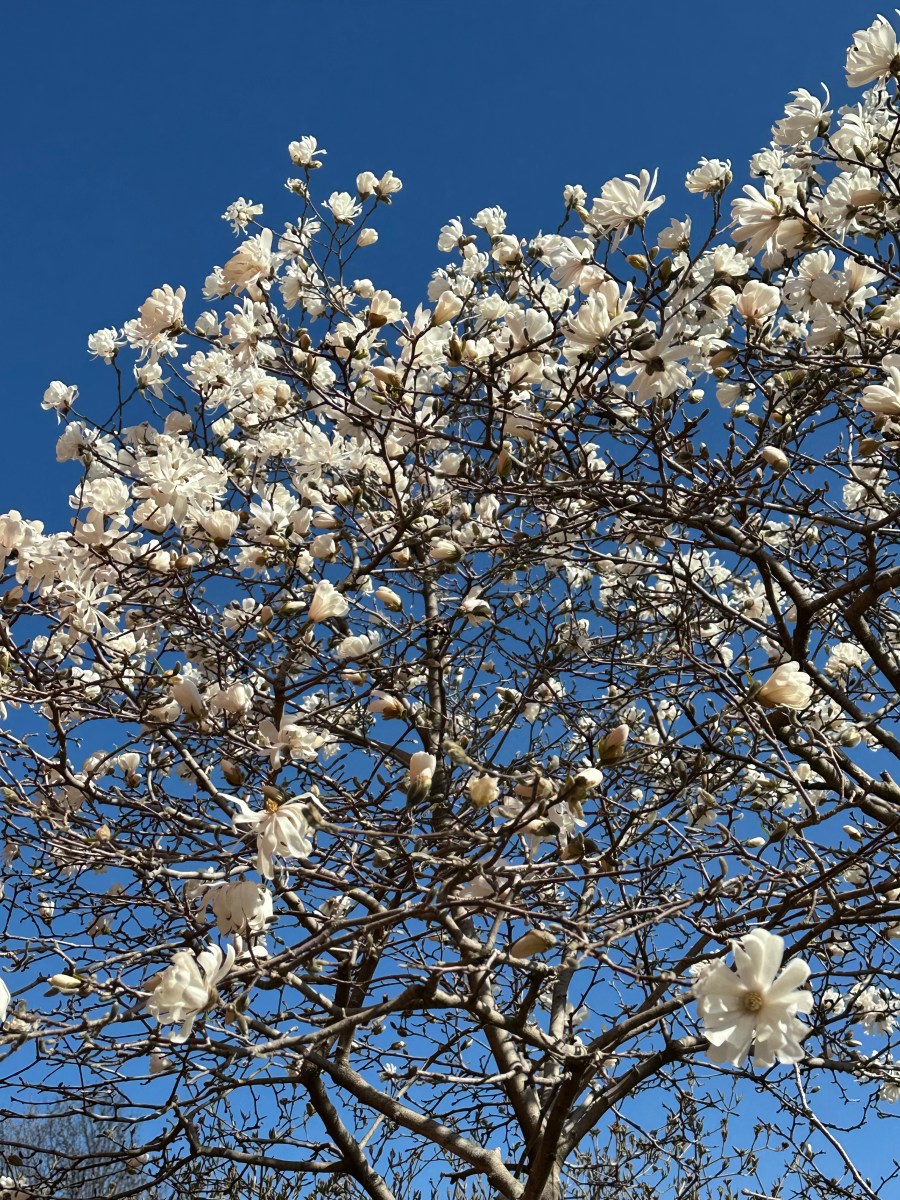
Image: A photograph of a blooming tree outside the St. Bede Worship Assembly Center where we gathered for our IL Valley Oblate gathering. As Spring begins next week, it might be enjoyable to spend some of that quiet time outside, looking at all the signs of new life around us, in the trees and flowers or listening to the birds. Just “be”, no worry or stress about what tomorrow will bring. Contemplate the love of God expressed in the world around you.

Walking behind great women

Some of these blogs start with an idea and a plan and things fall nicely into place. Today my plan was disrupted by the jubilant article written by Maria Shriver in Maria Shriver’s Sunday Paper, “A Woman’s Moonshot”. Maria shares the experience of joining the First Lady, Dr. Jill Biden, for the State of the Union this past Thursday. She shares the story of taking her idea to bring equity to women’s health research for Alzheimer’s, rheumatoid arthritis, menopause, autoimmune diseases and much more to the First Lady last year. Women’s health research has always been underfunded. She acknowledges the First Lady for taking her request seriously and acting quickly. But the best part of her article, for me, was when Maria stated that as the First Lady raised her arm in acknowledgement of the President’s introduction of the health research initiative, she quickly reached out for Maria’s hand to raise it with hers. As Maria says, “She didn’t have to do that, but she did…”

Great women working together for a common goal, that started with an idea or dream! That’s a vision we need for Women’s History Month. If you have a dream, follow it! Don’t give up, even when the road seems bumpy and unsure. Earlier this week I sat with an idea with my journaling cards, from my Visual Journal monthly class project, and thought of all the reasons why it’s too late, will take too long, or that I am not creative enough. Maria Shriver is seeing this dream come to life at 68, granted she has a family history and life experience to walk in bigger circles and perhaps dream bigger dreams, but she follows her dream of living a “life above the noise” and empowering change-makers – “big thinkers, visionaries and visionaries” to move humanity forward. We can each do this, regardless of the size of our circle of influence.

My original plan for this blog, in honor of Women’s History Month and International Women’s Day this week, was to write a litany to the great women, Saints and saints, in my life. Sr. Joan Chittiser’s powerful Litany of Women for the Church has always been a favorite. This link is 2021, but I think this is revised. I had a much older version, perhaps published by Pax Christi, on a well loved prayer card, that I can’t seem to locate now. It calls on great women, channels of the Word, to intercede for us and model what we might become. I wanted my version to include the women in my life that have lifted me up and encourage me along with way.

Besides saying “pray for us” or “intercede for us” you might also use “model for us”, “show us the way”, “teach us”, etc. Don’t we need to pray for and be that for each other?

Who would you include in your litany?

Wishing you the support and encouragement to dream your big dreams! Deena

Image: a photo our Our Lady of Good Counsel window in the Votive Candle Chapel at the Shrine of our Lady of Guadalupe in La Crosse, WI.

Unceasing prayer

Wednesday was “one of those days”. It feels like there have been a few of those lately. So after physical therapy and before returning to work, I stopped by the Queen of the Holy Rosary Shrine because I thought they had all day Adoration. I arrived at the Shrine and entered at the end of the Mass for the school children of Trinity Catholic. After Mass and for a brief period of Adoration for the children, they sang songs. Their angelic voices, and the incense being used, lifted my spirit. I watched them leave the church, from my place in the last pew. During that special time of prayer, Fr. Tom asked them to tell Jesus about the people they would like to pray for, to mention their concerns to him. I thought how lucky they are to have that special time each week and that they were reminded that their prayers are heard, that it is important to share them with Jesus. I took it to heart myself.

I also reflected on the fact that they were likely in church at this same time each week, their beautiful songs and prayers being lifted up while the rest of us are busy at work or home. Then I thought, this is true for more than the school children, there are monasteries or churches offering prayers at every moment throughout the world. Just as I was lifted by my chance encounter with the school Mass, I can be lifted by the prayers being said everywhere. I just have to stop, center and connect to those prayers rising like incense.

Constant prayer for the world is one of the main reasons that I discerned a life of a Benedictine Oblate when I was comparing all the various charisms of religious communities and whether I was being called to religious life in the 1990’s. I love so many aspects of each of the various spiritualities, Franciscan, Dominican, Carmelite, etc. and different parts of my personality and spiritual life could align with each. It was frankly hard to choose. Ultimately seeing the call of a monastic to perpetual prayer, by praying the seven hours of prayer, was the call that tugged at my heart and spirit the hardest. That does not mean that every monastery, or Oblate (lay associate) prays those seven hours! I knew I couldn’t live up to that ideal. In fact, most monasteries that I am aware of pray Morning (Lauds), Noon (Sext) and Night Prayer (Vespers and/or perhaps Compline), not all seven hours. But the idea that at some point in the day, my prayers, or desire to pray, would be joined with the continuous and unceasing prayers for the world, solidified my decision. Praying for the world is a lofty goal, especially when most days I get mad at the driver going too fast or too slow around me. But the goal of a monk, an Oblate and frankly all Christians, is to pray without ceasing, keep the love of God alive in our hearts and mind.

In our retreat, A Different Kind of Fast, Christine Valters Painter, reminds us to go to our interior cell, our “cave of the heart” to rest with the Beloved. In our weekly prayer with the desert elders, this week Amma Syncletica reminded us, in a quote offered by Christine, that we can be “solitary in one’s mind while living in crowd”. We don’t have to go away to a monastery or church to pray or be in the presence of the Divine. But we are invited to make the effort and be intentional about the encounter. Wednesday I needed the physical presence of the Eucharist in Adoration, today I rest in the warmth and embrace of Love in the sunshine.

As we continue on our Lenten journey, I invite you to consider the places that you feel most connected to the love of God and how you might join your prayers with all the prayers being lifted up in the world for those in need. If your prayer “list” is typically a personal list for family and friends, perhaps this week part of your Lenten observance could be to lift up all the places and people in the world that are in need of our prayers. As we heard on Ash Wednesday from the Gospel of Matthew; “when you pray, go to your inner room, close the door and pray”.

As I offer my prayers with all the prayers being said throughout the day, you will all be remembered.

Wishing you peace in and through your prayers, Deena

Image: Evening prayer during a visit to Mount St. Scholastica in Atchison, Kansas.

Trusting in new life

We have been teased the past week or so with a taste of Spring. Then all of a sudden it was winter again. Today the sun is shining with a forecast of high 60 degrees tomorrow and possibly 70’s on Tuesday, before it drops to 30’s again Weds. January was brutal and February, well, was just February in Illinois. It can be exhausting. I watch my bulbs, and early Spring plants, like my Lenten Rose, starting to grow. I am ready for Spring! Later this week we will cross the threshold into March. I hope it will be a month filled with warm days of sunshine and continued growth.

We are also only entering the Second Week of Lent. Perhaps like me, you began Lent full of enthusiasm and a desire to be renewed in the desert and leave it a transformed person. The early days are easy when desire is strong. Yet, they can be challenging too because the new practices have not yet been firmly established.

Last week, for three nights, I attended a Lenten Rosary Mission at a neighboring parish, hosted by Fr. Gary Blake, with the retreat given by Fr. Lawrence Lew, from England and the Promoter General of the Rosary for the Dominicans. It was wonderful to hear the Fr. Lawrence’s message of Jesus’ sacrificial love for us, how we can learn from and model that love in our desire to serve him and to see our prayers, especially in the Rosary, contributing to all the prayers being prayed for each other and the world, as we trust in God’s providence. To pray in community was uplifting but it also took me out of my newly established Lenten routine of special daily prayers and participating in my online retreat. This weekend I reflected that I didn’t completely return to it after the retreat ended. As a matter of fact, I felt a bit disheartened about doing so.

Mark’s gospel of the Transfiguration reminds us that Jesus wanted to give Peter, James and John a glimpse of heaven, and hope to hold on to in the days ahead, days of his arrest, trial, torture and eventual death on the cross. He had just told them he was going to die, so this was his invitation to see beyond the cross. We know that aside from John and the women of the cross, they all ran and hid in fear, the vision of the Transfiguration a distant memory.

Last Spring, and the Springs before that, likely seem a distant memory to us too. But Spring will come, we are seeing signs of it in nature. So, let’s not be discouraged or tempted to give up our desired fasts or initiatives to enter more deeply in prayer. If one day isn’t so great, do not despair. Start again in the morning with an intention to do better. Today I plan to catch up on the days of my retreat I missed this week and do some journaling.

Let us hold on to that vision of new life that we will encounter at Easter. Lent isn’t about winning a trophy in an Ironman competition of accomplished feats. It’s about growing closer to God, creating more time and space to look closely at our relationship with God. It’s a time to look at the things we spend time on and value in life, considering them from a perspective of our spiritual lives. The Transfiguration gives us hope to hold on during difficult days, with the glimpse of what lies ahead. May we move through these remaining days of Lent with a steadfast spirit of faith!

Wishing you continued strength for your Lenten pilgrimage, Deena

Image: tulips in my flower bed last year