A spirit of love

Love is one of the fruits of the Holy Spirit. On this Pentecost Day my prayer is that I open my heart to hold more love, joy, patience… all of the beautiful gifts of the Spirit (Read Galatians 5:16-25 one of the optional readings for Pentecost Sunday). It’s been a week that has challenged those fruits in me. I have thought about what I wanted to write all week but I wanted it to be written in a spirit of love, real love, which is “willing the good of the other”.

I read the reflection in Give Us This Day for today’s Solemnity written by Carolyn Woo, CEO/Catholic Relief Services and dean of the Mendoza College of Business at the University of Notre Dame and was especially moved by these three sentences regarding the apostles experience of Pentecost: “Their proclamation enveloped all in a spirit of love, belonging and oneness. What the people heard and understood was not just some breaking news of the day, a good chat, or rules for success. What they heard was the ‘mighty acts of God’-magnificent creation that included themselves, covenant love that is never broken, forgiveness, redemption, and ultimately reunion with God.”

So why have I been wrestling with my thoughts for today? I am having a difficult time because I want to respond to a limited view of Catholicism shared this week in a commencement address by Harrison Butker at Benedictine College and then debated widely in the news and in social media. I have seen more dissension and vitriol in social media than I can tolerate (and we still have an election coming up this November, I might have to fast from social media!). Initially I found myself responding with disdain rather than wanting to understand all that was included in the address. Once I stepped back, read the address, taking in all the reactions, positive and negative, I pondered when and how it got this bad, that every statement someone makes requires a personal rebuttal, nasty comment, sarcastic meme or hateful statement. Then gospel readings of vocal outbursts between the righteous Pharisees and Saducees came to mind. So maybe the reactions have always been there but are just more noticeable in the constant news and social media frenzy we live with.

I do not object to any person’s freedom of speech and opinion. I did wonder if the college that invited the speaker didn’t have a hidden agenda and expect the attention and backlash that it would cause. I was shocked, however, when the Benedictine Sisters of Mount St. Scholastica, in their response, as the founding institution and a sponsor of the College, received so many argumentative comments to their letter. I find it interesting that people who say they are open to discussion and debate hurl condescending responses when the opinion is different than their own. Is it no longer possible to disagree and turn away?

I am thankful for the many articles written in support of the Benedictine and Christian values that I believe in. I stand in complete solidarity with the Benedictine Sisters of Mount St. Scholastica and their statement that they are “faithful members of the Catholic Church who embrace and promote the values of the Gospel, St. Benedict, and Vatican II and the teachings of Pope Francis.”

I also listened to Bishop Barron’s Sunday Sermon on YouTube this morning regarding this solemn Feast we celebrate today. Bishop Barron contemplated each of the fruits of the Holy Spirit outlined in the Galatians reading. I would highly recommend listening to it. But one comment stands out, “Love stands at the center of the Church’s life, because that’s what the Holy Spirit is.” In speaking of the fruits of the Spirit, Bishop Barron suggests to pay attention to those things in life, vocations and activities, that give rise to the fruits, and stay close to those. If they don’t, if they bring up the opposite of those, stay away.

In no way am I saying that I take Bishop’s sermon as a validation of my feelings or the “truth” regarding my reaction to the commencement address or the response by the Benedictine Sisters. That answer is for people wiser than me. What I do hear, for me, in a spirit of discernment, is to stay away from the dissension, draw close to things that bring about more love, more joy, more patience. Going back to Carolyn Woo’s quote, look for opinions that are expressed in a “spirit of love, belonging, and oneness.” That, my friends, feels like the truth of the Gospel message that we should seek and ask the Holy Spirit to bless us with.

Lastly I offer most of the Blessing for Pentecost written and shared by poet and author Jan Richardson yesterday on her Facebook page. I highly recommend you read the blessing in its entirety.

Here’s one thing

you must understand

about this blessing:

it is not

for you alone.

It is stubborn

about this.

Do not even try

to lay hold of it

if you are by yourself,

thinking you can carry it

on your own.

To bear this blessing,

you must first take yourself

to a place where everyone

does not look like you

or think like you,

a place where they do not

believe precisely as you believe,

where their thoughts

and ideas and gestures

are not exact echoes

of your own.

Bring your sorrow.

Bring your grief.

Bring your fear.

Bring your weariness,

your pain,

your disgust at how broken

the world is,

how fractured,

how fragmented

by its fighting,

its wars,

its hungers,

its penchant for power,

its ceaseless repetition

of the history it refuses

to rise above.

I will not tell you

this blessing will fix all that.

But in the place

where you have gathered,

wait.

Watch.

Listen.

Lay aside your inability

to be surprised,

your resistance to what you

do not understand…

Again from Galatians; “If we live in the Spirit, let us also follow the Spirit.”

I wish you abundant peace this week. Deena

Image: A photo from my pilgrimage to Italy. Bernini’s stained glass window “The Dove of the Holy Spirit”.

The light of hope

Hope is being able to see that there is light despite all of the darkness. Desmond Tutu

I have been thinking about hope this week.

Easter is a season of hope. Hope at a deep level, a spiritual level. Hope is the second theological virtue, as opposed to a fruit or gift of the Holy Spirit. It allows us to trust and protects us from despair. But as with all gifts, we must accept it and make it a deliberate part of our lives.

It isn’t hope that a project turns out well or that my plants weren’t impacted by the frost last night. It isn’t hope that the weather will be nice next weekend, and that everything works out, for my friends Kate and Kathy as they host an aromatherapy retreat that I will be attending next weekend. It isn’t hope that the Chicago Cubs win again today. Although those are all great things to hope for! Perhaps they are hope at the level of a wish or a desire for a positive outcome.

Instead I think true hope is faith-filled. It is a trust in the promise of the Resurrection, that my Aunt Gina, who passed away this week, is now at peace and will be reunited with my Uncle Bill. I have hope that peace and justice ultimately triumph over violence and war. I hope that we will wake up and see what we are doing to the planet and begin to treat the earth with respect and love for the gift we have been given. I have hope in God’s love and mercy for all.

Christian author and speaker, Kate Bowler, has a new series, Words to Live By, on the Ritual – Wellbeing Practices app. I listened to her reflection on Hope a couple of times this week. I enjoy her books, her podcast and now these reflections because she looks at life as it really is, the “beautiful and terrible” of it all (Have a Beautiful, Terrible Day! Daily Meditations for the Ups, Downs and In-Between). I was captivated by a quote, by Martin Luther, that she referred to. “Hope changes the one who hopes into what is hoped for.” If we allow hope to change us, we then “lean into a possible future we can’t see yet.”

If I hope for peace, I become more peaceful in my own interactions with others. If I hope for and care for creation, then I make an attempt, in my own small way, to be more conscious of how I use resources, I recycle and buy less plastic. If I trust in God’s love and mercy for me, then I attempt to offer that love and forgiveness to others. I know I won’t do it perfectly but if I hope to see those things in the world, then I must be an active participant in bringing them about.

So I ask, as Kate did ending her reflection, ‘How well do we actively try to find hope in the world? Do we attempt to listen to its whisper and turn down the dial on fear?’

“Blessed are we when we make room for all of it.” (I also recommend Kate’s book of blessings, The Lives We Actually Have: 100 Blessings for Imperfect Days)

“May the God of hope fill you with all joy and peace in believing, so that you may abound in hope by the power of the holy Spirit.” Romans 15:13

Peace to you and days filled with hope, Deena

Image: Picture of a stone mosaic I took during a visit to a monastery.

PS. Before I started writing today’s blog, I looked back at a post last year, in the season of Easter, “Hold on to hope”. If you would like to read it and reflect further on hope, click the image below.

Human dignity and the rights of all

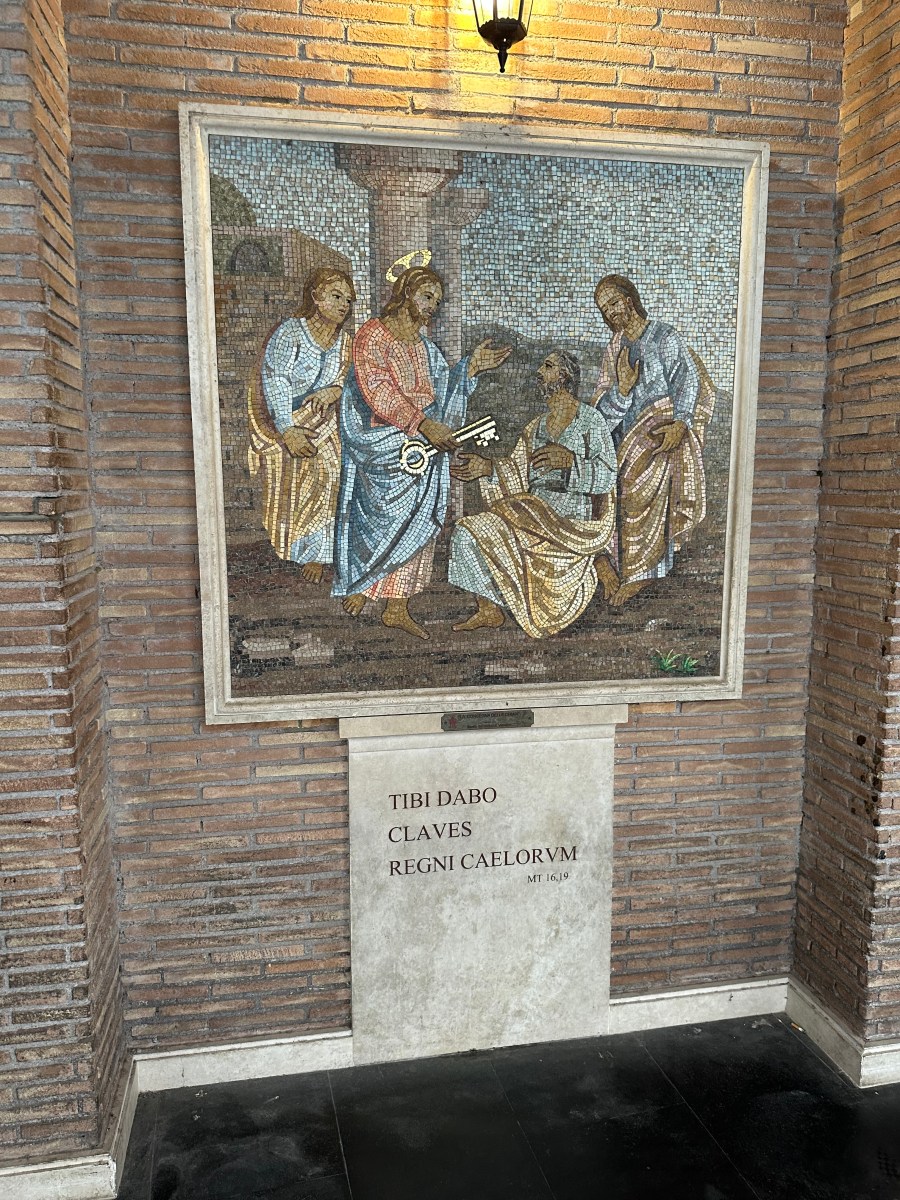
The gospel reading for Saturday in the Second Week of Easter is from the Acts of the Apostles and describes the needs of the growing church and the selection of individuals to assist in the cause of the distribution of goods to those in need, in the case of this scripture reading, widows.

Earlier this week, the Vatican released a final version of the Declaration of the Doctrine of Faith “Dignitas Infinita” on Human Dignity. I read it through a couple of times but need to spend more time with it in prayer and study. It occurred to me, upon reading Saturday morning’s scripture, that from the earliest days of the small community following the teachings of Jesus there has been concern and a need to respond to the needs of others.

Pope Francis requested the additional drafts of Dignitas Infinita because additional attention was needed to address the violation of human rights, in light of his Encyclical Fratelli Tutti in which he stressed the dignity of all persons “beyond all circumstances” and summoned all of us to defend human dignity “regardless of physical, psychological, social, or even moral deficiencies.”

The Declaration provides a biblical foundation for, theological perspective and the position of the Church on human dignity. We see countless examples in the gospel writings where Jesus responds to and elevates the dignity of each person he encounters. We should all follow this example with the same respect for the dignity and needs of each person we encounter in life.

The Declaration is a rich study of the Church’s recognition of the dignity of every person. It also acknowledges grave violations in various forms (not claiming to be a comprehensive list) such as poverty, war, the migrant issue, human trafficking, sexual abuse, violence against women, abortion, surrogacy, euthanasia and assisted suicide, marginalization of people with disabilities, gender theory and sex change, and digital violence. It is a helpful explanation of the Church’s position and I would encourage the document be read in totality versus bits and pieces that the media may choose for any specific agenda.

As mentioned, I need to spend more time studying it, but regardless of my opinions, it is an beneficial attempt by Pope Francis and the Roman Curia to continue to bring the needs of all peoples and situations impacting the dignity of each person to our attention, inviting us all to fight for the protection of that dignity and remember our own, a dignity no one can take from us.

I encourage you to read the Declaration, and whether you agree or not, be well-informed when speaking about the Church’s position for each of these concerns. Let’s also be sure that in any discussion, we support and maintain the dignity of each person whose opinion might be different than our own. We certainly are in need of a lot more of that these days!

In love and mutual respect, Deena

Image: From my trip to Italy, art at the Vatican, Jesus gives the keys to Peter.

Endless, inexhaustible mercy

One of the things I am learning, and appreciate, about the Spiritual Exercises of St. Ignatius of Loyola is that it begins with the premise, in the First Principle and Foundation, that God’s love for each one of us, individually, is endless and unconditional. We have unique gifts and talents, along with our deepest desires, that God wants us to realize and fulfill, to the ultimate purpose of living with God forever. A person making the Exercises is invited to spend time in this First Principle and Foundation, considering this love, before moving on to the other “weeks”. It is only then that we look at how our response to God’s love has been impacted by the sin in our lives, how to follow Jesus more closely, a consideration of Jesus’ passion and death and then the joy of the Resurrection.

Today is Divine Mercy Sunday, the Second Sunday of Easter. I enjoy the gospel of Thomas’ encounter with Jesus, Jesus’ greeting of “Peace” in a room full of his frightened apostles, men that abandoned him, and the prayers of Divine Mercy, but I think I haven’t been approaching the day quite right. I hope it makes sense as you read this.

I found a quote by Thomas Merton to reflect on while trying to look at Mercy a new way. It’s from his book “No Man is an Island”.

“But the man who is not afraid to admit everything that he sees to be wrong with himself, and yet recognizes that he may be the object of God’s love precisely because of his shortcomings, can begin to be sincere. His sincerity is based on confidence, not in his own illusions about himself, but in the endless, unfailing mercy of God.”

Last week, on Holy Thursday, as I traveled to various parishes to visit their Altars of Repose, I found myself contemplating the prayer of Jesus before his arrest and the brutal treatment of sentencing and crucifixion. I prayed, “I am so sorry. Can you forgive us for how we treated you?” I instantly heard, in my mind, an answer to that prayer. “You are forgetting, I already have, that’s what Good Friday was all about.” Wow. It changed my prayers and reflections on Good Friday, Holy Saturday and Easter and I have been contemplating it all week.

Yesterday in the Modern Mystics class I am participating in, Fr. Ron Rolheiser gifted us with his presentation on priest, writer and theologian Henri Nouwen, “The Light of Tenderness”. During the presentation he said, speaking of Nouwen’s writing, that “the heart is stronger than our wounds”. He said that Nouwen believed that we have to live our wounds vs. think about them, we have to take them from our head to our heart and live them so they don’t destroy us. I understood this to mean, for me, that we accept and learn from our wounds instead of rationalizing them, finding people to blame for them or continuing to dwell in them.

We can do this, it occurred to me, only if we believe in that “unfailing mercy of God” that Merton spoke of. I can remain in the posture of constantly trying to understand why I did what I did, keep asking for forgiveness, for the mistakes I have made, over and over again, or I can accept that Mercy and move on. Instead of dwelling on the reason I seek Mercy, I can share the joy of experiencing that Mercy in my life. Otherwise, it seems, I haven’t truly believed in the gift of Jesus’ death and resurrection or the gift of God’s Mercy.

There is immense freedom in knowing that God knows exactly who I am and who I have been. I don’t have to pretend it was anything else. God’s mercy is inexhaustible, precisely because of God’s love and despite my failed attempts to live as a loving human person to others.

I am going to continue to spend some time with this as we celebrate the Feast of Divine Mercy. I invite you to also consider how we might accept that Mercy more fully and move on with the intention of living with more love and compassion, because that great love and mercy has been gifted to us.

Peace, Deena

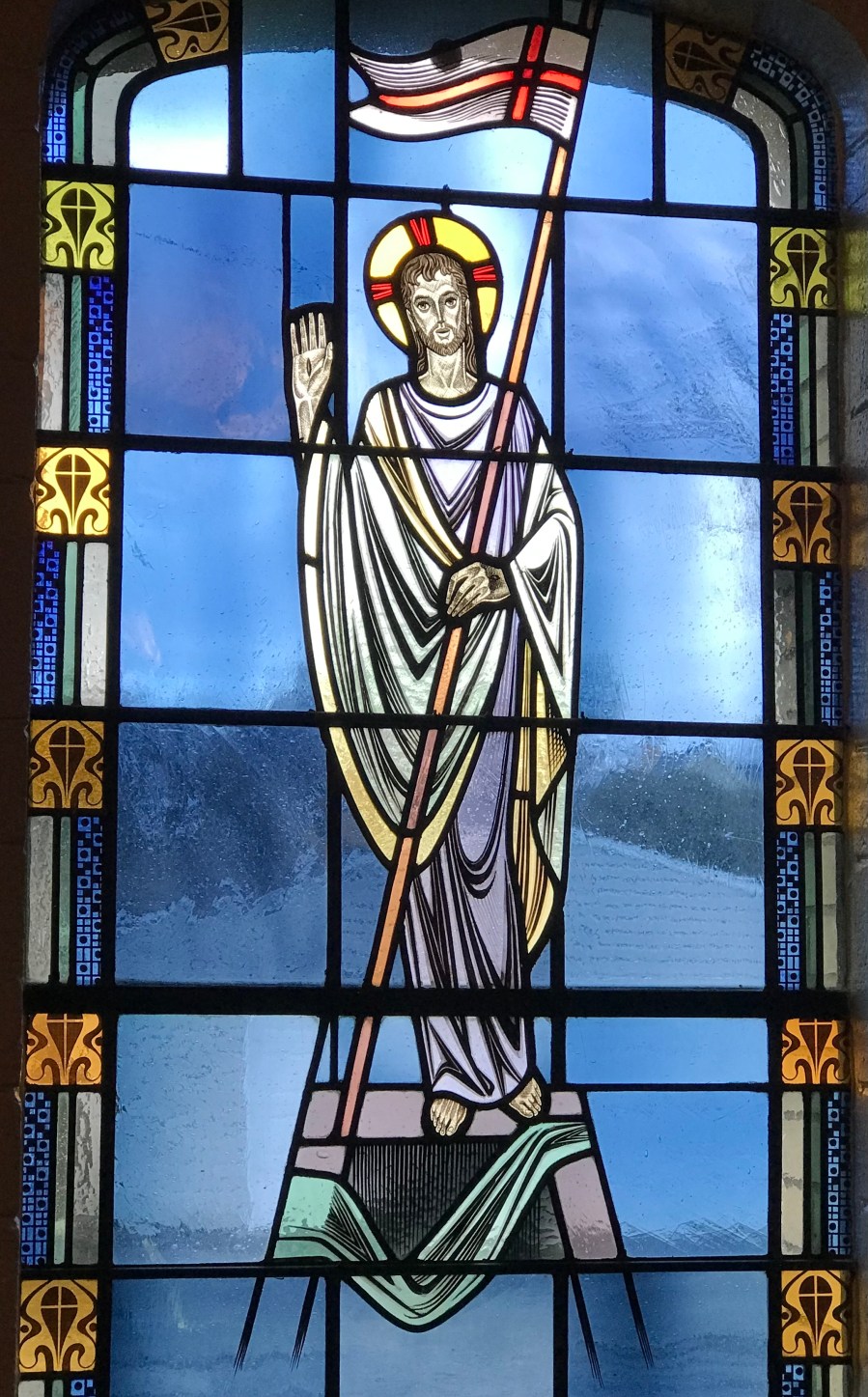
Photo: Our Resurrection Window at Holy Family Church, Oglesby.

O truly blessed night

O truly blessed night

when things of heaven are wed to those of earth

and divine to the human

I am writing this week on Holy Saturday before the Easter Vigil at our parish. The words above are from the Exsultet, or Easter Proclamation, that is sung during the Easter Vigil. It is usually sung by the priest or a deacon, in the dark with candles lit, after lighting the new Easter Candle representing the Light of Christ, before the Liturgy of the Word. If you didn’t listen to it, or read last week’s post, I included a link to a recording of the Exsultet being sung. It is a beautiful part of Easter Vigil.

It’s been a grace-filled Triduum, the holy days of Holy Thursday, Good Friday and Holy Saturday, for me this year. I hope for you as well and that you had a chance to participate in and savor the beauty of these special days. And so our Lent is concluded. We now rejoice!

The difficult days of Holy Thursday and Good Friday, the betrayal of Jesus and the sorrow of Jesus’ arrest, torture and crucifixion are behind us. As in life, we go through challenging times but eventually, I hope, we see things in a new light. It doesn’t always make it easier when we are in those situations, but we trust that we will get through it, that the “Good Fridays” end and the joy of Easter will come.

I read a post, for Holy Saturday, from Conception Abbey, written by Etienne Huard, OSB: “As we reflect on Jesus in the tomb, let us embrace this period of waiting with patience and faith. Let us trust in God’s promise of new life and resurrection, knowing that even in the darkest moments, His light shines through, bringing hope and renewal to all who believe. May this Holy Saturday deepen our appreciation for the Paschal mystery and prepare our hearts to rejoice in the resurrection of our Lord Jesus Christ.”

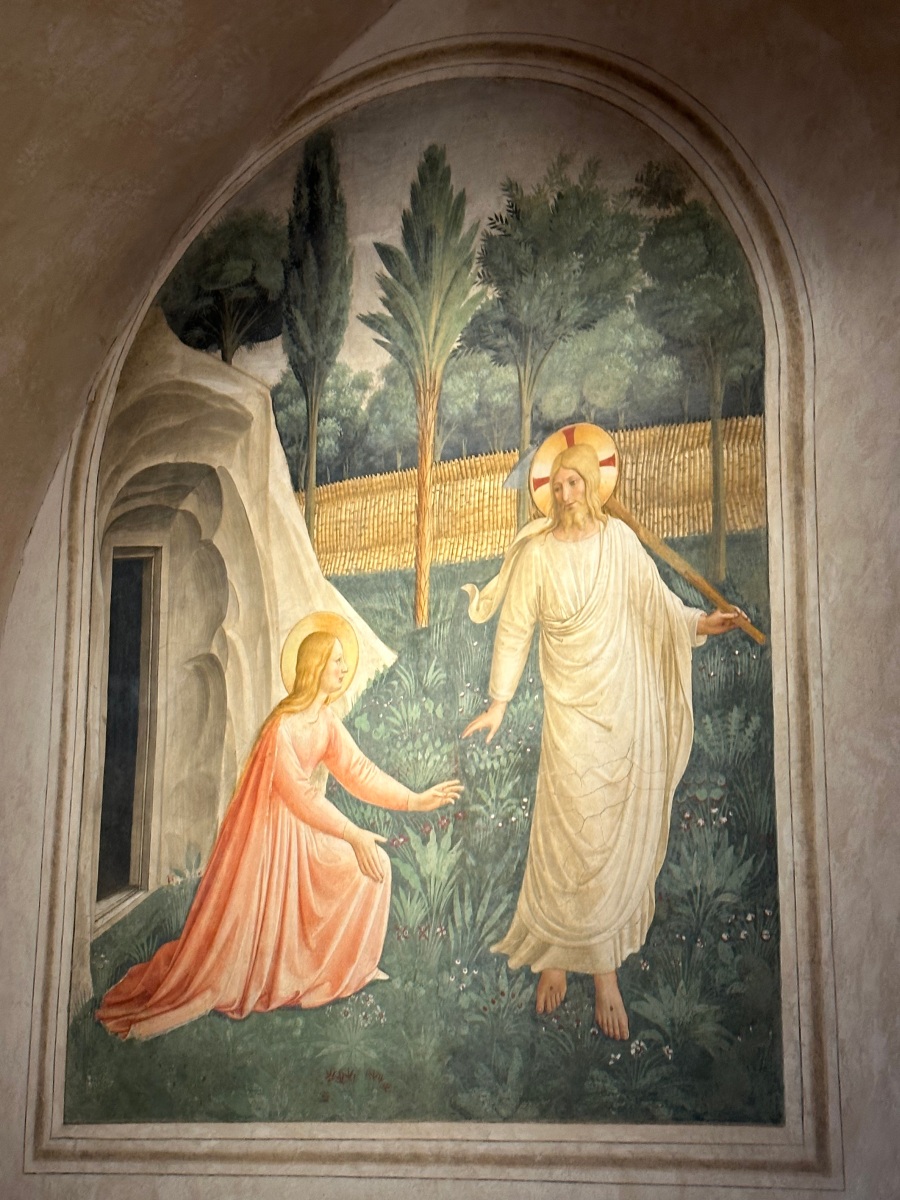
This week I included a photo of one of my favorite frescos from the Museum di San Marco in Florence, Italy painted by Fra Angelico in the rooms of the Dominican convent in the 1400’s. Mary Magdalene encounters Jesus in the garden. In her sorrow, finding the empty tomb, she pleads to know where Jesus’ body has been taken. But then he speaks to her and she sees him, she understands. She knows that the words he spoke, that he would die and rise again, have come to pass.

So on this glorious Easter Day, let us rejoice in the Light of hope that shines for each of us and keep our eyes upon that Light. Let us trust, that regardless of any situations that occur, we can hold on to the hope and peace that we have been promised. The family of poet, author and modern mystic John O’Donohue author a Facebook page of John’s writings. This week they shared a post of Easter Blessings from his book: Walking in Wonder. I was moved by this line, “We were sent to search for the light of Easter in our hearts and when we find it, we are meant to give it away generously.”

I wish you much joy on this Easter Day, as we begin our Easter journey with the Octave of Easter! Easter is 8 days long, lasting until Divine Mercy Sunday next week but the Easter season is 50 days, lasting until Pentecost. We have plenty of time to search for, and rejoice in, the light of Easter!

Peace, hope and joy during this holy Easter season, Deena

Standing at the threshold

Here we are, at the threshold of Holy Week, Palm Sunday. This week, the holiest of all weeks in the church year is our final week of Lent, leading us to Easter. Just as Jesus entered the gates of Jerusalem, we stand at the gate of this special week, prepared to journey with Jesus. Regardless of how our Lent was, how well we did on our Lenten promises, we can embrace this week with intention to enter into the mysteries of Christ’s suffering and death, leading to the Resurrection, the ultimate victory over death for each of us. It is a week of beautiful and moving Church liturgies, I would encourage you to attend as many services this week as you can.

Regardless of your church affiliation, most Christian denominations have Holy Week Services. If yours does not or has not been one in the past that motivates you to want to return, find a parish or church that has an active community. Last week I visited Christ the King Parish in Moline, IL (after Mass we witnessed the baptism of Wilder, the son of my niece Maureen and her husband Ben) and the priest asked the catechumens to come forward after the homily. They had more than 20! It’s a vibrant parish community as indicated by the number of people seeking to join the Church and that parish family! It was amazing and gives me hope.

This week I began reading William Barry’s Experiencing God in the Ordinary Barry invites us to consider that we don’t have to look for God in special places, we don’t have to go somewhere (“away”, to a retreat or monastery) to experience God, God is present to us in ordinary ways and experiences. In his introduction Barry wrote that it is true that some places make it easier for us to have that experience, that some places are “thin places” (as the Irish Celts would say) for us where God is able to break through to us more easily. I would suggest that Holy Week is one of those thin places or times. As we move through each of these holy days this week, we can more tangibly experience the presence of Jesus in our lives, as we walk with him during his final hours.

I have found that many are not aware of the various services of Holy Week and what they represent. If you are, I hope there is some tidbit of information for you in this explanation.

Holy Week begins with Palm Sunday and then concludes with the Triduum, the final holy days of Lent, Holy Thursday, Good Friday and Holy Saturday, we walk through and with Jesus during the final days of his triumphant entry on Palm Sunday into Jerusalem, his final supper with his apostles, his arrest, torture and crucifixion, death and burial. Then on Easter, we rejoice in the Resurrection.

On “Spy Wednesday” we recall Judas betrayal of Jesus for the thirty pieces of silver. We might reflect on the many ways we have betrayed Jesus in the way we live and treat others.

Triduum begins on Holy Thursday (Maundy Thursday) as we commemorate Jesus’ washing of the apostles feet (an act representing our need to be of service to all) and his final Passover meal, the Last Supper, with them. As Catholics, we celebrate the institution of the Holy Eucharist. The altar is then stripped bare, leaving us with the starkness of the cross for Good Friday. Many parishes create an Altar of Repose, a beautiful space created with flowers and palm trees, with the Blessed Sacrament in a tabernacle. We are encouraged to visit different Altars in the community, to spend quiet time in prayer with Jesus in the garden.

For Catholics, Good Friday Service, is not a Mass but a time that we pray with the Passion of our Lord, have a Communion Service, and then venerate the cross. It is a solemn remembrance of all that Jesus suffered and endured for each of us. Because it is not a Mass and the Eucharist has been removed, we don’t kneel before the tabernacle, the Blessed Sacrament is no longer there. Holy Water is also removed until Easter Vigil, when the water is blessed again for Baptism. In the past local parishes have also had Tenebrae Services, a moving service of the psalms of lament and a slow extinguishing of candles throughout the readings. It then usually ends with a loud noise, in almost total darkness, representing the closing of the tomb that held the body of Jesus.

Holy Saturday morning is a time of silent waiting, concluding with the most beautiful service of the church year, the Mass of Easter Vigil. We light the Easter fire, burning old palms, as the new Easter candle for the year is prepared and from that new candle, representing the Light of Christ, we each light our candles to begin the Vigil Mass. In the midst of that beautiful candlelight, a deacon, cantor or priest sings the Exsultet, the Easter Proclamation, an ancient (7th or 8th century) hymn of praise. It is the most beautiful part of Easter Vigil. You may enjoy listening to this version by Glenstal Abbey in Ireland. It is during this Mass that any new members of the Church are welcomed, receive their first sacraments and join fully in the participation of the Holy Mass.

Each Holy Week, and through the Triduum services, I recall my spiritual teacher and mentor saying to me, the first time we met, to “enter the deep, dark incense filled corners of the church” and really experience the ritual and liturgy of the Church. That wise advice helped me find meaning in each of these beautiful liturgies, regardless of any feelings that I have for the church at any particular time or in reaction to any particular teaching that a more conservative priest or bishop might pronounce. We are all human and capable of sin and error, but Holy Week reminds us that Christ died for each of us. My goal is to keep paying attention, to look for God in the places that God seeks to communicate with me, to do my best to get to know this God of tender love and compassion and then make a return of love, in response to that generous love, with my life.

I hope that this Holy Week is one of deep connection with God and that you find many blessings as you are able, and choose, to participate in the beautiful liturgies of the Church. Deena

Photo: Taken during my pilgrimage to Italy in 20923, the Sancta Sanctorum is a Roman Catholic chapel entered via the Scala Sancta (Holy Stairs) of the Lateran Palace in Rome. The photo is the chapel at the top of the stairs. It is believed that the white marble stairs were brought to Rome by St. Helena and were stairs used by Jesus as he walked toward his crucifixion.

Seeking peace

On Saturday we met for our monthly Benedictine Oblate gathering to continue our study theme for this year, Peace and Justice, using The Beatitudes of Peace: Meditations on the Beatitudes, Peacemaking, and the Spiritual Life by Fr. John Dear. It’s a fantastic book, but challenging. I think of myself as someone who stands up for peace and justice, but according to Dear’s definition and barometer of being a peacemaker, to stand up, speak out and take public action, I fall terribly short.

One aspect of being a peacemaker is to cultivate and maintain an interior peace. Peacemakers are nonviolent to ourselves, to all those we encounter, all creatures and creation. It’s a tall order! Our study guide posed this question for us to reflect on, “How can you build a more peaceful heart, a more peaceful community?” We discussed that spending time in silence was essential to building a more peaceful heart. It’s important to spend time in the quiet reflecting the love that God has for each of us and to just sit in that loving presence. If I did that every day, I am sure some of the more harsh and judgmental thoughts I have toward myself would begin to slip away and would be replaced with more peaceful and loving thoughts.

The Church begins Passiontide this weekend, with the Fifth Sunday of Lent. Crucifixes and images of saints or Jesus in our churches are veiled. We enter the final two weeks of Lent, preparing to enter into the mysteries of Jesus’ Passion and death. We remove the distractions, quiet our senses and focus interiorly on how we have done with our acts of prayer, penance and almsgiving.

What would it be like to take on an attitude of acceptance and peace as we assess the first four weeks of Lent and prepare for these more intense weeks. It will not help to look back at them and chastise ourselves if we didn’t do all the things we hoped we would. Enter these final two weeks with a peaceful heart and a desire to do what we can for these remaining days of Lent. The goal is contemplate the great love displayed for us in Jesus’ suffering and death. The darkness of these days are overcome by radiant light we celebrate on Easter Vigil and the joy of the Resurrection.

Wishing you much peace, Deena

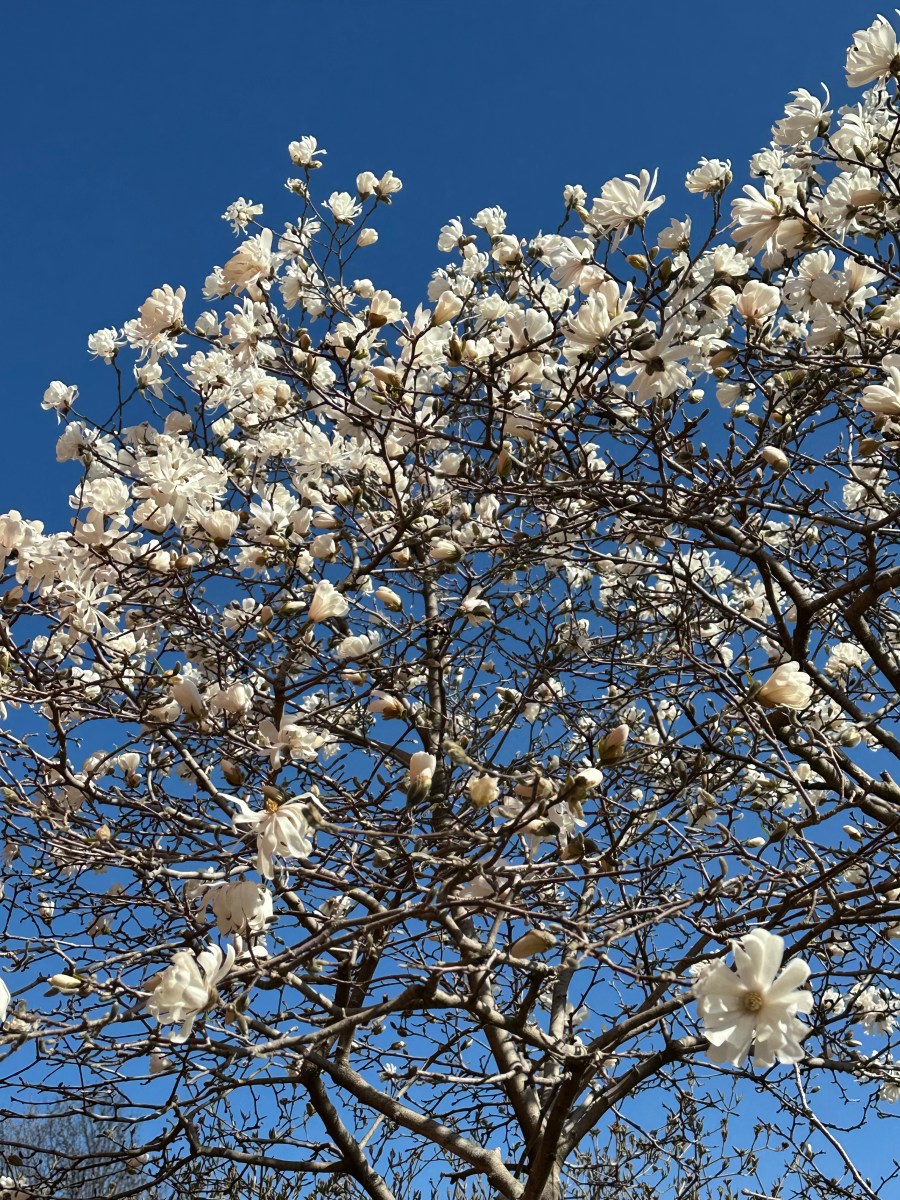
Image: A photograph of a blooming tree outside the St. Bede Worship Assembly Center where we gathered for our IL Valley Oblate gathering. As Spring begins next week, it might be enjoyable to spend some of that quiet time outside, looking at all the signs of new life around us, in the trees and flowers or listening to the birds. Just “be”, no worry or stress about what tomorrow will bring. Contemplate the love of God expressed in the world around you.

A desire for freedom

When I began the year I decided my “word of the year” was Fortitude. One of the practices I have incorporated in each new year, inspired by many authors and retreat leaders, has been to spend time asking questions and reflecting on the predominant quality or theme I want to grow in during the new year. I feel I lack discipline in many ways, so Fortitude came to mind. However, February has been a month of transitions and new learning, so it doesn’t feel right any longer. So, what word will it be? This week Freedom keeps coming to mind.

Last week I wrote about reflecting on the grace we seek before times of prayer, reflection or meditation. I am excited to begin Lent this week. I see Lent as a time of prayer, fasting and almsgiving that allows us to search our hearts. I have several practices that I hope to incorporate and new teachings to reflect upon. I have found that each of them touch on freedom (physical, emotional and spiritual) in some way, shape or form.

Yesterday was my monthly Creative, Visual Journaling class. Lisa invited us, as she gave us prompts to journal about, to be free of what we think is possible, from what has been part of our past experience and imagine the life we wish to live. We have to start with our mindset, Lisa challenged us. We have to change our minds to think about what is possible. Lisa believes that journaling helps us navigate change and transition, it “gives our subconscious mind the problem to solve”. So I embraced the freedom to imagine the life I want – the who, what, how of a life of using my authentic gifts, boldly and with joy.

Another teaching that has been weaving its way into my daily life and practice has been the desire to live more mindfully. The practice of mindfulness helps us be in the present moment, aware of what we are feeling, setting aside the scattered and distracting thoughts of “later”, “what if”, “how will I be able to?”, “why can’t I”, “should I?”, “how could they”… I am sure you have had similar lists. These thoughts do not serve us. A better way is to be in the moment, aware of the only thing we can be sure of, the present moment. I have read and studied many authors and teachers of mindfulness, Christian and Zen, but a review of mindfulness impacted me in a new way this month.

I shared in a Facebook post this month, that some of you may have seen, that I just began the third year of a Wisdom/Mystics program. The first year was Women Mystics and last year, Celtic Wisdom and Mystics. This year we are studying Modern Mystics. On the first Saturday of February we were blessed with the teaching of Thich Nhat Hanh, Zen Master and Buddhist teacher, by his student Kaira Jewel Lingo. Kaira Jewel is a teacher in her own right, given authorization to teach by Thich Nhat Hanh, after spending 15 years at Plum Village living and studying with him. Kaira Jewel is an author and teaches many programs, which you can find online or on apps, like Insight Timer.

A simple practice, one of many Kaira Jewel shared with us during our class, is to set the intention (i.e. in the language of my blog last month, name the grace) to be present for yourself. During our slow breath work as part of meditation, or you could do as part of Christian Centering Prayer, is to inhale “I have arrived” and exhale “I am home”. Kaira Jewel shared that we have to first come home to ourselves, to get to the root of our own suffering and to find unity and inter-being with all other persons and species. If “suffering” seems foreign to you, simply think of it as areas we have opportunities to be more aware of, to grow and let go of.

There have been a multitude of ways that the simple practice of returning to the breath, to the home of my body and spirit, has helped me this month. Has it been perfect? No! But I am learning. I tried to be more present listening to others. Instead of thinking of something outside the moment like a “to do” list, I tried to be attentive to what a person was saying to me. I have tried to be present to my physical pain, instead of reacting in anger or fear of it. Physical therapy seemed to go better this week! I have tried to think about why I am eating what I am eating, especially when it is an attempt to stuff down some other feeling or issue I would prefer to avoid. In a moment when I found myself reacting to someone, I came home to my anger and judgement and wondered why I was reacting to their words, then tried to have compassion and understanding for the person speaking, why they might be saying what they were saying.

Again, was it perfect? No, but perfection isn’t the goal, freedom is. Freedom from worry, anxiety, anger, judgment, etc is. All of those feelings do not change the situation so why do I view them as helpful? It was as if I learned that I had left my home unattended for years, just kept the heat on but the dust accumulated.

The leper in today’s Gospel for the Sixth Sunday in Ordinary Time desired to be made clean, had the faith that Jesus could do it by his act of will. At that time the man’s leprosy was viewed as an outcome of his sin. So Jesus’ act of healing brought him back into his community, it freed him. Doesn’t our sin, judgment and separation from others do the same for us? We are saying, what I want is more important than what God wants for me or how I might be here for others. Our own need and desire trumps everyone else, including God. Desiring to be made whole, desiring freedom from sin and the accumulation of dust, moves us back into community, with God and others.

Author and dear friend, Judith Valente’s Sunday blog (found on Medium and on Facebook), reflecting on Lent and looking at it in a new way, asks us to examine similar questions, “can I take a hard look at the habits I’ve acquired over the past year that don’t serve me or others well? Can I make a conscious effort to let go of them, to make a fresh start?” Again, freedom, freedom to move beyond the habits of my past with a desire to live with more awareness of and for love for self and others. These questions will be part of my daily examen during Lent!

In her weekly email, and in preparation for our Lenten Retreat, “A Different Kind of Fast”, author Christine Valters Painter discusses the Three Renunciations of theologian of the early Christian Church, John Cassian. Christine says the third renunciation was one she found most powerful, and I would agree, as I read her description of them. The third calls us to “renounce even our images of God so that we can meet God in the fullness of that divine reality beyond the boxes and limitations we create.”

This renunciation challenges me to be free to sit with, be gazed upon by the God who desires to be with me. I can be home with God exactly as I am, knowing that I am loved. I can look at the areas that I hope to grow in greater love and compassion for others. I can desire a purging of old ways with the desire to make more room for God and love of others.

So this Lent, where do you desire greater freedom? What grace do you seek for these 40 days of “retreat”, a time to free yourself of habits that prevent you from listening to and responding to God’s call in your life? May it be a time of growth and greater freedom to love and serve with our lives.

May it bring you greater peace, Deena

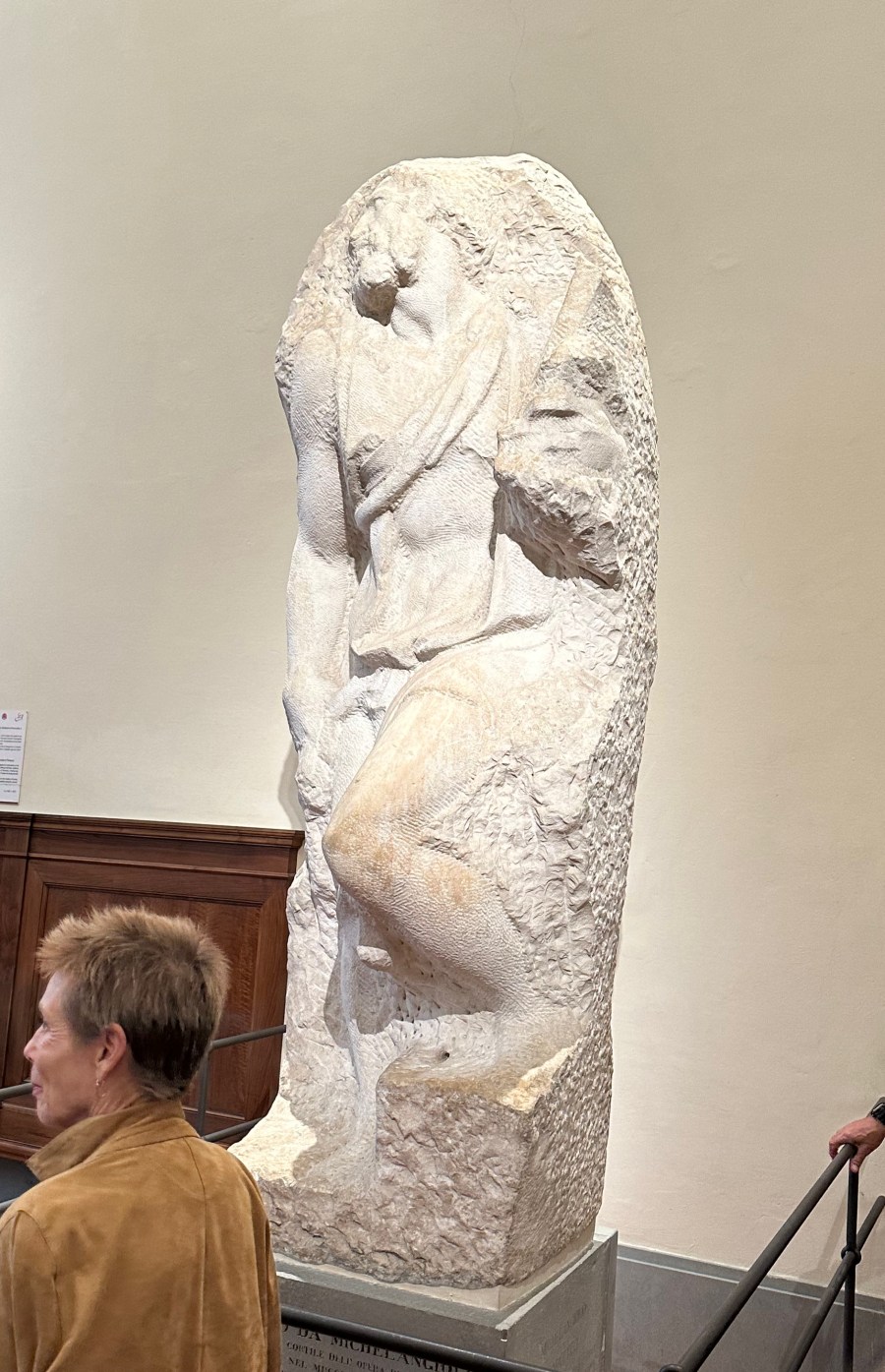
Photo: One of the unfinished marble pieces, never freed from the stone, of Michelangelo in Florence.

Advent & Christmas 2023 – O night divine

It’s a dreary Christmas Eve morning, cloudy but the fog of yesterday and last evening has lifted. I have my Advent candles lit for the last time, all the Christmas trees and other decorations lit. The lights bring a welcome and comforting light to the drab day.

We began Advent with one candle and now the four brightly glowing candles remind us of the Light that has come into our world. We can rejoice that on this evening, over 2000 years ago, a Savior was born. The fulfillment of all the Old Testament promises, a promise of hope, came into the world and we too can live in hope. It seems quite poignant to me this year that the Holy Land is not able to celebrate Christmas and cities are filled with refugees seeking a promise of a better life. It accentuates our need for hope and peace. Let the final Advent candle, and the white Christ candle, remind us that there is a promise of Peace that we can cling to.

As we move from Advent later today, considering my time of prayer and reflection, I am always relieved that Christmas is an Octave, an eight day celebration of the birth of Jesus. If the last couple of days leading up to Christmas have been hectic and not enough quiet reflection time, you still have time after tomorrow. Spend time considering whether Advent and Christmas were all that you hoped for. If not, what can you do to change that? What grace can you pray for during the Octave of Christmas?

This year I wrote the Christmas letter for our Ignatian Ministries blog, Into The Deep. I scheduled it to post late this evening and our subscribers will receive the email and link to the blog tomorrow morning. If you have time late this evening (after 10 p.m.) or tomorrow after all the activities with family or friends settles down, I invite you to read it. We are so grateful for all that was birthed with Ignatian Ministries this year, it had lots of unexpected surprises but oh so many graces! Just like Advent is for each of us, we started with our prayers and desires, listened and discerned along the way, and said “yes” to those moments that felt like invitations from God. As in our individual lives, those “yeses” bring us to celebrate Jesus, and our relationship with him, each and every day.

I pray that the Light of the Christ Child illumines and fills your heart and home as we celebrate Christmas.

Peace, Deena

Photo: My Advent candles

Advent 2023 – O Come, O Come

In years past I arrive at this point of Advent wishing I spent more time in prayer and reflection. There are things I would have preferred to done more of but feel I have entered this season of waiting more than years past. I find myself a bit sad for a different reason – this third week of Advent is our final week! The Fourth Week of Advent is only one day, for that matter, a partial day, next Sunday because it is also Christmas Eve.

My favorite week of scripture, all the special Gospels to savor in the Christmas narrative, will be this week, along with all the baking, card writing and sending, and shopping. However, not feeling well last week and part of this week, has helped me to focus on what really matters this year, and I have been trying to approach the season with a different, more simple, attitude. My sister-in-law and I chatted this week about all that we have and are grateful for, what we desire this year is to spend time together and enjoy the gift of family and friends. So, yes, I have a list of desired outcomes for each day, but what gets done, is what will get done. I would rather arrive at Christmas with love and joy instead of a frenzied attitude.

As we enter the final week before Christmas, today, December 17, begins my favorite days of Advent with the recitation of the O Antiphons with the Magnificat (Mary’s song of praise) each night with Vespers, evening prayer. We know them from the famous carol, O Come O Come Emmanuel. The seven titles of the Christ are sung, or recited, each evening to call upon Christ to come and save His people. Each prayer is short, a single line, invoking God based on the messianic hopes from the Old Testament.

For example, today’s Antiphon is Wisdom or Sapencia:

O Wisdom of our God Most High, guiding creation with power and love; come to teach us the path of knowledge.

You can find them online, written or sung. I love the sung version that St. John’s Abbey provides for us each year. You can find the daily Antiphon on their website or on YouTube.

As I mentioned, this week is rich with the familiar stories of the months leading up to Jesus’ birth; the dream of Joseph, the angel promise to Zechariah, the Annunciation or visit of the angel Gabriel to Mary, the Visitation of Mary to Elizabeth, Mary’s canticle of joy (the Magnificat) and then the birth of John the Baptist.

As we enter this final week before Christmas, I invite you to read the Gospel for each day and then recite (or listen to) the O Antiphon for each day. As you pray the Antiphon each day, consider the grace you seek. What do you call upon God for? I can’t think of a better way to end each busy day, then a few quiet moments reflecting on what we are preparing for!

May you find peace and joy in these final days of Advent. Deena