Pruning the vine

This weekend I am attending an aromatherapy workshop/retreat in Northern Illinois. I stepped away from the evening social to write this so that it can post in the morning when we are in our first session. I was talking to my friend Kathy and said, “I don’t think I want to write about the retreat yet, there has been too much to process and I’m not sure what I want to say yet.’ The introvert in me was tired after a full day of being with others and ready to retire, so I stepped away to the quiet of my room. I opened the gospel reading for the Fifth Sunday of Easter, and saw that it is the discourse on the Vine and the branches. I quickly changed my mind about mentioning the retreat.

Jesus tells us, as he uses the analogy of the Vine and branches, that some pruning is required in order to bear fruit. Pruning will separate away the lifeless and dead parts of the vine plant so that the healthy branches can bear fruit. The rest is gathered together and thrown into the fire. If you have ever had a garden, especially if you have grown zucchini or cucumbers, you know that the vines that grow off the main plant can easily get entangled with weeds or with other plants if not cared for. It’s important to watch as the vines or branches begin to grow and produce fruit. If those branches mingle and get wrapped up in another plant or weed, it is possible that the vines will be choked and that the plant won’t produce the fruit that we desire. Jesus tells us a branch, connected to the Vine, will bear more fruit by pruning away the things we don’t want and by caring for the plant we want to grow and produce abundant fruit. The fruit of sharing the life-giving message of Christ with the world, or at least the world that we interact with, will grow with the same attention and proper care as we need to tend our gardens. If we ignore and hope for the best, we probably won’t accomplish the desired outcome.

Meditation and reflection on the Word of God is an important part of making sure we remain connected to that Truth. As a Benedictine Oblate, that daily reflection with the Word is called Lectio Divina, which I have talked about in previous posts. It is by reading, listening and reflecting on the Word that we open our hearts and minds to hear what God has to say to us, what gifts we should use and sometimes, where we should be using those gifts.

As I returned to my room and reflected on a day full of suggestions about self-compassion, rest and mindfulness, care and releasing the negative burdens of the past to make room for a life of joy and bringing that joy and light to others, I thought yes, this too is part of the pruning. Jesus often stepped away from his disciples and others to pray and connect with God, before or after doing his work in the world. That stepping away was life-giving to him as it can be to us.

During Lent I was more intentional in talking about, and integrating in my life, time for prayer, creating a sacred space for prayer, setting aside activities that are not life-giving and making time for the things that are, entering the cave of the heart to be able to listen and discern. I have wondered all weekend why those were activities I was more intentional about during Lent have faded into the background, and have seemed to be overtaken and strangled by weeds of busyness and disordered passions.

Why is it so hard to step away, to spend a few minutes in silence and self care, in order to connect more deeply with the Source of all things? Why will we say yes to endless requests from others but say no to ourselves when we need to nourish and fill our spirit with just a few minutes that might help us listen and respond to that which is most important? When will we realize just how life-giving that time is, and that replenished and nourished, we are able to be a better vehicle of love and light in the world?

Another retreat participant and I took a few minutes after lunch to walk to Stronghold Castle here on the grounds of the Stronghold Camp and Retreat Center. We found bluebells layering the ground on both sides of the path, we listened to the waters of the Rock River just beyond the castle, and our conversation was interrupted by the loud and persistent jabbing of a woodpecker hidden in the tall trees. We allowed ourselves to be renewed by the healing energy of nature and it only took us about 15 minutes!

Take a few minutes today and try to do the same, be nourished by a walk, ponder looking out the window, take a short nap, read the gospel reading cited above regarding the Vine and the branches, and in those activities, connect to God, the source of all goodness. Find time to step away from the routine activities of your day, even if it’s just for 15 minutes.

Be still and listen with hearts and ears open to hear and receive.

May you find abundant peace in your day! Deena

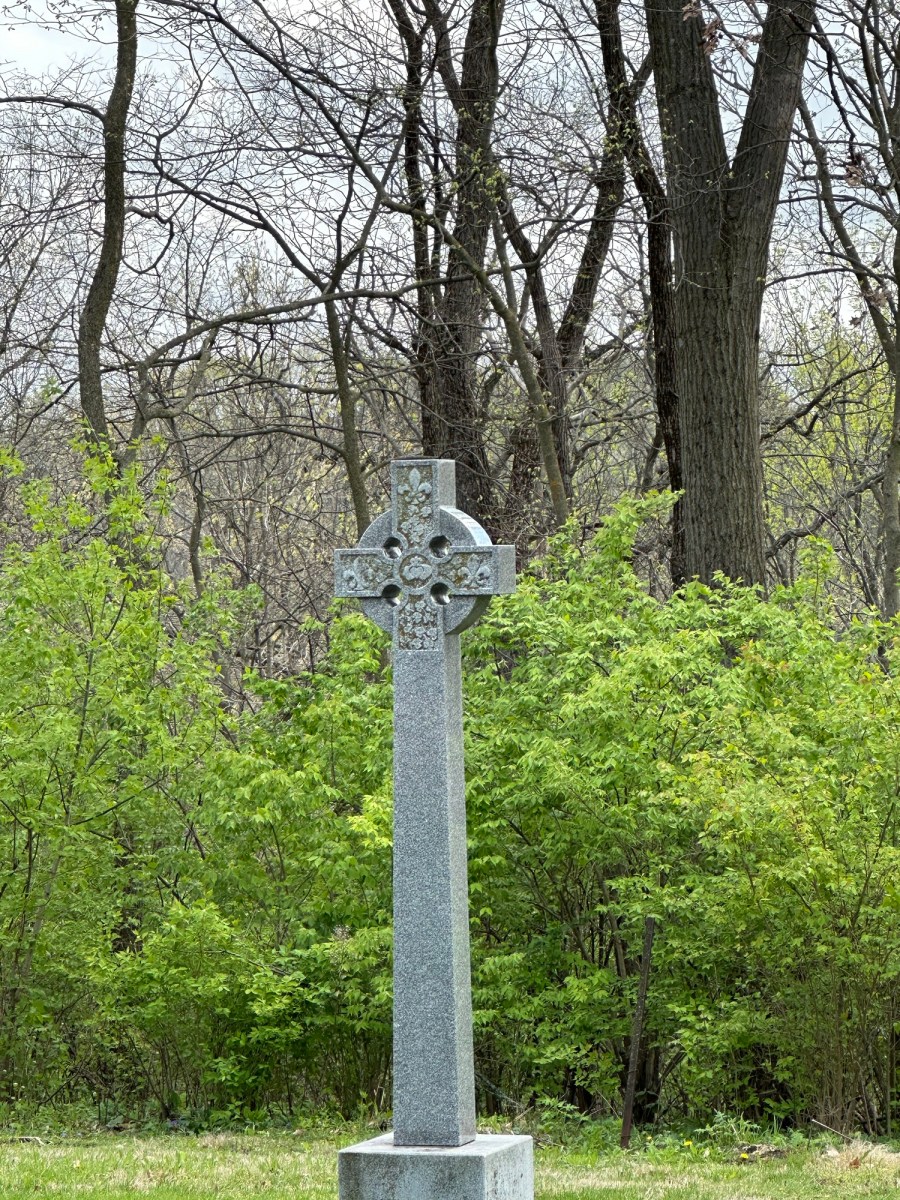
Image: a photo I took at Stronghold Camp and Retreat Center

The light of hope

Hope is being able to see that there is light despite all of the darkness. Desmond Tutu

I have been thinking about hope this week.

Easter is a season of hope. Hope at a deep level, a spiritual level. Hope is the second theological virtue, as opposed to a fruit or gift of the Holy Spirit. It allows us to trust and protects us from despair. But as with all gifts, we must accept it and make it a deliberate part of our lives.

It isn’t hope that a project turns out well or that my plants weren’t impacted by the frost last night. It isn’t hope that the weather will be nice next weekend, and that everything works out, for my friends Kate and Kathy as they host an aromatherapy retreat that I will be attending next weekend. It isn’t hope that the Chicago Cubs win again today. Although those are all great things to hope for! Perhaps they are hope at the level of a wish or a desire for a positive outcome.

Instead I think true hope is faith-filled. It is a trust in the promise of the Resurrection, that my Aunt Gina, who passed away this week, is now at peace and will be reunited with my Uncle Bill. I have hope that peace and justice ultimately triumph over violence and war. I hope that we will wake up and see what we are doing to the planet and begin to treat the earth with respect and love for the gift we have been given. I have hope in God’s love and mercy for all.

Christian author and speaker, Kate Bowler, has a new series, Words to Live By, on the Ritual – Wellbeing Practices app. I listened to her reflection on Hope a couple of times this week. I enjoy her books, her podcast and now these reflections because she looks at life as it really is, the “beautiful and terrible” of it all (Have a Beautiful, Terrible Day! Daily Meditations for the Ups, Downs and In-Between). I was captivated by a quote, by Martin Luther, that she referred to. “Hope changes the one who hopes into what is hoped for.” If we allow hope to change us, we then “lean into a possible future we can’t see yet.”

If I hope for peace, I become more peaceful in my own interactions with others. If I hope for and care for creation, then I make an attempt, in my own small way, to be more conscious of how I use resources, I recycle and buy less plastic. If I trust in God’s love and mercy for me, then I attempt to offer that love and forgiveness to others. I know I won’t do it perfectly but if I hope to see those things in the world, then I must be an active participant in bringing them about.

So I ask, as Kate did ending her reflection, ‘How well do we actively try to find hope in the world? Do we attempt to listen to its whisper and turn down the dial on fear?’

“Blessed are we when we make room for all of it.” (I also recommend Kate’s book of blessings, The Lives We Actually Have: 100 Blessings for Imperfect Days)

“May the God of hope fill you with all joy and peace in believing, so that you may abound in hope by the power of the holy Spirit.” Romans 15:13

Peace to you and days filled with hope, Deena

Image: Picture of a stone mosaic I took during a visit to a monastery.

PS. Before I started writing today’s blog, I looked back at a post last year, in the season of Easter, “Hold on to hope”. If you would like to read it and reflect further on hope, click the image below.

Human dignity and the rights of all

The gospel reading for Saturday in the Second Week of Easter is from the Acts of the Apostles and describes the needs of the growing church and the selection of individuals to assist in the cause of the distribution of goods to those in need, in the case of this scripture reading, widows.

Earlier this week, the Vatican released a final version of the Declaration of the Doctrine of Faith “Dignitas Infinita” on Human Dignity. I read it through a couple of times but need to spend more time with it in prayer and study. It occurred to me, upon reading Saturday morning’s scripture, that from the earliest days of the small community following the teachings of Jesus there has been concern and a need to respond to the needs of others.

Pope Francis requested the additional drafts of Dignitas Infinita because additional attention was needed to address the violation of human rights, in light of his Encyclical Fratelli Tutti in which he stressed the dignity of all persons “beyond all circumstances” and summoned all of us to defend human dignity “regardless of physical, psychological, social, or even moral deficiencies.”

The Declaration provides a biblical foundation for, theological perspective and the position of the Church on human dignity. We see countless examples in the gospel writings where Jesus responds to and elevates the dignity of each person he encounters. We should all follow this example with the same respect for the dignity and needs of each person we encounter in life.

The Declaration is a rich study of the Church’s recognition of the dignity of every person. It also acknowledges grave violations in various forms (not claiming to be a comprehensive list) such as poverty, war, the migrant issue, human trafficking, sexual abuse, violence against women, abortion, surrogacy, euthanasia and assisted suicide, marginalization of people with disabilities, gender theory and sex change, and digital violence. It is a helpful explanation of the Church’s position and I would encourage the document be read in totality versus bits and pieces that the media may choose for any specific agenda.

As mentioned, I need to spend more time studying it, but regardless of my opinions, it is an beneficial attempt by Pope Francis and the Roman Curia to continue to bring the needs of all peoples and situations impacting the dignity of each person to our attention, inviting us all to fight for the protection of that dignity and remember our own, a dignity no one can take from us.

I encourage you to read the Declaration, and whether you agree or not, be well-informed when speaking about the Church’s position for each of these concerns. Let’s also be sure that in any discussion, we support and maintain the dignity of each person whose opinion might be different than our own. We certainly are in need of a lot more of that these days!

In love and mutual respect, Deena

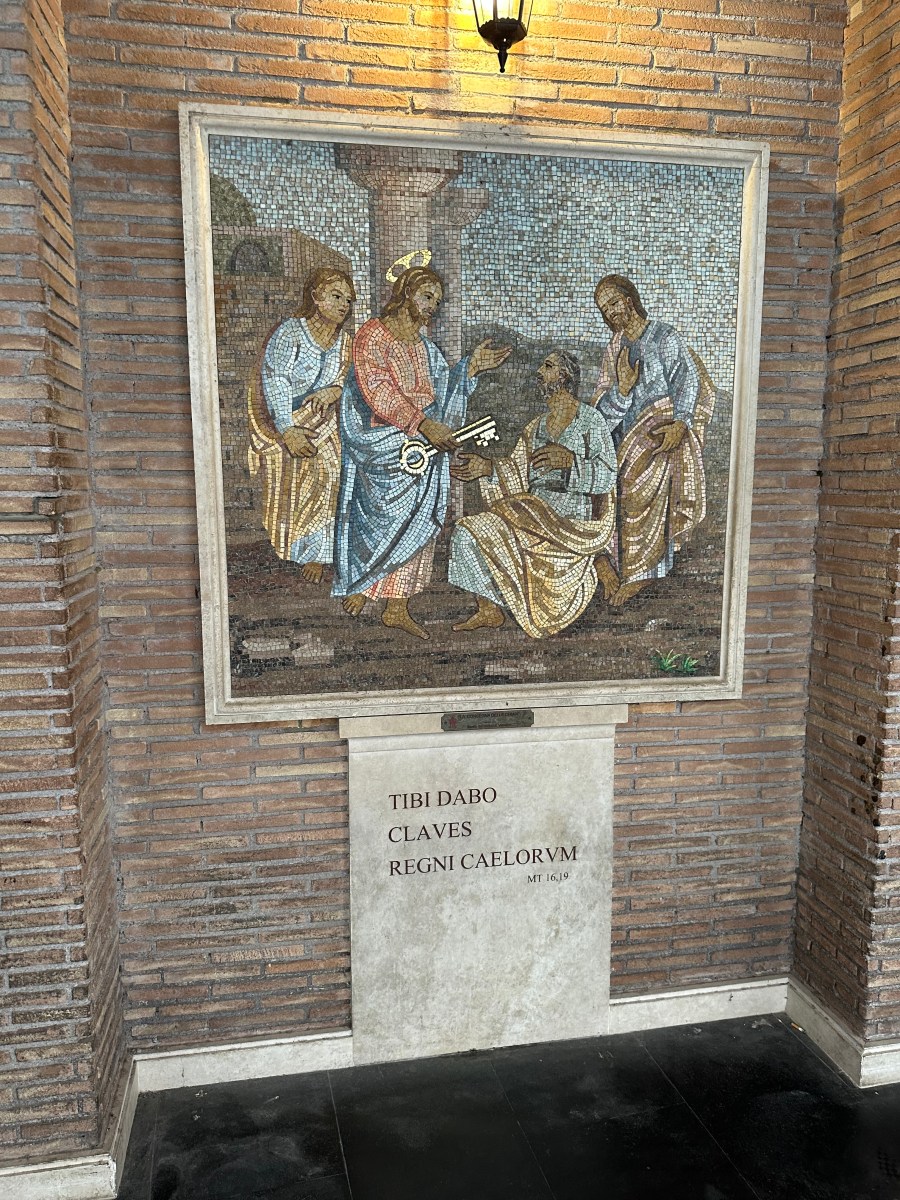
Image: From my trip to Italy, art at the Vatican, Jesus gives the keys to Peter.

O truly blessed night

O truly blessed night

when things of heaven are wed to those of earth

and divine to the human

I am writing this week on Holy Saturday before the Easter Vigil at our parish. The words above are from the Exsultet, or Easter Proclamation, that is sung during the Easter Vigil. It is usually sung by the priest or a deacon, in the dark with candles lit, after lighting the new Easter Candle representing the Light of Christ, before the Liturgy of the Word. If you didn’t listen to it, or read last week’s post, I included a link to a recording of the Exsultet being sung. It is a beautiful part of Easter Vigil.

It’s been a grace-filled Triduum, the holy days of Holy Thursday, Good Friday and Holy Saturday, for me this year. I hope for you as well and that you had a chance to participate in and savor the beauty of these special days. And so our Lent is concluded. We now rejoice!

The difficult days of Holy Thursday and Good Friday, the betrayal of Jesus and the sorrow of Jesus’ arrest, torture and crucifixion are behind us. As in life, we go through challenging times but eventually, I hope, we see things in a new light. It doesn’t always make it easier when we are in those situations, but we trust that we will get through it, that the “Good Fridays” end and the joy of Easter will come.

I read a post, for Holy Saturday, from Conception Abbey, written by Etienne Huard, OSB: “As we reflect on Jesus in the tomb, let us embrace this period of waiting with patience and faith. Let us trust in God’s promise of new life and resurrection, knowing that even in the darkest moments, His light shines through, bringing hope and renewal to all who believe. May this Holy Saturday deepen our appreciation for the Paschal mystery and prepare our hearts to rejoice in the resurrection of our Lord Jesus Christ.”

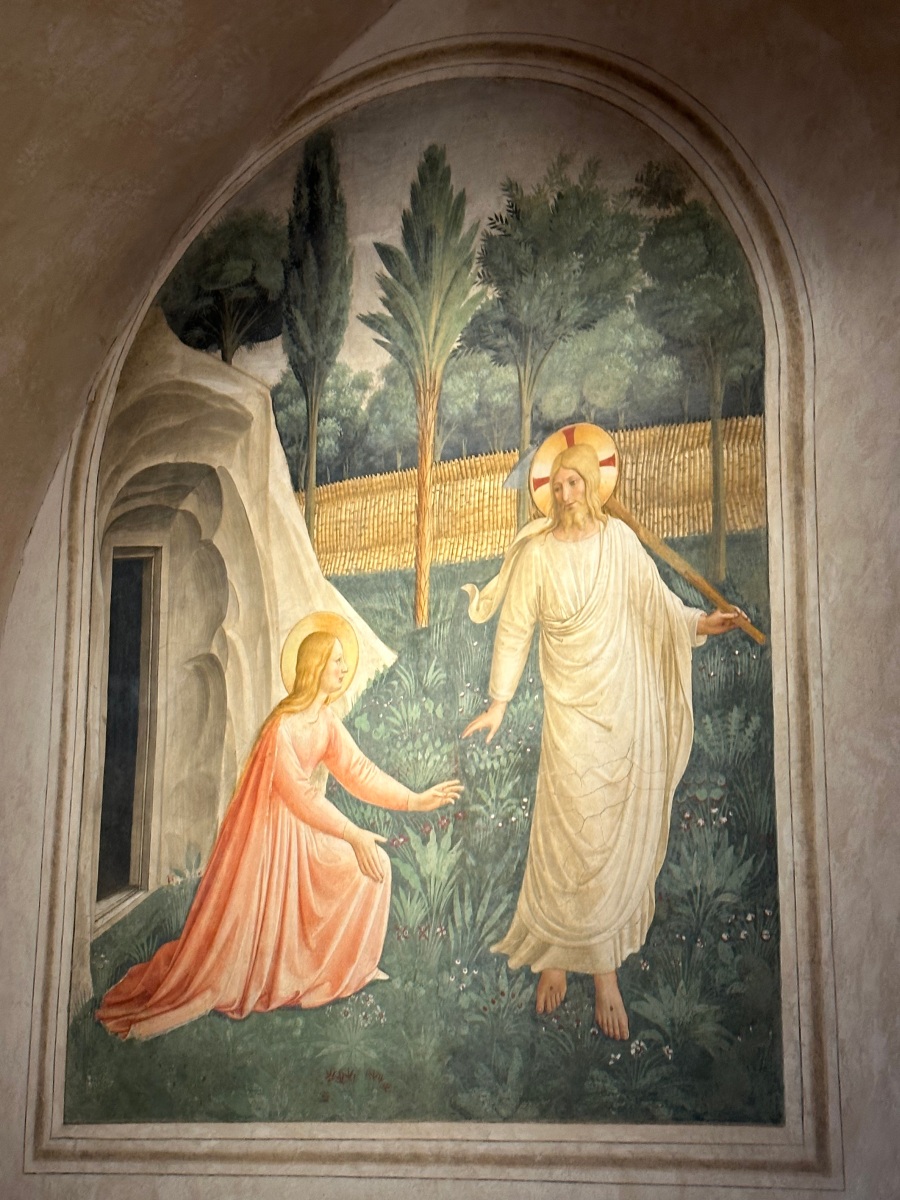
This week I included a photo of one of my favorite frescos from the Museum di San Marco in Florence, Italy painted by Fra Angelico in the rooms of the Dominican convent in the 1400’s. Mary Magdalene encounters Jesus in the garden. In her sorrow, finding the empty tomb, she pleads to know where Jesus’ body has been taken. But then he speaks to her and she sees him, she understands. She knows that the words he spoke, that he would die and rise again, have come to pass.

So on this glorious Easter Day, let us rejoice in the Light of hope that shines for each of us and keep our eyes upon that Light. Let us trust, that regardless of any situations that occur, we can hold on to the hope and peace that we have been promised. The family of poet, author and modern mystic John O’Donohue author a Facebook page of John’s writings. This week they shared a post of Easter Blessings from his book: Walking in Wonder. I was moved by this line, “We were sent to search for the light of Easter in our hearts and when we find it, we are meant to give it away generously.”

I wish you much joy on this Easter Day, as we begin our Easter journey with the Octave of Easter! Easter is 8 days long, lasting until Divine Mercy Sunday next week but the Easter season is 50 days, lasting until Pentecost. We have plenty of time to search for, and rejoice in, the light of Easter!

Peace, hope and joy during this holy Easter season, Deena

Trusting in new life

We have been teased the past week or so with a taste of Spring. Then all of a sudden it was winter again. Today the sun is shining with a forecast of high 60 degrees tomorrow and possibly 70’s on Tuesday, before it drops to 30’s again Weds. January was brutal and February, well, was just February in Illinois. It can be exhausting. I watch my bulbs, and early Spring plants, like my Lenten Rose, starting to grow. I am ready for Spring! Later this week we will cross the threshold into March. I hope it will be a month filled with warm days of sunshine and continued growth.

We are also only entering the Second Week of Lent. Perhaps like me, you began Lent full of enthusiasm and a desire to be renewed in the desert and leave it a transformed person. The early days are easy when desire is strong. Yet, they can be challenging too because the new practices have not yet been firmly established.

Last week, for three nights, I attended a Lenten Rosary Mission at a neighboring parish, hosted by Fr. Gary Blake, with the retreat given by Fr. Lawrence Lew, from England and the Promoter General of the Rosary for the Dominicans. It was wonderful to hear the Fr. Lawrence’s message of Jesus’ sacrificial love for us, how we can learn from and model that love in our desire to serve him and to see our prayers, especially in the Rosary, contributing to all the prayers being prayed for each other and the world, as we trust in God’s providence. To pray in community was uplifting but it also took me out of my newly established Lenten routine of special daily prayers and participating in my online retreat. This weekend I reflected that I didn’t completely return to it after the retreat ended. As a matter of fact, I felt a bit disheartened about doing so.

Mark’s gospel of the Transfiguration reminds us that Jesus wanted to give Peter, James and John a glimpse of heaven, and hope to hold on to in the days ahead, days of his arrest, trial, torture and eventual death on the cross. He had just told them he was going to die, so this was his invitation to see beyond the cross. We know that aside from John and the women of the cross, they all ran and hid in fear, the vision of the Transfiguration a distant memory.

Last Spring, and the Springs before that, likely seem a distant memory to us too. But Spring will come, we are seeing signs of it in nature. So, let’s not be discouraged or tempted to give up our desired fasts or initiatives to enter more deeply in prayer. If one day isn’t so great, do not despair. Start again in the morning with an intention to do better. Today I plan to catch up on the days of my retreat I missed this week and do some journaling.

Let us hold on to that vision of new life that we will encounter at Easter. Lent isn’t about winning a trophy in an Ironman competition of accomplished feats. It’s about growing closer to God, creating more time and space to look closely at our relationship with God. It’s a time to look at the things we spend time on and value in life, considering them from a perspective of our spiritual lives. The Transfiguration gives us hope to hold on during difficult days, with the glimpse of what lies ahead. May we move through these remaining days of Lent with a steadfast spirit of faith!

Wishing you continued strength for your Lenten pilgrimage, Deena

Image: tulips in my flower bed last year

Into the desert

Here we are in the first week of Lent. We hear in Mark’s brief gospel account of the time that Jesus went into the desert for forty days. It’s an account that sets us up for our forty day pilgrimage and journey into the desert of prayer, fasting and almsgiving.

“The Spirit drove Jesus out into the desert, and he remained in the desert for forty days, tempted by Satan. He was among the wild beasts, and the angels ministered to him.”

During his Angelus address today, Pope Francis asked us if we retreat into the desert or try to spend some time reflecting on the disordered passions, the “wild beasts” that stir in our hearts. He said that “the angels bring us good thoughts and feelings, suggested by the Holy Spirit, while the temptations tear us apart. “

We must enter into this season of silence and prayer, during Lent, to ask these important questions. The “Ash Wednesday” days, the short week before the First Week of Lent, of my retreat with Abbey of the Arts, A Different Kind of Fast, has been a thought-provoking entry into the desert. This retreat is also the title of the latest book by Christine Valters Painter, our online abbess and retreat facilitator. We have looked at the things we consume, not just food, that don’t really nourish or satisfy us. We look, during this entire journey, at those “disordered passions”, as Pope Francis labeled them today, in order to make space to grow closer to the Beloved. We look at those activities and habits that keep us from being present and aware, keep us from experiencing greater freedom, as I discussed in last week’s blog.

During the retreat we will journey into the desert, in guided meditations, to learn from the Desert Fathers and Mothers. This week we “spent time” with Abba Arsenius, to glean wisdom on true hunger and what is enough in life. At the end of the meditation Abba Arsenius presents us with a bowl, a bowl that we can fill up with things that no longer serve us and “empty the contents into the hands of the divine.”

I have added a picture of my bowl at the bottom of this post. I actually used it two years ago, the first time I took this retreat. When Lent was over, I put the bowl, wrapped, and safely back in a box in the basement. As soon as Abba Arsenius handed me a bowl, this purple bowl came to my mind. After discussing the contents that I could fill the bowl with each week, I thanked Abba and went downstairs to retrieve it. I thought, while unwrapping it, how many items do I have wrapped or stored in cabinets to be used for a special occasion instead of enjoying them? Then thinking of my other consumption, how many craft supplies do I buy and never use? Do I feel more creative just by having them? Or am I afraid to put myself out there? How many books do I have that have not been read? Do I feel more wise as a result of them sitting on my bookshelves throughout the house (and basement!)? Or is the purchase itself filling some kind of void? Why do I allow time to be filled with less nourishing activities instead of those that bring me peace? Similarly, what foods do I eat in order to stuff down a feeling I prefer not to deal with? What is the food in life that will truly nourish?

Yesterday we took part in a creative ritual to create an altar space, a space with symbols to remind us of this season of pondering the deep questions and to help us enter into our prayer practice. Mine came together easily with items that will remind me of my quest this Lent. I have a stone cross surrounded by stones, that built a cairn during my first Abbey of the Arts retreat, Earth; Our Original Monastery. I have a purple cloth bag to represent the things I have been carrying but desire to be free of. I have beautiful prayer cards that symbolize the journey: St Catherine of Siena, a lovely card I bought in Siena this past Fall, known for her rigorous fasting on vegetables, water and the Holy Eucharist; a card with St Teresa of Avila’s prayer, Let nothing disturb you; a prayer card I picked up in Rome, of Jesus and the Samaritan woman at the well, “Sir, give me this water so that I might not be thirsty…”; and a prayer cards of angels. My hope is that these cards will remind me of those holy saints and angels that accompany me on this journey through Lent.

The questions of Lent are hard ones to ask and replacing them with more life-giving practices takes time. It’s a journey of a lifetime, but a good one to begin during this holy season of Lent. We can ponder the questions of Pope Francis today. What disordered passions or wild beasts consume my life and keep me from more life-giving practices? What might I be invited to let go of? Am I spending time in silence and prayer?

Are there some symbols or objects that you can place in your prayer space to invite you to this time of deeper union with God? I would love to hear what items will assist you during this Lenten pilgrimage.

I wish you great peace, freedom, and inner calm this week, Deena

Images:

The purple bowl that I was invited to bring out during my meditation with Abba Arsenius.

Desert image, as a featured image for this blog, from my PicMonkey account

The grace I seek

A way of praying that has become ingrained in me the past couple of years, learning and growing in Ignatian spirituality, has been to begin prayer time reflecting on and naming a grace I seek for that time of prayer, retreat or gathering. It’s very different than praying prayers of petition or praying for intentions, which is also an important part of raising those people and concerns that we have to God. I’ll share a couple of articles, at the end of this post, that will introduce you to naming a grace, if that is not a practice you are aware of. The articles are by two authors that I regard highly, Becky Eldredge and Vinita Hampton Wright. Asking for a grace is “not for God, but for us”, Vinita writes. It is something we are seeking or wish to grow more deeply aware of in our lives. It might be peace, clarity, freedom from anger in a situation, or greater joy.

Yesterday afternoon I read the daily reflection in Give Us This Day by Sr. Colleen Gibson, a Sister of Saint Joseph of Philadelphia. She has a podcast, Beyond The Habit, which I haven’t listened to yet but looks very interesting and frankly, like a lot of fun too! Sr. Colleen speaks of yesterday’s daily Gospel and Solomon’s request for wisdom and an understanding heart. She reminds us that having a discerning heart, to seek wisdom in our daily lives, is a “gift and a muscle”. We have to exercise and use it. She also comments that asking for a grace is a “first of many steps on the spiritual journey.” The gifts or grace that we ask for may not come to us the way that we expect but they are graces we then have to use.

To slow down and reflect on that which we are seeking in prayer helps us, I have found, center and ground ourselves before the prayer. It makes the prayer more intentional, our eyes and hearts become open to see and hear what God might want to say to us or invite us to consider.

Lent begins this month on February 14th. Those of us that grew up Catholic typically prepare for Lent thinking about what we want to “give up”. Yes, this is still important. Giving up a favorite food or behavior helps us learn about sacrifice, perhaps offering that sacrifice for the needs of others. It also helps us clear our thoughts and minds of things that are habitual or distract us from God’s presence. It isn’t about a diet or another chance to revive a forgotten New Year’s resolution but rather make space for God.

This Lent I invite you to spend some time thinking about a grace that you seek this Lent. This will then open the way to consider what you would like to “fast” from this Lent. You might also consider a program or book that will help you on this journey toward the grace you are seeking. I once read that The Missionaries of Charity, the order founded by St. Mother Teresa of Calcutta, read the book Life of Christ by Fulton J. Sheen during the 40 days of Lent. It’s a large book, so not one that you could fall behind on daily reading but rather develop the daily habit of reflecting on the life of Jesus. Many other publishers, such as Loyola Press, Ascension Press or Word on Fire Catholic Ministries (there are many others!) have books or daily reflection programs if that is something you would find helpful. (See below for information regarding the daily Individual Path of Prayer for Lent that we offer from Ignatian Ministries.)

I will be participating in a second offering of A Different Kind of Fast by Abbey of the Arts. We walked through the sections of Christine Valters Painter’s book two years ago and now that the book has been edited and published we will be walking through it again this Lent. As Christine wrote in her weekly newsletter today, “Ultimately, the practice of fasting is about making more space within us to encounter our deepest, most radiant selves. How do we listen to the whispers of the Holy One when we constantly distract ourselves with social media and doomscrolling. How do we discover the radical abundance available to us, not of food or entertainment, but of nourishing gifts like joy, peace, love, and gratitude? How do we make room for the grief inside us which is a witness to how much we have loved if we are fighting to be strong and keep control in an unpredictable world?”

You have some time but begin to think about Lent before we arrive there on Ash Wednesday. This time will allow you to really reflect on the grace you seek. What would you like Lent to look like this year? What do you hope for your spiritual life as you move through the forty days of Lent? What practice might you add that will enrich your daily practice of prayer and reflection? What Lenten sacrifice or fast would clear the way in your heart and mind for a closer relationship to Jesus?

May it bring you greater peace, Deena

The articles I mentioned above:

Gathering the Graces by Becky Eldredge, August 2020

Asking for the Grace to Want the Grace by Vinita Hampton Wright, June 2019

Jesus: Companion in our Suffering, An Ignatian Prayer Path for Lent, Ignatian Ministries, 2024

Image from my photos, the prayer and adoration chapel at St. Mary Monastery, Rock Island.

Seeds that will sprout

I’ve been thinking about the spiritual practice a lot this week. When I think of my own practice, I notice the places that need some change and some nurturing. It’s normal to adjust and change as individuals as our spiritual lives deepen and grow. It’s healthy to notice where we need to tend to them a bit more.

The spiritual practice and what it leads to, a richer inner life and ever growing closeness to God, isn’t just a certain set of actions or habits. It is how it changes and transforms us interiorly. I think it is easy to focus on the external behaviors like going to church, saying a rosary or other prayers given to us by others, to sit in prayerful meditation, kneel in reverence or take a walk in nature. But if a quiet and receptive mind and heart aren’t there, then I would guess that the interior life is stagnant or perhaps even chaotic. We might not think that it is “getting us anywhere”.

Perhaps we can imagine the spiritual practice like planting seeds. We get the seeds or tiny plant, find the right environment for it to grow with the proper sunlight and we water it. We care for it. But the growth of the plant is outside of our control, we have to wait, continue to care for it and protect it. Ultimately it is a gift. Or even better, a grace that comes from the result of all the actions we have taken.

When we bake, we gather all of our ingredients, we mix them in the appropriate proportions and place those ingredients in the proper environment, an oven at the right temperature, and hope the result is the cake, muffins or cookies we desire. For those of us that bake, we know that sometimes outside factors can influence the end result, too much humidity, old flour, etc. But, the more we use that recipe, and make sure the ingredients are the best we have to use, the more often we are successful.

It isn’t just the ingredients of the cake, or the seeds and soil, that produce the desired outcome. Oh sure, sometimes you can toss a seed and get lucky. But gardening and baking both take practice, a repetition of the right process, over and over again, of doing the work and patient waiting.

The more I use Ignatian Contemplation, or imaginative prayer, the more I see the positive impact it has on my spiritual practice. Ignatian Contemplation, very simply, is placing ourselves in the scripture or story, listening and watching what is unfolding and then imagining our role in the story, what the scripture is saying to us personally. But just like baking and planting, it takes a bit of practice, as well as an open and receptive heart, to allow the scripture to speak to us personally. We listen to what Jesus might be saying to us, in our life, right now, in response to the needs, or graces, we have presented in prayer. Sometimes it is watching and learning from what we are seeing.

This week I imagined myself in the boat with Jesus and the apostles (Mark 4: 35-41) as the storm came upon the boat suddenly, I heard Jesus say “Quiet, Be Still!” to the storm, which caused the wind to cease and the waves to calm down. I knew instantly that my practice was lacking some calm, Jesus was inviting me to quiet my mind more, less talking, more being, in silence, present to the calming presence of Jesus.

If your inner life is feeling a dull or stagnant, maybe a bit unsettled, or in need of a little shift, a simple answer is to spend more time in prayer and reflection. This week sit with the scripture from Mark’s gospel of the blind Bartimaeus (Mark 10: 46-52). Jesus responds to his calls for help, those around Bartimaeus say “Take courage, get up, he is calling you.” He goes to Jesus and Jesus says to him, “What do you want me to do for you?” Bartimaeus replies, “Master, I want to see.”

As you quiet yourself and hear Jesus say, “What do you want me to do for you?”, listen to the words that well up within you regarding your spiritual practice and relationship to Jesus. What do you say to Jesus? What does Jesus say in reply? That just might be the beginning of your next steps, the guidance you are seeking to a more fulfilling spiritual life, which will result in an inner peace that comes from growing closer to God.

Two thoughts that might help come from a great teacher of the interior life, St. Frances de Sales:

One rarely does well what one rarely does.

There is no soil so barren wherein diligent tenderness cannot produce fruit.

I wish you great peace and inner calm this week.

Deena

Image from my PicMonkey account

Delighting in the simple things

We’re beginning the Third Week in Ordinary Time this week. Merriam-Webster defines ordinary as a common quality, rank or ability; of a kind to be expected in the normal order of events. So, ordinary is not anything that we get excited about. Ordinary implies nothing monumental or note-worthy. But I began to view “ordinary” differently this weekend. I reflected that we can miss out on the wonder of the ordinary moments and I contemplated delighting in the simple things of life, simple moments that transform a day.

We’re studying the topic of Peace and Justice this year as our study for the Oblate program of St. Mary Monastery. We are reading several articles and the book, The Beatitudes of Peace by John Dear.

This week was a hectic week at Ignatian Ministries. I’m not sure it was entirely due to the Martin Luther King holiday on Monday, but rather the amount of work we wanted to accomplish in the week, regardless of the number of days. There were the normal daily tasks of email communication and preparations for a new class that Becky Eldredge, our founder, begins on Wednesday. Becky had preparations for other meetings and a retreat this weekend. I prepared the weekly blog post that emails tomorrow morning. Our team worked to provide data for a quarterly review, that I prepared the PowerPoint for and presented on Friday, as well as launching our Lent Path of Prayer Series for individuals and small group leaders by end of day on Friday. The quarterly review and Lent series were essentially my tasks as part of my role as Director of Programming, a part-time position, while still coordinating some of Operations reporting, so I was feeling the weight of getting those tasks accomplished by the end of the week. On Thursday and Friday, I found myself sitting at my desk, shoulders hunched, not giving myself the periodic breaks that a body needs, stretching or exercising, or drinking the water I committed to drink as part of the 14 Day Reset program I am doing. I know better, I told myself, but choose to ignore the thought.

So by 7 p.m. on Friday I was ready to settle in and read my assignment for Saturday’s Oblate Meeting. The author, in the chapter, Blessed are the meek, wrote of simple ways that we can become more nonviolent individuals, and in doing so, protect the earth and her creatures. First, we need to examine and adopt more gentle, kind and steadfast nonviolent behavior as part of our daily practice, to become more conscious in our daily living. He also, as a second point, invited us to spend more time in daily meditation with God so that we can become aware of the times our thoughts are not so gentle, peaceful or meek. We can “disarm” our hearts and begin to live more at peace with ourselves and each other. There were certainly moments during the week I could have benefited from that quiet meditation!

Then his third point was the one that brought me to the greatest self-awareness and desire to resume a more quiet and gentle perspective to my daily routine. John Dear stated that “in this ever-deepening spirit of gentleness and nonviolence, we delight in the simple things of life – the morning sunrise, the gentle breeze, the ocean waves, the night stars, the moon, the meow of a cat, the beauty of a caterpillar, the flight of a hummingbird, the howl of the coyote, the rain, the snow, and everyone we meet – the whole web of life.” Inside I cried “Yes! Yes! Yes!” I paused as I read and thought of the brief moment I pause each morning to look at the brightening pink and purple sky of winter, the birds that perch on the back fence waiting for the seed I have been giving them in the backyard instead of trudging through the deep snow on the side of the house to the bird feeders, the stretch of Butters and Bela, my cats, when I peek in at them and gently disturb their napping. Lately, the beauty of the falling snow. Those noticings take but a brief pause in the day. I certainly can afford a brief pause every hour of the day and wonder how they might, as John suggests, disarm the less peaceful thoughts that swirl around when I become restless and agitated over activities I allow to take priority over a calm spirit.

Just as I was writing this, Butters waited patiently by the sliding door for me to open it so that he could stick his nose outside or even take a few brave steps onto the patio. He doesn’t last long with the below zero temps we have had but he loves to venture out for a few minutes. I leave the door open so he can come right back in and then enjoy the air from the warmth of the little rug in the sunshine, when it is shining. As I let him out, preparing him for the chilly air, I paused to enjoy the long icicles hanging from the building next door and the patches of bright blue sky behind the cloud-covered sky. Yes, I thought, do more of this!

As you go through this new week, I invite you to pause a second longer when something of beauty grabs your attention, savor it, breathe it in. Rest a moment there. Be more attentive to the wonders of nature, even if it’s only in your backyard. Become aware of those creatures that play a “necessary role in God’s great design” and as we slow down, we will become more peaceful individuals, and in doing so, we will also be individuals more aware of our planet and our role protecting it.

Peace, Deena

Picture: from my photo album of an amaryllis that was blooming in December.

Alert and listening

I have to admit there have been times that I was listening to someone and not hearing what they said. Have you ever listened to a speech, a lecture, a homily, or even a conversation with a friend, and realized you missed what was being communicated? We may be tired, distracted or preoccupied but we can’t really hear what the other person is saying unless we are awake, attentive and active in our listening. I would add that we have to be open to what is being said as well. If I have already decided that there is nothing to be gained from the person speaking, I certainly won’t hear anything.

Yesterday I attended the first session, for me and for the year, of a monthly creative expression workshop offered by visual artist, Lisa Sonora. I have been feeling that I haven’t been expressing my creativity enough lately, so I was instantly attracted to an email Lisa sent earlier this month. Yes, I write this blog and create written content for work, but visual art expression with photos, stamps, ink, paint and my journals has been on a sabbatical for months. I love the tag line on Lisa’s site for her workshops – “Make Art. Feel Better.” I know when I am creating with color and different medium, something comes alive in me. Of course I have to put judgement and comparison aside, that isn’t the point of creative expression. It is letting that inner voice that desires to speak do so. I saw a post this week that I shared to my crafting page on Facebook and loved the sentiment by a crafts and yarn supplier, Mary Maxim, “Crafting may not solve all my problems, but it solves enough of them.” I could not agree more!

In the workshop session we didn’t actually create anything, we listened and then journaled. Lisa asked us questions and we began the “dreaming and scheming” of those voices and desires we keep quiet. I can’t say I was shocked or surprised by my answers to the questions Lisa asked. But I definitely heard from the creative voice within that is longing to express herself. So, I am going to make a point this year to listen to that voice and provide the nurturing and support to let that voice have a place in my life.

The first reading for the Second Sunday of Ordinary Time is one of my favorites, from the first Book of Samuel (1 Samuel 3:3b-10,19). The young Samuel is sleeping in the temple and hears a voice call him. He assumes it is his mentor and teacher, Eli and goes to him and asks what he needs. This happens a couple of times before Eli realizes that Samuel is not attentive to the voice of the Lord and guides him to respond to the Lord the next time he hears the voice. Eli tells Samuel to respond “Speak Lord, your servant is listening.” There are a couple of key points in the scripture that relate to what I am trying to say in this blog this week. Samuel is not alert or aware of the Voice speaking to him. His teacher, Eli, helps him understand. Then Samuel has to respond to the call he is hearing.

We need to be awake and alert to hear those inner desires of our heart. St. Ignatius of Loyola would say that those desires help us to hear the call to live the unique purpose for which we were created. Often times we, like Samuel, need a guide, a spiritual director, a mentor or teacher to help us discern the call. Lastly we need to respond, take a step in the direction of that purpose. If we remain sleeping and unaware, then we will continue to run to the wrong places and potentially miss an opportunity to respond and live out that call.

Pick up a journal and some colorful markers and draw this weekend. If you don’t feel you can draw freehand just yet, or wouldn’t know where to start, pick up coloring book and crayons. If you don’t have a coloring book, there are plenty of free coloring pages online such as mondaymandala.com to download, print and color. While coloring, ask yourself, “What part of my life, work or relationships feels stagnant or asleep? What would I be willing to invite in to change that?” Then listen, really listen to the inner part of you that knows the answer and is longing to tell you. Listen with the ear of your heart (Prologue of the Rule of St. Benedict). Take some notes, journal, write it down. You don’t even have to do anything with that information yet. Just listen and watch to see what shows up in your life. I’ll check back again during the year on this. Feel free to send me a message if you want to share some of thoughts before then.

Create joy, Deena

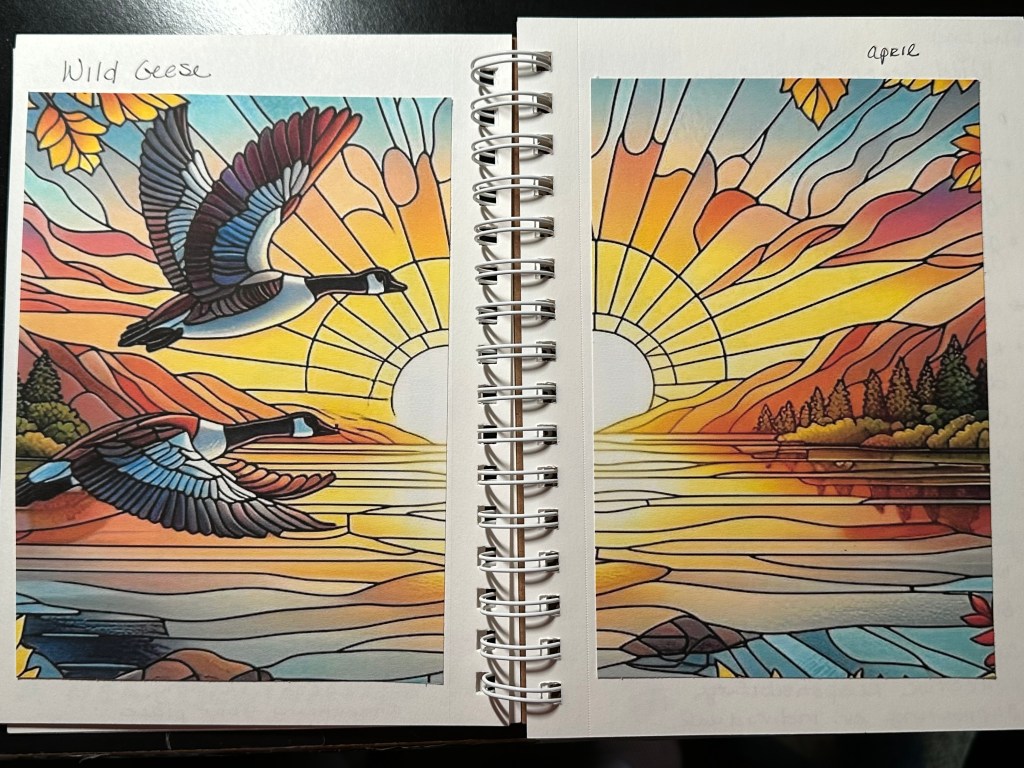
Images: Blog cover; a page in one of my art journals from 2020, created as part of a class but then also written about in my photo journal soon below.