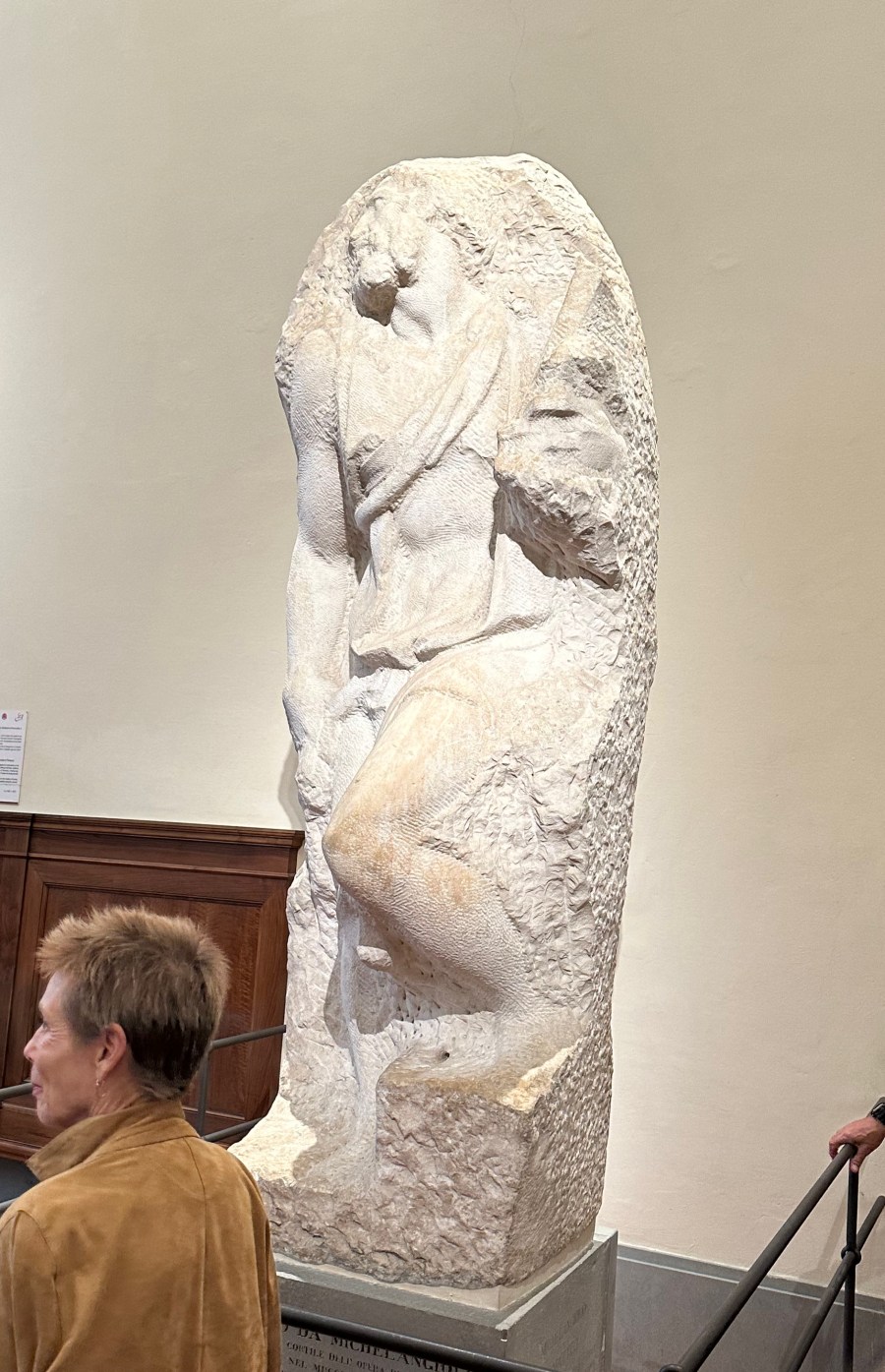
A desire for freedom

When I began the year I decided my “word of the year” was Fortitude. One of the practices I have incorporated in each new year, inspired by many authors and retreat leaders, has been to spend time asking questions and reflecting on the predominant quality or theme I want to grow in during the new year. I feel I lack discipline in many ways, so Fortitude came to mind. However, February has been a month of transitions and new learning, so it doesn’t feel right any longer. So, what word will it be? This week Freedom keeps coming to mind.

Last week I wrote about reflecting on the grace we seek before times of prayer, reflection or meditation. I am excited to begin Lent this week. I see Lent as a time of prayer, fasting and almsgiving that allows us to search our hearts. I have several practices that I hope to incorporate and new teachings to reflect upon. I have found that each of them touch on freedom (physical, emotional and spiritual) in some way, shape or form.

Yesterday was my monthly Creative, Visual Journaling class. Lisa invited us, as she gave us prompts to journal about, to be free of what we think is possible, from what has been part of our past experience and imagine the life we wish to live. We have to start with our mindset, Lisa challenged us. We have to change our minds to think about what is possible. Lisa believes that journaling helps us navigate change and transition, it “gives our subconscious mind the problem to solve”. So I embraced the freedom to imagine the life I want – the who, what, how of a life of using my authentic gifts, boldly and with joy.

Another teaching that has been weaving its way into my daily life and practice has been the desire to live more mindfully. The practice of mindfulness helps us be in the present moment, aware of what we are feeling, setting aside the scattered and distracting thoughts of “later”, “what if”, “how will I be able to?”, “why can’t I”, “should I?”, “how could they”… I am sure you have had similar lists. These thoughts do not serve us. A better way is to be in the moment, aware of the only thing we can be sure of, the present moment. I have read and studied many authors and teachers of mindfulness, Christian and Zen, but a review of mindfulness impacted me in a new way this month.

I shared in a Facebook post this month, that some of you may have seen, that I just began the third year of a Wisdom/Mystics program. The first year was Women Mystics and last year, Celtic Wisdom and Mystics. This year we are studying Modern Mystics. On the first Saturday of February we were blessed with the teaching of Thich Nhat Hanh, Zen Master and Buddhist teacher, by his student Kaira Jewel Lingo. Kaira Jewel is a teacher in her own right, given authorization to teach by Thich Nhat Hanh, after spending 15 years at Plum Village living and studying with him. Kaira Jewel is an author and teaches many programs, which you can find online or on apps, like Insight Timer.

A simple practice, one of many Kaira Jewel shared with us during our class, is to set the intention (i.e. in the language of my blog last month, name the grace) to be present for yourself. During our slow breath work as part of meditation, or you could do as part of Christian Centering Prayer, is to inhale “I have arrived” and exhale “I am home”. Kaira Jewel shared that we have to first come home to ourselves, to get to the root of our own suffering and to find unity and inter-being with all other persons and species. If “suffering” seems foreign to you, simply think of it as areas we have opportunities to be more aware of, to grow and let go of.

There have been a multitude of ways that the simple practice of returning to the breath, to the home of my body and spirit, has helped me this month. Has it been perfect? No! But I am learning. I tried to be more present listening to others. Instead of thinking of something outside the moment like a “to do” list, I tried to be attentive to what a person was saying to me. I have tried to be present to my physical pain, instead of reacting in anger or fear of it. Physical therapy seemed to go better this week! I have tried to think about why I am eating what I am eating, especially when it is an attempt to stuff down some other feeling or issue I would prefer to avoid. In a moment when I found myself reacting to someone, I came home to my anger and judgement and wondered why I was reacting to their words, then tried to have compassion and understanding for the person speaking, why they might be saying what they were saying.

Again, was it perfect? No, but perfection isn’t the goal, freedom is. Freedom from worry, anxiety, anger, judgment, etc is. All of those feelings do not change the situation so why do I view them as helpful? It was as if I learned that I had left my home unattended for years, just kept the heat on but the dust accumulated.

The leper in today’s Gospel for the Sixth Sunday in Ordinary Time desired to be made clean, had the faith that Jesus could do it by his act of will. At that time the man’s leprosy was viewed as an outcome of his sin. So Jesus’ act of healing brought him back into his community, it freed him. Doesn’t our sin, judgment and separation from others do the same for us? We are saying, what I want is more important than what God wants for me or how I might be here for others. Our own need and desire trumps everyone else, including God. Desiring to be made whole, desiring freedom from sin and the accumulation of dust, moves us back into community, with God and others.

Author and dear friend, Judith Valente’s Sunday blog (found on Medium and on Facebook), reflecting on Lent and looking at it in a new way, asks us to examine similar questions, “can I take a hard look at the habits I’ve acquired over the past year that don’t serve me or others well? Can I make a conscious effort to let go of them, to make a fresh start?” Again, freedom, freedom to move beyond the habits of my past with a desire to live with more awareness of and for love for self and others. These questions will be part of my daily examen during Lent!

In her weekly email, and in preparation for our Lenten Retreat, “A Different Kind of Fast”, author Christine Valters Painter discusses the Three Renunciations of theologian of the early Christian Church, John Cassian. Christine says the third renunciation was one she found most powerful, and I would agree, as I read her description of them. The third calls us to “renounce even our images of God so that we can meet God in the fullness of that divine reality beyond the boxes and limitations we create.”

This renunciation challenges me to be free to sit with, be gazed upon by the God who desires to be with me. I can be home with God exactly as I am, knowing that I am loved. I can look at the areas that I hope to grow in greater love and compassion for others. I can desire a purging of old ways with the desire to make more room for God and love of others.

So this Lent, where do you desire greater freedom? What grace do you seek for these 40 days of “retreat”, a time to free yourself of habits that prevent you from listening to and responding to God’s call in your life? May it be a time of growth and greater freedom to love and serve with our lives.

May it bring you greater peace, Deena

Photo: One of the unfinished marble pieces, never freed from the stone, of Michelangelo in Florence.

The grace I seek

A way of praying that has become ingrained in me the past couple of years, learning and growing in Ignatian spirituality, has been to begin prayer time reflecting on and naming a grace I seek for that time of prayer, retreat or gathering. It’s very different than praying prayers of petition or praying for intentions, which is also an important part of raising those people and concerns that we have to God. I’ll share a couple of articles, at the end of this post, that will introduce you to naming a grace, if that is not a practice you are aware of. The articles are by two authors that I regard highly, Becky Eldredge and Vinita Hampton Wright. Asking for a grace is “not for God, but for us”, Vinita writes. It is something we are seeking or wish to grow more deeply aware of in our lives. It might be peace, clarity, freedom from anger in a situation, or greater joy.

Yesterday afternoon I read the daily reflection in Give Us This Day by Sr. Colleen Gibson, a Sister of Saint Joseph of Philadelphia. She has a podcast, Beyond The Habit, which I haven’t listened to yet but looks very interesting and frankly, like a lot of fun too! Sr. Colleen speaks of yesterday’s daily Gospel and Solomon’s request for wisdom and an understanding heart. She reminds us that having a discerning heart, to seek wisdom in our daily lives, is a “gift and a muscle”. We have to exercise and use it. She also comments that asking for a grace is a “first of many steps on the spiritual journey.” The gifts or grace that we ask for may not come to us the way that we expect but they are graces we then have to use.

To slow down and reflect on that which we are seeking in prayer helps us, I have found, center and ground ourselves before the prayer. It makes the prayer more intentional, our eyes and hearts become open to see and hear what God might want to say to us or invite us to consider.

Lent begins this month on February 14th. Those of us that grew up Catholic typically prepare for Lent thinking about what we want to “give up”. Yes, this is still important. Giving up a favorite food or behavior helps us learn about sacrifice, perhaps offering that sacrifice for the needs of others. It also helps us clear our thoughts and minds of things that are habitual or distract us from God’s presence. It isn’t about a diet or another chance to revive a forgotten New Year’s resolution but rather make space for God.

This Lent I invite you to spend some time thinking about a grace that you seek this Lent. This will then open the way to consider what you would like to “fast” from this Lent. You might also consider a program or book that will help you on this journey toward the grace you are seeking. I once read that The Missionaries of Charity, the order founded by St. Mother Teresa of Calcutta, read the book Life of Christ by Fulton J. Sheen during the 40 days of Lent. It’s a large book, so not one that you could fall behind on daily reading but rather develop the daily habit of reflecting on the life of Jesus. Many other publishers, such as Loyola Press, Ascension Press or Word on Fire Catholic Ministries (there are many others!) have books or daily reflection programs if that is something you would find helpful. (See below for information regarding the daily Individual Path of Prayer for Lent that we offer from Ignatian Ministries.)

I will be participating in a second offering of A Different Kind of Fast by Abbey of the Arts. We walked through the sections of Christine Valters Painter’s book two years ago and now that the book has been edited and published we will be walking through it again this Lent. As Christine wrote in her weekly newsletter today, “Ultimately, the practice of fasting is about making more space within us to encounter our deepest, most radiant selves. How do we listen to the whispers of the Holy One when we constantly distract ourselves with social media and doomscrolling. How do we discover the radical abundance available to us, not of food or entertainment, but of nourishing gifts like joy, peace, love, and gratitude? How do we make room for the grief inside us which is a witness to how much we have loved if we are fighting to be strong and keep control in an unpredictable world?”

You have some time but begin to think about Lent before we arrive there on Ash Wednesday. This time will allow you to really reflect on the grace you seek. What would you like Lent to look like this year? What do you hope for your spiritual life as you move through the forty days of Lent? What practice might you add that will enrich your daily practice of prayer and reflection? What Lenten sacrifice or fast would clear the way in your heart and mind for a closer relationship to Jesus?

May it bring you greater peace, Deena

The articles I mentioned above:

Gathering the Graces by Becky Eldredge, August 2020

Asking for the Grace to Want the Grace by Vinita Hampton Wright, June 2019

Jesus: Companion in our Suffering, An Ignatian Prayer Path for Lent, Ignatian Ministries, 2024

Image from my photos, the prayer and adoration chapel at St. Mary Monastery, Rock Island.

Seeds that will sprout

I’ve been thinking about the spiritual practice a lot this week. When I think of my own practice, I notice the places that need some change and some nurturing. It’s normal to adjust and change as individuals as our spiritual lives deepen and grow. It’s healthy to notice where we need to tend to them a bit more.

The spiritual practice and what it leads to, a richer inner life and ever growing closeness to God, isn’t just a certain set of actions or habits. It is how it changes and transforms us interiorly. I think it is easy to focus on the external behaviors like going to church, saying a rosary or other prayers given to us by others, to sit in prayerful meditation, kneel in reverence or take a walk in nature. But if a quiet and receptive mind and heart aren’t there, then I would guess that the interior life is stagnant or perhaps even chaotic. We might not think that it is “getting us anywhere”.

Perhaps we can imagine the spiritual practice like planting seeds. We get the seeds or tiny plant, find the right environment for it to grow with the proper sunlight and we water it. We care for it. But the growth of the plant is outside of our control, we have to wait, continue to care for it and protect it. Ultimately it is a gift. Or even better, a grace that comes from the result of all the actions we have taken.

When we bake, we gather all of our ingredients, we mix them in the appropriate proportions and place those ingredients in the proper environment, an oven at the right temperature, and hope the result is the cake, muffins or cookies we desire. For those of us that bake, we know that sometimes outside factors can influence the end result, too much humidity, old flour, etc. But, the more we use that recipe, and make sure the ingredients are the best we have to use, the more often we are successful.

It isn’t just the ingredients of the cake, or the seeds and soil, that produce the desired outcome. Oh sure, sometimes you can toss a seed and get lucky. But gardening and baking both take practice, a repetition of the right process, over and over again, of doing the work and patient waiting.

The more I use Ignatian Contemplation, or imaginative prayer, the more I see the positive impact it has on my spiritual practice. Ignatian Contemplation, very simply, is placing ourselves in the scripture or story, listening and watching what is unfolding and then imagining our role in the story, what the scripture is saying to us personally. But just like baking and planting, it takes a bit of practice, as well as an open and receptive heart, to allow the scripture to speak to us personally. We listen to what Jesus might be saying to us, in our life, right now, in response to the needs, or graces, we have presented in prayer. Sometimes it is watching and learning from what we are seeing.

This week I imagined myself in the boat with Jesus and the apostles (Mark 4: 35-41) as the storm came upon the boat suddenly, I heard Jesus say “Quiet, Be Still!” to the storm, which caused the wind to cease and the waves to calm down. I knew instantly that my practice was lacking some calm, Jesus was inviting me to quiet my mind more, less talking, more being, in silence, present to the calming presence of Jesus.

If your inner life is feeling a dull or stagnant, maybe a bit unsettled, or in need of a little shift, a simple answer is to spend more time in prayer and reflection. This week sit with the scripture from Mark’s gospel of the blind Bartimaeus (Mark 10: 46-52). Jesus responds to his calls for help, those around Bartimaeus say “Take courage, get up, he is calling you.” He goes to Jesus and Jesus says to him, “What do you want me to do for you?” Bartimaeus replies, “Master, I want to see.”

As you quiet yourself and hear Jesus say, “What do you want me to do for you?”, listen to the words that well up within you regarding your spiritual practice and relationship to Jesus. What do you say to Jesus? What does Jesus say in reply? That just might be the beginning of your next steps, the guidance you are seeking to a more fulfilling spiritual life, which will result in an inner peace that comes from growing closer to God.

Two thoughts that might help come from a great teacher of the interior life, St. Frances de Sales:

One rarely does well what one rarely does.

There is no soil so barren wherein diligent tenderness cannot produce fruit.

I wish you great peace and inner calm this week.

Deena

Image from my PicMonkey account

Delighting in the simple things

We’re beginning the Third Week in Ordinary Time this week. Merriam-Webster defines ordinary as a common quality, rank or ability; of a kind to be expected in the normal order of events. So, ordinary is not anything that we get excited about. Ordinary implies nothing monumental or note-worthy. But I began to view “ordinary” differently this weekend. I reflected that we can miss out on the wonder of the ordinary moments and I contemplated delighting in the simple things of life, simple moments that transform a day.

We’re studying the topic of Peace and Justice this year as our study for the Oblate program of St. Mary Monastery. We are reading several articles and the book, The Beatitudes of Peace by John Dear.

This week was a hectic week at Ignatian Ministries. I’m not sure it was entirely due to the Martin Luther King holiday on Monday, but rather the amount of work we wanted to accomplish in the week, regardless of the number of days. There were the normal daily tasks of email communication and preparations for a new class that Becky Eldredge, our founder, begins on Wednesday. Becky had preparations for other meetings and a retreat this weekend. I prepared the weekly blog post that emails tomorrow morning. Our team worked to provide data for a quarterly review, that I prepared the PowerPoint for and presented on Friday, as well as launching our Lent Path of Prayer Series for individuals and small group leaders by end of day on Friday. The quarterly review and Lent series were essentially my tasks as part of my role as Director of Programming, a part-time position, while still coordinating some of Operations reporting, so I was feeling the weight of getting those tasks accomplished by the end of the week. On Thursday and Friday, I found myself sitting at my desk, shoulders hunched, not giving myself the periodic breaks that a body needs, stretching or exercising, or drinking the water I committed to drink as part of the 14 Day Reset program I am doing. I know better, I told myself, but choose to ignore the thought.

So by 7 p.m. on Friday I was ready to settle in and read my assignment for Saturday’s Oblate Meeting. The author, in the chapter, Blessed are the meek, wrote of simple ways that we can become more nonviolent individuals, and in doing so, protect the earth and her creatures. First, we need to examine and adopt more gentle, kind and steadfast nonviolent behavior as part of our daily practice, to become more conscious in our daily living. He also, as a second point, invited us to spend more time in daily meditation with God so that we can become aware of the times our thoughts are not so gentle, peaceful or meek. We can “disarm” our hearts and begin to live more at peace with ourselves and each other. There were certainly moments during the week I could have benefited from that quiet meditation!

Then his third point was the one that brought me to the greatest self-awareness and desire to resume a more quiet and gentle perspective to my daily routine. John Dear stated that “in this ever-deepening spirit of gentleness and nonviolence, we delight in the simple things of life – the morning sunrise, the gentle breeze, the ocean waves, the night stars, the moon, the meow of a cat, the beauty of a caterpillar, the flight of a hummingbird, the howl of the coyote, the rain, the snow, and everyone we meet – the whole web of life.” Inside I cried “Yes! Yes! Yes!” I paused as I read and thought of the brief moment I pause each morning to look at the brightening pink and purple sky of winter, the birds that perch on the back fence waiting for the seed I have been giving them in the backyard instead of trudging through the deep snow on the side of the house to the bird feeders, the stretch of Butters and Bela, my cats, when I peek in at them and gently disturb their napping. Lately, the beauty of the falling snow. Those noticings take but a brief pause in the day. I certainly can afford a brief pause every hour of the day and wonder how they might, as John suggests, disarm the less peaceful thoughts that swirl around when I become restless and agitated over activities I allow to take priority over a calm spirit.

Just as I was writing this, Butters waited patiently by the sliding door for me to open it so that he could stick his nose outside or even take a few brave steps onto the patio. He doesn’t last long with the below zero temps we have had but he loves to venture out for a few minutes. I leave the door open so he can come right back in and then enjoy the air from the warmth of the little rug in the sunshine, when it is shining. As I let him out, preparing him for the chilly air, I paused to enjoy the long icicles hanging from the building next door and the patches of bright blue sky behind the cloud-covered sky. Yes, I thought, do more of this!

As you go through this new week, I invite you to pause a second longer when something of beauty grabs your attention, savor it, breathe it in. Rest a moment there. Be more attentive to the wonders of nature, even if it’s only in your backyard. Become aware of those creatures that play a “necessary role in God’s great design” and as we slow down, we will become more peaceful individuals, and in doing so, we will also be individuals more aware of our planet and our role protecting it.

Peace, Deena

Picture: from my photo album of an amaryllis that was blooming in December.

Wonder and wandering

Today we celebrate the Solemnity of Epiphany of the Lord. We remember the visit of the three wise men, bearing gifts and paying homage to the infant king they were searching for. Today and tomorrow, the Baptism of Jesus, mark the end of the Christmas Season. It went too fast for me this year. I cherished the long (albeit shorter this year) waiting and reflecting time of Advent. Then Christmas, New Year’s Day and today’s feast of Epiphany were over in two weeks. I love the readings of the Christmas Season, taking time to remember what truly matters in life and the colorful and bright lights that remind us of the Light that has come to illumine the path for us.

I heard and read so many beautiful reflections on the Epiphany this weekend, as I hope you did, I can’t think of anything to add to them. So I reflected on the search of the three wise men, kings of the Gentile world, seeking and having faith in the journey they were undertaking. Most of us start the new year with an intention or purpose, something we seek, as we begin the year of 2024. I was in conflict about some of the intentions I was clarifying in my mind and ways I was hoping to find the answers and direction to their accomplishment. It wasn’t that the practices were unethical or contradictory to my faith, but I wondered if I was placing my focus on the right things. Would those things bring me closer to God? How was my 14-day health reset program that I will begin on January 15th, for example, making a difference in my spiritual life? The answers came as I wandered through two practices I began in the New Year, or the week before.

I mentioned, last week, the 90-day program of contemplative prayer and reflection, based on Ignatian Spirituality and the Spiritual Exercises. These early days of the program invite us to reflect on the love of God for each of us and the Principles and Foundations of St. Ignatius’ Spiritual Exercises. The basic premise of the Principles and Foundations is that we are created out of love, in order to praise God’s infinite love and goodness, and by dedicating our lives to his service in order that we may enter eternal life with him. The desires of our heart then, those intentions we name each year, are given to us to attain the specific purpose we have been created for. So, we pray for the right disposition, a perspective as we make decisions, that will help us live that purpose. We hold on to the things that bring us closer to God and let go of the things that hinder that. What a simple and easy way to make decisions!

As I consider my 14 day health reset program, will losing weight and drinking my NingXia Red juice bringing me closer to God? No, not in and of itself. However if the program helps me stop the self sabotaging behavior of ignoring my feelings and distracting me by eating the wrong foods, that don’t help sustain my body in this world, then yes! The program will help free me from the stresses of this world and turn to God when I am in worry, stress or despair. It will be a physical, emotional and spiritual cleansing if I pay attention during the process and make appropriate decisions.

The other program, to mention quickly, is the “Divine Rhythms” course by transformational life coach, Leah Darrow on the Hallow app. Routines, according to Leah, help us stay focused, in a world full of distractions, and create a sacred space to discover and live our divine purpose. Our personal life purpose is to align our lives, in our unique way and varying interests, with God’s divine purpose. As we define our interests and routines for each day, we create a way to be who God called us to be in life. Discovering and creating our daily routines, helps us consider the desires of our heart and then create a life that sets time aside to do them and discover how they are helping me live that divine and specific purpose I was created for.

On the Solemnity of the Epiphany of the Lord, there is a lovely practice of blessings our homes for the year. Hopefully your church or place of worship has provided some blessed chalk for you to use. There are a variety of blessings online (just Google, Epiphany House Blessing or search Epiphany of the Lord on Facebook) that you can use. I will provide a link to a blessing that our founder of Ignatian Ministries has published (also available for free download on our website). Even if your chalk isn’t blessed, if you have some, make the markings of the home blessing, indicated below, and read the blessing by Becky Eldredge, or a blessing you find on Facebook.

20 + C+M+B + 24

The numbers of 20 and 24 mark the year, the letters in the middle are said to represent the three wise men, Caspar, Melchior and Balthasar and secondly, represent the Latin phrase which translates to “May Christ bless this house.”

It’s a beautiful tradition I love to practice each year, updating the year, reading a prayer and then blessing my doorways, inside and out, for all who live here and all who may enter, blessing the home, keeping us safe and protecting us from evil. This year I also pray that within this house I spend time on the things that matter most.

Lastly as we end the Christmas Season, I offer this guitar rendition of We Three Kings and Coventry Carol (the carol that remembers the death of all the innocent boys King Herod had murdered seeking to destroy the infant King he perceived as a threat to his reign). Spend time today reflecting on the desires of your heart and ask whether your daily routines and activities bring you closer to their accomplishment and are in service of the divine purpose for which you were created.

Wishing you abundant blessings this year, Deena

Image: my photo of a nativity scene with the three kings in Assisi, Italy

We Three Kings/Coventry Carol – Steve Adams

Epiphany House Blessing by Becky Eldredge and others

Advent 2023 – O Come, O Come

In years past I arrive at this point of Advent wishing I spent more time in prayer and reflection. There are things I would have preferred to done more of but feel I have entered this season of waiting more than years past. I find myself a bit sad for a different reason – this third week of Advent is our final week! The Fourth Week of Advent is only one day, for that matter, a partial day, next Sunday because it is also Christmas Eve.

My favorite week of scripture, all the special Gospels to savor in the Christmas narrative, will be this week, along with all the baking, card writing and sending, and shopping. However, not feeling well last week and part of this week, has helped me to focus on what really matters this year, and I have been trying to approach the season with a different, more simple, attitude. My sister-in-law and I chatted this week about all that we have and are grateful for, what we desire this year is to spend time together and enjoy the gift of family and friends. So, yes, I have a list of desired outcomes for each day, but what gets done, is what will get done. I would rather arrive at Christmas with love and joy instead of a frenzied attitude.

As we enter the final week before Christmas, today, December 17, begins my favorite days of Advent with the recitation of the O Antiphons with the Magnificat (Mary’s song of praise) each night with Vespers, evening prayer. We know them from the famous carol, O Come O Come Emmanuel. The seven titles of the Christ are sung, or recited, each evening to call upon Christ to come and save His people. Each prayer is short, a single line, invoking God based on the messianic hopes from the Old Testament.

For example, today’s Antiphon is Wisdom or Sapencia:

O Wisdom of our God Most High, guiding creation with power and love; come to teach us the path of knowledge.

You can find them online, written or sung. I love the sung version that St. John’s Abbey provides for us each year. You can find the daily Antiphon on their website or on YouTube.

As I mentioned, this week is rich with the familiar stories of the months leading up to Jesus’ birth; the dream of Joseph, the angel promise to Zechariah, the Annunciation or visit of the angel Gabriel to Mary, the Visitation of Mary to Elizabeth, Mary’s canticle of joy (the Magnificat) and then the birth of John the Baptist.

As we enter this final week before Christmas, I invite you to read the Gospel for each day and then recite (or listen to) the O Antiphon for each day. As you pray the Antiphon each day, consider the grace you seek. What do you call upon God for? I can’t think of a better way to end each busy day, then a few quiet moments reflecting on what we are preparing for!

May you find peace and joy in these final days of Advent. Deena

Advent 2023 – Comfort not comparison

The first reading from Isaiah for the Second Sunday of Advent begins with the word “Comfort”. I was not feeling comfort yesterday. I having been feeling well this week, and lost my voice. Well, not entirely but I didn’t have as much voice as I needed to proclaim the readings this week as lector for Vigil Mass. I spent Saturday resting and picking up some items to soothe my throat and buy some groceries. I wasn’t shopping or preparing for the holidays as I felt I should have been.

Last night I listened to the Saturday reflection for the Hallow app’s Advent series. The presenter for the series indicated that on Saturdays they would play music to contemplate and rest in. This week’s song was “O Come, O Come Emmanuel” by the Benedictine of Mary, Advent at Ephesus. I instantly felt myself calming down. Advent at Ephesus has been my favorite Advent reflection music since Fr. Gary Blake introduced it to us before Mass or during Holy Hours years ago.

As I calmed down I asked myself whether it was just my disappointment in my voice or something else stirring within. I realized quickly how comparison was weighing me down. Others have shopping done, I haven’t started except for the ideas in my mind. I am receiving Christmas cards and mine aren’t written yet. How did I have time to make cards while working full time and now, working part-time, I have to resort to buying them. Speaking of working, I compare my previous income to my current and I can go in a tailspin of worry. I look at my beautiful decorations and then see posts of bigger trees, prettier lights, cheery mantles and festive table settings. I read Advent reflections, online and in books, and think other writers are more intelligent and profound in their Advent pondering.

St. Peter asks the most important question in the second reading for this week, “Since everything is to be dissolved in this way, what sort of persons ought you to be, conducting yourselves in holiness and devotion….” I don’t think the reading suggests that we give up our holiday celebrations and gift-giving but it does ask us to put things in perspective.

If we aren’t careful we can get lost in the rush during this season, meant to be one of waiting and contemplating. Find time to slow down this week and reflect on the true reason for our joy and celebration. Prioritize your quiet reflection time amidst the other activities. Ignatian Solidarity Network has a lovely online Advent calendar and asked yesterday, “What opportunities exist for you to practice simplicity this week?”

Be grateful for the things you have and the talents you have been given. We are each created as unique and special beings, find comfort in that instead of comparing yourself to someone else. I will try to do the same.

Peace, Deena

Photos:

Cover Image – my reminder “ornament” to find find calm in the midst of chaos

Our Advent wreath at Holy Family Church

The art of the soul

This morning I posted an excerpt from a book, Beauty, The Invisible Embrace by John O’Donohue on my Facebook page. I read it yesterday and it has continued to capture my thoughts and imagination since reading it. In the quote, John states: “All through your life, the most precious experiences seem to vanish. Transience turns everything to air. You look behind and see no sign even of a yesterday that was so intense. Yet in truth, nothing ever disappears, nothing is lost. Everything that happens to us in the world passes into us. It all becomes part of the inner temple of the soul and it can never be lost. This is the art of the soul: to harvest your deeper life from all the seasons of your experience.”

I have found that one of the richest ways of “harvesting” the deeper life is through the use of ritual.

Rituals are those practices, ceremonies or actions done in a customary way (Vocabulary.com). They are ways of behaving or a series of actions carried out in a particular situation (Collins Dictionary). They can be prescribed or established rites (Dictionary.com). They can be personal, such as pizza dinners on Friday nights or rites of passage such as a quinceanara for a Latino girl turning 15 or a bar mitzvah for a Jewish boy at the age of 13. Funeral rites for the dead or incensing the altar at a feast day Mass or High Mass are examples of religious rituals or sacramentals. There are endless examples of prayer rituals and practices in religions or religious communities, whether Jewish, monastic or buddhist. They are ways of setting our intention and bringing the invisible in a more tangible way in to our visible world. Setting a rose on the tombstone of my parents on their birthdays or anniversary dates is a special way that I ritualize my love and remembrance of them.

Part of the reason that the quote has captivated my soul for the past 24 hours is that I have been contemplating offering a workshop/retreat on ritual for the past few months. I know the value that ritual has had in my life, personally and spiritually, but I have allowed many of the daily practices I use to give my time and attention to go dormant. So, of course, the natural reaction is to question and chastise myself saying “who are you to offer meaningful advice on ritual when you aren’t committed to it yourself!” I try to remind myself of the advice I received from one of my spiritual teachers, Gurudarshan Singh Khalsa, when I moved back “home” from Michigan. He wanted me to teach yoga so that I would maintain my own practice, he advised we teach what we want to learn and what we want to practice. I did that for awhile when I taught personal development classes, as part of the continuing education program, at the local community college. As I returned to corporate work, I stopped teaching and my time was more personal, such as daily morning prayer and scripture reading, journaling, and time spent in creative activities, such as art journaling.

So today, I am reflecting on the reasons that some of the little daily rituals or practices, that were important to me in the past, have taken a back seat each day. I have allowed work, daily responsibilities and worry to take their place. I “fit in” things like morning prayer and daily Mass or evening prayer, applying my essential oils, instead of setting aside the time to be still and connect, to linger a bit in those moments, allowing peace to enter in. That is not to say that the tasks we have to complete each day aren’t important, but the things that nurture us and sustain us need their place too. I believe we need to create space for the “more subtle brightness that sustains us” (John O’Donohue, Beauty, The Invisible Embrace). In the sacrament of Reconciliation Friday evening, I was reminded that worry, even the despair I recently experienced, are attempts to block my connection to, and relationship with, God. A return to some of the daily prayer practices will be a healing balm and will help build up the “sureness” of that relationship.

Simple actions such as lighting a candle, setting a special place or time or journaling are ways of creating a daily ritual around silence, meditation or prayer time. Going for a walk each morning, or evening, or writing a daily poem, might be a good time for daily reflection. Selecting dates and times that are meaningful when engaging in a new activity can be part of naming and setting a clear intention for the pursuit.

So this week, I invite you to look at the rituals that are part of your life, acknowledge the good they bring, and consider ways you might be interested in creating new rituals. What would be your goal or intention in creating the ritual? I will join you in doing the same and devote some time and attention to what I might offer in November, in the form of a short workshop or retreat, as a way to invite more ritual in to our lives. I leave for Italy in a month, so I will have my eyes and heart open to the many ways that our pilgrimage is a renewal experience of many of the rituals and sacred sites of my Catholic faith.

Until then, I wish you peace.

Create Joy, Deena

Remember to stop and breathe

As I sat in quiet reflection before Mass on Saturday evening I was reading from Evening Prayer (Give Us This Day monthly prayer book) and was cut to the heart by the scripture from 1 Peter 4:8-11. “…let your love for one another be intense, because love covers a multitude of sins. Be hospitable to one another without complaining.” FAIL.

I have to admit one of the worst weeks I have ever had dealing with anger, rage, irritation, reaction to others… The circumstances may have warranted frustration, or not being satisfied with the way an event unfolded, but anger and rage? A wise person once told me anger was simply frustrated will. This week I would have to agree with that!

There I was feeling fully convicted, right before having to approach the ambo to proclaim the Word of God as lector for the Mass. The words of the Responsorial Psalm 138, literally stuck in my throat “I will give thanks to you, O Lord, with all my heart, for you have heard the words of my mouth;” I had to take a nanosecond to regroup. Give thanks that God heard all the hateful words I spewed out this week? Give thanks for the times that I said “this isn’t worth it!” (life, faith, times of intense humility after needing to ask for help).

The gospel for this week, Sunday August 27, is Matthew 16: 13-20 in which Jesus tells Peter that he will build the church upon him. Peter who messes up countless times and Peter, who Jesus knows will deny Him during His time of need. I felt some hope. “Your kindness O Lord endures forever” (Psalm 138).

Earlier in the day on Saturday I was part of a retreat on the 14th century book (letters written by an anonymous monk to a student or disciple) The Cloud of Unknowing, hosted by Abbey of the Arts, presented by award winning translator Carmen Acevedo Butcher. The book has long been considered as the source for the practice of Centering Prayer, a form of Christian contemplation. When we take the time to sit, or walk as Carmen prefers at times, to go within, to listen in silence, we will encounter “God’s unabsent being” and the “soul is helped by grace”. It was a lovely reminder to return to the practice of my breath work and silent prayerful meditation at the end of a week that was so completely in need of grace.

This morning as I was finalizing some of these thoughts to post in the blog, I also read Judith Valente’s blog for this week, Practicing the “Psychological Hygiene” of Compassion. I was delighted for the additional reminders of a way to practice letting go of anger and welcome a stance of compassion in its’ place. I would encourage you to read her blog.

“Close the doors and windows of your spirit against the onslaught of pests and foes and prayerfully seek his strength; for if you do so, he will keep you safe from them.” Anonymous/The Cloud of Unknowing

Create Joy, Deena

Do not be concerned

I don’t know why, but I seem to have a short memory for all the things that have gone right after a time of worry and fret over health, work, finances or whatever concern was on my mind. I can even say that there have been at least two times that something extra-ordinary or miraculous has happened that, at the time, assured me of God’s presence and personal care. Yet, the past couple of weeks I have been anxious over circumstances in life.

Today is the Feast of the Transfiguration. The three apostles, Peter, James, and John get a glimpse of Jesus’ divinity, they see the prophets Moses and Elijah, they hear the voice of God. Just before ascending to Mount Tabor, they learned Jesus was going to suffer and die, they were warned that the road ahead will be difficult, so you would think this glorious experience would sustain them, right? No, in a short time, they run and hide from the cross, their memories are short and they succumb to fear.

I can reflect back on the time that I had my little business here in town and even though it was the most wonderful experience of my life, it wasn’t as successful as I had hoped and I decided to “go back” to work. It was a time before internet and social media, I love imagining how I might have used those platforms to advertise! I had moved back “home” to Illinois after working for General Motors in the Detroit area. I remember telling the loan officer at the bank, when asked “what will you do if your business isn’t successful?” I replied, “I will go back to work and pay off my loan”. So I did! I worked part-time at JC Penney’s and within a short time was offered a manager position. I wasn’t sure it was the right role for me but I needed the job. While I was trying to decide, a manager role at Boise Cascade opened, for a new venture, I applied and got the position. Twenty-three years later I retired after working in many different roles and serving customers in many ways. One of those was a position in e-commerce that I visioned, recommended for my business unit and ultimately filled, it was my favorite of all.

Before I moved to Michigan I worked for a small software company in the Chicago suburbs and, because I had an account in Warren, I heard that EDS was hiring people for the GM account. I applied and got a position along with 14,000 other people, all of us looking for housing at the same time. I was put up in a hotel in the Detroit area, not the most favorable part, and spent time after work each day looking for an apartment. I felt as though I would never find a suitable living space, EDS would figure out I wasn’t one of the “eagles” they expected us all to be, as loyal workers for Ross Perot, and they would send me back to Illinois. I found a cute apartment in a community I loved and close to a parish that was an important part of my life during those five years.

I am sure that you, like me, can reflect back on circumstances in life that worked out differently than you might have imagined or hoped for. In most cases, the result was better than I could have envisioned. Even if it wasn’t better, it was a threshold space, an answer until the next step was revealed. Yet, this week, I have forgotten, and like the apostles, have run from the cross and hid in the arms of inquietude and melancholy.

Luke chapter 12, verses 22-34, reminds us that all of our needs will be attended to, that we don’t have to worry. Like the birds of the air or the lilies of the field, we need not be concerned about life. I don’t believe that it means that we are careless and don’t discern the best options for our lives. But, worrying doesn’t change the outcome, lessen the time it takes to resolve the situation and, in most cases, probably limits our ability to see solutions that might be right in front of us. So, this week, I invite us to get a glimpse of the love and personal care God has for us and, like Peter, James and John, respond with an open heart to the voice that says “listen to him”.

Create joy, Deena