Featured

The work we do

We’ve all been given unique gifts and talents. One of my least favorite jobs was working, thankfully for only a brief time, in a financial department of the corporation I worked for 23 years. I don’t like working with numbers in that way, invoices and debits/credits. But I found a way to engage my passion for organization and process improvement when working on the invoices for the import process of our business. I will never have a passion for math and numbers, but do love the process of organizing in Excel spreadsheets. In doing so, I was helping streamline the process of invoice reconciliation.

I believe that God desires that we discover and use our talents and gifts to make the world a better place, to help others. I don’t think it makes a difference where we work or the kind of work we do, in the home or outside the home. If we are city workers fixing roads or highways, we hope to make travel easy and safe. If we work in an office, whether health or law office, we hope to help others as they sort through issues they are dealing with. Medical professionals are attempting to help people overcome imbalance and dis-ease. For those of us that teach or write, we hope to share ideas, encourage independent thinking, or help young minds learn skills needed to navigate through life. Government officials should be focused on improving and protecting the lives they have been elected to safeguard. When any of these tasks become more concerned with self and power, we have lessened the degree to which our talents contribute to the value of the whole or the common good.

St. Pope John Paul II wisely stated that a human being expresses themselves by the work they do, that work has dignity. His background as a laborer and his opposition to Communism in Poland gave him a unique perspective as he later (1981) wrote about the value of work in Laborem Exercens. He wrote: “Through work man must earn his daily bread and contribute to the continual advance of science and technology and, above all, to elevating unceasingly the cultural and moral level of the society within which he lives in community with those who belong to the same family.”

One of the aspects of Ignatian Spirituality and the Spiritual Exercises that I love (and am trying to discern more in my life) is how we are uniquely called to express and participate in the work of God in the world. We look at how and where God is inviting us to participate, given the particulars of our lives and desires. We look at our disordered attachments and whether we are truly free to hear and respond to that call. Part of the journey is also to explore the cost and call of discipleship. God’s call can be a radical call, because it may depart from the current views and values that the society in which we live. We may be opposed and belittled. A radical call is not an easy call.

Today, for the Fifth Sunday in Ordinary Time, we hear the Gospel of Luke 5: 1-11, and after pulling in the great haul of fish, Jesus begins the call of the apostles by inviting Peter, James and John to follow him. He invites them to go deeper (see my blog, Duc in altum, Nov. 3, 2024), to respond to a call beyond the lives they were living, and the way they saw themselves, in that moment. He invited them to a new life.

A prayer that has become one of my favorite was one that I learned from one of our teachers in a Diocesan Lay Ministry program I graduated from in the 1990’s. It’s a prayer by St. John Henry Cardinal Newman. I share the first stanza of the prayer here:

God has created me to do him some definite service; He has committed some work to me which he has not committed to another. I have my mission….

I invite you to consider the gifts and talents you have and how you are using them to improve the lives of those around you, those you work with and for, and for the world at large. Have you considered the mission or vocation, in daily living, that you have been called to? You make a difference one way or the other in the lives of those you encounter. What difference do you hope to make?

Wishing you abundant peace, Deena

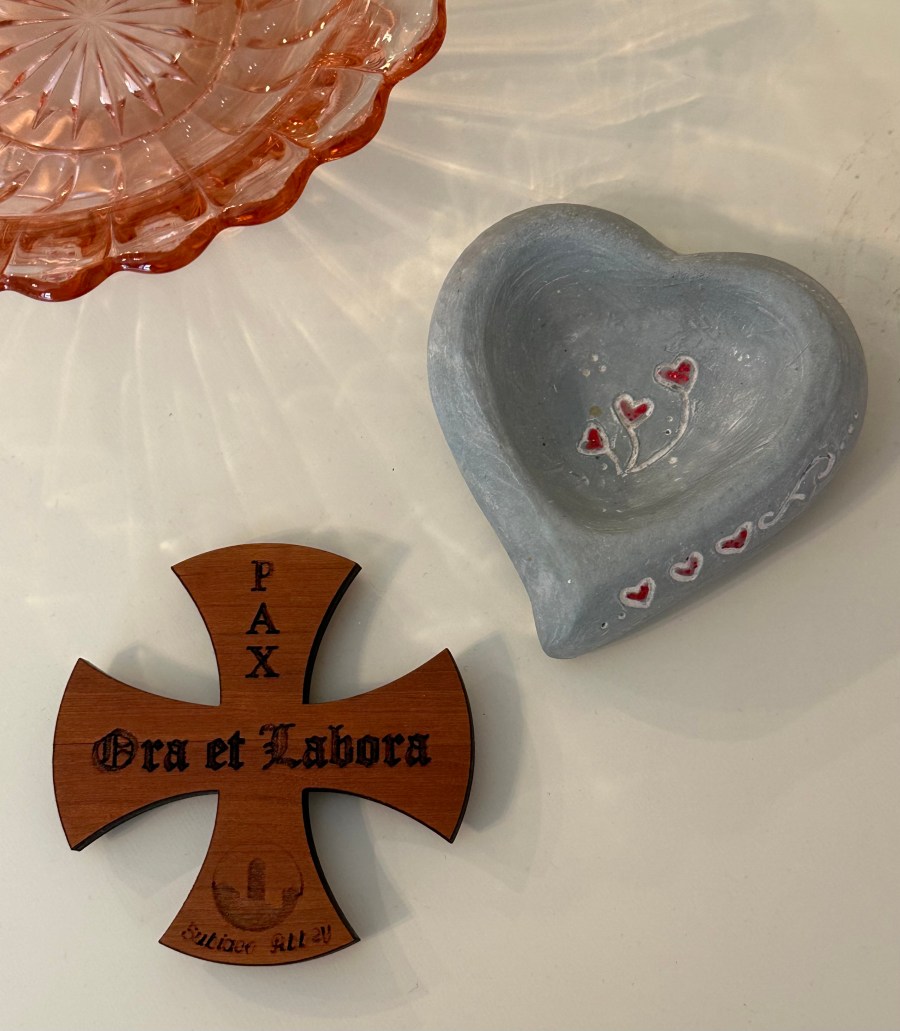
Image: Ora et Labora – The Benedictine motto of Pray and Work

Featured

The light we carry

By the great and small lights we mark our days and seasons, we brighten the night and bring warmth to our winter, and in these lights we see light…” (Catholic Household Blessings & Prayers)

Today is Candlemas. In many churches and parishes the faithful are invited to bring candles to have blessed for use during the year. The candles represent the Light of Christ in the world. Today is also known as the Feast of the Presentation of the Lord (February 2nd). It is unusual that a Feast Day has priority over a Sunday but has been elevated because it falls on a Sunday in Ordinary Time. Today’s feast is also the official end of the Christmas season marking 40 days after Jesus’ birth and the presentation of the child Jesus in the temple, according to the law. We see and ponder on this holy day the fulfillment of the Old Testament prophecy that the glory of the Lord would return to the temple (Ezekiel 10:8, the glory of the Lord left the temple but will return Ezekiel 43). Simeon, and the prophetess Anna, rejoice as they recognize what is happening. They have been waiting for this day, but they needed eyes to see. They were alert in their waiting and hoping for the coming of the Messiah.

As a Benedictine Oblate, I pray each day to hear the words of Scripture with the “ear of the heart” (Prologue of St. Benedict) but this week I also prayed to see with the “eyes of the heart”. I was seeking to see things in a new way and to have the grace to see where the Lord is leading me (and the Lord did not disappoint!).

As Mary listened to the words of Simeon, rejoicing that he has seen the Messiah but also proclaiming the sorrow Mary will encounter (“and you yourself a sword will pierce”) as she continues her unique journey in and with Jesus, she pondered or reflected on each day with Jesus and what was being revealed to her. We need to have similar eyes of faith as we make our pilgrim journey in life.

As part of night prayer each evening, we pray the beautiful words of Simeon “Lord, now let your servant go in peace; your word has been fulfilled: my own eyes have seen the salvation which you prepared in the sight of every people: a light to reveal you to the nations and the glory of the people Israel.”

May our eyes be open to the Light. May we remember that we carry that Light with us and bring it to others. May we look for the ways we encounter the Christ each day and then rejoice as we close our eyes, as we prepare to rest, each night.

“In the beauty of these candles, keep us in quiet and in peace, keep us safe and turn our hearts to you that we may ourselves be light for our world.” (Catholic Household Blessings & Prayers)

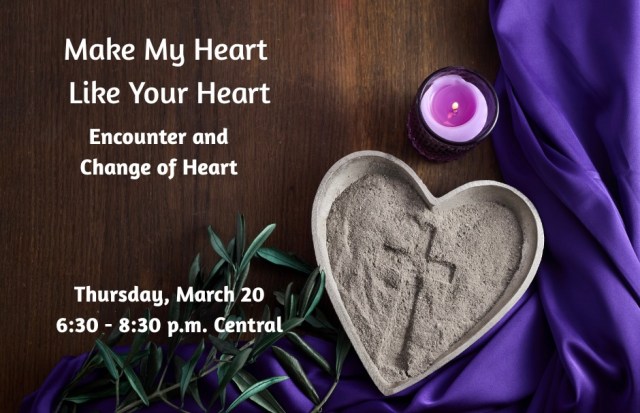
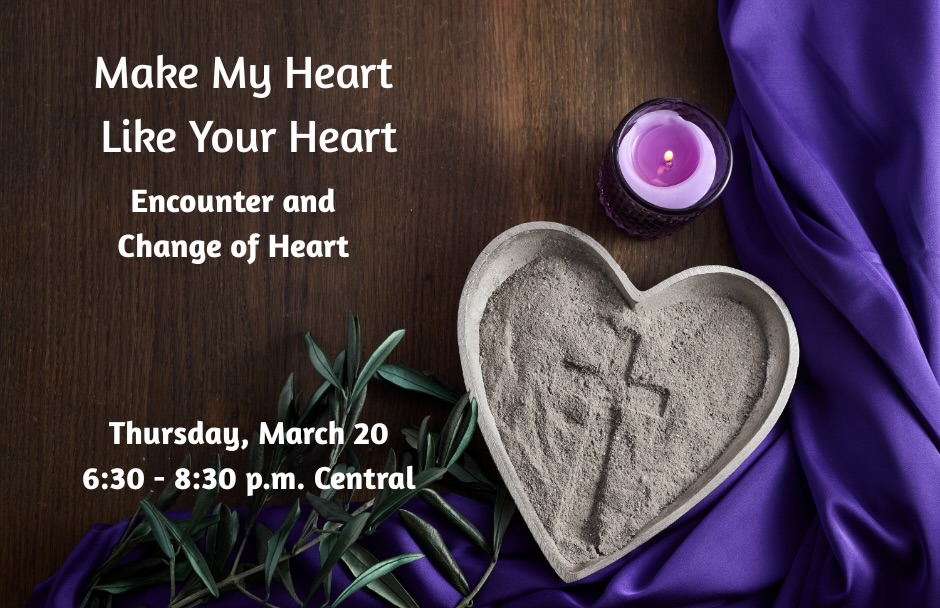
Note: As a follow up to my mention of a new undertaking, True to Self Living, that I will be introducing this Spring or Summer, I would like to share something that I have been praying about this week. I am working on a Lent night of reflection and prayer, later in March. “Make my heart like your heart” will be an evening of listening to prayer, reflecting on the words of scripture as we make our Lenten journey, time for discussion and even a little personal creative reflection for our prayer. More details to follow and I hope you will be drawn to consider this as part of your Lenten prayer.

Freely choose what seems good

Have you ever spent so much time weighing options, an action to take or a decision to make, that you never really take a step or make a move? “What is the better of these two choices? What if I make the wrong choice? What if I don’t have enough information to decide?” We can paralyze ourselves with indecision.

This past week was the feast day of St. Francis de Sales, a saint known for his kind and gentle spiritual direction. St. Francis de Sales is a Doctor of the Catholic Church, The Doctor of Divine Love. The title of Doctor is given to saints who are recognized for having a significant impact on theology or doctrine as a result of their work and writing/teaching. He was the spiritual director to St. Jane de Chantal, another saint I regard highly because of her courage and patience in the face of the challenges she encountered and her desire to help others, especially the poor. St. Francis de Sales reminded St. Jane, when she desired to enter a religious community after the death of her husband, that there was holiness in her daily tasks as a mother and that being faithful to the real life in front of her each day was a way to become holy. Eventually he counseled her to begin a new order of women, The Order of the Visitation of Holy Mary or The Visitation Sisters. St. Francis also had a temper and struggled with resentment, but he believed that the spiritual life is made up of mistakes we learn and grow from. For this reason, I also have a special fondness for him and his teaching.

He wrote of making decisions, especially when faced with two good options, “as S. Basil says, freely choose what seems to us good, so as not to weary our spirit, lose time, and put ourselves in danger of disquiet, scruples, and superstition. But I mean always where there is no great disproportion between the two works, and where there is no considerable circumstance on one side more than on the other.” He said that we should pray and ask for clarity from the Holy Spirit, seek the guidance of a spiritual director or one or two spiritual friends and then “devoutly, peacefully, and firmly keep and pursue it.”

We can hold ourselves back by saying that we don’t have this skill or aptitude or that someone else is better equipped with a particular gift. We can focus on the abilities of others and neglect to see the good that we can do with the talents we have been given.

Today and last Sunday, Second and Third Sunday in Ordinary Time, the second reading has been from the Letter of St. Paul to the Corinthians. In this letter, St. Paul is advising the church of Corinth that the Spirit of God gives different gifts and forms of service, different parts of the body that all make up the Body of Christ. We are all given our own unique talent to serve those around us. Each of these is necessary for a healthy and thriving community. All of these gifts are valuable to the whole.

In another profound weekly article by Maria Shriver, she considers how to find peace in the world, peace after the devastation of the LA Fires and peace as we navigate change in our country. She states that the way to build something new is to build from within, “to get quiet, to truly bring our peaceful selves to the table.” “Listening, trying to understand, caring for another, loving another, bestowing grace, forgiveness, kindness, and mercy on another—that’s something each of us can do.” Simple but dramatic ways to have an impact.

I have been considering this for myself, in this new year of 2025. Beginning this Spring, I will be adding a new page to this site (or perhaps a new site), mini-courses and ways to connect with each other as I launch a new venture into the world. True To Self Living will be a journey of being our most authentic self in the world. We will use practices from various disciplines such as faith and spirituality, mindfulness, creativity and wellness to live a life that allows the full expression of who we are, a way to come home to ourselves. I believe, like Maria, that when we do this we also have a positive impact on the world.

What gifts do you have and offer to those around you? In what ways do you, or can you, serve your family and friends, making a positive impact on their day? What ways might you get quiet and bring peace and concern, a gentleness like St. Francis de Sales, to those you encounter? Let’s work together to bring peace to the world in a way that only we can.

Wishing you abundant peace, Deena

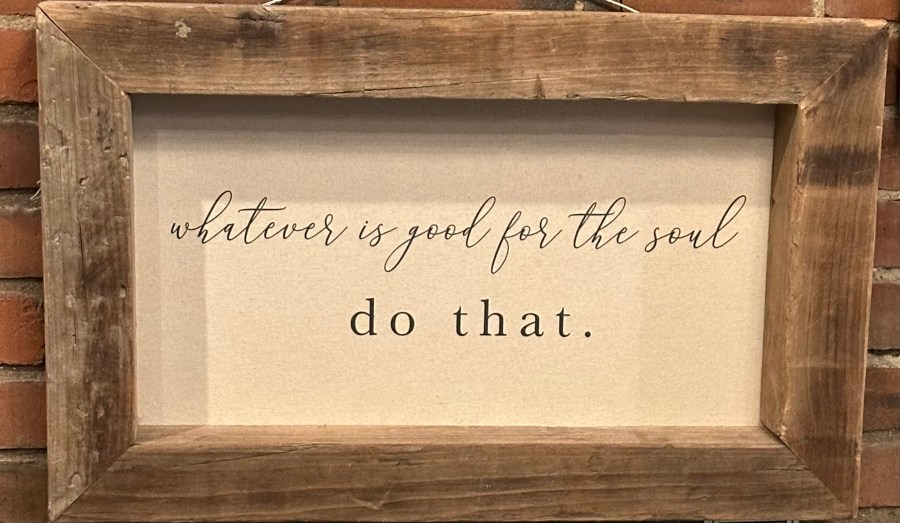
Image: a sign I saw on the wall at Tea Room at the Depot in Mackinaw, IL.

Poverty of spirit

I participated in Judith Valente’s “Writing the Prologue to Your New Year”, a retreat I look forward to each January. Part of the retreat is to reflect on our “word of the year”. This tradition of considering a word for the new year goes back to the 2nd or 3rd century when individuals seeking spiritual insight and wisdom would go to one of the Desert Fathers or Mothers and “ask for a word”. Most of us don’t have a desert monastery of wise elders to seek out. Most of us don’t even have a spiritual father or mother who knows us well enough to provide that “word” based on their insight to the spiritual journey we are on. We are left to our own discovery, discernment or discrimination of the word that can carry us through the new year.

This past week, words emerged like kernels popping up in a popcorn popper or one of those bingo cages that you spin to pull out the next important letter in the game. Words were tossed and spinning all week and I had a long list to sit with on Friday before sharing my word on Saturday morning. It isn’t my word for 2025 or phrase, (sets of words are ok to choose, there aren’t any rules!) but “poverty of spirit” kept capturing my attention all week. It kept coming up as part of reflections I was reading or podcasts I have been listening to in the new year. So I kept pondering what it might mean, for me, as the phrase kept presenting itself over and over.

One example of trust and humility that was shared in a podcast was that as young children we turn to our parents when asked a question like “what would you like to order to eat” or “to drink”. We, as children, aren’t aware of all the options or what is acceptable, so we turn to a trusting adult to help us decide. Poverty of spirit is the same type of humility or dependence on God as God’s children, turning to the One who can help us see more clearly.

I reflected earlier this week (my first mid-week reflection) on President Jimmy Carter’s funeral services. He certainly seemed to be a man with a poverty of spirit, a will to serve God and others, before self, always looking for ways to be attentive to what God desired for him to do and where he was needed to help others.

As I reflected on these two examples I determined that I can’t be open to hear or listen when my “hands” and mind are grasping tightly to what I think I need to do or be. My tendency is to anxiously hurry up and figure out the next step. This can create confusion or perhaps beginning to go down a path that isn’t the “right” one. I realize that I need an open spirit, willing to ask, “God, I don’t know what I want, or even what the options are (because I surely can’t see them all) or what is best for me, so will you help me decide?”

Jesus’ Baptism, that we remember as we end the Christmas season today, was not a baptism that Jesus needed. It was a baptism for the rest of us. As Fr. Paul Carlson, my parish pastor, shared in his homily, St. Gregory of Nazianzus said that “when Jesus rises from the waters, the whole world rises with him. As Jesus rises from the waters, our recreation has begun”. To be recreated though, requires a poverty of spirit to be called and led, to change and to be transformed.

This week retired minister, speaker and writer, Catherine E. Smith shared her blog on Baptism in an email (links below). She shared a beautiful story of Jesus’ Baptism and a Blessing for each of us. I share the closing stanza of her story.

Baptism is concrete and holy and full of mystery.

Out of the cloud-split heavens the words of belovedness are spoken. 

These words fall upon Christ and in Christ they fall upon us. 
We are the beloved. 

In those days, in these days, in days to come
We are the beloved,
And we are beautiful to behold. 

To listen for my call, for words of “belovedness” being spoken to me, or even to hear my word for 2025, takes a poverty of spirit. Am I willing to say “I don’t know what to choose, will you guide me?” Am I willing to emerge from the waters open to hearing what I am being called to? Am I willing to be transformed? I invite you this week to consider these questions also.

Wishing you abundant peace, Deena

Link to Catherine’s website, Hem of the Light, click here.

Link to Catherine’s post on Baptism (not on the website yet), click here.

Photo: Statue of the Baptism of Jesus, Epiphany Parish, Normal IL.

Duc in altum

A little over three years ago I was discerning whether a part-time role on a virtual ministry team was the right opportunity for me. Since the ministry was founded by an author that I had read, I picked up Becky Eldredge’s book, The Inner Chapel, to read it again and get familiar with the person I was considering working for. Early in her book (Chapter 2 “Spiritual Growth is like Stepping into the Ocean”), Becky shared an image of her children at the ocean’s edge with varying degrees of confidence to enter the water to swim and play. Her eldest child was brave and ready to run headlong into the water. Her middle child was curious, ready to explore but more tentative about how deep she wanted the water around her to be. The youngest child was reluctant, initially, but then willing to play in the water but safely at the water’s edge.

As St. Ignatius, in the Spiritual Exercises, encourages us to do in prayer, I closed my eyes and entered a prayerful contemplation of standing at the ocean’s edge, considering my own desire after years of corporate work to go deeper in my journey of faith and to discover whether it was time to consider a role that would combine my skills at work and my desire to help others on their faith journeys. I saw myself walking confidently in the water but stopping with the water around my neck and my feet firmly planted on the sand beneath me. I felt safe but surrounded by the water with an occasional splash of a wave in my face. As I opened my eyes in the contemplation I saw Jesus ahead of me, deeper in the waters. With a curled index finger, he looked at me lovingly and said, “come deeper”. I paused, reluctant to move past the security of the footing I had beneath me. I looked at his eyes again, that inviting finger urging me forward, and I began to go deeper, keeping myself afloat with the support of the spiritual waters of grace. That imaginative prayer became my sign that it was time to move forward in faith. I was offered the position and accepted it, beginning a three year journey of ministry work.

A couple of weeks ago I prayed an Ignatian contemplation with Luke’s version (Luke 5: 1-11) of Jesus’ calling of the apostles. The apostles had been out fishing all night but Jesus sees them, coming back empty-handed, and invites them to cast their nets out again, on the other side of their boat. They are reluctant at first, even challenging Jesus, but cast their nets and bring in a huge haul of fish. They marvel at the miracle, express their faith, and begin their ministry life of following Jesus. As I prayed with this scripture, I heard Jesus invite me to cast my net, to “put out into the deep” (the meaning of the Latin words Duc in Altum), and not to be afraid.

Decision making and listening to the will of God in our lives isn’t always easy. We have our individual will and freedom, God will never ask that of us. But if we want to go deeper in our faith lives and relationship with God, we have to be willing to risk the unknown. Sometimes it might be an invitation just to enter the water a bit more, moving from ankle deep to knee deep waters. Sometimes it is casting a net in faith, unaware of the catch we will bring in. But always, always, Jesus is there to encourage us and let us know that we do not walk, or swim, alone.

Is there an invitation from God you have been hearing? Is it still a whisper or has God’s voice been beckoning louder? I offer these images of standing at the water’s edge, or hearing Jesus ask you to cast your net, for your prayer and consideration. Be willing to hear the invitation. You don’t have to rush, but if you listen, your life might never be the same!

Duc in altum, do not be afraid!

Wishing you abundance peace, Deena

Photo: one of the families on our Italy pilgrimage exploring the ocean edge in Nettuno.

Set the world on fire

Last week I talked about a couple of sports superstars so bear with me this week, I want to share another example. I was really moved by an interview with Dave Roberts, manager of the LA Dodgers, Friday night after their win over the San Diego Padres. I have NEVER heard such enthusiasm by a manager after a game as I did during that interview. Roberts was jubilant talking about his team and what they accomplished as he was interviewed by the Fox Sports Team. He talked about their fighting attitude and determination, their mindset, their belief in each other and how bonded they are, as a team, to meet the challenge of postseason baseball. Derek Jeter commented that Roberts’ job as a manager is to set up his team to succeed, congratulating Roberts for how he does that, but then asked him how long he was going to enjoy the win before turning his focus to the next game against the New York Mets (Sunday, October 13 at 7 p.m.). Roberts replied that he was going to finish his cigar, drink some good red wine and “enjoy the heck out of tonight” because he said, if he doesn’t enjoy the wins, “what the heck are we doing it for?” He then restated how proud he was of his team. He exuded enjoyment in what he does and the pride of managing his team. Roberts stands out to me because he has a vocation, a calling, to manage his sports team.

Exceptional people in other arenas are likely living out their career as a vocation. It is who they are and what they are meant to be doing in life. Life may not always have the level of excitement of winning a postseason baseball game in hopes of winning a World Series, but my guess is there is an inner joy and satisfaction that comes from dedicating life to the fulfillment of a dream.

One of my favorite quotes by a saint is attributed to St. Catherine of Siena, mystic and Doctor of the Church. St. Catherine said, “Be who God meant you to be and you will set the world on fire.” When we have joy in our state in life, the tasks we do in a job, in our daily activities, support of the church or by helping other people, we set the world on fire because of the love of doing what we have been called to do.

I think some of us have a fear that if we surrender and submit to the will of God, God will ask us to do something we don’t want to do. We ponder that we might have to give up the things we love in order to serve God with our gifts and talents. There may be people called to that, to work in ministries or communities that require a total giving of self, property and serve obediently under the authority of someone else. But for most of us, I doubt that is what God is calling us to.

God has tremendous love for us and wants us to be happy. The surrender, giving up of attachments, comes when we desire pleasing God more than we desire those things we have been attached to. It is a matter of where our focus is. The things in life that we love are an expression of who we are and they are gifts from God. We just have to check the importance they have in our lives and whether they are burden, moving us away from our relationship with God.

So my question for us this week, I include myself in this pondering, is whether we are responding to a call to live our lives using the gifts and talents we have been given? Do we experience an inner joy in the work we are doing? If not, why are we holding back? What are we afraid of? How might we begin to take steps in that direction of being who God meant us to be? Set some time aside this week to ask these questions. The answers may not be obvious and might require some quiet thought, reflection and prayer. Be sure to ask God how you might live more authentically as the person God has called you to be, and listen for the response.

Wishing you abundant peace this week!

Deena

Photo: A status of St. Catherine of Siena that I took during my Italy pilgrimage which included a visit to Siena.

Transformed hearts

Have you ever shared with someone a health condition or that you weren’t feeling well, only to hear in response – yes I have had that too, only their illness was worse, longer, required more treatment, etc. Perhaps you were talking with a friend about a busy time in life and then they replied with their situation which is busier, more intense and requires more than your situation. You may have actually been the person that responded in that way, we all do it. When I reflect on times that I was the person listening and responding, I believe it was, in most cases, an attempt to show empathy and compassion for what the person is going through but afterwards reflected that I could have acknowledged their feelings without adding my own example.

Today’s first reading and gospel for the Twenty-Sixth Sunday in Ordinary Time reminded me of those times of oneupmanship in life. In the first reading, the elders complain to Moses that two men who weren’t at a gathering where God bestowed the spirit upon them to prophesy were prophesying in the camp anyway. They were among the seventy elders but they didn’t follow the protocol of attending the gathering. The spirit was upon them regardless and Moses corrected the others by saying that he wished all the people were prophets and questioned their jealousy for the two men. Then in the gospel reading the apostles complained to Jesus that there were people driving out demons in Jesus’ name but weren’t part of the in group of followers. Jesus then uses it as a teaching lesson for his apostles and followers. Jesus broadened their sense of who is included and who belongs to him as a follower.

I also reflected on meetings that I attended, or comments made by someone, showed the need for a person to be in charge or make sure others know of their involvement was a critical part of making something happen. The reality is very little of what we do is on our own. First of all, it is the grace of Spirit of God that inspires us. Also, others are involved in helping us and ideas we read along the way contributed to the concept we are sharing or the work we are doing. I think of the number of things I listened to or read last night and this morning that helped with my reflection on these weekly readings. Everything I think and share is a synthesis, albeit through my personal experience, of the thoughts of those wiser than me. The Rule of St. Benedict, in Chapter 7 on Humility, reminds me that every exaltation is a kind of pride. I am not saying that we shouldn’t be proud of our accomplishments, or acknowledge them in appropriate situations, but that we check our intentions before we do so.

I immediately thought of my photo for today’s blog as I reflected on the readings this morning and what I might share with all of you. The flowers in the garden don’t compete and say I worked harder to be this color, or I grew taller than you, and they do not try to stand out above the others. They just express the beauty of their being.

I would love to be more like these flowers!

Wishing you abundant peace, Deena

Listening to hear

I love crafting; making cards, playing with mixed media projects and dabbling with painting supplies. Sometimes an idea comes to me and I create it with ease but often I need inspiration from others. I will turn to crafting videos on YouTube by “makers” like Jennifer McGuire, Tim Holtz, Nichol Spoor, Nina Marie Traponi, Mindy Eggen and so many others to watch them as they express their immense creativity. A technique they share or a card idea created in the video helps me take a product I have and create something in my style or with my vision. Seeing what others, and listening to how and why they are using a technique, help me learn the craft and put my hands to work trying different techniques.

Early Saturday morning for my prayer time, I turned to a new podcast Wonder with the Word produced by God In All Things. The podcast was an Ignatian Contemplation (reading a scripture and then placing yourself in the scene) for children and young adults or “the childlike”, “exploring the gospels through the power of imagination and curiosity”. The podcast was recorded earlier this week so it didn’t occur to me, I hadn’t done my preparation before Vigil Mass, that it was the gospel for this weekend. The gospel of Mark 7: 31-37 is the scene with Jesus, the apostles, and the people following Jesus, bringing the deaf man to him for healing. With simple prompts, we were invited to enter the scene and watch the interactions that unfolded. I observed the people begging Jesus to lay his hands upon the deaf man, then Jesus pulling the man away from the crowd and healing him.

I considered two things in my reflection after praying with the scripture. First, Jesus pulled the man aside. I don’t think it was to hide what he was going to do from others, Jesus knew they would be watching. Rather I felt that Jesus had compassion on the man. He knew that once the man heard, if still among the people gathered, there might be the sudden shock of many voices and cheers once he revealed that he could now hear. Jesus wanted him to gently enter the world of sound again. Second, I reflected that to hear the Word of God we need to step away, to the quiet, each day to clearly hear God speaking to us. Whether we are simply reading scripture, practicing Lectio Divina, prayerfully repeating scripture and sharing our prayer with God, or Ignatian Contemplation, placing ourselves in the scene to see and hear what God has to reveal to us during the time of prayer, we need the quiet time to reflect on the Word. I heard the invitation from God to be sure to continue to set aside my daily prayer to listen and hear God speak to me.

I attended Saturday Vigil Mass and hearing the Gospel proclaimed, I entered deeper and listened more attentively as Fr. Carlson shared a similar reflection that words help us express spiritual realities and to communicate ourselves to others. We need language to share ourselves, on a real level, with the words we share. God also communicates to us in the Word. That is the reason that we listen to the Liturgy of the Word each Sunday as part of Mass, or as other congregations do each weekend. He reminded us to be open and attentive to the Word of God, to spend some time in silent prayer and meditation, shutting out useless noise. We need to go to be alone with the Lord so that he can open our ears.

As a Benedictine Oblate, in the Prologue of The Rule, we are invited to listen with the ear of the heart. Daily Lectio, or prayerfully reflecting on a scripture passage, is an important part of daily life. We are reminded to be receptive and open before we are active in the tasks of each day.

Then early this morning, listening to Bishop Barron’s sermon on the Gospel, he shared the rich background and insight typical in his Sunday Sermons on YouTube. The word “Ephphatha” means “be open”. Jesus was opening the man’s ears to hear but also reminds us to be open to hearing the Word of God, not to shut it out or off. It’s as if Jesus by placing his fingers in the man’s ears unplugs them, opens them to hearing again.

Jesus, Word made flesh, words we hear spoken from God, reminds us to do the same, in our busy lives and secular society. In most cases it won’t remind us to stop and listen to what God is calling us to. It won’t tell us listening to God is more important that listening to what the world says is important. In some cases it might even try to embarrass or chastise us for trying to hear a deeper calling. Don’t stop, don’t let it. Take time to listen each day. Spend a few minutes reading a scripture. There are plenty of great devotional books with daily scripture, but don’t just read the words. Read the scripture, pause, and listen to what God might have to say to you, what God might be inviting you to do. It might just surprise you!

Wishing you abundant peace, Deena

Photo: Bronze angels in the Garden of Reflection at Anderson Gardens in Rockford, IL.

A weekend to relax

This week someone asked me what I did to relax, to find more joy, to play. I thought about that a long time, even after we discussed it. I was tempted to pass up a girls get together this weekend because it has been a long and super busy week at Ignatian Ministries. But my conversation reminded me that all the things will be there! All the household tasks that didn’t get done Saturday morning before leaving will be there for me next week. It’s time to pause…

So, this weekend I am taking time off from writing this blog. I hope this update finds you well and spending the day doing something that you love with family and friends.

Take a break, take a deep breath, look at the sky.

All the things will be there when you are ready to pick it up again.

Wishing you abundant peace and rest today! Deena

Photo: One of my favorite quiet places to look up at the skies and trees.

Notice what you are noticing

At times during the week a topic for this blog will evolve and begin to take shape. It might be a book, a quote, a class I took, etc. But a thought emerges and I ruminate on it throughout the week. Some Sunday mornings I wake up and ask for inspiration. Then there are days like today, well, weekends really, that I am bombarded with similar ideas from random places. I could journal for weeks on the things that have captured my attention!

One of the books I ordered to read this weekend is Discovering Your Dream by Gerald Fagin, SJ. It’s a little primer on an Ignatian approach to discernment and decision-making. I didn’t have anything specific in mind regarding discernment, just to continue to learn more about the topic. As I mentioned last week, it’s an ongoing process in life. Fagin says “discernment presupposes that life is a mystery to be lived out, not a problem to be solved.” People use the words spirituality, prayer, meditation and discernment so freely today it can be difficult to find things that will be useful or beneficial to personal and spiritual growth. One of the things I have found helpful is the adage to “notice what you are noticing”. God is at work in the people, encounters, situations and dare I say, even the things we read, around us. God is at work, personally, in my heart and in yours, each and every day.

I couldn’t help think about the mystery and unfolding of God in the events of Maria Shriver’s life as I read her Sunday Paper today. She revealed a meditation she had while in Cambodia, regarding birthing a new version of herself, and then a visit to the hospital with her daughter upon their return. While waiting outside, she helped a nurse deliver a baby in the parking lot! She concludes with a suggestion that every day is a chance to begin again or birth a new version of ourselves. She also mentioned that maybe God is trying to get her attention…notice what you are noticing.

Richard Rohr’s Daily Meditation, Evolving Faithfully, today acknowledges that everything is and keeps changing, that God “keeps creating things from the inside out”. He surmises that many people want instant or quick solutions versus a “universal pattern of growth and healing—which always includes loss and renewal. This is the way that life perpetuates itself in ever-new forms: through various changes that can feel like death.” It’s a helpful reflection for me as I look at what is happening in the world, both in the environmental and political landscape, as well as the evolving aspects of my self, the parts that I want to let go of and the parts I want to birth.

As you pay attention to the changing aspects of who you are and who you want to be, pay attention to those who stand in your circle, your “tribe” or supporting cast. In today’s Gospel, Mark 6: 1-6, Jesus is “amazed at the lack of faith” of those around him. He is in his home town and surrounded by people that have watched him heal and work miracles, yet, they question the things he says to them.

I appreciated Diana Butler Bass’ reflection today, Sunday Musings, regarding their unbelief. She suggests that unbelief isn’t an idea about God but a “disposition of the heart”. She says that Jesus was amazed at the lack of trust they had or their inability to have faith, he was alone and perhaps, Diana says, a little heart-broken. But the highlight of the post was: “The truth is that we need others to rise to our fullest abilities; there are certain things that can only be done with the love and trust of those committed to being there with and for us…Faith and trust are necessary for wisdom, to heal what is wounded, to cast out injustice, and to care for all those in need. Ideology will only divide us more deeply. Those idea-tribes are killing us, separating us.”

As we listen to and become more aware of the desires of the heart that emerge in prayer and reflection, we must also acknowledge the parts that are ready to fall away. We look also for the places and people that stand with us and encourage us rather than hold us back. We may not receive support from everyone, but life’s too short for less than this.

Lastly, consider reading my friend, and author, Judith Valente’s blog post today on a “well-lived life”. As all of these thoughts tumble around in my head this week I will continue to ponder the essence of Judith’s theme to keep focusing on things that bring meaning and passion while considering what a well-lived life might actually mean for me. It’s an excellent read, I hope you take the time to consider Judith’s musings and consider what a “life well-lived” might mean for you as well.

Then this week, notice what you are noticing…Deena

Image: The “Devotion” or Giboshi (refers to the finial used on the bridge and posts) Bridge at Anderson Japanese Gardens was recently reopened after a multi-year restoration process of curing and air-drying the Alaskan Yellow Cedar and then constructing the bridge. Our docent advised us that as we crossed the bridge we were invited to leave the dust of the world behind us, inviting us to a time of peace and serenity during our stay in the Gardens.