Featured

Visionary faith

I met with a Catholic counselor/coach this past month to explore a prayer technique I was interested in learning more about and discuss experiences I had during a recent retreat. One of the most helpful aspects of the meetings was a recommendation to explore a couple of personal assessments and then meet again if interested to discuss them. One of the assessments explored life experiences, or achievements, and what they reveal about the truest expression of ourselves. The summary stated that we change over time but “What remains constant are the God-given motivations that fuel your decisions and behavior.” This reminded me of the Spiritual Exercises of St. Ignatius of Loyola, that I have written about in previous blogs. The Spiritual Exercises help us name desires and motivations and in doing so, discover ways that we can serve God, in our own unique and personal way, and lead us toward God’s deepening life within us.

The assessment summary provides a person’s top 5 motivations and top motivational dimension. My top motivational dimension was Visionary. Each of the motivations and this top motivational dimension make perfect sense and I can see why I am drawn to certain activities and relationships in life and why they fill me up or make me feel purposeful and alive. I think it will be helpful as I continue to discern what’s ahead for me in life.

As I thought about the dimension of Visionary, someone who loves to envision possibilities and ideas and find practical ways to bring them to life or to inspire others to bring things to being in their lives, I thought about life with God and visionary faith. To be a Catholic Christian in today’s world requires visionary faith. While this was not what the assessment was talking about, I reflected that to live and share our faith with others requires a visionary approach. We live with a faith that hopes in the promises of God, that looks beyond what we see in our current reality, and looks to the spiritual realities to direct and guide our choices. When we look to those in scripture that heard and acted on God’s voice and guidance, they hoped in a life beyond current circumstances, they lived and acted, on God’s promises. With visionary faith we are able to move forward in life based on hope not fear.

But we are called to live differently as a result of our faith. Pope Leo XIV challenged us in today’s Angelus message saying that God doesn’t want a church full of those who only offer prayers and sacrifices. He says that our faith should lead us to practicing justice and loving our brothers and sisters in this world. Pope Leo went on to say that it isn’t an easy path, that our choices in life may be unpopular, that we must fight “against our selfishness, giving ourselves for the sake of others, and persevering in doing good even when the logic of evil seems to prevail.” That is visionary faith!

So, let us choose this “narrow path” (today’s Gospel, Luke 13:22-30), believing in the life that Jesus invited us to, discerning God’s will in our lives, and acting with courage and hope in pursuit of a joy that comes from living more deeply in God’s love.

Wishing you abundant peace and hope, Deena

Photo: I selected this image of St. Bartholomew and St. Lawrence from the Museo de San Marco in Florence, Italy, because today, August 24, is the Feast Day of St. Bartholomew. St. Bartholomew was one of the 12 Apostles and was recognized by Jesus for his pure heart and acknowledgement of Jesus as the promised one of God.
Featured

Before the bloom

This week I happened upon an article about pruning lantana plants. I have a few plants in pots and didn’t realize to get the most proficient blooms that it is best to prune them when the weather is hot and sunny, then as things begin to cool down you stop pruning. So, I will have to see, with warm days still in the forecast, if I can revive them a bit.

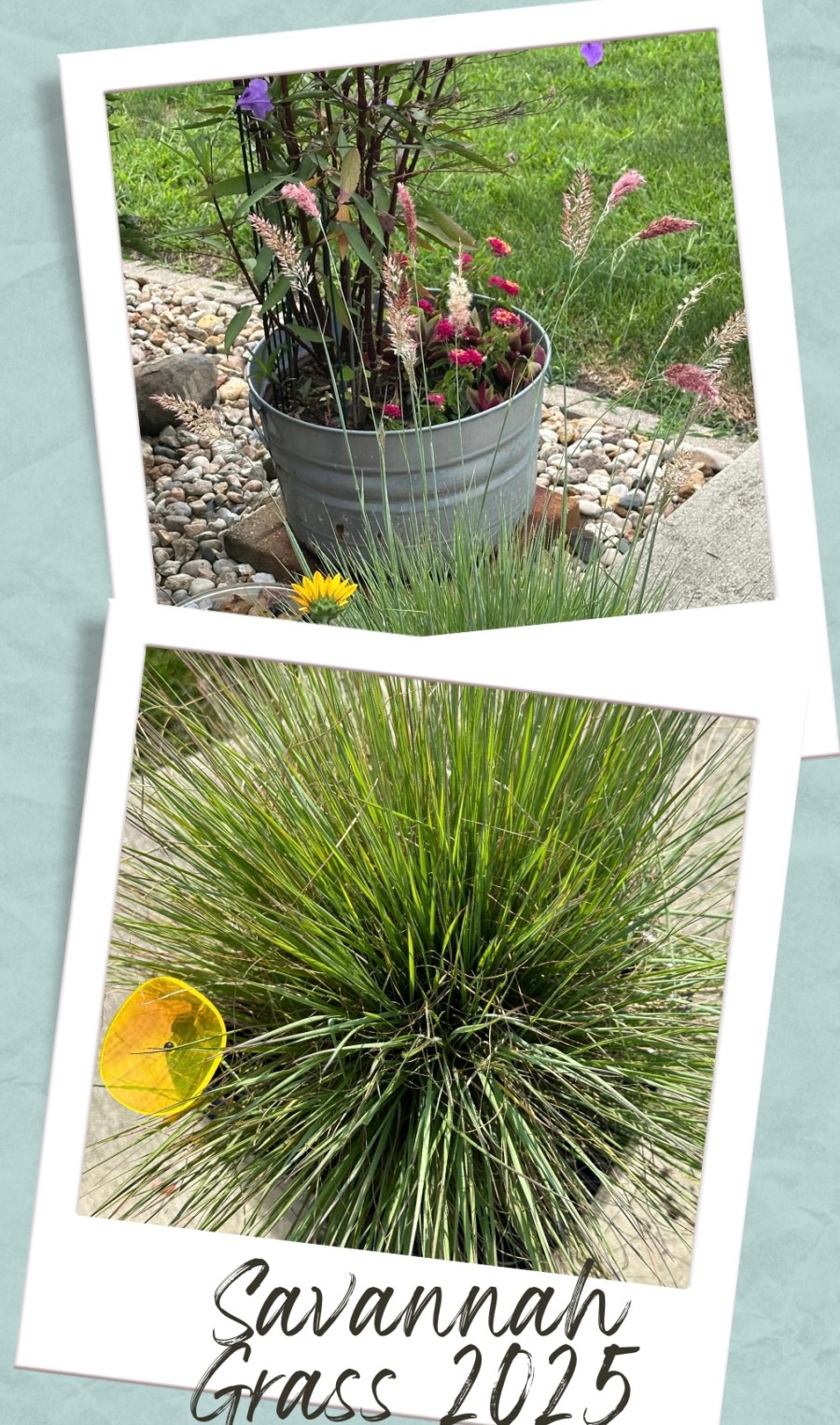
As a result I began reflecting on my Savannah Grass blooms. It’s a lovely grass that my friend Kathy introduced me to three or four years ago. I learned after the first year, one plant in front of the house and one on the patio in back, that they prefer a longer day of sunlight. So the past couple of years, and this, I have had two plants on the patio that has a full day of sun exposure. They produce a lovely, delicate, pink plume that gently sways in the breeze like the one we have this Sunday morning. The cats actually love a piece of the grass each morning, they sit and wait for me, not so patiently, to find the perfect blade for them. As you see in the blog photo for today, one of my plants has produced the anticipated blooms but one has not.

I began reflecting on why one plant produced plumes and the other didn’t. I water them at the same time and the same amount. I feed them on the same days. They are only seven feet apart and get the same amount of sunlight. Then I remembered that after buying the plants, both started from seed at the same nursery, that I repotted one in a larger ceramic pot with new potting soil, and the other I left in the large container from the nursery and just dropped it inside a very tall ceramic pot. The first year I bought that particular pot I filled it with soil (a lot of soil!) which made it difficult to move. The next year I emptied it, filled with bricks so that my Savannah grass can sit nicely on top the bricks inside the pot and cascade over the sides. The difference it seems is the soil that I planted, or did not plant, each of the grasses in.

As I reflected on my plant situation I recalled a recent Gospel reading, Matthew 13: 24-30, regarding the Kingdom of heaven being likened to a man who sowed good seed in his field. While I don’t have any weeds, like the parable, my plant didn’t produce the desired blooms.

If you aren’t seeing the desired “blooms” in your life, or desired fruit, using another Gospel and garden analogy, I invite you to reflect with me on the following questions. I would like to continue with my garden metaphor and ponder whether I have been seeing the fruits of the Spirit such as love, joy, peace, gentleness, patience, etc.

Has your “soil” been properly prepared so that you are seeing these fruits? If not, or if in some way someone or something was detrimental to that growth, what can you do to amend the soil? Are you watering your plants each day with prayerful reflection? Are you nourishing the soil with the support of a faith community? Are you watching for “weeds” or other harmful influences, that might choke growth and inspired living? Are you monitoring your growth or just hoping for the best?

As we enjoy these final weeks of summer, I hope you will use the opportunity to look at your flowers or gardens as an inspiration for your life, supporting and sustaining each day just as we would our precious plants.

Wishing you abundant peace and hope, Deena

Featured

Pulling out all the stops

Last week I mentioned that I enjoy watching YouTube videos for entertainment, instruction and reflection. I shared that I enjoy watching Paul Fey and his playing the great organs around the world. If you use technology you know that the algorithms see what you watch and then show more of that type of content to your feed in the way of posts or ads. Sometimes it’s helpful and sometimes it is just plain annoying.

The other night I opened YouTube to watch a video and saw an organ short titled “Pulling out all the stops”. I laughed out loud, not realizing the source of that idiom. I watched as the organist pulled out all the knobs on the side of the organ and how the sound of the organ changed and amplified.

My post photo today is our organ at Holy Family Church. You will see the stops on the side, we have about 30 or so stop knobs on our beautiful organ. On the large organ at Holy Name Cathedral in Chicago, built by Flentrop Orgelbouw, (image from my recent visit to Holy Name pasted at the bottom of this blog) there are 71 stops and 5,558 pipes. The stops are the primary way that an organist controls and shapes the sound that is produced by the organ. They produce the pitch and tone of the sound and allows the air to flow through the pipes on the organ.

The use of the phrase, “pulling out all the stops”, suggests that we are going to do everything in our power to make something happen or to succeed. I paused to think about this with regard to our faith life. What if we pulled out all the stops in our daily prayer and living of the Gospel message? What if I lived “full out” in my belief that I am a beloved daughter of the Father and a disciple and friend of Christ? Am I living my life in a world of “just okay” when God has something greater in store for me and my life? To use the organ analogy, by pulling out all the stops, can I get the loudest, fullest, deepest expression of what I am meant to be in life?

The Gospel message this weekend for the Seventeenth Sunday in Ordinary time encourages us in persistent prayer. Jesus, in Luke’s version, assures us to be confident in our prayer, to be bold and persistent. In our Old Testament reading, Abraham is bold in convincing God to spare Sodom if there are at least 10 faithful individuals who remain in the city destined for destruction. Jesus guides us to approach God, as our loving Father, confident and trusting.

That’s what I want in my faith life! Deep, rich, vibrant spirituality lived with passion and confident trust that God knows all I need and desire to live my best life giving glory to him! Are you living in a world of “just okay” or are you willing to place your trust in God and pull out all the stops in living that faith?

Wishing you abundant peace, trust, and hope this week, Deena

The organ at Holy Name Cathedral from the nave, or main seating area, of the Cathedral.

Featured

Spirit that reveals

On June 11 of this month, Sojourners Magazine reflected on the life and teachings of American Christian scholar and theologian, Walter Brueggemann. Brueggemann, who passed away on June 5, was a great teacher, and an influential interpreter, of the Bible and especially, the Old Testament and biblical prophets. His most influential work, The Prophetic Imagination, challenged us to see the world as God sees it and overcome the limitations of our present reality. In 1985, he wrote, for Sojourner, “The Spirit works through us, among us, and even against us. The Spirit in these days would indeed work against our hopelessness to let us hope.” A poignant message for us given the state of the world.

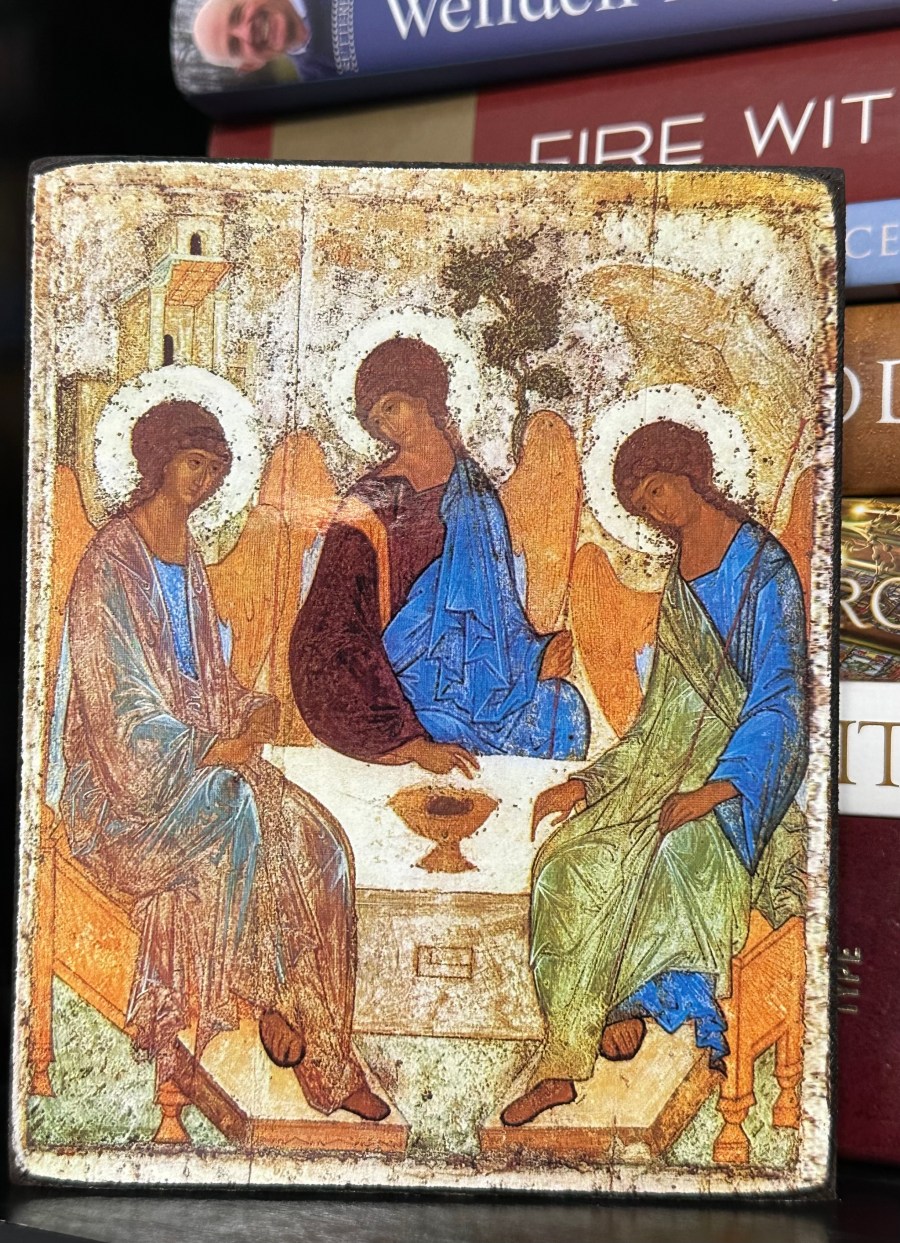
This Sunday, June 15, is the Solemnity of the Holy Trinity. We often try to give images and roles to the Trinity in an attempt to understand the inexplicable relationship of God in three persons, Father, Son and Holy Spirit. Brueggemann once wrote that the purpose of doxology, an expression of praise or liturgical praise, is to defy reasoning that tries to explain what God in the Trinity is. We can’t, so perhaps it’s better to just sing!

This week I have been praying with an 8-Day Retreat on the Gifts of the Holy Spirit, presented by Our Lady of the Way Retreat Ministry. Day 6 focused on the Gift of Understanding. The prelude to the prayer states: “Understanding is one of the seven gifts of the Holy Spirit that enables believers to comprehend the truths of faith through both reason and divine revelation….With the gift of understanding, we can grasp divine mysteries of faith that surpass human reasoning.” That was a helpful reminder as I approached Trinity Sunday.

I can’t possibly grasp the concept of Trinity with my feeble human intellect. I can read, pray and contemplate the relationship between the “persons” of the Trinity but at some point I have to accept it on faith. I can also, reflecting on Bruegggemann’s statement above, hope to grow in understanding and allow the impact of the Trinity to reveal, guide and be at work in my life.

Give Us This Day published a reflection entitled “Sustained Attentiveness” by Brueggemann on Friday of this week, certainly planned far in advance of his passing. In it he wrote, talking about Jesus’ “radical interpretation” of the Torah, “finally he will say at the end of the chapter, “Be Perfect” – be whole – have integrity – be about one thing in your life. Be in sync with God. But such being in sync requires, as serious Jews have always known, swimming upstream against ordinary social practices.” Brueggemann went on to suggest we see the church as a body of coworkers who walk a different path in the world and that we live together “for the sake of the world that God loves!” He said we cannot “be the church by accident, but only with obedient intentionality.” In that Sojourner article, mentioned above, they quoted Brueggemann saying “the practice of prophetic imagination … requires energy, courage, and freedom, and the sense of being otherwise. And I have no doubt that we are now arriving at a moment when there is no more middle ground.”

As I pray for peace in our fractioned and turbulent world, and integrity within our policies and caring for the good of all those in society, I ask for the gift of understanding. I pray, also, to be transformed by the gifts of knowledge, fortitude, counsel and wisdom so that I may live in sync with God, radical in justice and mercy. Then, as St. Ignatius teaches, I will desire and choose only that which helps me attain the end for which I have been created.

Wishing you abundant gifts of the Spirit this week, Deena

Image: my favorite icon of the Trinity, created in the 15th century by Russian iconographer, Andrei Rublev.