Featured

Still learning

Did you know that a typical Jewish Torah scroll is 86 feet long? I didn’t! They are handwritten and if a mistake is made during the creation of the scroll it is discarded and process begun again.

This past week I went on a bus trip to three places of worship in Chicago – Holy Name Cathedral, the Chicago Loop Synagogue, and the Baha’i House of Worship in suburban Wilmette. It was a fascinating day and I loved learning new things about other faith traditions, as well as sharing some things about our Catholic faith and tradition at the Cathedral with those on the trip who pulled me aside to ask questions.

While we were at the synagogue I noticed a lamp burning above the Ark, where the Torah scrolls are kept, and asked about it because of the similarity to a sanctuary candle in every Catholic Church by the Tabernacle. The assistant director of the synagogue praised my question and acknowledged that the Ner Tamid, or Eternal Light, always burns above or near the Ark representing God’s eternal presence. In a Catholic Church we have the red sanctuary light burning at all times (except after Holy Thursday Mass until Easter Vigil because Jesus is no longer present in the Tabernacle) by the Tabernacle in the Church indicating the presence of the Blessed Sacrament.

I admit to being enthralled with studying and learning new things. When people ask what I am reading they might expect a current bestseller or fiction book but it is almost always a book on spirituality, self-improvement, or a biography of someone I admire. As a matter of fact I could probably stop buying books and still read new books for the next 5 years! I’ll catch up one of these days.

The Catechism of the Catholic Church (CCC) encourages our study and ongoing learning. In Article 6 regarding Moral Conscience, the CCC tells us that it is the voice that calls us to love, do good and avoid evil. It guides us to behavior that we view as just and right for ourselves and those we encounter. But it goes on to say that our conscience must be informed and enlightened. We can’t expect that we learned everything that we need to act with an informed conscience, or to act in accord with the teachings of the Church, or whatever faith we practice, when we were instructed as young children. Education of our conscience is a lifelong and ongoing task, according to the Catechism.

Many of us, in Catholic and Protestant services, listened to the scripture of the Good Samaritan this weekend. Jesus teaches with this parable to encourage unconditional love and fair treatment to all regardless of our differences. An insightful Benedictine reflection that I read this Sunday morning reminded us that “we aren’t there yet. We need to keep re-tuning our ear and correcting our vision with the lens of charity, humility, and truth.” That is exactly the reason we continue to listen and be transformed by the Living Word of God (and hopefully by homilies and sermons that encourage the kind of behavior that Jesus challenges us to).

This desire for ongoing learning is the reason that I love the Wednesday Papal Audience and Angelus addresses given by our Popes. They are a brief catechesis on current topics of the day, how we should treat each other and live our lives. I want to keep my mind and heart open to seeing things a new way and changing those aspects of my thoughts and behavior that are not aligned with the heart of Christ.

Whether it is your faith life, or an area you desire to grow deeper in understanding and knowledge, keep learning! I offer these reminders for us to consider this week:

“I am still learning.” – Michelangelo (aged 87)

“Wisdom is not a product of schooling but of the lifelong attempt to acquire it.” – Albert Einstein

“Therefore we intend to establish a school for God’s service. In drawing up its regulations, we hope to set down nothing harsh, nothing burdensome…But as we progress in this way of life and in faith, we shall run on the path of God’s commandments, our hearts overflowing with the inexpressible delight of love.” – The Prologue of the Rule of St. Benedict

Wishing you abundant peace and hope this week, Deena

Image: Torah scrolls in the Ark at the Chicago Loop Synagogue

Featured

Pause and rest

Some days writing is like turning on the kitchen faucet and the ideas, like water, pour forth easily. Other days it is like watching water boil, but I am ready for the tea right now! None of the ideas I had to share today were developing. I decided not to fight it. I am just tired.

I am weary from the news. As if this week’s National news wasn’t enough, today my heart is breaking for the families who sent their children to Camp Mystic in Texas and now will be planning funerals. I can’t imagine the sorrow and grief they are experiencing. They will be on my heart, and in my prayers, along with all the others experiencing the devastation from the flooding river.

I didn’t realize how changes around me, some personal and some broader, were impacting me until I made an effort this week to breathe a little deeper and slow down. I felt the weight of those changes and decided to honor them instead of ignoring them.

This morning I saw a quote by Etty Hillesum, Dutch Jewish author and modern mystic who was murdered at Auschwitz in December of 1943, which said “Sometimes the most important thing in a whole day is the rest we take between two deep breaths, or the turning inwards in prayer for five short minutes.”

I sighed and thought “Yes, just rest today. You don’t have to write or do anything else.” I was going to simply write and suggest we all rest and pause today.

But, I was also reminded of Pope Leo XIV’s prayer intentions for July on discernment and the prayer he wrote. Part of the prayer says: “I ask you for the grace to learn how to pause, to become aware of the way I act, of the feelings that dwell within me, and of the thoughts that overwhelm me which, so often, I fail to notice.”

Like Pope Leo (as stated further in the prayer), I long for the choices that bring joy and bring me closer in my relationship to God.

So, today I pause and rest. I will make some tea, slowly, not rushing the water as it boils. I will enjoy the flowers that seem to be as relieved as I am from the intense sun and heat and are just radiant under the cloudy skies. Perhaps you will be able to take some time to rest today too.

As I researched the quote shared above by Etty Hillesum, to make sure I was sharing her words accurately, I saw another. I offer it to you today too.

“Ultimately, we have just one moral duty: to reclaim large areas of peace in ourselves, more and more peace, and to reflect it toward others. And the more peace there is in us, the more peace there will also be in our troubled world.”

Wishing you abundant peace and rest today, Deena

Photo: Butters will be my muse for rest today. He is an expert!

Featured

Clearing the weeds

I purchased two new plants to add to my flower beds, so yesterday, in spite of the intense heat, I grabbed the plants, and some garden soil to supplement the area, and dug new holes for the plants. Despite the abundance of plants and cared for beds, there are always some weeds to pull. It’s not too bad if you stay on top of it, but if an area is ignored for a while, it can take some time to remove the unwanted growth. I cleared the spaces, dug holes, then added the gaura and poppy plants. I also decided to move my “Silly String” hosta (shown in my blog image this week) to a place with better light and replenished the soil for it, and around a heuchera, that has been slow to grow. I’m hoping the extra nourishment of the garden dirt will give it the support it needs.

Caring for these plants yesterday was a perfect analogy for my week. I reflected that we have to get rid of the weeds to give space for the desired plants to grow. The garden can be disturbed or strangled by the degradation of pesky plant growth. Sometimes it just needs some attention and nourishment.

By Wednesday night of this week I realized that my own Garden was in a state of disrepair and rupture. But uprooting false ideas, and tending to wounds, can be a tender undertaking. It is, however, a necessary exercise if we want to move beyond a place we are in and approach a desired state of peace and wholeness. To use another analogy, one proposed by my friend Kate Brown in a program this week, we need to “clear the static” to tune in and be in a place of alignment.

After hours of crying and praying Wednesday evening into Thursday early morning, I turned to an anchor (a focal point) to help myself feel grounded and safe. I began to breathe more slowly, calm my mind and gently fall to sleep, trusting in the love and support of God. It was a difficult time, for sure, accentuated by some pain from a serious fall in the morning and, then later in the day, feeling dismissed, and undervalued, by someone. Without noticing and attending to the wounds when they occur, just like the weeds in my flower beds, they can overwhelm and choke the joy and life force from us.

On Saturday morning I found myself recalling the time I taught classes at the local community college, in some of which I shared the importance of relaxation and mindfulness techniques to reduce stress and anxiety. I then opened an email to a podcast on mindfulness and learned a new technique that I was not aware of. Author and mindfulness teacher, Julie Potiker, shared her concept and use of the SNAP technique she developed. SNAP is an acronym, and has a somatic component, like the snap of our fingers, which can help us manage difficult emotions and move through situations with more ease and peace. The S in SNAP stands for Soothing Touch. It might be placing your hand on your heart to get in touch with your emotions in the moment. N stands for Name the emotion. To stop and consider what we are feeling in the moment, not judge or dismiss it, can be powerful. As Julie said, “you name it to tame it”. A stands for Act, we choose whatever we have in our mindfulness toolbox to help us move beyond the place we are in and “change the channel”. It might be deep breathing, listening to soothing music or a teacher that inspires us, talking with a friend, going for a walk or simply picking up an item of meaning or significance to us. Lastly, P stands for Praise. She suggests that here we move into a state of gratitude for “yourself, your practice, the universe, or the deity of your choice.” As I moved through my own difficult emotions this week, I stopped to thank God for the healing work that is beginning, that the fog is lifting, so that I could see more clearly what lies ahead.

Yesterday after I was done with the planting and care for my plants, I was able to see the flower beds and know that I had helped provide an environment for growth for them. I also checked in on my own state of being and knew that I had begun the work of cultivating the soil for restoration and peace. It affirmed my decision (that I have been second guessing since registering last month) to attend to week long retreat on healing. It provided insight to the reasons I have been researching joy and what I hoped I would find there. I gained clarity on the work I want to do and ways that I might share it with others.

Our growth never ends, at least as long as we are on the journey in this life, and I am thankful for that. I hope that you feel the same and know that you are never alone on the journey!

Wishing you abundant hope and peace, Deena

Featured

Spirit that reveals

On June 11 of this month, Sojourners Magazine reflected on the life and teachings of American Christian scholar and theologian, Walter Brueggemann. Brueggemann, who passed away on June 5, was a great teacher, and an influential interpreter, of the Bible and especially, the Old Testament and biblical prophets. His most influential work, The Prophetic Imagination, challenged us to see the world as God sees it and overcome the limitations of our present reality. In 1985, he wrote, for Sojourner, “The Spirit works through us, among us, and even against us. The Spirit in these days would indeed work against our hopelessness to let us hope.” A poignant message for us given the state of the world.

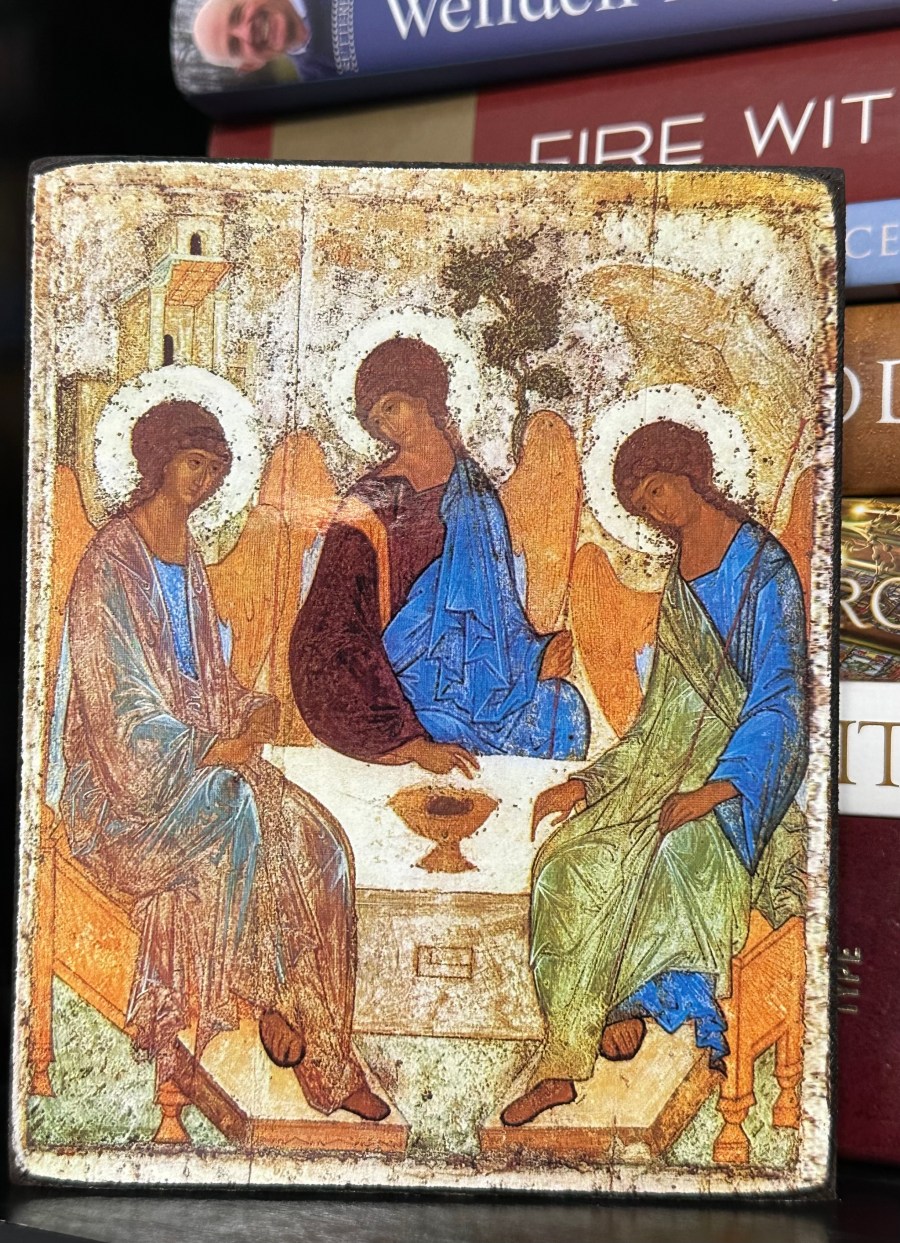
This Sunday, June 15, is the Solemnity of the Holy Trinity. We often try to give images and roles to the Trinity in an attempt to understand the inexplicable relationship of God in three persons, Father, Son and Holy Spirit. Brueggemann once wrote that the purpose of doxology, an expression of praise or liturgical praise, is to defy reasoning that tries to explain what God in the Trinity is. We can’t, so perhaps it’s better to just sing!

This week I have been praying with an 8-Day Retreat on the Gifts of the Holy Spirit, presented by Our Lady of the Way Retreat Ministry. Day 6 focused on the Gift of Understanding. The prelude to the prayer states: “Understanding is one of the seven gifts of the Holy Spirit that enables believers to comprehend the truths of faith through both reason and divine revelation….With the gift of understanding, we can grasp divine mysteries of faith that surpass human reasoning.” That was a helpful reminder as I approached Trinity Sunday.

I can’t possibly grasp the concept of Trinity with my feeble human intellect. I can read, pray and contemplate the relationship between the “persons” of the Trinity but at some point I have to accept it on faith. I can also, reflecting on Bruegggemann’s statement above, hope to grow in understanding and allow the impact of the Trinity to reveal, guide and be at work in my life.

Give Us This Day published a reflection entitled “Sustained Attentiveness” by Brueggemann on Friday of this week, certainly planned far in advance of his passing. In it he wrote, talking about Jesus’ “radical interpretation” of the Torah, “finally he will say at the end of the chapter, “Be Perfect” – be whole – have integrity – be about one thing in your life. Be in sync with God. But such being in sync requires, as serious Jews have always known, swimming upstream against ordinary social practices.” Brueggemann went on to suggest we see the church as a body of coworkers who walk a different path in the world and that we live together “for the sake of the world that God loves!” He said we cannot “be the church by accident, but only with obedient intentionality.” In that Sojourner article, mentioned above, they quoted Brueggemann saying “the practice of prophetic imagination … requires energy, courage, and freedom, and the sense of being otherwise. And I have no doubt that we are now arriving at a moment when there is no more middle ground.”

As I pray for peace in our fractioned and turbulent world, and integrity within our policies and caring for the good of all those in society, I ask for the gift of understanding. I pray, also, to be transformed by the gifts of knowledge, fortitude, counsel and wisdom so that I may live in sync with God, radical in justice and mercy. Then, as St. Ignatius teaches, I will desire and choose only that which helps me attain the end for which I have been created.

Wishing you abundant gifts of the Spirit this week, Deena

Image: my favorite icon of the Trinity, created in the 15th century by Russian iconographer, Andrei Rublev.

Featured

Trust the journey

I recall the words of one of my wellness teachers in Michigan as I prepared to leave corporate life in the late 1980’s and move back to Illinois to open a business. He said, paraphrasing a bit, teach what you want keep practicing or what you want to learn. Many of us that write or teach do just that. It’s often a thought we want to explore more, go deeper with, or remember about our journeys. That is very true with today’s post!

The past couple of days have been challenging ones. I was doubting and wondering what lies ahead for me. It’s part of the reason that the past couple of blogs have been about listening to an inner call and watching for guidance from Spirit. But more specifically this week, I have been contemplating a way to present a concept about personal call and vocation in life, a Christ-centered approach to looking at the different aspects of our lives and making sense of how we decide what to focus on, the activities we pursue and how they fit in our mission in life. As soon as I put thoughts together, my inner critic would chime in and say “who cares”, “why bother”, “no one needs to know this” or worse, “no one wants to know this”. I got discouraged and depressed.

So Friday, I bought some plants! Dirt therapy is revitalizing! I have hope when I plant and watch my flowers grow and blossom. As I was finishing up outside Saturday morning, I was surprised by a visit from a good friend, Cheryl, who lives out of town, but was in the area to visit the cemetery and another friend. She dropped off an adorable cat, coffee mug, knowing coffee and cats are two of my favorite things. I was touched by the gift and the surprise visit! A few minutes later, another friend, Kelly, texted that she wanted to stop by and drop off a treat. It was an amazing chocolate expresso cupcake from a local bakery, Millstone, which I thoroughly enjoyed Saturday evening! Those brief encounters reminded me that no matter what else is going on, I have loving and cherished friends and have that to be grateful for.

Saturday evening I sat down to catch up on social media and saw a post by the Jesuits of Canada and the United States on Facebook honoring the Feast of Our Lady of the Way, Madonna della Strada, on May 24. I paused and gave thanks for the reminder to trust Divine Timing.

The fresco of Our Lady of the Way is displayed at the Church of the Gesu in Rome, Italy. There is also a replica of the painting in the Madonna della Strada Chapel on the campus of Loyola University in Chicago. St. Ignatius of Loyola, founder of the Jesuits, had a deep love for our Lady. Our Lady of Arantzazu and Our Lady of Montserrat Shrines were significant in his personal journey, and the formation of what we now call the Spiritual Exercises and Ignatian Spirituality. St. Ignatius, and later his companions, the early Jesuits, formed and made solemn vows on Marian feast days.

Our Lady of the Way is special to me because she led me to my spiritual director and praying the Spiritual Exercises this past year. Last Spring, when I worked for Ignatian Ministries, I had been talking to Becky Eldredge about the Spiritual Exercises. I knew I didn’t want to walk through the Exercises with anyone that was on our referral list or directors that Becky knew. I wanted it to be with someone that didn’t know me or my work at the ministry. I browsed many Ignatian and Jesuit retreat sites and the minute I found Our Lady of the Way (see info and link below), I knew it was the right retreat center for me. I waited a couple of months, but once I felt that the calling was intensifying within, I browsed the spiritual directors and emailed one of the founders. Besides being trained to walk with people through the Spiritual Exercises, she was trained in Mind-Body, Integrative Healing and Cognitive Behavior Therapy. I just knew she was the right fit! We talked and it was! It’s been a grace-filled year.

This morning, Sunday, May 25, Pope Leo XIV reminded us in his Regina Caeli address that “in all that the Lord calls us to—whether in our life journey or in our journey of faith, sometimes we feel inadequate.” He said that Jesus sends us the Spirit so that we don’t have to worry or be anxious in life in our individual calling or regarding personal responsibilities. Pope Leo, who also has a deep love of Our Lady, said that we too, like Mary, can welcome the Spirit, so that we can be “signs and instruments of his love” to those we encounter. Those words give me hope. I pray that they are an encouragement to you too. Let us watch for the signs that God is with us and that we have the Spirit to guide and encourage us as we attempt to respond to that personal call in each of our lives.

I wish you abundant peace and hope, Deena

Our Lady of the Way, stay with us when we grow weary of the journey…Lead us when we cannot see the path…Because for all we lay down, we pick up something greater, we pick up freedom. Our Lady of the Way, show us the way. (Full prayer on Jesuits.org)

My spiritual director, and her colleagues, have a lovely description of the history and dedication of Madonna della Strada, as well as their retreats and information regarding spiritual direction, on their website, Our Lady of the Way. The Blog section has an abundance of articles on prayer and Ignatian Spirituality, I encourage you to visit it!

Image for today’s blog: the icon of Madonna della Stada at the Church of the Gesu, Rome.

Featured

A pilgrim journey

Our Lenten journey has brought us to the glorious Feast of Easter, it is the Solemnity of all Solemnities, a joyful conclusion to our Lenten penances and the beginning of the Octave of Easter (Easter is eight days long!). I wish you and your loved ones a grace-filled Easter Season!

If you participated in the Triduum Services of the Lord’s Supper, Good Friday and Easter Vigil, there is so much to reflect on from the solemn liturgies we prayed with and today we celebrate the gift of God’s love in the Resurrection. A few thoughts came to mind as I reflected on my own journey through Lent.

Meditations written by Pope Francis for the Good Friday Way of the Cross in Rome’s Colosseum explained that the world we are faced with can be cold and calculating, that we become prisoners of ourselves when we focus on selfishness and indifference to those in need. Writing about and using the analogy of each of the Stations, Pope Francis explains our human journey and that only when we focus on the way of Christ, are we able to make sense in our lives, to bring about a restoration of joy and we feel as though we have come home.

Pope Francis’ meditation reminds me of the essence of a book I read during Lent, Jesus and the Jubilee; The Biblical Roots of the Year of God’s Favor by Dr. John Bergsma. It’s a deep and profound study of the history of the Jubilee Year in the Church and an invitation to reflect on this current Jubilee Year of Hope 2025, as a way of life, not a single, special event in the Church. He shares practical ways that we can bring the Spirit of Jubilee into our lives. We reflect on how we might make Jubilee a lifestyle and encounter the liberty that Jubilee offers us. If I approach the crosses of daily life with a heart of the Beatitudes and the “divine economy” of God, then we are able to experience the liberating grace of Jubilee.

I spent time on Holy Saturday reflecting on words written by Fr. James Martin, S.J. for America magazine on waiting. Fr. Martin wrote that most of our life is spent waiting. Our days waiting aren’t always “the unbearable pain of a Good Friday. Nor are they suffused with the unbelievable joy of an Easter.” Most days, Fr. Martin proposes, are “in between”. We wait for changes in circumstances, health, job, and relationships. I know I often think, “when this happens” (whatever “this” is), then I’ll be happier or find more peace, that my life will change or be better. But, our waiting becomes bearable when we change our approach to the outcome we desire and when we choose to wait with hope.

As I look back on this Lent, I’m a little sad it has ended. I have benefited from the extra prayers and practices. I have grown and changed in ways I hoped to, but desire so much more. That, I suppose, is our Easter pilgrimage, a journey that continues beyond this Lent and each day of our lives.

Wishing you abundant peace, Deena

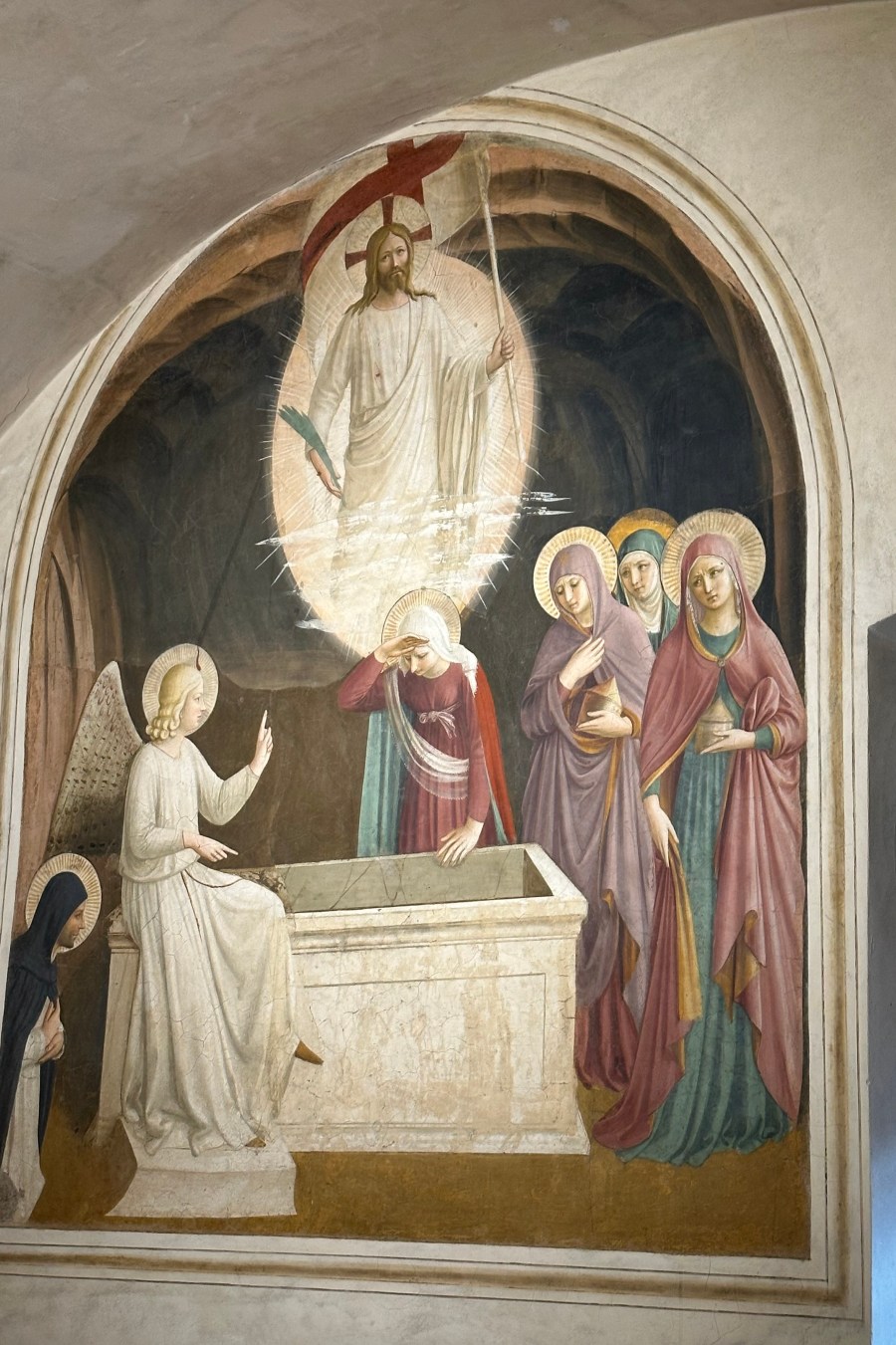
Image: A fresco of the women encountering the angel at the tomb of Jesus, painted by Fra Angelico viewed in the Museo di San Marco in Florence, Italy.

Featured

Cultivating beauty

On March 24, for the Third Week of Lent, I read the following quote by Joan Chittister, in her Reflection Resource, Cry Justice, Cry Hope, and I began implementing the practice of being, or at least attempting, to be more aware of beauty around me, with a strong desire to cultivate it more within me.

The purpose of life is to cultivate the sacred in ourselves so that we can come to know God before we see God. Goethe puts it this way: “A person should hear a little music, read a little poetry, and see a fine picture every day in order that worldly cares may not obliterate the sense of the beautiful that God has implanted in the human soul. ” This week, follow Goethe’s advice. Every day this week, list one way that you tried to “cultivate beauty in the human soul. ” In your own life … in your neighborhood … in the world.

––from Cry Justice, Cry Hope by Joan Chittister

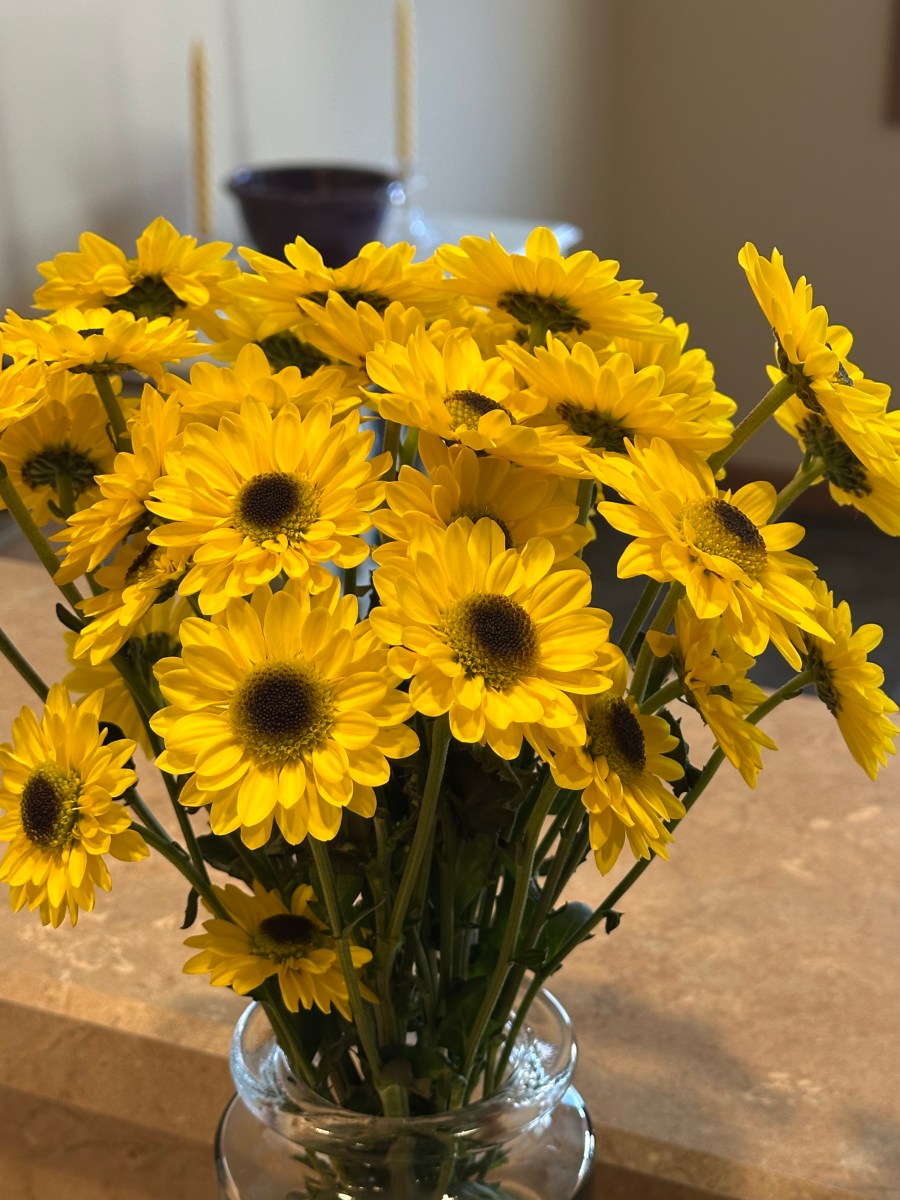
I think that is why I love having a garden, keeping fresh flowers on my kitchen counter each week, like the daisies in my blog photo, or creating little vignettes of objects in my home. Looking at something beautiful uplifts and inspires me. It does as Sr. Joan suggests, help me see God in the world around me. After reading Sr. Joan’s quote, I want to raise my awareness of the beauty I see around me in the world. I want to make a conscious effort of cultivating beauty in my life so that I might create more beauty in the world. It’s going to be a work in progress for sure!

This weekend I was blessed to be a participant, virtually, in a retreat being given by my friend, author Judith Valente for the Associates of the Sisters of Charity of Nazareth in Kentucky. The presentations by Judith and by Brother Paul Quenon, her friend, co-author of books and a Trappist monk at the Abbey of Gethsemani, were wonderful but perhaps my favorite was Judith’s talk on Saturday evening, “What can we learn from Italians this Lent about living more mindfully”. So many of the practices, la dolce vita (living the sweet life), that Judith discussed are practices I grew up with or still make part of my life. Sunday meals at my Italian grandmother’s home while growing up, the art of sitting and engaging in conversation over coffee, as well as visiting our family cemetery plots to clean up and remember our beloved deceased.

My return to Italy in the Fall of 2023 rekindled a passion for living and savoring the good life. My friend Kelly’s visit to Italy this past week, and pictures she shared of a family dinner gathering, reminded me of the graces of sitting down together for aperitivo, good food, wine and conversation. I tend to rush through dinner, if I even make it, instead of savoring the slowing down of the day before the quiet time of evening.

As a note, you will be able to read more of Judith’s reflections on life in Italy in her new book, The Italian Soul: How to Savor the Full Joys of Life, which will be released on May 5. (Click on the link to preorder it.) Judith’s book will help us learn to look more deeply for beauty in life and experience the grace of the present moment, the life we are living. It is not only an Italian way of life, but a spiritual lifestyle. It is the same awareness that Goethe and Sr. Joan Chittister are encouraging us to have.

So this week, I invite you to look for and instill more beauty in your life, just as Sr. Joan and Judith have excited in me a desire to look for more awe-inspiring moments in the everyday. Look for, and pause to savor, these moments when you encounter them. Create them in your daily living and the way you express yourself in the world, with your family and in your home.

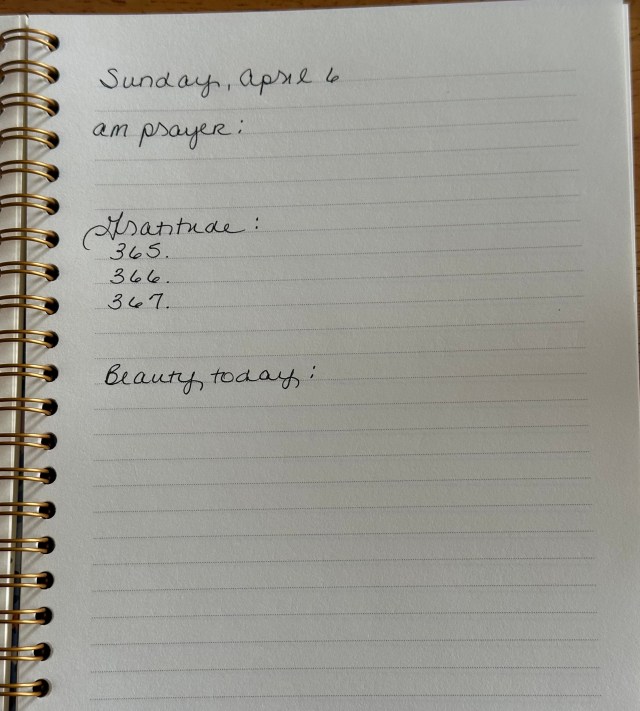
In a previous blog post I mentioned a new practice of keeping an ongoing list of my daily gratitude, tracking the sequential numbers versus jotting down three new entries each day. To this practice I have added an area to reflect on beauty that crossed my path each day. Besides my daily spiritual and creative reflections, I write in my daily Examen journal the consolations or graces and desolations each day. Before those movements of the Spirit, I note my reflections of gratitude and beauty. I have included a sample of today’s page, in this blog post, before writing in it later today. Try it and let me know what you think.

Wishing you abundant peace and this week, la dolce vita! Deena

My daily Examen journal image:

Featured

A story to tell

You’ve probably heard or used the phrase, “what’s their story”, when someone is inquiring about another person. It suggests that the person in question has a backstory or anthropology that will help us understand them more deeply. This week was a wonderful lesson in being open to learning more about others and being open to what might be going on behind the scenes of the exterior I am seeing. I have two examples that touched me and a captivating discussion I would like to share. They have radically changed my outlook and I hope you find them helpful as well.

This week in spiritual direction I was sharing my need to grow in compassion and patience with others, especially when out driving and doing errands. I try to be courteous and mindful of others but darn, there are days I feel like I am the only one. I am working on stopping a negative or condemnatory response before it explodes in my mind. My director shared a video, made by Cleveland Clinic, that she has used when working with others. It is helpful when trying to be more compassionate and understanding about what might be going on in another person’s life. Wow! Tears flowed. The video, Empathy: The Human Connection to Patient Care, was made in a hospital setting sharing thoughts of various individuals working at or experiencing treatment at a hospital. It’s only slightly over 4 minutes. I highly recommend it!

After watching that video, I am trying to look at others differently, with more openness. As I walked around a grocery store yesterday, I felt the desire to be more tenderhearted. Later in the day I found an interesting new page to follow on Instagram (but also on Facebook), a_mug_of_life. A young filmmaker in England began posting his encounters with others by offering them a cup of tea and asking them to share their story and letting them know he was going to film their discussion. He only has 8 posts so far this year and every single person captivated me. Ordinary looking people with amazing stories of courage, perseverance, love and tenderness. Stories that I wouldn’t know if Will hadn’t offered them a cup to tea and asked them a few simple questions about their life. I look forward to new videos! I was grateful for the timely reminder, after watching the Cleveland Clinic video, of the stories that people are walking around with.

Earlier in the week I watched an interview of Padraig O Tuama, a poet, theologian and conflict mediator that I read and follow. The interview was done by, author and podcaster, Kate Bowler. If Kate sounds familiar, I’ve shared her writing in the past, but last week shared parts of her interview with retired Duke basketball coach, “Coach K”, regarding leadership. I like Kate but I was very curious because this wasn’t an interview pairing I would ever have imagined. Padraig was brilliant as usual, especially talking about his experience with conflicts in Ireland and his perspective on ways to see political conflict differently. He shared some precious examples of leading retreats with children and allowing them space to encounter Jesus in their imaginations, highlighting in a different way, what can happen when we nurture openness and creative thinking. Finally he shared how he approaches groups when doing conflict mediation, using the Johari Window concept of the fourth quadrant, what is unknown to the self and unknown to others. He explained that it is useful to begin by saying, I don’t know why any of those gathered are there and that, initially, what holds the group together is just the physical space of being there. He said it is fruitful to begin with an openness and willingness to nurture that space without expectations. It might allow for the imagination and curiosity to occur. Kate acknowledged that this might be helpful when we are afraid that division will “take us all apart”. Padraig replied, “Division is everywhere, the question is what we do with it.” His perspective was refreshing.

I might not be able to impact a lot of people by implementing these simple things I was reminded of this week. But I certainly can try to be more open and curious when listening to others and a little more compassionate about what others might have going on in their lives when I encounter them. I dare to say that this perspective would do us all a bit of good.

I’d love to hear from you if you have the opportunity to watch the videos or visit Will’s social media page.

Wishing you abundant peace this week, Deena

Photo: A piazza in Assisi where I enjoyed an expresso during my 2023 pilgrimage.

Tilling the soil

It’s March Madness time. I don’t really follow NCAA basketball all season but I love watching during tournament time. Anything can happen. Players rise above challenges they may have been having all year, determination and drive kick in. I’m looking forward to seeing if some of my favorite teams advance in each round. I have a variety of reasons that teams are favorites, not always because of the team or it’s location but rather the character of school and leadership, like Loyola University’s team chaplain Sr. Jean Schmidt. Another favorite has always been Duke University, because of the legendary coaching style of “Coach K”, Mike Krzyzewski. Coach K coached Duke basketball for 42 seasons, having the most winning seasons in college basketball, and was also a six-time gold medalist head coach of the US Olympic Men’s Basketball Team. Coach K is no longer the coach at Duke, but his influence remains.

I recently watched an interview of Coach K by Kate Bowler, an author that I have quoted here before, and associate professor at Duke Divinity School. The interview, available on YouTube, was called “Love in Winning, Love in Losing”. Kate began the interview by stating that one of Coach K’s qualities is bringing out the greatness in others, and asked if it is hard, because many of us don’t look inside and see that level of greatness. Coach K responded that, as a coach, the team leaders looked for individuals that were talented with character, talented individuals who were willing to do the work to improve, and not talented characters, who see themselves as better than they are. Throughout the interview, he shared examples of believing in his players, asking them to step up, being honest and building trust within the team, being willing to hear the good things when things are going well, but also to receive honest feedback and work through the tough times. He shared his four A’s of Leadership; Agility, Adaptability, Accountability, and Attitude. They are great characteristics in life as well! He also spoke of his parents and their mentorship in his life. He said “if they didn’t till the ground, till the soil the right way”, his decision to go to West Point, and the influence of others, all as aspects that led him to be who he is, develop his leadership style and allow him to accomplish what he has. It’s an outstanding interview, I would highly recommend watching it.

In today’s Gospel, Luke 13: 1-9, there is a story of a fig tree that isn’t producing fruit. The owner instructs the gardener to cut it down. The gardener responds that he will cultivate and fertilize the soil and requests another year to see if the fruit will produce fruit. This morning I read a reflection by a monk at Conception Abbey that explained the fig tree as an ancient symbol of fruitfulness in the Bible and provided several scripture passages as examples. Br. Michael goes on to say that the Gardener is the Lord who loves each of us, lavishes mercy on us and continues to prune and fertilize our lives so that we can grow in love and continue to make a return to the Lord with our hearts and lives.

Spend some time this week reflecting on the teachers in your life? Who believed in you when you didn’t see your own capability and worthiness? What is the fig tree in your life that is dormant and needs some attention and nourishment? Lent is the perfect time to till the soil so that we bring forth new life at Easter and beyond.

Wishing you abundant peace, Deena

By the way, there is an adorable three minute video of Kate preparing for her interview with Coach K. Check it out here.

Photo: Taken during a prior year early Spring visit to Hornabaker’s Gardens in Princeton, IL.

Keep careful watch

A week ago I saw a beautiful painting of Bishop Mariann Budde, shared by Fr. James Martin SJ, painted by Fr. William Hart McNichols. The post shared how Fr. McNichols came to know of Bishop Budde and then his reason for painting the image after the January Prayer Breakfast. It’s entitled “Holy Living Prophet Bishop Mariann” and it is lovely! If you follow Fr. Martin on social media you can see it there or visit Fr. McNichols’ website to view this painting and his other artwork. My reason for mentioning it was the first comment that appeared as I read the post by Fr. Martin. Besides spending much less time on social media since January, I have been staying away from the comment section on any post. But sometimes Facebook decides that I need to see it below the post. Even the most mundane posts seem to give someone an audience to be rude and disrespectful. The comment said “surely Fr. you recognize she is not a valid Bishop” and that she and her congregation are not in communion with the “true church”. Wow. I’ve been trying to give the gentleman the benefit of the doubt regarding his comment, viewing religion from the perspective of his (I assume) Roman Catholic affiliation. But it actually got me thinking about how we view things in life.

If I only knew seasons from a life lived in the Southeast or the West coast, I would never know the ever changing, mostly beautiful and somewhat fickle, seasons of the Midwest. If I grew up in a Latino household, I would have experienced delicious food made with spicy chili peppers, but perhaps would never have experienced the aroma of pasta with herbs, olive oil and freshly grated cheese. My experience wouldn’t be wrong, it would just be shaped by my familiarity with the seasons or food I have been exposed to. It should not diminish the experience someone else has had.

Stick with me on this. I am by no means saying because I am not aware of (or choose not to be aware of) a different opinion that makes my view acceptable. I am also not saying “if it feels right to you” then it’s ok. Choices and decisions are so much more complex than that. But I am saying that just because I see something from my world view, then it does not mean that everything and everybody else is wrong. Making an assumption like that might take research, discernment or guidance from someone who knows and understands the differences better than I do.

This past week, the first reading at daily Mass, or as you read them at home, was from the book of Sirach. This book of Wisdom advises us where to place our faith and hope, what things in life really matter and how we can trust in God, even during times of difficulty. The first reading for this weekend, Eighth Sunday in Ordinary Time, was also from Sirach, and will be on Monday and Tuesday until we enter the season of Lent. The reading from Sirach 27: 4-7 grabbed my attention and has not let go.

“When a sieve is shaken, the husks appear; so do one’s faults when one speaks. As the test of what the potter molds is in the furnace, so in tribulation is the test of the just. The fruit of a tree shows the care it has had; so too does one’s speech disclose the bent of one’s mind. Praise no one before he speaks, for it is then that people are tested.”

Besides feeling the political embarrassment of the behavior in the White House on Friday, I have had a couple of other occasions this week that allowed me to watch others in a personal and broader landscape. Cliches like these seem true; “only time will tell”, “time reveals a persons true colors” or as in the gospel for today, “every tree is known by its own fruit.” (Luke 6: 39-45). There’s no room for judgement, at least by me, but watching and waiting to see an outcome or behavior can be helpful. It takes patience and it takes a decision on how to act or respond as it unfolds.

As I prepare for Lent this week and consider what I will do, or in some cases “give up”, I turn to the Rule of St. Benedict again this year. There is so much wisdom in The Rule for me, as a Benedictine Oblate, as I look at the areas of my life that need refinement, molding and reformation. The chapters on The Tools for Good Works and Humility are my favorite each year. I could try to live each Lent with the goal of practicing “your way of acting should be different from the world’s way” or “keep careful watch over all you do” and be challenged enough during these next 40 days. Then there is always the call to make more time for “holy reading” and prayer, which has been easier now not watching the news or TV. But I can do more! Lastly, Benedict’s guidance on moderation in speech, esteem for silence and listening remind me that I desire to make sure that the speech I use and the conversations I engage in reflect the desires of my heart. Will I fail? Absolutely. But giving more attention to my internal and external dialogue might bring about the more lasting change after Lent that I desire.

I invite you, if you are considering participating in Lenten observances of fasting, prayer and almsgiving, to reflect on the words I shared above from Sirach. Pick up a Bible and read segments of the book to reflect on for Lent and see what the Spirit might be calling you to consider this Lent. You might also consider joining me for my Lenten Night of Reflection on March 20 at 6:30 p.m. CT. I will have more information in the next week but have repeated my previous update below.

Wishing you abundant peace and a grace-filled and holy Lent, Deena

Reminder: A Lent Night of Reflection entitled “Make My Heart Like Your Heart: Encounter and Change of Heart” will be held on Thursday, March 20 from 6:30 – 8:30 p.m. Central Time. The suggested donation for the event is $19. I continue to think about the best registration process for this first offering but it might be as simple as a PayPal or Venmo payment. During the event we will reflect on the things in the world that consume our heart and attention, our need and desire to give and receive forgiveness, and ways that we can pour out our love to God in a personal and sincere way. I am excited to offer this and I hope you will be able to join me. Thank you to those who have let me know you are interested! For now, you can email me, private message me if you are interested.

Blog image: A scenic window view in Santarem, Portugal

Retreat Image: