Featured

The story of our families

I have been reflecting this morning on the journey of my grandparents from Italy to Ellis Island, then on to Illinois. My grandmother was born, on this day, December 28, in 1898. She met my grandfather during the war. He traveled here first to get a job and then my grandmother came after. They had three children here. My grandmother lived, caring for her young children after my grandfather’s death, by first working in a factory and then in later years sewing for others. My other grandparents lived in the area as well, after migrating from Slovakia. My great-grandfather died in the Cherry Mine Disaster in 1909, when my grandfather was a young boy. The family name was changed for ease of describing who people were and where they came from while they worked, so the last name on one of the few tombstones in the Cherry Cemetery represents the area in Slovakia that he came from and then the name that became our family name here in the United States.

During the holidays I also recalled so many wonderful family occasions with aunts and uncles that are no longer with us. All families with struggles and accomplishments, just like any other family. My mother and father worked hard, in a variety of occupations, to provide for us. We moved from Illinois to upstate New York then back to Illinois again as my father followed his career and then desire to open his own business. My mom, a nurse, ceased her career to work alongside my father for over 25 years.

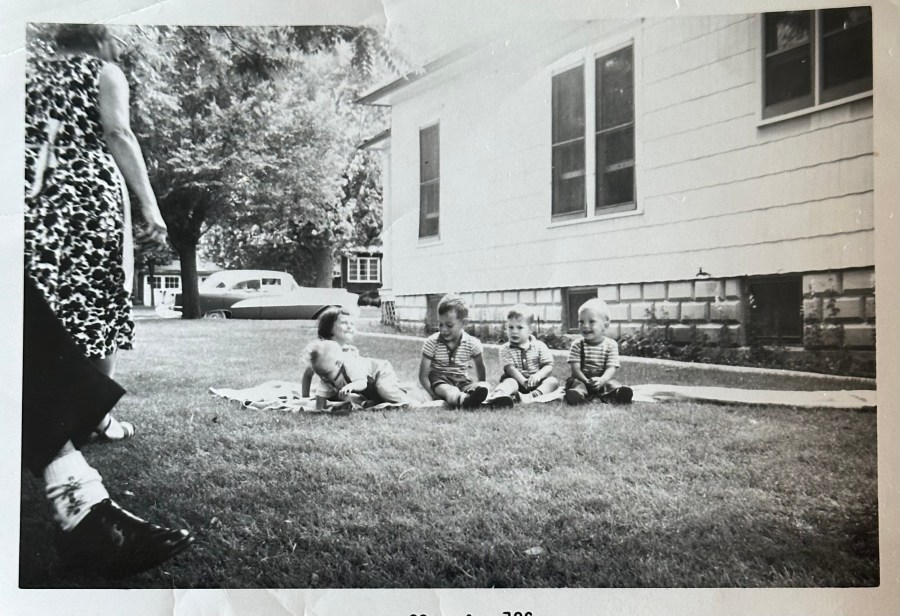
I am sure you have similar stories and history. Parents trying to provide for and do the best that they can for their children. Perfect? No, not by any means. But the family that we are one with and come from, the families that make us who we are, for better, or motivated to change. If you don’t know, or haven’t shared your family story, make a point to do so. There are so many details that I wish I had now, but they are gone with the memories of those who held them. But I am grateful for countless images captured in photos, like the one I share today, before we stored everything on our phones.

Today we celebrate the Feast of Holy Family, a young family also journeying in life, with Joseph doing his best to care for his little family. December 28 also recalls the death of the Holy Innocents, the young boys massacred because of a cruel and jealous king who couldn’t stand the thought of someone having more authority than him. The message that Joseph received, to flee to Egypt, saved Jesus from this horrible persecution.

Today, Pope Leo XIV reminded us that the world “has its ‘Herods,’ its myths of success at any cost, of unscrupulous power, of empty and superficial well-being, and it often pays the price in the form of loneliness, despair, divisions and conflicts.” He asked us to pray for all families suffering due to war and violent conflicts. We can pause and pray for all those families who, like our own families, are trying to find a better place in the world to live and flourish.

So today, reflect on the family that helped form you into the person you are today. Tell stories and share memories, so that they are passed on. If you are lucky enough to have them, spend time with old photos and recall family celebrations and gatherings.

Then as Pope Francis wished in his 2020 encyclical, Fratelli Tutti, “Let us dream, then, as a single human family, as fellow travelers sharing the same flesh, as children of the same earth which is our common home, each of us bringing the richness of his or her beliefs and convictions, each of us with his or her own voice, brothers and sisters all.” (No. 8).

Wishing you abundant joy and peace with the family memories that you hold, Deena

Featured

Christmas Peace

On this blessed morning I wish you peace. This morning in his Urbi et Orbi Christmas address and blessing, Pope Leo XIV spoke of peace bringing to our minds and prayers so many places in our world in need of peace. But giving us hope, Pope Leo reminds us that Christ is peace because he shows us the way to overcome all conflicts proclaiming that “today, true peace has come down to us from heaven.” “The Lord’s birth is the birth of peace.”

Let it be so in our world and in our hearts.

I wish you abundant peace and hope on this holy morning, Deena

Featured

A whispering threshold

I visited the cemetery before Vigil Mass for All Souls Day yesterday (Saturday) afternoon to put small votive candles (as seen in today’s blog photo, I gave up on trying to keep real candles lit in the wind) on our family tombstones, a tradition on the evening of All Saints Day to light the path for souls and a symbol of love and remembrance. A few years ago there used to be groups praying as they visited each gravesite and many more candles. I only see a few now.

I love the tradition of Dia de los Muertos, Day of the Dead, altars with the many marigolds, pictures, food items and symbols decorating the ofrendas, altars, set up between October 27th and taken down shortly after All Souls Day. You can find many beautiful and elaborate pictures online if it is not celebrated in your area. At my parish, we have a lovely tradition of remembering our beloved dead with candles, many of us provide pictures to be placed by the candles, which will burn all month surrounding the altar. I love to reflect on the candles as all the souls that worship at the altar each Mass with us, Saints and saints, that join in our praise. I will add a photo of the candles this year, below, to the online version of this blog post.

There have been times during the year, or after the passing of someone dear, that I have experienced the thin veil between heaven and earth, the mist of time, more easily. Perhaps that is why I relish these days of All Hallows Eve, All Saints and All Souls so much. We can pause and reflect that it is literally a breath that binds us in our bodies and a more tangible realm. We take so many breaths each day for granted. If you have been with someone as they have breathed their last breath, you know how fragile and temporary life is.

This week, during my Wednesday Adoration time, Fr. Carlson played an organ piece, from the many he has downloaded and saved, that I hadn’t heard before. It was lovely, then dissonant like someone that might have hit the wrong note but it continued. It was jarring and unpleasant at times but then also hauntingly beautiful. I asked him about it afterwards but missed the name except that it was a Babylon meditation (if I get the full title this week, I will footnote it below). We reflected that it seemed a fitting reflection on the exile of Jews from Jerusalem to Babylonia. I later reflected on this symbolically for life. We are exiled, temporarily, from our true home, in Heaven. Life is full of those discordant moments, unsettling and disagreeable, in the middle of beautiful, soothing and joyful times. The next night I had a dream, full of symbolism about my life’s journey. I paused in the morning, journaled about it, not wanting to forget the details that I can reflect on and how they might be inspiration for areas of my life that need transformation. I viewed it as a thin, whispering insight between my conscious and subconscious being.

One of my favorite books, it is likely that I have written about it in the past, is Braving the Thin Places by Julianne Stanz. Early in the book she asks us to pause and take a deep breath, reminding us that “Our spirit did not generate itself; neither did we create it. It comes from a Divine Being who has breathed life into you and me, into all of us.” Stanz writes about her Irish heritage, Celtic wisdom and the beauty and symbolism of the “thin spaces and places” in Ireland. “Out of sight…does not mean out of soul.” The souls of those we love walk with us each day and remain close to us.

The Church asks us to pray for all those who have died, especially those who have no one to pray for them, this month of November. A lovely practice is to visit a cemetery and just pray the “Eternal rest grant unto them, O Lord…” Often as I am driving between the tombstones of my grandparents and my parents I recite that prayer over all the tombstones at the cemetery. In the older section there may no longer be family members to pray for them. Whether you are close to the burial places of your loved ones or not, or others you have known in life, take some time during this month of November to remember them and pray in a special way for their souls. They have gone before us with the sign of faith, and have fallen asleep in the hope of the resurrection (Eucharistic Prayer in the Roman Canon). We shall join them some day.

“…do not let our brothers and sisters be parted from you, but by your glorious power give them light, joy and peace in heaven where you live and reign forever…Eternal rest grant unto them, O Lord, and let perpetual light shine upon them. May they rest in peace. Amen” (Give Us This Day post for All Souls Day)

Wishing you abundant hope and peace, in the company of all the Saints, this month. Deena

Candles for our beloved dead at Holy Family Parish, Oglesby.

Featured

Toolkit for your spirit

Friday evening I was listening to a YouTube recording of a conference talk by Monsignor James Shea of Bismarck, North Dakota. He began his talk sharing an experience he had during a flight delay, hotel layover and then subsequent flight back to North Dakota. To sum up his (humorous) introduction, he was having a bad day! He was honest about his attitude during the various events as they unfolded. While very funny, and a great introduction to the theme of his talk, I have to admit being very surprised. I had this ridiculous notion of this very intelligent and pious man living a life without the many reactions he voiced. The kinds of reactions I experience daily. I was surprised, but also relieved.

We all have those days, or perhaps weeks, when things just aren’t going the way we hoped they would or we find ourselves facing feelings we would rather ignore and stuff down, and away, out of sight and mind. But I am wise enough to know that, in the long run, that isn’t the right approach! We have to walk through those days and, leaning on support when needed, and look at the source of the feelings so that we can move through and beyond them.

Sometimes the light shines through and creates an opening when least expected.

I was reminded of this on Saturday morning by reading “Midmorning Blessing Prayer”, one of my favorites, by Sr. Macrina Wiederkehr (dec’d 2020) from her book, Seven Sacred Pauses. I can’t describe what happened except to say that the clouds parted and hope streamed in.

What is a blessing but a rain of grace falling generously into the lives of those in need; and who among us is without need?

Sr. Macrina’s writing has always been that glimmer of hope for me. Why did I forget picking up a favorite book of poems or blessing prayers, these past two weeks? Why didn’t I turn to the things that bring light to dark places? I reflected on those questions and realized I had a couple of answers.

First, in moments of desolation, it’s hard to remember to get up and seek a healing remedy. We don’t have the energy to seek out the very thing that might help us. St. Ignatius of Loyola would call “desolation” those times when we are feeling restless and in a state of dis-ease, when we feel hopeless or discouraged, when we might even sense that God feels far away.

I have been reminded this week, reading Experience Jesus, Really by John Eldredge and his premise that as “Disciples of the Internet” we expect immediate answers. We can Google and find out a solution to anything that might be going on in our lives. It might be true, I can find a supplement or exercise routine to feel better, but what is more likely is that I will participate in endless scrolling to distract myself. We’re “told” that prayer and mystery aren’t necessary (or desired). We also don’t see, or realize, that there is a darkness and evil at work that we need to protect ourselves from. We might not be comfortable calling that darkness “the devil” or a demon. “False spirit” or “enemy” might be easier words to use and grasp. Whatever we call it, it is a real force in the world. It’s a force we need to protect ourselves from. For another blog, but so I don’t leave you wondering, John’s book offers insight on prayer, provides several specific prayers, and suggests that the practice of being an “ordinary mystic” can bring us closer to Jesus and the refuge he offers us in a broken world.

I also reflected back to the three years, and the Ignatian wisdom I learned, while working at Ignatian Ministries. Becky’s (the founder) class series Going Past the Shallows, (GPTS) on the Ignatian Rules of Discernment, gave me a lot of insight on desolation and the false spirit, how to recognize and deal with times of desolation, and the concept of Agere Contra, meaning to fight against. (A new version of the first in the GPTS series, Ignatian Prayer Methods, is being offered this Fall.)

My pondering of my “stuckness” and desolation of the past two weeks reminded me that I need to have some things at the ready during times like this, a Toolkit so to speak, that I can turn to. All of the things I will mention were right here, alongside me, but I didn’t think to turn to them. Perhaps a list would have helped. Imagine having a list in preparation for a vacation, or young expectant parents anticipating the sudden trip to the hospital, the list makes sure we don’t forget the essential things we need to have with us.

  • Reading Sr. Macrina’s, or a variety of other authors that inspire and lift me up, with a cup of tea in a quiet spot.
  • Turning to a special prayer, like the St. Michael the Archangel prayer, or Litany to the Sacred Heart of Jesus, the Divine Mercy Chaplet or a favorite mystery of the Rosary.
  • Contemplating a prayer card, a favorite image of Jesus, Mary or the saints.
  • Knowing who we can turn to, a trusted friend or spiritual guide to walk with during the difficult times.
  • Setting aside times of prayer for daily Mass or Adoration of the Blessed Sacrament.
  • Using a journal for writing, drawing or expressing yourself in some way.

What would be on your list? What do you turn to in times of need? How might they help you and how might you turn to them more quickly in the future when feeling the world weighing heavy upon you?

Wishing you abundant peace and hope, Deena

Image: My photo in the prayer chapel of Benet House, the retreat house at St Mary’s Monastery in Rock Island, where I am a Benedictine Oblate.

Featured

Behold a great light

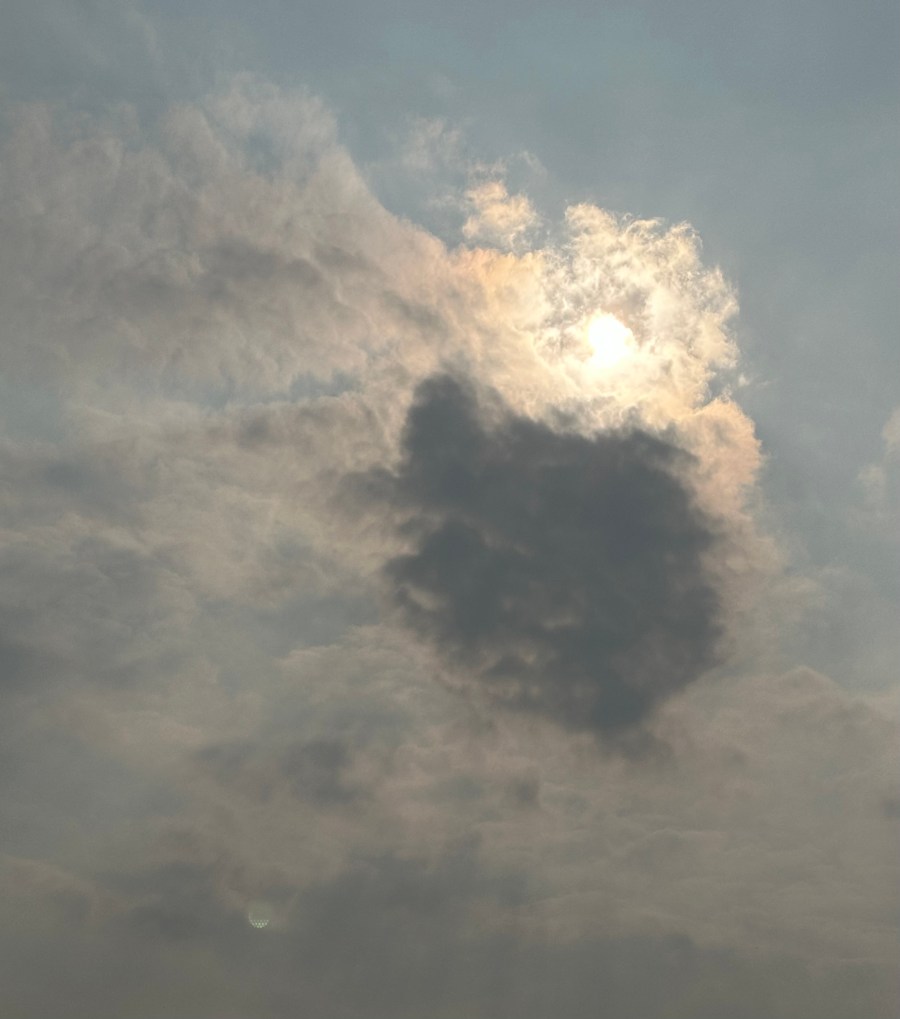
Earlier this week our skies were filled with haze from the Canadian wildfires. On Thursday the air quality index in Chicago (an hour and a half from my home) was 174, the worst of any major city in the world. Even in our area, Alexa reminded me of the poor air quality, and at times, I could smell the smoke. As I was driving later that afternoon I captured the image for today’s blog (I parked of course!). It reminded me of a time, living in Royal Oak Michigan, that I was contemplating the light within each of us, an ever-present flame that burns and is alive, no matter what is going on in life. I will never forget it, one of those special epiphany moments walking, seeing the clouds part within, and sensing a presence of light and joy.

It’s hard, at times, to see that light if one is even a little aware of the news and the great tragedies in the world of war, hunger and suffering, greed and a focus on power above justice and truth. But I have been uplifted by the scenes from Rome and the Jubilee of Youth. An estimated million youth have been attending the Jubilee at Tor Vergata. Even Pope Leo XIV seems invigorated by the crowds of young people. Circus Maximus, an ancient Roman arena was transformed for the youth to make their confessions at 200 confession stations with priests speaking English, Italian, Spanish, French, Portuguese, Polish, German, Hungarian, Slovak, Korean, and Chinese. Thousands of pilgrims were able to receive the Sacrament of Reconciliation in this place known for chariot races, gladiator fights and wild animal cruelty.

Pope Leo XIV reminded the youth of a truth we all seek, a burning question in each of our hearts, for truth and justice. He asked the pilgrims, and each of us, to reflect on our way of living in order to build a more humane world. In today’s homily, reflecting on the scriptures from Ecclesiastes and Luke’s Gospel, Pope Leo encouraged the youth to listen to Jesus knocking at the window of our souls and look beyond the world and nature that is fleeting and passes away. “‘This is why,” he said, “we continually aspire to something ‘more’ that no created reality can give us; we feel a deep and burning thirst that no drink in this world can satisfy.'” He challenged us to not let our hearts be deceived by the things of this world but rather “fullness has to do with what we joyfully welcome and share.  “Buying, hoarding and consuming are not enough.  We need to lift our eyes, to look upwards, to the ‘things that are above…'”

I remain hopeful, even this week with disappointing encounters or heavy news to try to grapple with. I begin a new week with a desire to focus on the things that really matter and things that I can control. Just this Sunday morning, artist Kreg Yingst of PsalmPrayers (his amazing work in on Facebook, Instagram and Etsy) responded to a comment I made on a new series he will be sharing with us by saying “it’s a drop in the ocean, but it’s my drop. I come to Christ in ‘my anger and powerlessness.'” Each of our individual drops make a difference, we each have the ability to have a positive impact and cast a ripple that might spread love and hope to those around us. Let that be our goal this week!

Isaiah 9: The people who walked in darkness have seen a great light; Upon those who lived in a land of gloom a light has shone.

Wishing you abundant peace and hope, Deena

Image: my photo of the hazy skies this week in Illinois.

Featured

Clearing the weeds

I purchased two new plants to add to my flower beds, so yesterday, in spite of the intense heat, I grabbed the plants, and some garden soil to supplement the area, and dug new holes for the plants. Despite the abundance of plants and cared for beds, there are always some weeds to pull. It’s not too bad if you stay on top of it, but if an area is ignored for a while, it can take some time to remove the unwanted growth. I cleared the spaces, dug holes, then added the gaura and poppy plants. I also decided to move my “Silly String” hosta (shown in my blog image this week) to a place with better light and replenished the soil for it, and around a heuchera, that has been slow to grow. I’m hoping the extra nourishment of the garden dirt will give it the support it needs.

Caring for these plants yesterday was a perfect analogy for my week. I reflected that we have to get rid of the weeds to give space for the desired plants to grow. The garden can be disturbed or strangled by the degradation of pesky plant growth. Sometimes it just needs some attention and nourishment.

By Wednesday night of this week I realized that my own Garden was in a state of disrepair and rupture. But uprooting false ideas, and tending to wounds, can be a tender undertaking. It is, however, a necessary exercise if we want to move beyond a place we are in and approach a desired state of peace and wholeness. To use another analogy, one proposed by my friend Kate Brown in a program this week, we need to “clear the static” to tune in and be in a place of alignment.

After hours of crying and praying Wednesday evening into Thursday early morning, I turned to an anchor (a focal point) to help myself feel grounded and safe. I began to breathe more slowly, calm my mind and gently fall to sleep, trusting in the love and support of God. It was a difficult time, for sure, accentuated by some pain from a serious fall in the morning and, then later in the day, feeling dismissed, and undervalued, by someone. Without noticing and attending to the wounds when they occur, just like the weeds in my flower beds, they can overwhelm and choke the joy and life force from us.

On Saturday morning I found myself recalling the time I taught classes at the local community college, in some of which I shared the importance of relaxation and mindfulness techniques to reduce stress and anxiety. I then opened an email to a podcast on mindfulness and learned a new technique that I was not aware of. Author and mindfulness teacher, Julie Potiker, shared her concept and use of the SNAP technique she developed. SNAP is an acronym, and has a somatic component, like the snap of our fingers, which can help us manage difficult emotions and move through situations with more ease and peace. The S in SNAP stands for Soothing Touch. It might be placing your hand on your heart to get in touch with your emotions in the moment. N stands for Name the emotion. To stop and consider what we are feeling in the moment, not judge or dismiss it, can be powerful. As Julie said, “you name it to tame it”. A stands for Act, we choose whatever we have in our mindfulness toolbox to help us move beyond the place we are in and “change the channel”. It might be deep breathing, listening to soothing music or a teacher that inspires us, talking with a friend, going for a walk or simply picking up an item of meaning or significance to us. Lastly, P stands for Praise. She suggests that here we move into a state of gratitude for “yourself, your practice, the universe, or the deity of your choice.” As I moved through my own difficult emotions this week, I stopped to thank God for the healing work that is beginning, that the fog is lifting, so that I could see more clearly what lies ahead.

Yesterday after I was done with the planting and care for my plants, I was able to see the flower beds and know that I had helped provide an environment for growth for them. I also checked in on my own state of being and knew that I had begun the work of cultivating the soil for restoration and peace. It affirmed my decision (that I have been second guessing since registering last month) to attend to week long retreat on healing. It provided insight to the reasons I have been researching joy and what I hoped I would find there. I gained clarity on the work I want to do and ways that I might share it with others.

Our growth never ends, at least as long as we are on the journey in this life, and I am thankful for that. I hope that you feel the same and know that you are never alone on the journey!

Wishing you abundant hope and peace, Deena

Featured

Spirit that reveals

On June 11 of this month, Sojourners Magazine reflected on the life and teachings of American Christian scholar and theologian, Walter Brueggemann. Brueggemann, who passed away on June 5, was a great teacher, and an influential interpreter, of the Bible and especially, the Old Testament and biblical prophets. His most influential work, The Prophetic Imagination, challenged us to see the world as God sees it and overcome the limitations of our present reality. In 1985, he wrote, for Sojourner, “The Spirit works through us, among us, and even against us. The Spirit in these days would indeed work against our hopelessness to let us hope.” A poignant message for us given the state of the world.

This Sunday, June 15, is the Solemnity of the Holy Trinity. We often try to give images and roles to the Trinity in an attempt to understand the inexplicable relationship of God in three persons, Father, Son and Holy Spirit. Brueggemann once wrote that the purpose of doxology, an expression of praise or liturgical praise, is to defy reasoning that tries to explain what God in the Trinity is. We can’t, so perhaps it’s better to just sing!

This week I have been praying with an 8-Day Retreat on the Gifts of the Holy Spirit, presented by Our Lady of the Way Retreat Ministry. Day 6 focused on the Gift of Understanding. The prelude to the prayer states: “Understanding is one of the seven gifts of the Holy Spirit that enables believers to comprehend the truths of faith through both reason and divine revelation….With the gift of understanding, we can grasp divine mysteries of faith that surpass human reasoning.” That was a helpful reminder as I approached Trinity Sunday.

I can’t possibly grasp the concept of Trinity with my feeble human intellect. I can read, pray and contemplate the relationship between the “persons” of the Trinity but at some point I have to accept it on faith. I can also, reflecting on Bruegggemann’s statement above, hope to grow in understanding and allow the impact of the Trinity to reveal, guide and be at work in my life.

Give Us This Day published a reflection entitled “Sustained Attentiveness” by Brueggemann on Friday of this week, certainly planned far in advance of his passing. In it he wrote, talking about Jesus’ “radical interpretation” of the Torah, “finally he will say at the end of the chapter, “Be Perfect” – be whole – have integrity – be about one thing in your life. Be in sync with God. But such being in sync requires, as serious Jews have always known, swimming upstream against ordinary social practices.” Brueggemann went on to suggest we see the church as a body of coworkers who walk a different path in the world and that we live together “for the sake of the world that God loves!” He said we cannot “be the church by accident, but only with obedient intentionality.” In that Sojourner article, mentioned above, they quoted Brueggemann saying “the practice of prophetic imagination … requires energy, courage, and freedom, and the sense of being otherwise. And I have no doubt that we are now arriving at a moment when there is no more middle ground.”

As I pray for peace in our fractioned and turbulent world, and integrity within our policies and caring for the good of all those in society, I ask for the gift of understanding. I pray, also, to be transformed by the gifts of knowledge, fortitude, counsel and wisdom so that I may live in sync with God, radical in justice and mercy. Then, as St. Ignatius teaches, I will desire and choose only that which helps me attain the end for which I have been created.

Wishing you abundant gifts of the Spirit this week, Deena

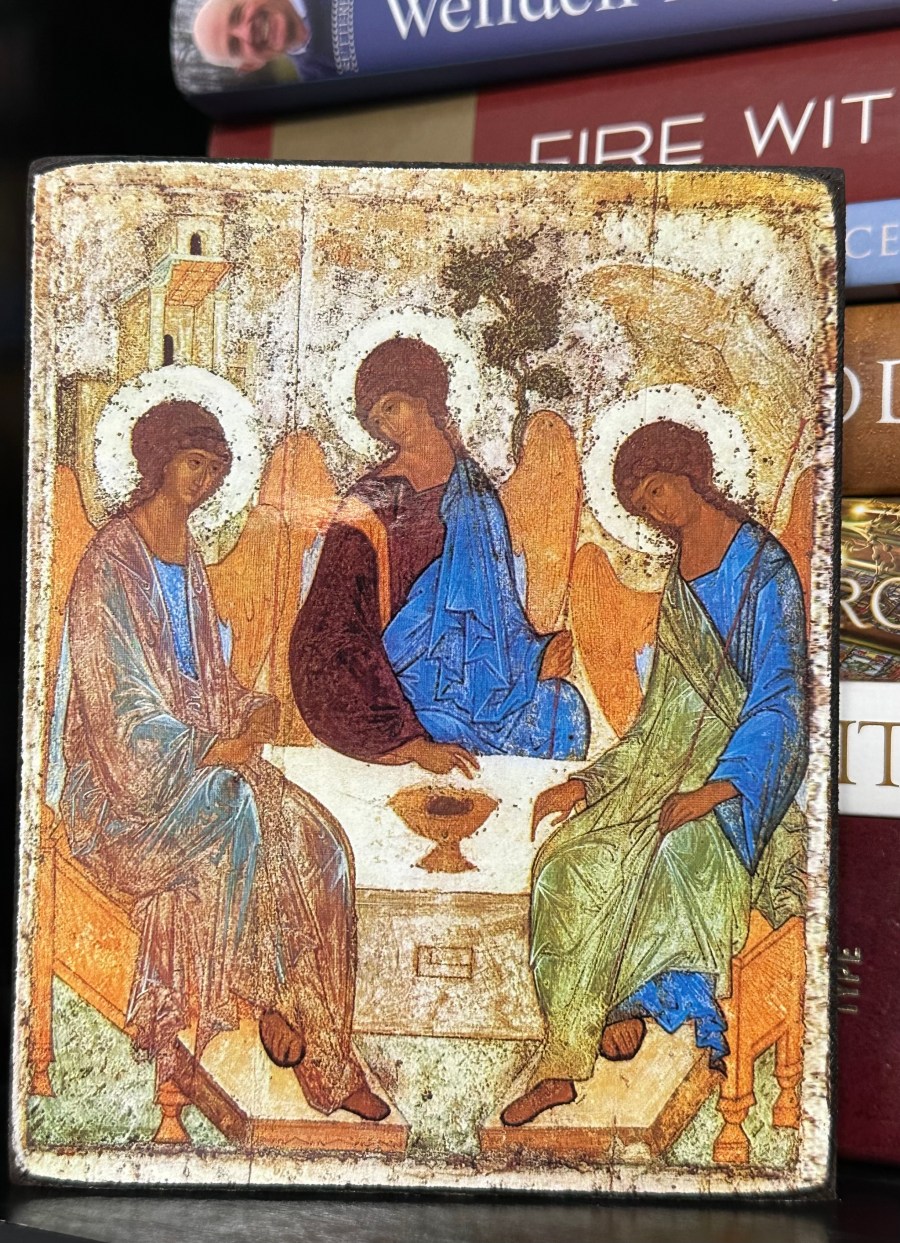
Image: my favorite icon of the Trinity, created in the 15th century by Russian iconographer, Andrei Rublev.

Featured

Cultivating beauty

On March 24, for the Third Week of Lent, I read the following quote by Joan Chittister, in her Reflection Resource, Cry Justice, Cry Hope, and I began implementing the practice of being, or at least attempting, to be more aware of beauty around me, with a strong desire to cultivate it more within me.

The purpose of life is to cultivate the sacred in ourselves so that we can come to know God before we see God. Goethe puts it this way: “A person should hear a little music, read a little poetry, and see a fine picture every day in order that worldly cares may not obliterate the sense of the beautiful that God has implanted in the human soul. ” This week, follow Goethe’s advice. Every day this week, list one way that you tried to “cultivate beauty in the human soul. ” In your own life … in your neighborhood … in the world.

––from Cry Justice, Cry Hope by Joan Chittister

I think that is why I love having a garden, keeping fresh flowers on my kitchen counter each week, like the daisies in my blog photo, or creating little vignettes of objects in my home. Looking at something beautiful uplifts and inspires me. It does as Sr. Joan suggests, help me see God in the world around me. After reading Sr. Joan’s quote, I want to raise my awareness of the beauty I see around me in the world. I want to make a conscious effort of cultivating beauty in my life so that I might create more beauty in the world. It’s going to be a work in progress for sure!

This weekend I was blessed to be a participant, virtually, in a retreat being given by my friend, author Judith Valente for the Associates of the Sisters of Charity of Nazareth in Kentucky. The presentations by Judith and by Brother Paul Quenon, her friend, co-author of books and a Trappist monk at the Abbey of Gethsemani, were wonderful but perhaps my favorite was Judith’s talk on Saturday evening, “What can we learn from Italians this Lent about living more mindfully”. So many of the practices, la dolce vita (living the sweet life), that Judith discussed are practices I grew up with or still make part of my life. Sunday meals at my Italian grandmother’s home while growing up, the art of sitting and engaging in conversation over coffee, as well as visiting our family cemetery plots to clean up and remember our beloved deceased.

My return to Italy in the Fall of 2023 rekindled a passion for living and savoring the good life. My friend Kelly’s visit to Italy this past week, and pictures she shared of a family dinner gathering, reminded me of the graces of sitting down together for aperitivo, good food, wine and conversation. I tend to rush through dinner, if I even make it, instead of savoring the slowing down of the day before the quiet time of evening.

As a note, you will be able to read more of Judith’s reflections on life in Italy in her new book, The Italian Soul: How to Savor the Full Joys of Life, which will be released on May 5. (Click on the link to preorder it.) Judith’s book will help us learn to look more deeply for beauty in life and experience the grace of the present moment, the life we are living. It is not only an Italian way of life, but a spiritual lifestyle. It is the same awareness that Goethe and Sr. Joan Chittister are encouraging us to have.

So this week, I invite you to look for and instill more beauty in your life, just as Sr. Joan and Judith have excited in me a desire to look for more awe-inspiring moments in the everyday. Look for, and pause to savor, these moments when you encounter them. Create them in your daily living and the way you express yourself in the world, with your family and in your home.

In a previous blog post I mentioned a new practice of keeping an ongoing list of my daily gratitude, tracking the sequential numbers versus jotting down three new entries each day. To this practice I have added an area to reflect on beauty that crossed my path each day. Besides my daily spiritual and creative reflections, I write in my daily Examen journal the consolations or graces and desolations each day. Before those movements of the Spirit, I note my reflections of gratitude and beauty. I have included a sample of today’s page, in this blog post, before writing in it later today. Try it and let me know what you think.

Wishing you abundant peace and this week, la dolce vita! Deena

My daily Examen journal image:

Featured

Tilling the soil

It’s March Madness time. I don’t really follow NCAA basketball all season but I love watching during tournament time. Anything can happen. Players rise above challenges they may have been having all year, determination and drive kick in. I’m looking forward to seeing if some of my favorite teams advance in each round. I have a variety of reasons that teams are favorites, not always because of the team or it’s location but rather the character of school and leadership, like Loyola University’s team chaplain Sr. Jean Schmidt. Another favorite has always been Duke University, because of the legendary coaching style of “Coach K”, Mike Krzyzewski. Coach K coached Duke basketball for 42 seasons, having the most winning seasons in college basketball, and was also a six-time gold medalist head coach of the US Olympic Men’s Basketball Team. Coach K is no longer the coach at Duke, but his influence remains.

I recently watched an interview of Coach K by Kate Bowler, an author that I have quoted here before, and associate professor at Duke Divinity School. The interview, available on YouTube, was called “Love in Winning, Love in Losing”. Kate began the interview by stating that one of Coach K’s qualities is bringing out the greatness in others, and asked if it is hard, because many of us don’t look inside and see that level of greatness. Coach K responded that, as a coach, the team leaders looked for individuals that were talented with character, talented individuals who were willing to do the work to improve, and not talented characters, who see themselves as better than they are. Throughout the interview, he shared examples of believing in his players, asking them to step up, being honest and building trust within the team, being willing to hear the good things when things are going well, but also to receive honest feedback and work through the tough times. He shared his four A’s of Leadership; Agility, Adaptability, Accountability, and Attitude. They are great characteristics in life as well! He also spoke of his parents and their mentorship in his life. He said “if they didn’t till the ground, till the soil the right way”, his decision to go to West Point, and the influence of others, all as aspects that led him to be who he is, develop his leadership style and allow him to accomplish what he has. It’s an outstanding interview, I would highly recommend watching it.

In today’s Gospel, Luke 13: 1-9, there is a story of a fig tree that isn’t producing fruit. The owner instructs the gardener to cut it down. The gardener responds that he will cultivate and fertilize the soil and requests another year to see if the fruit will produce fruit. This morning I read a reflection by a monk at Conception Abbey that explained the fig tree as an ancient symbol of fruitfulness in the Bible and provided several scripture passages as examples. Br. Michael goes on to say that the Gardener is the Lord who loves each of us, lavishes mercy on us and continues to prune and fertilize our lives so that we can grow in love and continue to make a return to the Lord with our hearts and lives.

Spend some time this week reflecting on the teachers in your life? Who believed in you when you didn’t see your own capability and worthiness? What is the fig tree in your life that is dormant and needs some attention and nourishment? Lent is the perfect time to till the soil so that we bring forth new life at Easter and beyond.

Wishing you abundant peace, Deena

By the way, there is an adorable three minute video of Kate preparing for her interview with Coach K. Check it out here.

Photo: Taken during a prior year early Spring visit to Hornabaker’s Gardens in Princeton, IL.

Featured

A revolutionary vision

Lately the range of emotions I experience each day feel as though I am riding a roller coaster. I might note, I am not a fan of roller coasters! I try to ignore the news and take deep breaths but it can be overwhelming. I stopped watching the news (preferring to read updates by well versed political historians and fact-finders) but still come across posts with quotes by our leaders, elected or not, that are filled with such hate, delusion and self supremacy that I feel like giving up completely. But I know it is not the time to give in or to be silent. I also know that the people and things of this world are not the things that really matter, they are not my ultimate purpose or goal. My stability and sanity come from trying to balance each day with things that bring some relief, some joy, some hope. Thankfully there are an abundance of uplifting and life-giving posts, essays, articles and events that help me counter the negativity and vitriol.

As my thoughts for writing this post jumbled around all week, I thought of sharing an experience I had a couple of weekends ago, attending a fireside poetry reading by Scottish poet Kenneth Steven, hosted by friend Pat Leyko Connelly, also a published poet. He read from his book, Atoms of Delight: Ten Pilgrimages in Nature. I won’t share more details of the event as my friend Judith Valente, does so eloquently this morning, in her blog, along with other thoughtful reflections on finding wonder during these turbulent times. But, a significant moment during the event came for me as Kenneth Steven read a story of one of the significant “atoms of delight” in his life, being the first to gather the freshly fallen chestnuts from a tree in the early dawn. I recalled one of my own “atoms”. I spent some of my grade school years living in a small town in the area of the Catskill Mountains in New York. In a wooded area behind our home there was a huge rock (likely only 5 feet but in my memory it was massive) and giant pine trees. We would venture in the freshly fallen snow, shake the tree branches on each other and play on and around the rock. It was my own personal energy portal. Nature was alive and filled me with joy and wonder, an “atom of delight”.

In a personal post on social media this weekend I shared an article entitled “A Spell Against Stagnation”, a reflection on the writings of John O’Donohue, another poet that lifts my heart and spirit, on a site called The Marginalian (link to website but you can find on Facebook). Founder Maria Popova shares articles with endless links and spirals of creativity and nourishment. Statements from Maria, like “Kneeling to look at a lichen is a devotional act”, remind me to stop and look for those moments of wonder. I appreciate the beauty and sensitivity of her artwork, bird divinations, from An Almanac of Birds: Divinations for Uncertain Days which you can find on her website or Facebook page (and soon available in a card deck as a pre-order on Amazon).

Another simple practice that I implement each day as part of morning and/or evening prayer is a gratitude or wonder list. In a blog or article by writer and retreat facilitator, Mary DeTurris Poust, I was intrigued by a different approach to my daily list. Mary shared that she numbers her three daily posts in an ongoing list, which was now in the thousands. I began mine at the time of the reading and as of this morning have reached 215. This list is part of my daily Examen (a practice of reflecting on the graces, consolations and desolations of each day) journal. It helps me look for those moments of wonder, those small “atoms of delight” in each day.

Today a homily written by Pope Francis, read by Cardinal Jose Tolentino de Mendoza, challenged artists [poets, writers, visual artists…] to be “witnesses of the revolutionary vision of the Beatitudes”. The Pope said that living the Beatitudes and expressing them in art [and I would add the expression of our lives] was a way to reveal “ truth and goodness …hidden within the folds of history”, and “giving voice to the voiceless”. “‘Artists have the task, the Pope said, of “helping humanity not to lose its way’”. (Vatican News, February 16, 2025)

If you seek solace these days I encourage you to read poetry, listen to music or reflect on art. Visit some of the writers or poets I mention today or find others that inspire you to look at life differently. If you write, continue to do so. If you draw, paint or create mixed media journals, keep going. If you have longed to pick up and learn to play a musical instrument, it’s not too late. Do it for you, not to change the world at large, but to change yours. Find joy and express it. It just might make each day a bit more lovely!

Wishing you abundant peace, Deena

Another note: I mentioned offering a Lent Night of Reflection a couple of weeks ago. I am still working on a webpage and more sophisticated registration process, but that all takes time. I decided to move forward anyway. The mini retreat will be “Make My Heart Like Your Heart: Encounter and Change of Heart” on Thursday, March 20 from 6:30 – 8:30 p.m. Central Time. The suggested donation for the event is $19. I will keep working on a registration process but it might be as simple as a PayPal or Venmo payment for my first event. During the event we will reflect on the things in the world that consume our heart and attention, our need and desire to give and receive forgiveness, and ways that we can pour out our love to God in a personal and sincere way. I am excited to offer this and I hope you will be able to join me. For now, you can email me, private message me or add a comment to this post on my website adding “Retreat” to the beginning of your comment and I won’t approve (or will hide) that comment to be shown on the website.

Photo: A print of Bernini’s “The Ecstacy of St. Teresa of Avila” that hangs in my office.