Featured

The story of our families

I have been reflecting this morning on the journey of my grandparents from Italy to Ellis Island, then on to Illinois. My grandmother was born, on this day, December 28, in 1898. She met my grandfather during the war. He traveled here first to get a job and then my grandmother came after. They had three children here. My grandmother lived, caring for her young children after my grandfather’s death, by first working in a factory and then in later years sewing for others. My other grandparents lived in the area as well, after migrating from Slovakia. My great-grandfather died in the Cherry Mine Disaster in 1909, when my grandfather was a young boy. The family name was changed for ease of describing who people were and where they came from while they worked, so the last name on one of the few tombstones in the Cherry Cemetery represents the area in Slovakia that he came from and then the name that became our family name here in the United States.

During the holidays I also recalled so many wonderful family occasions with aunts and uncles that are no longer with us. All families with struggles and accomplishments, just like any other family. My mother and father worked hard, in a variety of occupations, to provide for us. We moved from Illinois to upstate New York then back to Illinois again as my father followed his career and then desire to open his own business. My mom, a nurse, ceased her career to work alongside my father for over 25 years.

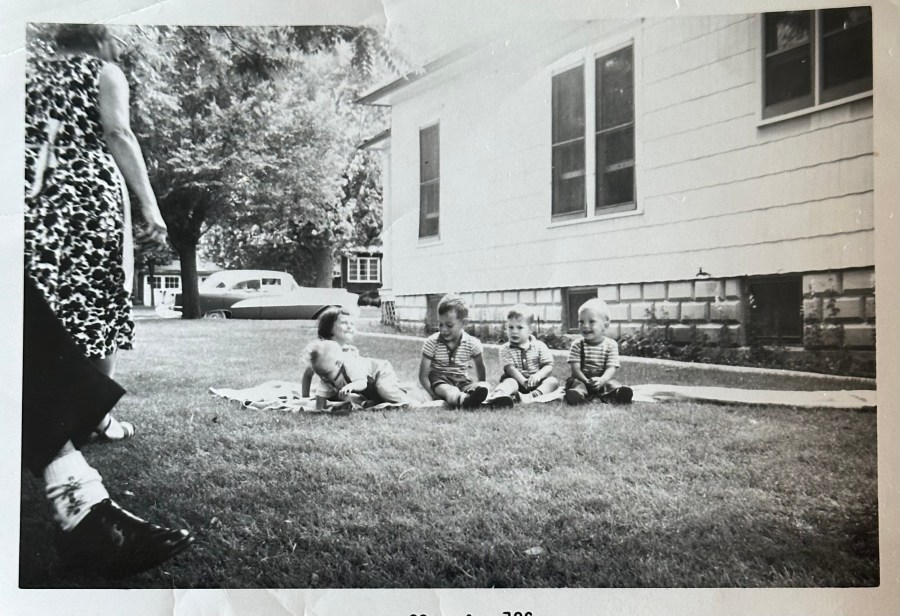
I am sure you have similar stories and history. Parents trying to provide for and do the best that they can for their children. Perfect? No, not by any means. But the family that we are one with and come from, the families that make us who we are, for better, or motivated to change. If you don’t know, or haven’t shared your family story, make a point to do so. There are so many details that I wish I had now, but they are gone with the memories of those who held them. But I am grateful for countless images captured in photos, like the one I share today, before we stored everything on our phones.

Today we celebrate the Feast of Holy Family, a young family also journeying in life, with Joseph doing his best to care for his little family. December 28 also recalls the death of the Holy Innocents, the young boys massacred because of a cruel and jealous king who couldn’t stand the thought of someone having more authority than him. The message that Joseph received, to flee to Egypt, saved Jesus from this horrible persecution.

Today, Pope Leo XIV reminded us that the world “has its ‘Herods,’ its myths of success at any cost, of unscrupulous power, of empty and superficial well-being, and it often pays the price in the form of loneliness, despair, divisions and conflicts.” He asked us to pray for all families suffering due to war and violent conflicts. We can pause and pray for all those families who, like our own families, are trying to find a better place in the world to live and flourish.

So today, reflect on the family that helped form you into the person you are today. Tell stories and share memories, so that they are passed on. If you are lucky enough to have them, spend time with old photos and recall family celebrations and gatherings.

Then as Pope Francis wished in his 2020 encyclical, Fratelli Tutti, “Let us dream, then, as a single human family, as fellow travelers sharing the same flesh, as children of the same earth which is our common home, each of us bringing the richness of his or her beliefs and convictions, each of us with his or her own voice, brothers and sisters all.” (No. 8).

Wishing you abundant joy and peace with the family memories that you hold, Deena

Featured

Preparing the way

The Feast of Christ the King, the final Sunday in the Church’s liturgical year, gives us a reason to stop and pause and ask how important Christ is in our lives. The Feast acknowledges Jesus’ authority over all of creation, including us. But do we live with that in mind? As we end the liturgical year this week and prepare, during the four weeks of Advent, for the celebration of Jesus’ birth over 2000 years ago, are we giving the same attention to planning for Advent that we give planning our preparations for Christmas celebrations and family gatherings?

This week I’d like to offer some suggestions of a variety of books and virtual programs you might consider for your prayer and reflection time during Advent. With the speedy shipping of Amazon, you have plenty of time to order and receive books. Online programs are even easier. (If you are reading this on social media, please visit my website for the links to all the programs, online resources and books.)

Hallow – the #1 Christian and Catholic app for prayer, meditation, and music has planned an Advent program, Be Still, starring several actors and well-known Catholic teachers, which will journey with Mary and Joseph to Bethlehem. It will be “a journey into the Christmas story as it truly was.”

Ascension – The Ascension App will be offering Fr. Mike Schmitz’ Advent program, Waiting Well. You can listen to the program with a 7 day free trial or a 90 day subscription for $4.99 (new subscribers only, otherwise 8.99/mo). To find out more, click here.

Ignatian Ministries – In addition to a virtual retreat (Advent Light: Finding Hope in the Word Made Flesh) on Thursday evening, December 4, I am delighted to see that an individual prayer resource I helped to create during my time at Ignatian Ministries, Living Into Advent, is still on the website and available to purchase and download. It offers daily scripture and reflection questions.

My spiritual director for the Spiritual Exercises of St. Ignatius and her colleague at IgnatianRetreats.com are offering a free 8 day Advent retreat, Follow the Way of Hope, Peace, Joy, Love. You can take on your own if you are familiar with Ignatian Contemplation or arrange to meet with a spiritual director during the retreat.

Mary DeTurris Poust’s Advent and Christmas reflection book, Waiting in Joyful Hope 2025-2026, is a wonderful guide for the season. It includes Mary’s reflections on the weekday and Sunday scriptures and invites us to ponder where we are on our spiritual journey. Mary writes a reflection for a daily scripture passage and then a meditation for our personal consideration. I really love this guide and will be meditating with it each day during Advent and the Christmas.

Fr. Gary Caster’s book, The Little Way of Advent: Meditations in the Spirit of St. Therese of Lisieux, is the book we selected for the Advent Discussion Group I will be leading at my parish. Fr. Caster is a priest in our Diocese of Peoria. I used the book when it was first published. It includes readings for all three cycles of the Advent season, so you will be able to use it over again. It is available on Amazon but it now being published by, and available on, Dynamic Catholic. Dynamic Catholic also has a free online program, Slowing Down to the Speed of Joy, for Advent.

Kate Bowler is a Christian author and podcaster that I have mentioned in this blog previously. Kate and her team have put together a free program in Substack subscriptions (last two years it was a downloadable PDF) but you can also request a daily email directly to your inbox.

Catherine Smith, another author that I have mentioned in my blog, will be reading Watch for the Light: Readings for Advent and Christmas, a collection of poetry, essays, sermons, and stories by classic and contemporary authors. If you just want to listen to Catherine read and use her reflections, you can upgrade to a paid subscription to Wonder & Awe, her platform, for $5 which will only last one month and won’t be billed another month after. Catherine sends her monthly messages out via email.

I know there are probably dozens of programs you can choose from, these are just some that I am aware of and will be using during Advent. Choose one that fits you and your style of prayer and reflection. Choose one or two, whether a book or an online program, and commit to following it through Advent. Spend time each day reflecting on the real reason for the season. Today’s Feast of the Solemnity of Christ the King, and the season of Advent, can help give us clarity and direction if we pause and look inward. If we realize that our focus has been misplaced, Advent is the perfect time to recalibrate and recenter.

I hope you will join me this Advent to create some quiet time for prayer and reflection as the world tries to tell us we are behind, that we have to spend more money and that the season has to be full of activity to be joyful.

Wishing you abundant peace and hope this coming week, Deena

Image: a church visited during an Oblate conference

Featured

Embrace joy

Joy and happiness are emotional states that are often used interchangeably but actually joy is very different. Happiness might be found in response to life circumstances such as setting and completing a goal. Joy, science is telling us, may be experienced even amidst life hardships or uncertain times. I might not be happy all of the time, but I can experience joy regardless of what is going on in my life by being intentional about certain things in life. For me, my faith and prayer life, are huge contributors to my experience of joy.

An article published by the National Institute of Health in May of this year said that lots of attention is given, in popular psychology, to positive emotions and finding happiness while joy is still an area that would benefit from further study. A study cited, of adults ages 28-59 from the United Kingdom, reported “fostering positive relationships, engaging with nature, and cultivating self-awareness were identified as key strategies for sustaining joy.”

A study of 7000 individuals, reported by National Public Radio in 2023 as part of the BIG JOY Project, reported that “people who commit daily “micro-acts” of joy experience about a 25% increase in emotional well-being over the course of a week.” Emotional well-being was described as attributes such as better coping, less stress, quality relationships, and feelings of hope, optimism and even fun. Examples of the micro-acts of joy included gratitude journaling, doing a random act of kindness, visiting a sick neighbor, celebrating a friend’s joy, or engaging in self-reflection. The researchers asked whether doing these small acts of joy can make a difference and referred to “the ideas of the Dalai Lama and Archbishop Desmond Tutu, who both spoke about how it’s possible to feel joy even in the midst of suffering, and to use that feeling to help do good.” Our joy, it seems, help us not only enhance our own well-being but contribute to the lives of others when we use our joy as a motivation to share with and help others in the world. I am sure we can think of others in our personal circle, or the wider circle of our communities, that could use a bit more joy these days.

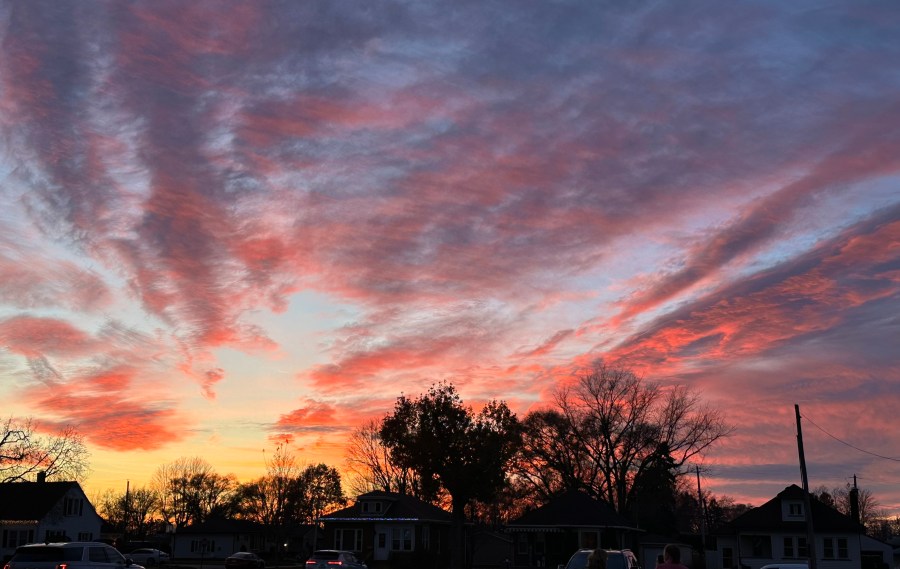
Randy Taran, founder of Project Happiness, wrote in her daily email update that “joy isn’t something you wait for. It’s something you choose, amidst the struggle and in life’s tender moments, that make life worth living. Embrace the people and the things that bring your heart healthy doses of joy.” Things like buying yourself flowers, watching the sunset (or I would add, stepping out to experience the Northern Lights this past week), dancing in the kitchen or taking a long route home are some of the suggestions she offered.

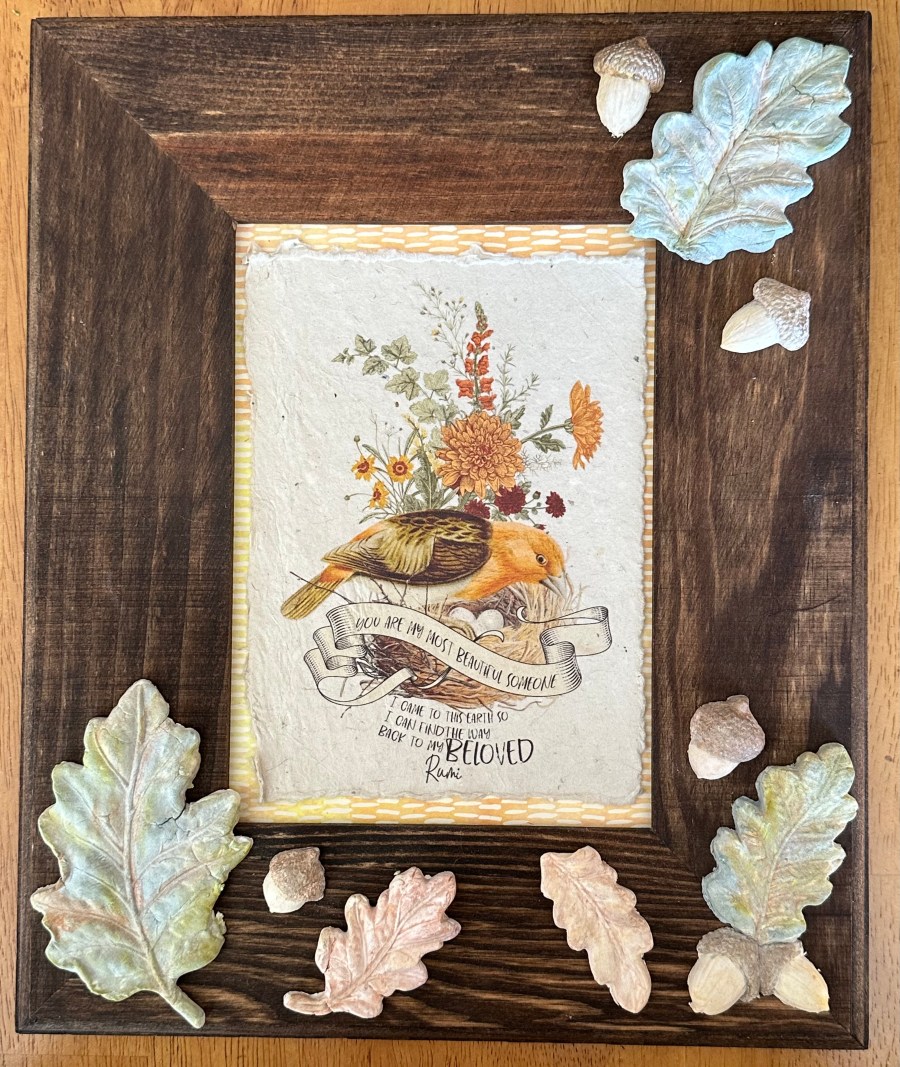
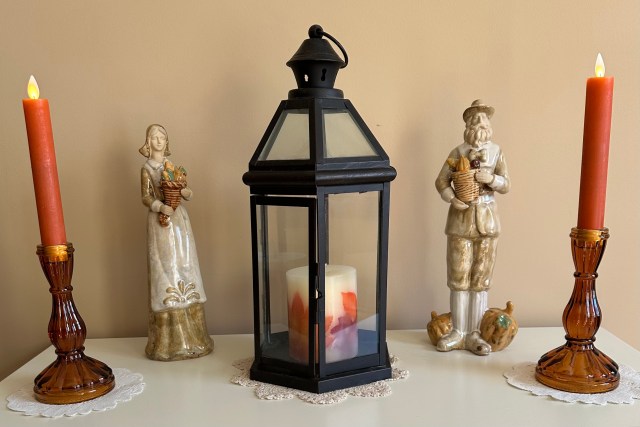
Exploring the world of creativity, the impact of expressing myself in creative acts, is also a way to increase joy and mindfulness, while decreasing stress and anxiety. Creativity becomes a means to tap into my own wisdom, gain clarity in difficult situations and decrease stress, either personal situations or response to societal events. Perhaps painting, knitting or crocheting, making handmade cards, or frames like the one I posted as the featured photo, are ways that you might express yourself. A friend, Joan, on Facebook shares her creativity by posting her table settings. They are always expressions of beauty, care and love by the way she has displayed her table. I love creating little vignettes with decorations, like a Thanksgiving display, photo included on blog site, or setting out favorite seasonal items. Some of those items may evoke an emotional response, to a family member or celebrations in the past. It may just be the way the colors you choose make you feel when you look at them. All of these are ways of expressing your inner artist and creative soul.

As we move into preparing for the holidays, days that can be stressful or frantic, how might you engage in a daily micro-act of joy. What can you do each day to reconnect with inner joy or creativity, so that regardless of how holiday planning is going, you find more peace and tranquility? As we find and experience more joy, it will likely spread to those around us!

Wishing you a week of abundant joy and hope, Deena

Featured

Savor these days

I watched one of my cats, Butters, this morning after he finished eating and was ready to settle down for a morning nap. He walked the house and looked at all of his favorite spots before settling on his blanket on the couch. I will likely join him with a blanket later today and a steaming cafe latte. It’s a good day to stay warm and cozy after the rain and snow last night and, now, the chill and cold in the air this morning.

Friday I was beginning to feel the panic of the season set in – busy days with work, church activities and errands to get done. I cleaned up the cemetery, thinking ahead to Saturday and knowing that I should clean up a variety of pots at home too. I had some bulbs to get in the ground and transplant a plant from a pot to the ground before the cold. I started thinking about the Christmas cards and shopping that I haven’t started yet. I will be helping with a pop up ornament class at the unique shop that I do social media work for, as well as working two mornings a week. November has meetings and holiday events. In December and early January, I will facilitate an Advent book discussion for my parish. I found myself short of breath thinking about it all! I stopped and reminded myself that I didn’t want these next two months to be a blur of activity and stress but rather moments of prayer, worship, family, friendship, and celebration.

Yesterday I simply enjoyed the day. I went to the gym and coffee with my friend, Kelly. Then home to clean out the pots and get the plant and bulbs in the ground, with a heavy coat of mulch. I went to Mass and then dinner with Kelly and her husband, Mark. We laughed and enjoyed our dinner and each other’s company.

It all gets done. Whatever doesn’t, probably wasn’t that important. Or better yet, focusing on being grateful, celebrating Advent and Christmas, spending time with people and making memories is what truly matters. Stress and worry doesn’t help. It also prevents us from savoring the moments as they present themselves.

I am enjoying my Thanksgiving decorations before I move into Christmas. Each night, in the house, I light my candles, lanterns and sparkly pumpkin. When I decorate for Christmas, I leave those decorations up until at least Epiphany. Since it falls on January 4th this year, I will likely enjoy them until mid-January. The merry lights and decorations help with the darkness of winter. The decorations make me happy but also bring lovely family memories with many of them.

I want to move around and make the best decision for my spirit and my well-being, just as Butters did this morning. I want to pause and savor the moment just as I did as I watched this little bird, today’s post image, as it landed in my tree this morning, swaying with the moving branches in the wind.

Maybe you are like me though, and you have to remind yourself to slow down and savor the moments. I don’t want the days to be a blur of getting things done but not enjoying them. As we move into this busier time of year, I invite you to join me in taking intentional pauses to be present, aware of the people you are with and the things you are doing. I know it’s cliche but if today was your last day, would you be happy with how you spent it? Let’s step back from the rush and hectic pace and find ways to enjoy the things we are doing and the people we are with.

As Pope Leo XIV reminded us in today’s Angelus address, we are invited to walk in “the joy of being the holy People that God has chosen” to spread the Gospel message of love and mercy through our daily witness in life. I am pretty sure being stressed out and anxious isn’t the best way to share that message. So, let us be grateful to God for the lives and people we have been blessed with. Even with daily challenges, we can find something to pause and be grateful for. In doing so, we will likely be a bright light of hope to those around us.

I wish you abundant peace and hope this week, Deena

Featured

How you start your day

Are your morning routines defined and predictable? Do you have things you do each morning that help you get ready for the day ahead? I have been reading lately that how you start your day, sets your day. I have a pretty reliable and set routine each morning but lately I have been questioning the effectiveness of each morning and also why I am not getting some of the reflection time in that I used to. I miss it and want to find a way to incorporate that quiet morning time back in my schedule.

I listened to Dr. Arthur Brooks, “the Happiness professor, best-selling author and Harvard professor, on YouTube a couple of weeks ago. He described his 6-step protocol each morning that he suggests will create a better day. He begins by getting up at 4:30 a.m. (Dr. Brooks cited a study that showed higher levels of productivity and creativity in those who began their day before dawn), after starting with an early bedtime the night before, exercising first thing (he has a gym in his home or when traveling only selects hotels with 24 hour gyms on premise), having time each morning to spend in spiritual reflection (he goes to daily Mass), delaying his morning coffee (saying that it improves focus and energy throughout the day) and has a high protein breakfast. Then he gets on with his day and makes sure his time is productive time by ignoring emails, the newspaper and social media until later, or checking hourly.

I enjoy listening to Dr. Brooks and his thoughts on happiness, reducing stress and anxiety, and spirituality. But I listened to these six points and felt like such an under-achiever! But to his credit, toward the end of the video, he said try it and adapt it to yourself, even inviting viewer response on how we might have changed it for our lifestyle.

Another routine I read was similar; plan the night before, get enough sleep, limit phone and technology use before bed, practice gratitude, hydrate in the morning, eat a healthy breakfast, move your body or exercise, and practice mindfulness or journaling.

Last week, in an online class, we talked about morning routines and setting daily intentions. Our discussion was about finding a routine that works for us and being aware, or conscious, as we completed all the tasks each morning that feel like an obligation or perhaps even prevent us from doing these things I have listed above. The main point was changing our attitude about those duties that feel as though they are hinder us from doing things we would prefer to do, in my case, my quiet reflection and journaling time.

I tend to get up at 4 or 4:30, feed the cats but don’t always stay up and begin the day at that time. That might be a good place to start, but that also means I have to do a better job of getting to bed early so that I am ready to stay awake at 4:30 a.m. I love watching the sunrise, so I am usually up by then, especially recently as the mornings are darker longer (well, at least until next week). Before daily Mass I do the social media posts for my parish, then get ready for Mass. When I get home the cats usually want more attention, or food if they ate at 4 a.m., and I want my coffee! I do a terrible time with a healthy protein-rich breakfast. At one point I thought about a protein smoothie first thing, but read one natural health practitioner say not to have anything cold first thing in the morning. I hate eggs and don’t eat meat, or very little, so that rules out lots of morning breakfast options. Maybe the better choice is still selecting the smoothie, even though it’s cold, because I would begin the day with protein and fruit.

I have been, over the past few months, working as a social media assistant for two different entrepreneurs, one an independent training and holistic practitioner and the other a retail establishment. I have noticed I get drawn into social media more than I did in prior months by checking out posts and techniques used, which then leads down a rabbit hole of viewing other posts and updates. I would like to discipline myself enough to come home from Mass, make the smoothie (or find a better alternative), make my coffee and sit down to journal before I begin my online work activities. A half hour or so isn’t going to make or break the day for daily sales at the store or online enrollments! Based on Dr. Brooks video, it might make me even more productive and focused.

If you are a pet parent, you also know that you have to be flexible for changes in routine. The cats love the patio as soon as I get home and I am happy to open the doors and windows to get fresh air in the house. The holistic practitioner I mentioned above, regarding the cold breakfast, suggested getting 10 minutes of sunshine early in the day, so it would be nice to step outside with the cats for a bit. That would add 10 more minutes to a routine before beginning work. But seriously, 10 minutes isn’t going to prevent me from getting things done and might even help, by standing outside, taking some deep breaths and reflecting on the day ahead before I sit down to journal.

The gym usually gets delayed until afternoon, if I get there, because I prefer to go when fewer people are there and I can’t imagine adding one more thing to the morning before doing my online work. But that works for me and I guess that is the point of this discussion. My recommendation is take in all the ideas and suggestions about creating a great day and then do what works for you. By all means be flexible and spontaneous too. This Sunday morning I was asked to “play the organ” (i.e., hit the buttons at the right time) on our amazing organ at church, that Fr. Carlson programmed with the music for Mass. I wasn’t in the mood to begin this blog on Saturday evening, my normal writing time is early Sunday morning, but I also wanted to help and relished the idea of attending Mass again this morning after attending Vigil Mass on Saturday. So I am posting it later than normal today. The world isn’t falling apart as a result. Often, on Wednesday mornings after Mass, the ladies invite me to join them for breakfast or a friend might reach out and suggest meeting for coffee. Being social and spending time with people I enjoy is also important to me and my well-being, even if it means other morning activities are delayed a bit. I think the most important thing is that we feel that we are choosing versus reacting to the activities in our day, having a positive attitude and making the most of the time we have been given.

I’d love to hear your thoughts on starting the day in a way that sets you up for a happier, more joyful, day. What routine has been most impactful for you? Do any of these ideas sound like ones you would like to incorporate?

As always, I wish you a week abundant in hope and peace, Deena

Blog image: Bela deciding that he needed to be a part of my morning routine a few years ago.

Featured

Grounded in faith

I started reading Brene Brown’s new book, Strong Ground: The Lessons of Daring Leadership, The Tenacity of Paradox, and The Wisdom of the Human Spirit, the past few days. I have to admit that it is always her personal reflections and application of her work with the Dare To Lead program that I find most thought provoking in my own life. We’re all leaders in some way; family, church or social organizations, the way we interact and care in relationships, but having stepped away from corporate work I am less interested in leadership qualities at that level. Still, I was intrigued with Brown’s new book and thoughts she might have on the current state of our societal relationships and leadership. I am glad I followed the hunch to purchase her book.

She began with a personal story about recovering from a pickleball injury and how her coach helped her find and work from her core, engage her body and mind in the healing process, and connect to her “strong ground.” She suggests that many of us are struggling to find our ground. She proposes that individually, and collectively in our country and in organizations, “we need to push into the source of our strength and sturdiness so we can navigate the world. We need the ground to steady us and at the same time to propel us into purposeful action.”

Brown writes quite a bit about her study of, and personal journey with, the mindfulness work of Jon Kabat-Zinn in relation to finding our center and being grounded. Citing research she did for another book, Brown says that both anxiety and calm are contagious. She reminds us that staying calm is an intention. When we consider those we encounter each day, “Do we want to infect people with more anxiety or heal ourselves and the people around us with calm?” We need to pay attention; to our breath, to what’s going on within as we speak and make decisions. I NEED to reflect on the attitude I have as I leave the house, am I going to contribute to the day that others are having or am I going to be a tornado of worry, concern and anxious thoughts as I venture out? Some days it just might be better to stay in until the calm returns and I feel grounded in the truth of who I am.

So far, my favorite sections of the book have been on transformation and “grounded confidence”. I tend to read the first couple of chapters of a new book, then browse and read selectively to get an idea of the entire book I am reading, then go back and read more slowly and thoughtfully. In writing about transformation, and summarizing her reflections throughout the book, Brown examines the false notion that learning and change are only about effort one applies. She suggests that real change happens when we focus and build our foundation, and operate from that place of being grounded, instead of reacting to a current situation or perhaps even worse, being so set in our ways that we think that the problem is with everyone else, thinking they are the ones that need to change, not us!

Personally, one place that I build my foundation and center myself is in my daily prayer, reflection and journaling. Daily Liturgy of the Hours, Lectio Divina, or scripture reflection remind me of God’s love and presence, no matter what seems to be going on around, or within, me. The Letter of 2 Timothy caution us that there will be people around us that deceive us and will go “from bad to worse”. But remaining faithful to what we have learned and believed, from Christ, we will remain “competent and equipped for every good work.” (2 Timothy: 3)

Remaining faithful to the daily practice of reflecting on the truth of our faith, we will be “strengthened with power through his Spirit in the inner self, and that Christ may dwell in your hearts through faith; that you, rooted and grounded in love, may have strength to comprehend with all the holy ones what is the breadth and length and height and depth, and to know the love of Christ that surpasses knowledge, so that you may be filled with all the fullness of God.” (Ephesians 3: 16-19)

With that as the source of my strength, I am grounded, more capable and willing, to engage with the world with hope and joy.

Wishing you abundant hope and peace this week, Deena

Photo: Taken during a visit to Muir Woods, California

Featured

Whisper of the soul

A few weeks ago an opportunity to apply for a position that 10, maybe even 5, years ago would have been a dream come true, presented itself to me. At that point in my life I would have considered moving to be sure that I would be as available as the position would require. I applied but as I reflected upon it, and listened to the voice within, I just knew it wasn’t the right time or role for me as I wind down my 60’s this year. I emailed and withdrew my name. Once I made that decision, in God’s timing and providence, I was asked to be a social media coordinator for a second client. It’s with a business that is very appealing to me and my personal interests. They carry products that inspire me and my creativity. Both of my part time clients are in the business of things that I enjoy. I feel that I am contributing, but am also challenged to learn and grow.

Saturday was the Memorial of St. Pope John XXIII, the Pope who convened the Second Vatican Council, to bring a breath of fresh air to the church, which resulted in changes to the liturgy (such as praying in English instead of Latin for those of us in the US, and the altar facing forward) and church structure. He was a humble servant, a humanitarian, and was an advocate for human rights and for peace.

I read a quote on a social media page reflecting on his papacy, which I fell in love with, so I wanted to learn more about it. The quote: “Consult not your fears, but your hopes and dreams. Think not about your frustrations, but about your unfulfilled potential. Concern yourself not with what you have tried and failed in, but with what it is still possible for you to do.” Pope St. John XXIII

I found the quote in a Papal Artifacts site that documented St. John XXIII and his accomplishments. But Google indicated that the quote is not cited in any specific papal document but seems very much in style of his Daily 10 Point Plan. The Pope’s “Daily Decalogue” was shared in a memorial Mass in 2006 by Cardinal Tarcisio Bertone. It includes daily resolutions such as living with a positive attitude, reading and creating a daily plan, and believing that he was created to be happy, believing in the Providence of God in his life and to do good in life each and every day. So I think the quote is still a good one to share and that that it represents the spirit of how St. John XXIII approached life.

This week grab a notebook or piece of paper and write down your hopes and dreams. Create your own personal “daily decalogue”, ways you would like to approach each day. I have a series of things I do each day, but not always in the morning. I have been reflecting that I would prefer to challenge myself to get up earlier each morning (or if I wake up at 4:30, which happens a lot these days, stay up) and begin my prayer and journaling. It is with focused attention and reflection that we get clear about what is important to us and what we desire in life. I have always believed that the desires we hold in our heart are calling us to use the gifts that God has given us in life, as long as they bring us closer to God and serve others in a life-giving way.

This past week was also the memorial of St. John Henry Cardinal Newman. One of his prayers, which I learned during Lay Ministry training in our Diocese in the 1990’s, has remained a favorite over the years. It also speaks of our soul’s purpose. I’ve shared it before but would like to share here again. I hope as you read, and pray with this, you are reminded that there is something specific you are on this earth to do. Listen and then follow that desire.

God has created me to do Him some definite service. He has committed some work to me which He has not committed to another. I have my mission. I may never know it in this life, but I shall be told it in the next. I am a link in a chain, a bond of connection between persons. He has not created me for naught. I shall do good; I shall do His work. I shall be an angel of peace, a preacher of truth in my own place, while not intending it if I do but keep His commandments. Therefore, I will trust Him, whatever I am, I can never be thrown away. If I am in sickness, my sickness may serve Him, in perplexity, my perplexity may serve Him. If I am in sorrow, my sorrow may serve Him. He does nothing in vain. He knows what He is about. He may take away my friends. He may throw me among strangers. He may make me feel desolate, make my spirits sink, hide my future from me. Still, He knows what He is about. (St. John Henry Newman)

Wishing you abundant peace this week, Deena

Image: Some plants, and an adorable sign, in my raised bed.

Featured

Live light

I don’t really remember what the discussion was the day my spiritual director asked me, during the 9 months of the Spiritual Exercises of St. Ignatius, what I would take if I had to leave my home immediately but I have never forgotten the question and my answer.

This week I read a daily reflection in Give Us This Day, by Maxwell Johnson in “Travel Lightly to the Kingdom” in which he asked “how easy would it be for any of us to pack up, pick up and go?” He was reflecting on the possibility of having to quickly pack, leave our homes the next day with the possibility of not being able to return, knowing we only had time to pack a few things. He asked us to consider what we would take, leave behind and then the ultimate question, “How much ‘stuff’ do we really need?” As I reflected on these questions I wondered if the things I possess are bringing me joy or are just a source of stress and anxiety. The questions are natural in later years, along with a desire to purge and live more simply, but they are good ones to ponder each day as well.

Certainly in areas impacted by weather threats like fire or hurricanes, the question has been a real one for many individuals in recent years. People being forced from their homes and their countries as a result of war have faced the same concern. I am sure they could tell us the weight of those decisions, whether given a day or an hour to choose. For them, it isn’t just a hypothetical question. It wasn’t a probing inquiry to reflect upon or a spiritual analogy for all the things that weigh us down and distract us on our journey toward eternal life. It was an impactful decision that forced them to consider what they really needed or wanted.

I wonder, what would I take with me?

This weekend, the Twenty-Sixth Sunday in Ordinary Time, the always disruptive parable, in the Gospel of Luke (Luke 16: 19-31) of the rich man and Lazarus, asks us to ponder the same soul-searching questions. Am I leading a life that brings me closer to God? Does my life reflect a love and concern for those around me? Or have I been living a self-centered life focused on more mundane and temporal concerns?

I invite you this week to consider the question in your own life. What would you pack today, knowing you have to leave your home tomorrow? Then, reflecting on your answer, what does that say about the other possessions that might consume your time, energy and financial resources?

Whatever the answer, I hope you find abundant peace and hope this week.

Deena

Image: A sketch of monks walking together I saw hanging in a monastery.

Featured

Dawn of a new day

One of the things that I have realized in dealing with, and recently writing about, issues around mental health and well-being is that things always feel worse at night. The darkness, heavy with shadows and devoid of light, seems to forbid seeing possibility. Gloom settles in easily. In January I cancelled all streaming channels and was content to read or work on art projects. The past couple of months required noise from the TV or from YouTube videos, even if they were positive or spiritual talks, as a constant companion, reminding me I wasn’t alone. This week that noise has become a distraction and annoying, TV, especially the news, was intensifying the anxiety instead of calming it. That was a sign, for me, that things are beginning to change. I am beginning to find my way back to peace.

The darkness became a metaphor for the things that I didn’t want to face or deal with. Whatever flaw popped up in my mind became ten times worse when I refused to look at and acknowledge it. As I heard Fr. Ambrose Criste of St. Michael’s Abbey say this weekend as he began the St. Michael the Archangel Novena (preparing for St. Michael’s Sept 29th Feast Day), we need to acknowledge how far we have drifted from the light. We have to recognize and name the darkness, not to be discouraged by it, but rather to be healed. He remarked that only what is named and brought into the light can be healed. “Only what is seen can be surrendered.”

During the Healing the Whole Person Retreat that I attended at the beginning of August, Sr. Miriam Heidland invited us to engage our healing journeys with curiosity and kindness instead of judgment. We were reminded during the retreat that “suffering that is not transformed is transmuted.”

It requires humility to face those areas of our lives that we are not living to our full potential. Qualities that we have been gifted by God to live and express in our being but have been ignoring. To do so, for whatever reason whether doubt and lack of confidence, or due to some harm or damage inflicted by someone, is to ignore what God is calling us to do or be. It’s as if we are saying, I know better than God and my choice to live in fear and lack of trust is more important than trusting that God is leading me to live a certain way. It may also be the divisive voices of the world, the enemy, or the “false spirit” as I prefer to call it. One of those faulty messages is doubt.

Doubt, whether real or imagined, is harmful to our emotional well-being. It can lead us to self-isolate and avoid situations so we don’t have to pretend to act in a way that we aren’t feeling. It can result in procrastination and indecision because we don’t trust that we can make the right decision. We begin to use negative self-talk and criticism about the things we are doing and how capable we feel. We begin to compare ourselves to others, and if we do so through the lens of social media, we will never measure up because the standards we set become unrealistic. Doubt increases stress, anxiety and depression.

When we welcome the light of hope and truth, we can see the flaws as they really are, something to surrender to the grace of change. Then we move forward, yearning to live in trust and peace. We can cast doubt aside, even in difficult situations, and trust that we are not walking alone. I lean in to the words of Psalm 34, “The Lord is close to the brokenhearted”, the Lord delivers us from our troubles.

On Saturday, Pope Leo XIV spoke a message to those suffering with ALS, acknowledging the difficult burden they bear but offering an insight, and reminder, that the disease offers an opportunity to see that the quality of human life is more than achievements, it is dependent on love. He encouraged them to grow in gratefulness, especially for those who care for them, and for the “beauty of creation, of life in this world, and of the mystery of love.” I think this is a message we can all take to heart, no matter what we might be facing in life.

Wishing you abundant peace and hope this week, Deena

Image: Sunlight streaming through the trees and Anderson Japanese Gardens

Featured

A stronghold

This weekend our local area Oblate group met and began our 2025-2026 reading and discussion of Sr. Joan Chittister’s The Rule of St. Benedict: A Spirituality for the 21st Century. Many of us have studied it in our Oblate groups before but it’s a wonderful commentary of The Rule to revisit for anyone desiring to follow this spiritual guidance in our secular world. As we began our study for this month, we read the chapters of The Rule on guidelines and order of praying the psalms in the monastery. Each monastery creates a breviary, or guidebook, for the praying of the 150 psalms. It is similar to the order of praying the psalms in the Liturgy of the Hours, or Divine Office, prayed by clergy and lay people each day in a sequence of four “weeks”. St. Benedict in his Rule said that how and when the psalms are prayed could vary but it was required that monastics pray all 150 psalms. I don’t have a copy of the breviary used by the Monastery that I am an Oblate, so I pray the traditional “Office”. Over the course of 30 years since it was recommended, and that I have tried (my discipline and commitment have varied over the years, so don’t be too impressed!), to pray the Liturgy of the Hours each day, for Morning and Evening Prayer, certain psalms have become favorites. They become like a healing balm or a familiar friend on days that it feels difficult to pray or that nothing I pray or read seems to help.

There have been plenty of those days in recent weeks. The violence seen in our national news and the continued atrocities of war in other countries are hard to ignore, even if we don’t watch the news. I shared with my chiropractor this week that I am worried for the emotional well-being of young people who are bombarded on social media with these images and opinions. We pondered the impact these stories are having or wondered if they are becoming desensitized to it all. As a child of the 60’s I recall the impact of watching the violence of the Vietnam War on evening news, but it was only on the nightly news or in newspapers, we didn’t have constant images thrust upon us on cell phones and computers.

In this week’s blog I would like to continue the discussion about depression and anxiety and ways to deal with it. I am grateful for the abundance of information on social media in September for Suicide Prevention Month. These sites or pages are dedicated to raising awareness and breaking the stigma around mental health issues. It has not only raised my awareness of statistics regarding suicide and depression but helped me feel understood. Symptoms of depression are varied and we may not even associate them with our depression. It’s easy to try to convince ourselves to ‘just snap out of it’ or “get over it”, whatever the “it” is that perhaps we haven’t really identified anyway!

What can compound the stress is adding the belief that, as a Catholic Christian or person of faith, we should be able to pray our way out of it. The internal dialogue of “if I was holy enough,” “if I was faithful enough,” or “if God really loves me” suggest that if I was any of those things, then all of the anxious feelings would magically disappear. But that isn’t the way that it works! I am not saying that prayer isn’t helpful or that even if we don’t feel like it is working that we should give up on it. We have a wonderful model in St Teresa of Calcutta whose writing revealed 40 years of spiritual dryness, desolation and feeling abandoned. But in all of that, she remained faithful to prayer, to service of the poor and to leading her community.

This week I received and began reading a wonderful 30-day guidebook, Anchored in Peace, by the founders of the social media page, Mindful Christianity. The father and son writing duo begin the book by reminding us that our fear and anxiety do not disqualify our faith. The book is a combination of scripture passages, reflection questions, mindful Christian practices and prayers to help us navigate the difficult times we are experiencing. They suggest that we don’t want to hide the anxiety and pretend it doesn’t exist but bring it into the light and presence of God to be there with us. The authors counsel that we can let our guard down, present the honest feelings we are having, and let God be our refuge, anchor and peace, a day at a time.

After our Oblate discussion this weekend, I reflected that there are many psalms that can be prayed during times of anxiety and depression, psalms that can bring comfort and reassurance. I recalled one of those healing psalms for me. Psalm 144 is prayed on Tuesday of Week II, it is a prayer for victory and for peace. In the psalm King David is praying to God as a fellow warrior, defender and protector. As I pray that psalm I pray for the help of a God who can strengthen me in the daily battles I face, whether emotional or spiritual. I offer a few lines as comfort in the battles you may face in life.

Blessed be the Lord, my rock,

who trains my arms for battle,

who prepares my hands for war.

He is my love, my fortress;

he is my stronghold, my savior,

my shield, my place of refuge.

Wishing you abundant peace this week. Deena

Image: the medieval castle walls in the city of Avila, Spain