Featured

Live light

I don’t really remember what the discussion was the day my spiritual director asked me, during the 9 months of the Spiritual Exercises of St. Ignatius, what I would take if I had to leave my home immediately but I have never forgotten the question and my answer.

This week I read a daily reflection in Give Us This Day, by Maxwell Johnson in “Travel Lightly to the Kingdom” in which he asked “how easy would it be for any of us to pack up, pick up and go?” He was reflecting on the possibility of having to quickly pack, leave our homes the next day with the possibility of not being able to return, knowing we only had time to pack a few things. He asked us to consider what we would take, leave behind and then the ultimate question, “How much ‘stuff’ do we really need?” As I reflected on these questions I wondered if the things I possess are bringing me joy or are just a source of stress and anxiety. The questions are natural in later years, along with a desire to purge and live more simply, but they are good ones to ponder each day as well.

Certainly in areas impacted by weather threats like fire or hurricanes, the question has been a real one for many individuals in recent years. People being forced from their homes and their countries as a result of war have faced the same concern. I am sure they could tell us the weight of those decisions, whether given a day or an hour to choose. For them, it isn’t just a hypothetical question. It wasn’t a probing inquiry to reflect upon or a spiritual analogy for all the things that weigh us down and distract us on our journey toward eternal life. It was an impactful decision that forced them to consider what they really needed or wanted.

I wonder, what would I take with me?

This weekend, the Twenty-Sixth Sunday in Ordinary Time, the always disruptive parable, in the Gospel of Luke (Luke 16: 19-31) of the rich man and Lazarus, asks us to ponder the same soul-searching questions. Am I leading a life that brings me closer to God? Does my life reflect a love and concern for those around me? Or have I been living a self-centered life focused on more mundane and temporal concerns?

I invite you this week to consider the question in your own life. What would you pack today, knowing you have to leave your home tomorrow? Then, reflecting on your answer, what does that say about the other possessions that might consume your time, energy and financial resources?

Whatever the answer, I hope you find abundant peace and hope this week.

Deena

Image: A sketch of monks walking together I saw hanging in a monastery.

Featured

Dawn of a new day

One of the things that I have realized in dealing with, and recently writing about, issues around mental health and well-being is that things always feel worse at night. The darkness, heavy with shadows and devoid of light, seems to forbid seeing possibility. Gloom settles in easily. In January I cancelled all streaming channels and was content to read or work on art projects. The past couple of months required noise from the TV or from YouTube videos, even if they were positive or spiritual talks, as a constant companion, reminding me I wasn’t alone. This week that noise has become a distraction and annoying, TV, especially the news, was intensifying the anxiety instead of calming it. That was a sign, for me, that things are beginning to change. I am beginning to find my way back to peace.

The darkness became a metaphor for the things that I didn’t want to face or deal with. Whatever flaw popped up in my mind became ten times worse when I refused to look at and acknowledge it. As I heard Fr. Ambrose Criste of St. Michael’s Abbey say this weekend as he began the St. Michael the Archangel Novena (preparing for St. Michael’s Sept 29th Feast Day), we need to acknowledge how far we have drifted from the light. We have to recognize and name the darkness, not to be discouraged by it, but rather to be healed. He remarked that only what is named and brought into the light can be healed. “Only what is seen can be surrendered.”

During the Healing the Whole Person Retreat that I attended at the beginning of August, Sr. Miriam Heidland invited us to engage our healing journeys with curiosity and kindness instead of judgment. We were reminded during the retreat that “suffering that is not transformed is transmuted.”

It requires humility to face those areas of our lives that we are not living to our full potential. Qualities that we have been gifted by God to live and express in our being but have been ignoring. To do so, for whatever reason whether doubt and lack of confidence, or due to some harm or damage inflicted by someone, is to ignore what God is calling us to do or be. It’s as if we are saying, I know better than God and my choice to live in fear and lack of trust is more important than trusting that God is leading me to live a certain way. It may also be the divisive voices of the world, the enemy, or the “false spirit” as I prefer to call it. One of those faulty messages is doubt.

Doubt, whether real or imagined, is harmful to our emotional well-being. It can lead us to self-isolate and avoid situations so we don’t have to pretend to act in a way that we aren’t feeling. It can result in procrastination and indecision because we don’t trust that we can make the right decision. We begin to use negative self-talk and criticism about the things we are doing and how capable we feel. We begin to compare ourselves to others, and if we do so through the lens of social media, we will never measure up because the standards we set become unrealistic. Doubt increases stress, anxiety and depression.

When we welcome the light of hope and truth, we can see the flaws as they really are, something to surrender to the grace of change. Then we move forward, yearning to live in trust and peace. We can cast doubt aside, even in difficult situations, and trust that we are not walking alone. I lean in to the words of Psalm 34, “The Lord is close to the brokenhearted”, the Lord delivers us from our troubles.

On Saturday, Pope Leo XIV spoke a message to those suffering with ALS, acknowledging the difficult burden they bear but offering an insight, and reminder, that the disease offers an opportunity to see that the quality of human life is more than achievements, it is dependent on love. He encouraged them to grow in gratefulness, especially for those who care for them, and for the “beauty of creation, of life in this world, and of the mystery of love.” I think this is a message we can all take to heart, no matter what we might be facing in life.

Wishing you abundant peace and hope this week, Deena

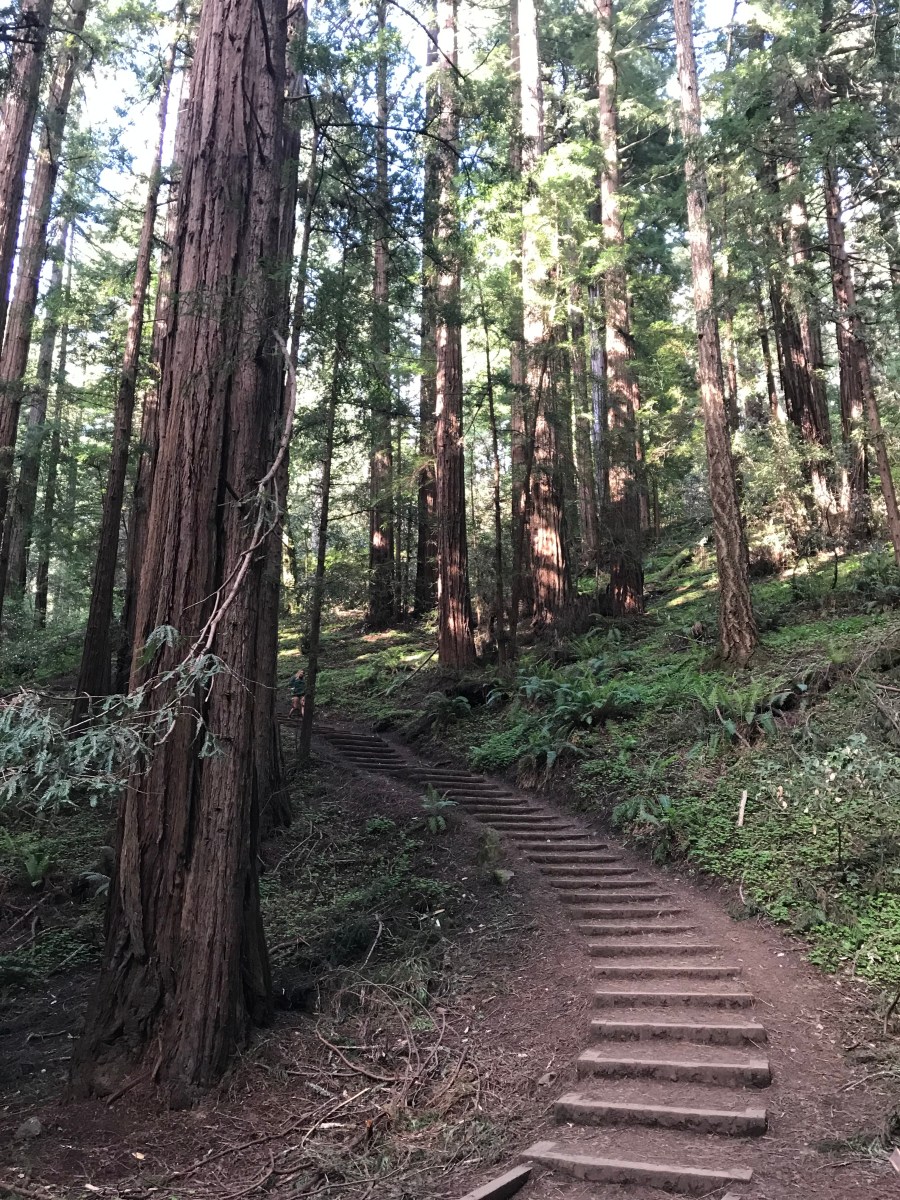
Image: Sunlight streaming through the trees and Anderson Japanese Gardens

Featured

Ora et labora

I have been blessed to work a variety of interesting jobs in my life. I have learned new things in each, which were always helpful for the next adventure in my career. I rarely until more recently in life, viewed the work I did as holy.

The Rule of St. Benedict advises the monks of the abbey (or Oblates like me who choose to follow The Rule in life) that “Idleness is the enemy of the soul. Therefore, the monastics should have specified periods for manual labor as well as for prayerful reading.” (Chapter 48 of the RB) During the time of St. Benedict the monastery did not have slaves to do the work of the monastery as was true during this time in history. Work was part of the basic life of the monastery. Benedict believed that the monastics should not benefit or taken advantage of the labor of others or to be a burden on others. It was a privilege to contribute to the life of the monastery, it was purposeful and valuable to the lives of those living there.

We often hear Ora et Labora, pray and work, as I used in my title for today’s blog, associated with The Rule of St. Benedict. While not actually words written in The Rule, it is a motto that represents the orderliness of prayer and work that St. Benedict believed led to a balanced spiritual life. I also like Esther de Waal’s statement in her book, A Life-Giving Way, that “ora, labora, lege (prayer, work, read) would be preferable” to describe life in the monastery. Monks had assigned tasks, non too burdensome for the person doing the work, their designated times of community prayer during the day, but also the times of prayerful reading (lectio divina) and study so that the mind and heart were engaged in growing too.

For St. Benedict, all work done by monastics was valuable. It was a necessary part of life in the monastery but it was also a way of serving others and serving Christ. In the book, A Little Rule for Beginners, Sr. Joan Chittister reflects on the “American Mind”, suggesting that God “leaves the co-creation of the world to us” and says “Our work is not a “job,” it is a contribution to the good of humankind and each of us must find our own.”

On this Labor Day weekend, let us reflect on the work we do, whether paid, volunteer or within our households, as part of the ongoing work of creation. What are we contributing to the world and to those around us? Are we glorifying being busy? Do we have a balanced approach to the time we spend working and the time we spend in prayer and reflection? Perhaps we can take this day of rest from our labors and reflect on how we view our work, or even ourselves in relation to our work.

Wishing you abundant peace and hope. Deena

Image: A photo of St. Benedict from one of my monastery visits in Arkansas (can’t recall which one) with the words Opus Labor (work, labor) on his Rule.

Featured

Visionary faith

I met with a Catholic counselor/coach this past month to explore a prayer technique I was interested in learning more about and discuss experiences I had during a recent retreat. One of the most helpful aspects of the meetings was a recommendation to explore a couple of personal assessments and then meet again if interested to discuss them. One of the assessments explored life experiences, or achievements, and what they reveal about the truest expression of ourselves. The summary stated that we change over time but “What remains constant are the God-given motivations that fuel your decisions and behavior.” This reminded me of the Spiritual Exercises of St. Ignatius of Loyola, that I have written about in previous blogs. The Spiritual Exercises help us name desires and motivations and in doing so, discover ways that we can serve God, in our own unique and personal way, and lead us toward God’s deepening life within us.

The assessment summary provides a person’s top 5 motivations and top motivational dimension. My top motivational dimension was Visionary. Each of the motivations and this top motivational dimension make perfect sense and I can see why I am drawn to certain activities and relationships in life and why they fill me up or make me feel purposeful and alive. I think it will be helpful as I continue to discern what’s ahead for me in life.

As I thought about the dimension of Visionary, someone who loves to envision possibilities and ideas and find practical ways to bring them to life or to inspire others to bring things to being in their lives, I thought about life with God and visionary faith. To be a Catholic Christian in today’s world requires visionary faith. While this was not what the assessment was talking about, I reflected that to live and share our faith with others requires a visionary approach. We live with a faith that hopes in the promises of God, that looks beyond what we see in our current reality, and looks to the spiritual realities to direct and guide our choices. When we look to those in scripture that heard and acted on God’s voice and guidance, they hoped in a life beyond current circumstances, they lived and acted, on God’s promises. With visionary faith we are able to move forward in life based on hope not fear.

But we are called to live differently as a result of our faith. Pope Leo XIV challenged us in today’s Angelus message saying that God doesn’t want a church full of those who only offer prayers and sacrifices. He says that our faith should lead us to practicing justice and loving our brothers and sisters in this world. Pope Leo went on to say that it isn’t an easy path, that our choices in life may be unpopular, that we must fight “against our selfishness, giving ourselves for the sake of others, and persevering in doing good even when the logic of evil seems to prevail.” That is visionary faith!

So, let us choose this “narrow path” (today’s Gospel, Luke 13:22-30), believing in the life that Jesus invited us to, discerning God’s will in our lives, and acting with courage and hope in pursuit of a joy that comes from living more deeply in God’s love.

Wishing you abundant peace and hope, Deena

Photo: I selected this image of St. Bartholomew and St. Lawrence from the Museo de San Marco in Florence, Italy, because today, August 24, is the Feast Day of St. Bartholomew. St. Bartholomew was one of the 12 Apostles and was recognized by Jesus for his pure heart and acknowledgement of Jesus as the promised one of God.

Featured

Before the bloom

This week I happened upon an article about pruning lantana plants. I have a few plants in pots and didn’t realize to get the most proficient blooms that it is best to prune them when the weather is hot and sunny, then as things begin to cool down you stop pruning. So, I will have to see, with warm days still in the forecast, if I can revive them a bit.

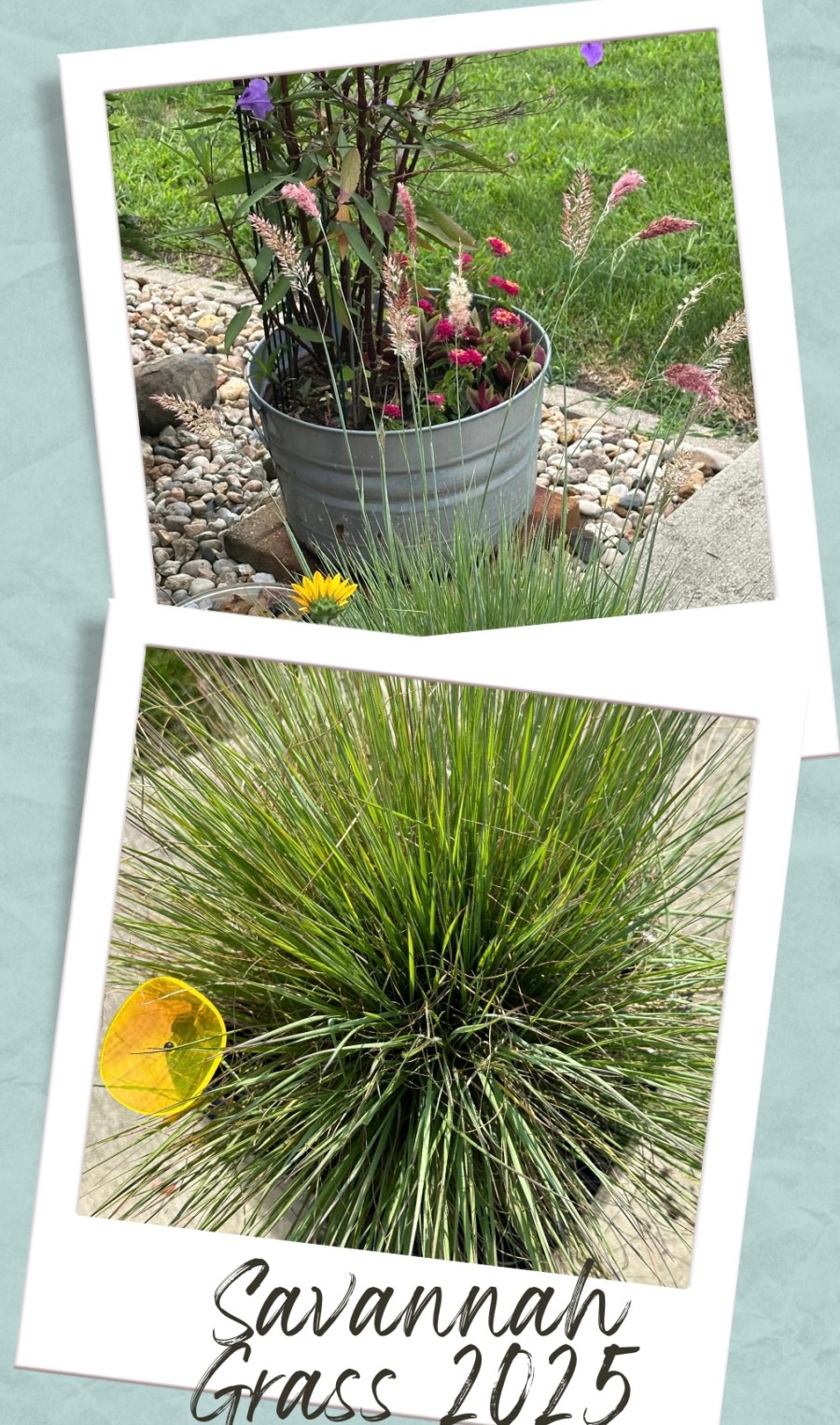
As a result I began reflecting on my Savannah Grass blooms. It’s a lovely grass that my friend Kathy introduced me to three or four years ago. I learned after the first year, one plant in front of the house and one on the patio in back, that they prefer a longer day of sunlight. So the past couple of years, and this, I have had two plants on the patio that has a full day of sun exposure. They produce a lovely, delicate, pink plume that gently sways in the breeze like the one we have this Sunday morning. The cats actually love a piece of the grass each morning, they sit and wait for me, not so patiently, to find the perfect blade for them. As you see in the blog photo for today, one of my plants has produced the anticipated blooms but one has not.

I began reflecting on why one plant produced plumes and the other didn’t. I water them at the same time and the same amount. I feed them on the same days. They are only seven feet apart and get the same amount of sunlight. Then I remembered that after buying the plants, both started from seed at the same nursery, that I repotted one in a larger ceramic pot with new potting soil, and the other I left in the large container from the nursery and just dropped it inside a very tall ceramic pot. The first year I bought that particular pot I filled it with soil (a lot of soil!) which made it difficult to move. The next year I emptied it, filled with bricks so that my Savannah grass can sit nicely on top the bricks inside the pot and cascade over the sides. The difference it seems is the soil that I planted, or did not plant, each of the grasses in.

As I reflected on my plant situation I recalled a recent Gospel reading, Matthew 13: 24-30, regarding the Kingdom of heaven being likened to a man who sowed good seed in his field. While I don’t have any weeds, like the parable, my plant didn’t produce the desired blooms.

If you aren’t seeing the desired “blooms” in your life, or desired fruit, using another Gospel and garden analogy, I invite you to reflect with me on the following questions. I would like to continue with my garden metaphor and ponder whether I have been seeing the fruits of the Spirit such as love, joy, peace, gentleness, patience, etc.

Has your “soil” been properly prepared so that you are seeing these fruits? If not, or if in some way someone or something was detrimental to that growth, what can you do to amend the soil? Are you watering your plants each day with prayerful reflection? Are you nourishing the soil with the support of a faith community? Are you watching for “weeds” or other harmful influences, that might choke growth and inspired living? Are you monitoring your growth or just hoping for the best?

As we enjoy these final weeks of summer, I hope you will use the opportunity to look at your flowers or gardens as an inspiration for your life, supporting and sustaining each day just as we would our precious plants.

Wishing you abundant peace and hope, Deena

Featured

Behold a great light

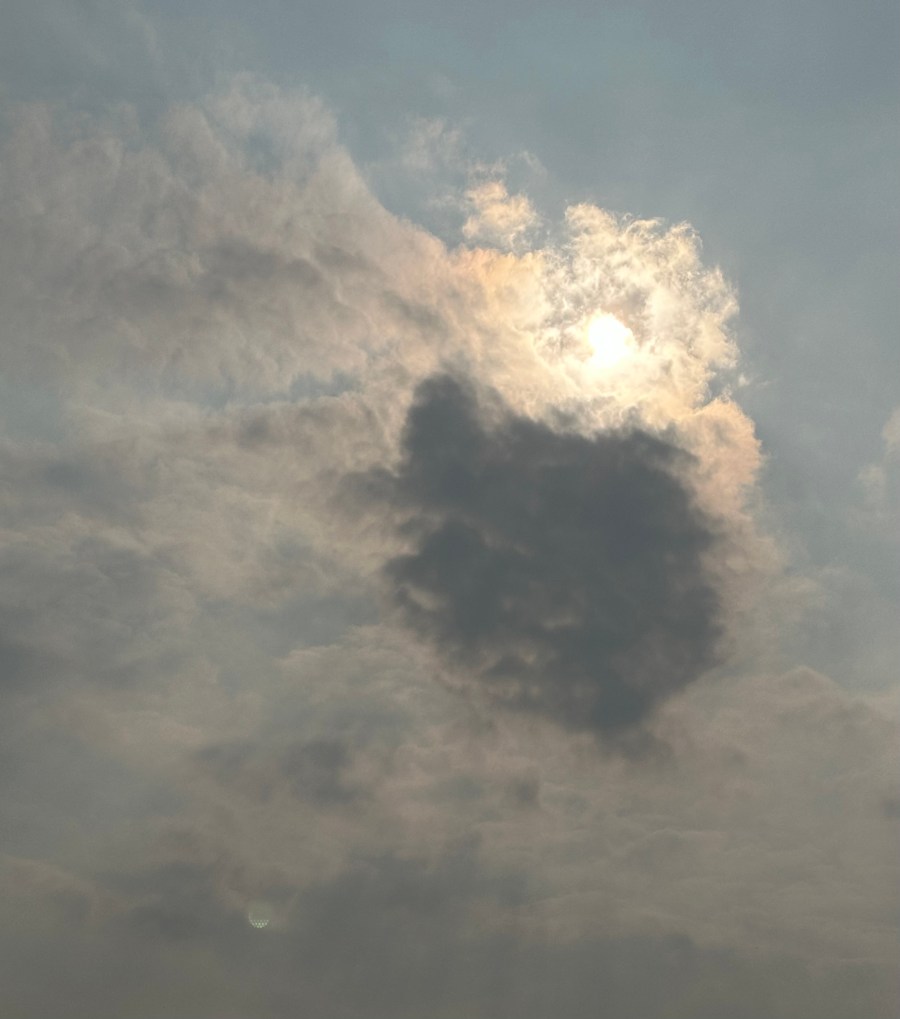
Earlier this week our skies were filled with haze from the Canadian wildfires. On Thursday the air quality index in Chicago (an hour and a half from my home) was 174, the worst of any major city in the world. Even in our area, Alexa reminded me of the poor air quality, and at times, I could smell the smoke. As I was driving later that afternoon I captured the image for today’s blog (I parked of course!). It reminded me of a time, living in Royal Oak Michigan, that I was contemplating the light within each of us, an ever-present flame that burns and is alive, no matter what is going on in life. I will never forget it, one of those special epiphany moments walking, seeing the clouds part within, and sensing a presence of light and joy.

It’s hard, at times, to see that light if one is even a little aware of the news and the great tragedies in the world of war, hunger and suffering, greed and a focus on power above justice and truth. But I have been uplifted by the scenes from Rome and the Jubilee of Youth. An estimated million youth have been attending the Jubilee at Tor Vergata. Even Pope Leo XIV seems invigorated by the crowds of young people. Circus Maximus, an ancient Roman arena was transformed for the youth to make their confessions at 200 confession stations with priests speaking English, Italian, Spanish, French, Portuguese, Polish, German, Hungarian, Slovak, Korean, and Chinese. Thousands of pilgrims were able to receive the Sacrament of Reconciliation in this place known for chariot races, gladiator fights and wild animal cruelty.

Pope Leo XIV reminded the youth of a truth we all seek, a burning question in each of our hearts, for truth and justice. He asked the pilgrims, and each of us, to reflect on our way of living in order to build a more humane world. In today’s homily, reflecting on the scriptures from Ecclesiastes and Luke’s Gospel, Pope Leo encouraged the youth to listen to Jesus knocking at the window of our souls and look beyond the world and nature that is fleeting and passes away. “‘This is why,” he said, “we continually aspire to something ‘more’ that no created reality can give us; we feel a deep and burning thirst that no drink in this world can satisfy.'” He challenged us to not let our hearts be deceived by the things of this world but rather “fullness has to do with what we joyfully welcome and share.  “Buying, hoarding and consuming are not enough.  We need to lift our eyes, to look upwards, to the ‘things that are above…'”

I remain hopeful, even this week with disappointing encounters or heavy news to try to grapple with. I begin a new week with a desire to focus on the things that really matter and things that I can control. Just this Sunday morning, artist Kreg Yingst of PsalmPrayers (his amazing work in on Facebook, Instagram and Etsy) responded to a comment I made on a new series he will be sharing with us by saying “it’s a drop in the ocean, but it’s my drop. I come to Christ in ‘my anger and powerlessness.'” Each of our individual drops make a difference, we each have the ability to have a positive impact and cast a ripple that might spread love and hope to those around us. Let that be our goal this week!

Isaiah 9: The people who walked in darkness have seen a great light; Upon those who lived in a land of gloom a light has shone.

Wishing you abundant peace and hope, Deena

Image: my photo of the hazy skies this week in Illinois.

Featured

Pulling out all the stops

Last week I mentioned that I enjoy watching YouTube videos for entertainment, instruction and reflection. I shared that I enjoy watching Paul Fey and his playing the great organs around the world. If you use technology you know that the algorithms see what you watch and then show more of that type of content to your feed in the way of posts or ads. Sometimes it’s helpful and sometimes it is just plain annoying.

The other night I opened YouTube to watch a video and saw an organ short titled “Pulling out all the stops”. I laughed out loud, not realizing the source of that idiom. I watched as the organist pulled out all the knobs on the side of the organ and how the sound of the organ changed and amplified.

My post photo today is our organ at Holy Family Church. You will see the stops on the side, we have about 30 or so stop knobs on our beautiful organ. On the large organ at Holy Name Cathedral in Chicago, built by Flentrop Orgelbouw, (image from my recent visit to Holy Name pasted at the bottom of this blog) there are 71 stops and 5,558 pipes. The stops are the primary way that an organist controls and shapes the sound that is produced by the organ. They produce the pitch and tone of the sound and allows the air to flow through the pipes on the organ.

The use of the phrase, “pulling out all the stops”, suggests that we are going to do everything in our power to make something happen or to succeed. I paused to think about this with regard to our faith life. What if we pulled out all the stops in our daily prayer and living of the Gospel message? What if I lived “full out” in my belief that I am a beloved daughter of the Father and a disciple and friend of Christ? Am I living my life in a world of “just okay” when God has something greater in store for me and my life? To use the organ analogy, by pulling out all the stops, can I get the loudest, fullest, deepest expression of what I am meant to be in life?

The Gospel message this weekend for the Seventeenth Sunday in Ordinary time encourages us in persistent prayer. Jesus, in Luke’s version, assures us to be confident in our prayer, to be bold and persistent. In our Old Testament reading, Abraham is bold in convincing God to spare Sodom if there are at least 10 faithful individuals who remain in the city destined for destruction. Jesus guides us to approach God, as our loving Father, confident and trusting.

That’s what I want in my faith life! Deep, rich, vibrant spirituality lived with passion and confident trust that God knows all I need and desire to live my best life giving glory to him! Are you living in a world of “just okay” or are you willing to place your trust in God and pull out all the stops in living that faith?

Wishing you abundant peace, trust, and hope this week, Deena

The organ at Holy Name Cathedral from the nave, or main seating area, of the Cathedral.

Featured

Pause and rest

Some days writing is like turning on the kitchen faucet and the ideas, like water, pour forth easily. Other days it is like watching water boil, but I am ready for the tea right now! None of the ideas I had to share today were developing. I decided not to fight it. I am just tired.

I am weary from the news. As if this week’s National news wasn’t enough, today my heart is breaking for the families who sent their children to Camp Mystic in Texas and now will be planning funerals. I can’t imagine the sorrow and grief they are experiencing. They will be on my heart, and in my prayers, along with all the others experiencing the devastation from the flooding river.

I didn’t realize how changes around me, some personal and some broader, were impacting me until I made an effort this week to breathe a little deeper and slow down. I felt the weight of those changes and decided to honor them instead of ignoring them.

This morning I saw a quote by Etty Hillesum, Dutch Jewish author and modern mystic who was murdered at Auschwitz in December of 1943, which said “Sometimes the most important thing in a whole day is the rest we take between two deep breaths, or the turning inwards in prayer for five short minutes.”

I sighed and thought “Yes, just rest today. You don’t have to write or do anything else.” I was going to simply write and suggest we all rest and pause today.

But, I was also reminded of Pope Leo XIV’s prayer intentions for July on discernment and the prayer he wrote. Part of the prayer says: “I ask you for the grace to learn how to pause, to become aware of the way I act, of the feelings that dwell within me, and of the thoughts that overwhelm me which, so often, I fail to notice.”

Like Pope Leo (as stated further in the prayer), I long for the choices that bring joy and bring me closer in my relationship to God.

So, today I pause and rest. I will make some tea, slowly, not rushing the water as it boils. I will enjoy the flowers that seem to be as relieved as I am from the intense sun and heat and are just radiant under the cloudy skies. Perhaps you will be able to take some time to rest today too.

As I researched the quote shared above by Etty Hillesum, to make sure I was sharing her words accurately, I saw another. I offer it to you today too.

“Ultimately, we have just one moral duty: to reclaim large areas of peace in ourselves, more and more peace, and to reflect it toward others. And the more peace there is in us, the more peace there will also be in our troubled world.”

Wishing you abundant peace and rest today, Deena

Photo: Butters will be my muse for rest today. He is an expert!

Featured

An ever-present call

I laughed out loud this morning when I read Kate Bowler’s Blessing for today on social media (“A Blessing and a Curse for your best life now”). “I am a project with a thousand open tabs. A walking checklist, forever waiting for the satisfying ding of completion. And this much is true: I am incomplete. But no one ever promised we’d get to feel whole.”

I LOVE THAT!

I often have this sense (and maybe you do too) of some magical finish line to cross. We think we will finally get all the insights, knowledge, tasks complete, big picture finally clear, etc. Then everything will be fine.

Nope! It doesn’t happen that way. It’s an ongoing, ever-evolving journey. (That’s exactly why I titled my weekly blog “Journeys”!)

We have to listen to the calls and invitations in life but then shape it to our own way of being in the world. One of my favorite craft makers and designers constantly reminds us, “You do you!” It doesn’t work to copy someone else or expect our “projects in life” to come out the same as their version. As a matter of fact, that would likely be pretty boring. Yes, I certainly look to others to inspire me but then have to do it my way, go “rogue” and make it my version of being.

Just the other day I was sharing a new project idea with a friend and thought it might be a great idea for her too. My project looked one way and the idea I had for her was something that would be unique to her and what she shares with the world. We both love to teach and help people grow in self-awareness and being their best selves, but we have two unique ways of sharing it. And that is just perfect! Neither of us could, or would want to, present our ideas the way the other one does. We support and encourage each other in our unique ways of being.

I’ve shared in previous blogs that this uniqueness of call is one of the things I love most about Ignatian Spirituality. Discernment, whether to our vocation in life, or the every day decisions we have to make, advise us to look at our desires, our unique gifts and aspirations, the needs of those around us and in the world, and most importantly, our dialogue with God and the guidance of the Holy Spirit. God wants to use the things we love to do, and that we have been given the ability to do, to do God’s work in the world.

I love the quote by Blaise Pascal, “The heart has its reasons which reason knows nothing of… We know the truth not only by the reason, but by the heart.” We have to listen to the desires of our heart, in union with our intellect and the Spirit, as we respond to the “call” in front of us each day.

June 29 is the Solemnity of the Saints Peter and Paul, a great Feast Day in the church. Peter, despite his lack of education and constant faults, and even betrayal, was entrusted with the initial guidance of the Church. Paul, a persecutor and enemy of the early followers of Jesus, became the most distinguished and esteemed writer of the scriptures that serve as a roadmap for Christian living and offer instruction and guidance to the Church. Both died as martyrs for the faith.

I would venture to say that when Jesus said to Simon, “You are Peter, and upon this rock I will build my Church”, or when St. Paul was knocked off his horse, blinded by light and led to the home of an early Christian that he would have been known for persecuting, that neither of them had a clear vision and goal, the perfect five-year plan, and knew what lied ahead for them. They only knew to respond “yes” to the call. God used who they were, and what they were in life, to call them to something more.

So, this week I propose we give ourselves a little grace to having it all figured out. Most certainly, I want to stop comparing and expecting to have all the answers that I perceive others to have. I hope to have a little bit more trust this week than last in the guidance I receive in prayer. I desire to be a better version of “just being me” this week than I was last. That seems like it would be wonderful progress to make!

Wishing you abundant hope and peace this week, Deena

Photo for this week: The San Damiano Cross, taken during my pilgrimage to Italy, in the Basilica of St. Clare in Assisi. It is said St. Francis was praying before this cross when the received the commission to the Lord to “go rebuild the Church”.

Featured

Clearing the weeds

I purchased two new plants to add to my flower beds, so yesterday, in spite of the intense heat, I grabbed the plants, and some garden soil to supplement the area, and dug new holes for the plants. Despite the abundance of plants and cared for beds, there are always some weeds to pull. It’s not too bad if you stay on top of it, but if an area is ignored for a while, it can take some time to remove the unwanted growth. I cleared the spaces, dug holes, then added the gaura and poppy plants. I also decided to move my “Silly String” hosta (shown in my blog image this week) to a place with better light and replenished the soil for it, and around a heuchera, that has been slow to grow. I’m hoping the extra nourishment of the garden dirt will give it the support it needs.

Caring for these plants yesterday was a perfect analogy for my week. I reflected that we have to get rid of the weeds to give space for the desired plants to grow. The garden can be disturbed or strangled by the degradation of pesky plant growth. Sometimes it just needs some attention and nourishment.

By Wednesday night of this week I realized that my own Garden was in a state of disrepair and rupture. But uprooting false ideas, and tending to wounds, can be a tender undertaking. It is, however, a necessary exercise if we want to move beyond a place we are in and approach a desired state of peace and wholeness. To use another analogy, one proposed by my friend Kate Brown in a program this week, we need to “clear the static” to tune in and be in a place of alignment.

After hours of crying and praying Wednesday evening into Thursday early morning, I turned to an anchor (a focal point) to help myself feel grounded and safe. I began to breathe more slowly, calm my mind and gently fall to sleep, trusting in the love and support of God. It was a difficult time, for sure, accentuated by some pain from a serious fall in the morning and, then later in the day, feeling dismissed, and undervalued, by someone. Without noticing and attending to the wounds when they occur, just like the weeds in my flower beds, they can overwhelm and choke the joy and life force from us.

On Saturday morning I found myself recalling the time I taught classes at the local community college, in some of which I shared the importance of relaxation and mindfulness techniques to reduce stress and anxiety. I then opened an email to a podcast on mindfulness and learned a new technique that I was not aware of. Author and mindfulness teacher, Julie Potiker, shared her concept and use of the SNAP technique she developed. SNAP is an acronym, and has a somatic component, like the snap of our fingers, which can help us manage difficult emotions and move through situations with more ease and peace. The S in SNAP stands for Soothing Touch. It might be placing your hand on your heart to get in touch with your emotions in the moment. N stands for Name the emotion. To stop and consider what we are feeling in the moment, not judge or dismiss it, can be powerful. As Julie said, “you name it to tame it”. A stands for Act, we choose whatever we have in our mindfulness toolbox to help us move beyond the place we are in and “change the channel”. It might be deep breathing, listening to soothing music or a teacher that inspires us, talking with a friend, going for a walk or simply picking up an item of meaning or significance to us. Lastly, P stands for Praise. She suggests that here we move into a state of gratitude for “yourself, your practice, the universe, or the deity of your choice.” As I moved through my own difficult emotions this week, I stopped to thank God for the healing work that is beginning, that the fog is lifting, so that I could see more clearly what lies ahead.

Yesterday after I was done with the planting and care for my plants, I was able to see the flower beds and know that I had helped provide an environment for growth for them. I also checked in on my own state of being and knew that I had begun the work of cultivating the soil for restoration and peace. It affirmed my decision (that I have been second guessing since registering last month) to attend to week long retreat on healing. It provided insight to the reasons I have been researching joy and what I hoped I would find there. I gained clarity on the work I want to do and ways that I might share it with others.

Our growth never ends, at least as long as we are on the journey in this life, and I am thankful for that. I hope that you feel the same and know that you are never alone on the journey!

Wishing you abundant hope and peace, Deena