Featured

Pray for peace

I begin by stating that I understand and support the notion that we create internal peace by staying out of negative and political social media posts, staying away from the news except to remain informed, or worrying about a war that we have absolutely no control over.

I get it, I really do. I am trying hard to create peace internally and in my small sphere of influence. I continue to write in my journal, as I have for months, that each day is going to be my peaceful day and I focus on that goal each day.

But when I see a little boy crying in a Lebanese hospital because he was bombed and saw his father in pieces before him, I also know we cannot hide from the reality of what this evil war is doing to innocent people. There are times we must speak out and defy what is happening. It is not making our country safer, richer or better off. I don’t need to share all the information about what is happening each day and how much it is costing our country. You can read that on your own.

I join Pope Leo XIV appealing to “those responsible for this conflict: cease fire!” I join him in asking each of us to look at what is happening with the eyes of Jesus. In today’s gospel for the Fourth Sunday of Lent Jesus cures the blind man. We can open our eyes or keep them shut. Pope Leo also said, “It takes a vigilant, careful and prophetic faith to open eyes to the darkness of the world and bring the light of the Gospel to them through commitment to peace, justice and solidarity.”

Speak up when you can. Support those in need in whatever way you are able. Vote to make a difference.

Most importantly, let us pray for peace in our world.

Deena

Featured

Go sit in your cell

When asked for a word of wisdom, Abba Moses, one of the early desert fathers, told the seeker “Go sit in your cell, and your cell will teach you everything.” The journey of Lent is one of going within, engaging in disciplines that help us see, hear and respond more freely to the call of the Christ. This week I was called deeper into the desert.

After picking up the remains of my cat, Bela, on Tuesday, I felt a desire, and an inner call, to greater solitude. I needed space to process grief on many levels, not just losing Bela. I picked up some groceries, advised a couple people who needed to know that I wouldn’t be participating in “normal” activities for the remainder of the week. I turned within. I did have some text or phone conversations as needed, did some required social media posts on sites I post for, but spent the week reading, reflecting and journaling. I created a personal and private retreat in my home. Just like entering a silent retreat and questioning whether I would be able to gracefully encounter the time in silence, Wednesday morning I questioned what I was doing, I “should be…” Fortunately those temptations were met quickly and I easily fell in the rhythm of my self-created retreat.

When we set aside time and space for reflection, it’s amazing what shows up. Or perhaps, the quietude invites greater attention to the world as it always is around us, without a blur of motion, internal and external. For most of us the mind is a turbulent ocean, or sea, waves crashing and distracting us all of the time, but when the waves calm down we can see into the depth of the sea more clearly.

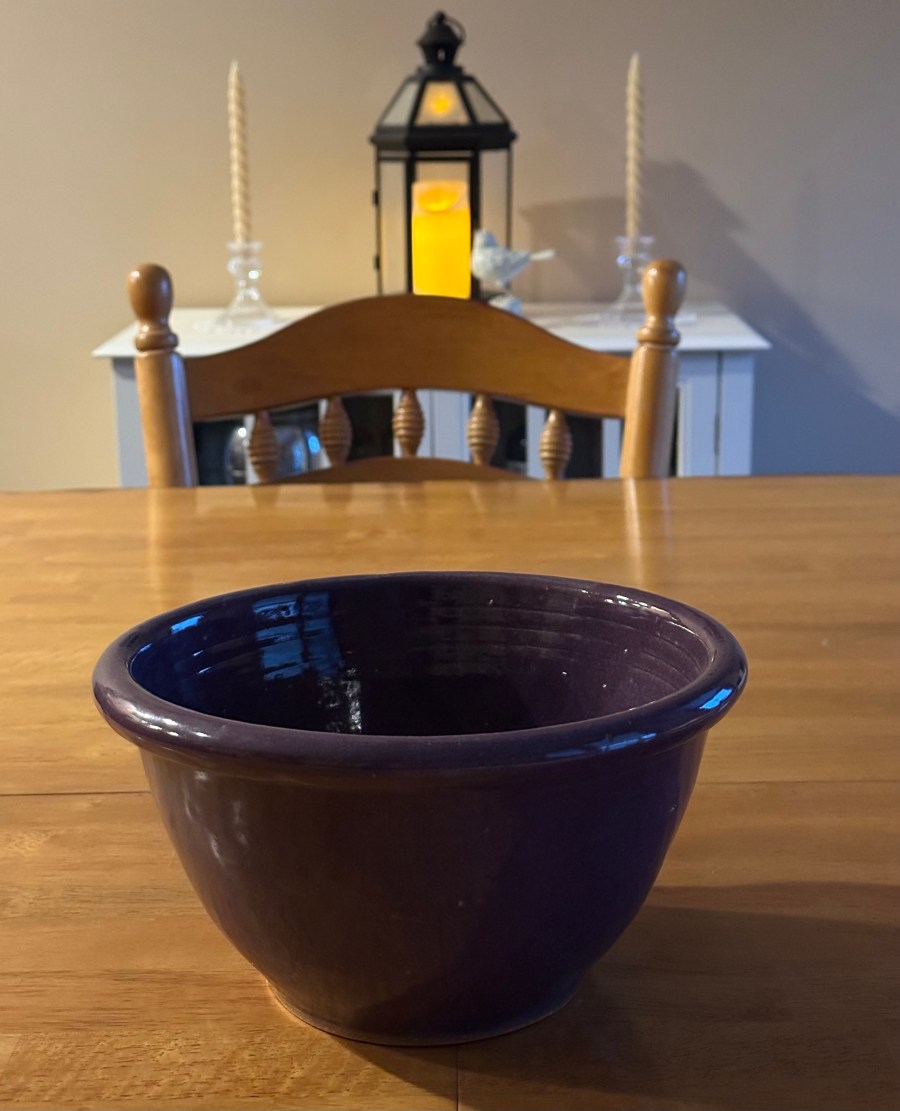
I was invited again this year to imagine receiving an empty clay bowl from Abba Arsenius, another of the early desert fathers, (Retreat: A Different Kind of Lent) as I had been given in the past. In the bowl we can visualize all the activities that fill up the bowl each day, distracting or addictive behavior, and then intentionally empty the bowl to create a spacious place to receive what is more life-giving.

Not everything I read or encountered was spiritual or faith reading. Most was. I also listened to a discussion by an author and life coach, Cheryl Richardson, who I followed more closely several years ago, but have been tuning into more frequently lately. She offered simple self-care wisdom during these challenging times we are experiencing. (These were offered in a quite humorous and sarcastic way, such as eat more sugar, make sure you always have your phone so you don’t miss a social media post, read every comment on them, and of course, stay up late each day!) I felt a longing for activities, or information, like that from my past. Things that were authentically me, things that inspired, shaped and formed me. Somehow they became “less spiritual”, a bogus assessment of where one is capable of experiencing God or Spirit.

I stitched – if you have stitched, crocheted, knitted or maybe even done puzzles or diamond art, you know it can become a method of quieting the mind. A stitch in, and a stitch out, can shape a slow pace for mindful breathing. It can become a way to let go, creating a framework for a quiet pause.

St John of the Cross said, which was often shared and made popular by Trappist monk, Thomas Keating, “Silence is God’s first language. Everything else is a poor translation.” In stillness we can hear what is more essential. Nothing I “heard” or read this week was an earth-shattering revelation, but I was awed, and grateful for, the insights that did form throughout the week. Like the Samaritan woman in today’s Third Sunday of Lent gospel, I have been at the well thirsting for a drink. This week, during my quiet pause, I was given a long, cool, refreshing drink.

It’s not practical for me to be able to retreat completely like that every week but I can certainly create more quiet spaces each day. I also want to continue to assess that my daily activities are done from a place of desire or service, not expectation. If any of this sounds inviting to you, perhaps you can consider some time in your day for a sacred pause to turn within and listen.

Wishing you abundant peace, Deena

Image: my purple bowl, a visual to remind myself to fill it more consciously and lovingly with things that matter.

Featured

Led into the desert

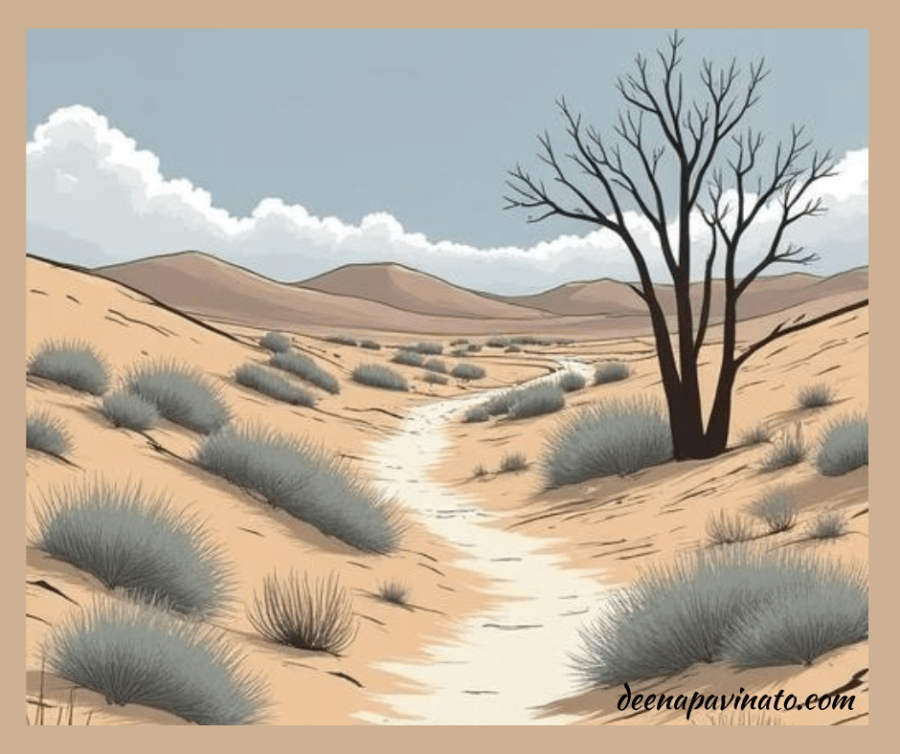
In life we are led to places we don’t want to go. I have struggled with a thousand questions this week, none of them with life-giving answers that help me in my grief. The desert provides a vast and stark landscape, with few distractions, so we have room for answers to emerge. I am learning that the answers will have to emerge, in their own time, they do not break through as a result of my willing it. Perhaps that is why we are given the symbolic period of 40 days in our own Lenten journeys to mirror the days that Jesus was led into the desert to pray, fast and be tempted. We need time to “rediscover what our hearts truly desire when the distractions fall away” as so beautifully stated in the opening of the Laudato Si’ reflection for the First Sunday of Lent.

What I desired for Lent was to enter a desert time to be free of the distractions that were filling my time with things other than prayer and reflection. Now the distraction of all my questions is consuming my time, impacting the desire for prayer and reflection, even more than going out for coffee would have done.

Given the temptation of changing this situation, just like a rock into a loaf of bread, I would probably say “yes”, change it. I would not be strong enough to resist the temptation. I want Lent to be different than it is.

If you are finding you have a similar mindset as you look at the distractions in your own life – wishing to change circumstances to be a person more centered in prayer and meditation, to be a person of peace and lovingkindness and more compassionate towards others, to want to give more of your time to those in need – you are not alone. I hope for each of us that the desire for these good works is in itself a grace. As also stated in the reflection by Laudato Si’, the distorted desire for the things (my add – of the world, more fleeting in nature) that are pleasing becomes a distraction, they fragment us, not free us.

This weekend in my journaling and reflection I read something written by Rainer Maria Rilke that I am trying to sit with. He invites us to “have patience with everything unresolved” in our hearts and to love the questions. “Don’t search for the answers, which could not be given now, because you would not be able to live them. The point is, to live everything.” I must have hope in that, to live with the questions so that the answers slowly emerge as part of living into them. Just as I have hoped by writing my “peaceful day” statement every day for months is a slow drip of water smoothing the jagged edges of my heart, I have hope in this guidance by Rilke.

Let each day be what it is. Lean into the questions. Hold hope that they are all part of a larger transformation taking place.

Wishing you a week of peace and hope, Deena

Image created in Canva

Featured

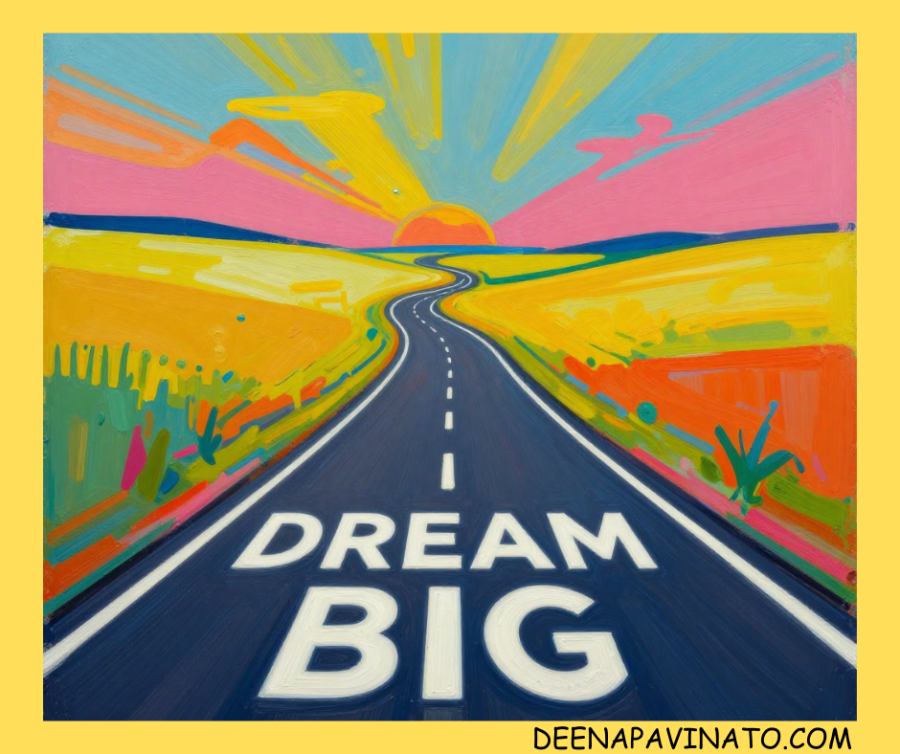
Start with a dream and dream big

I love the Opening ceremonies of the Olympics, and the Winter 2026 Opening Ceremonies did not disappoint (ok, it’s in Milan and Cortina, so I might be a bit biased). I loved it all – Andrea Bocelli, the dove image and message of peace, the adorable Italian hand gesture lesson, the all female color guard in Armani suits, the colorful flowing paint tubes, dancing composers and, (seriously? How creative and representative of Italy!), giant colorful moka pots, I was thrilled.

Beginning with a sequence of the winter athletes watching their younger selves practicing their sport was an inspiring first segment for the Ceremonies! Having watched young people grow into adulthood, in my own family, with their specific goals and ambitions, and achieve those dreams is equally inspiring. I paused to reflect how some people are so inspired at a young age to pursue a goal, and the relentless practice to accomplish it. It’s a gift to be so confident and determined.

On Friday I was reminded that we are all encouraged to dream big. A reflection by Monk Mindset challenged me to consider that we would never tell a young child to dream mediocre dreams, to aspire to goals that are “less than” what they might desire. We don’t tell a child, or at least I hope we don’t, not to dream big because it is grandiose or presumptuous to want to accomplish something in life. My niece’s 7 year old has mentioned she wants to be a Lego Master. So why not?! She’s immensely talented at it and there are such individuals called Lego Masters in the world. Whether that comes to pass or it morphs into some other creative, and equally talented, skillset of planning, designing and creating, it doesn’t matter. I want to encourage her to believe in that dream! I would not dare to tell her to focus on something less exciting!

Fr. John of Monk Mindset continued to suggest that we might spend some time in prayer and discernment about the deepest desires in our hearts. It reminds me so much of Ignatian Spirituality and the notion that God is discovered when we spend time reflecting on the desires of the heart. In true discernment, we explore those desires that are ordered toward God, that lead to greater faith, hope and love of God. In that discernment we will uncover something that God might intend us to desire and pursue. When we have identified a spiritually noble and ambitious dream, then we have to courage to ask God to aid us as we run confidently toward it.

These dreams would not be petty desires or visions of grandiose and self-promoting accomplishments. Fr. John reminded that we need to be open to and allow room for purification and alteration of those desires toward the will of God in our lives. In prayer and contemplation, we weed out the disordered attachments and desires and seek those that best use our gifts and talents to serve God and others. I always thought, why would God want me to be an accountant when my heart does not move in that direction. So I don’t have to fear asking God what ways I can best serve.

I was also reminded, seeing a recent post from Hay House, that Louise Hay, an author and founder of Hay House Publishing, began her life’s work late in life. After a divorce and cancer diagnosis she began to write and at the age of 62 opened her publishing company, which remains a leader in the world of self-help and personal fulfillment publications. Do I desire to open a publishing house or author several books? No, but perhaps some of the other ideas that I lay in bed and dream of deserve a bit more reflection, prayer and discernment.

We can all make a difference in the world by using our gifts and talents. What are your dreams that lay dormant? Spend some time this week and reflect on ways that your future might be as grand as God imagines for you.

One of the best commercials I have seen so far is by Toyota with young girls repeating positive affirmations from their father in a car. The tag line is “Every destination has a beginning.” What’s your destination?

Wishing you abundant peace and joy this week, Deena

Image: created in Canva

Featured

The journey of peace

In today’s Gospel from Matthew (Matthew 5: 1-12a), Jesus gathers his apostles, and the growing crowd of disciples and followers, and shares the familiar Beatitudes with them – these words shared are a radical blueprint for the heart for those of us searching for answers. Although I’ve heard these verses many times, they spoke to me with a new weight this year. Ever since the Vigil Mass on Saturday, words like ‘peacemakers,’ ‘persecuted for righteousness,’ and ‘hunger and thirst’ have been nudging me to spend more time with them. What am I being called to do? How might I move beyond hearing the words and make them become a part of my life? What is my role to help embody the words at a time when our world needs more light and peace? I don’t have the answers, so I have gathered a few favorite quotes from many that I respect and turn to for wisdom, with a prayer that they might help me understand the words Jesus is calling us to live. I also share a personal example at the end of how we are invited to reflect on our own journeys.

As a Benedictine Oblate, I begin with St. Benedict and the peace he advocates in our daily living of The Rule, from the Prologue: “Let peace be your quest and aim.”

Pope Leo XIV, yesterday in his address to participants at the “Political Innovation Hackathon: One Humanity, One Planet” Conference, said “there can be no peace while humanity wages war against itself—by discarding the weak, excluding the poor, and remaining indifferent to refugees and the oppressed.” He said “Only those who care for the least among us are capable of accomplishing what is truly great.” He urged the young people to seek peace always.

Dorothy Day: “If peace is to be built, it must start with the individual. It is built brick by brick.”

St. Mother Theresa: “If we have no peace, it is because we have forgotten that we belong to each other.”

Anthony deMello: “Peace is not the absence of conflict, it is the ability to handle conflict by peaceful means.”

Thomas Merton: “We are not at peace with others because we are not at peace with ourselves, and we are not at peace with ourselves because we are not at peace with God.”

Thich Nhat Hahn: “Peace in every step.”

Lastly, I share the personal experience from my reflection during Adoration this past Wednesday on the Buddhist monks walking for peace. I prayed to let their walk continue to plant seeds of peace in my heart. That they might encourage me to spread a message of peace in my own way. I contemplated the number of people they are influencing by their walk and their daily messages. I continue to write in my journal each morning, “Today is going to be my peaceful day.” I paused and thought about others, like the Peace Pilgrim, who have journeyed for peace. Then God reminded me he has a sense of humor and is listening to all these silent prayers and yearnings.

I reached down and picked up my copy of the new book, Encounter Grace: Moments of Hope, Joy and Peace, by mentor and friend, Becky Eldredge. I opened and turned to pages 36 and 37 and read the two reflections “A Call” and “Healing Power”. In “A Call”, Becky wrote that we are invited to pray for the grace of getting to know Jesus more intimately as we journey through the Spiritual Exercises of St. Ignatius of Loyola. “It means not only hearing the call to follow Jesus but also to WALK with him and be there working with him.” Then in “Healing Power”, Becky reflected on the ways that Jesus healed others and the impact it had on her. She invites us to consider that it is through our connection with Jesus in our “inner chapel” that “his power moves from him to us.” When we do that, we “encounter Jesus the same way Jesus encountered people tangibly when he was WALKING around the earth.” (Using caps for both quotes here is my emphasis.) I laughed out loud, quietly because I was in Adoration, but I thanked God for reminding me of Jesus’ constant effort to be and share peace. I can turn to scripture just as easily as I can turn to YouTube to see where the monks are walking today.

So today, in whatever way is most helpful for you, consider how you are and might be sharing a message of peace to those around you. We all need it so desperately.

Wishing you abundant peace this week, Deena

Image: A photo of a banner at Subiaco Abbey in Subiaco, Arkansas taken during an Oblate conference.

Featured

Go by another way

I sat down this morning to do social media work I have been hired to do, before starting this blog, and I heard a bird calling. It wasn’t the typical wrens or sparrows of the morning. It was clearly not cardinals or blue jays I hear in adjacent neighborhood trees. It’s too early for robins. It was distinct, different. I immediately got up to find it, in the front yard, or in my backyard tree. I couldn’t find it but I kept looking as it kept calling out. It stopped me from doing anything else, I couldn’t resist the invitation.

I wonder, as I reflect on the wise men in today’s Epiphany story, if these magi had the same urgency to respond to the unique star they were seeing, seeking the important event it was foretelling. It’s easy to ignore those inner promptings, whether as simple as the little bird I heard, or as illuminating as a distant star. We pass them off as impractical ideas or a passing flights of fancy.

Sometimes the way will find you, even if you go another way.

This Fall I listened to a talk, either by Fr. Bonafice Hicks or Sr. Miriam Heidland (my journal notes weren’t clear as I looked back), and a reference to a new book by Bishop Eric Varden on Chastity and how chastity, and Bishop Varden’s description of chastity, speak of a reconciliation of senses and a love of beauty. I had listened to Bishop Varden online in the past, and enjoy his teaching, so I ordered it immediately. Once it arrived, and I attempted reading, I quickly realized I was in over my head. I set it aside. I picked it up again at a later date and came to the same conclusion, I was not going to get the point so easily captured by the review I listened to.

During a recent homily, my pastor spoke of Bishop Varden, so Friday I dropped off the book, thinking he might enjoy reading it and would certainly be a better student of the concepts than I was. I consider myself fairly adept at spiritual literature and theological teaching. Not an intellectual, but also not completely amateur to spiritual reading. After all, St. Teresa of Avila, St. Catherine of Siena, St. John of the Cross aren’t kindergarten reading and I enjoy spending time with their writings. I handed over the book as well as any hope of being able to understand it.

Friday night I was listening to a daily session of Minute Monk on the Hallow app, led by John Cannon, founder of Monk Mindset (a website but also a paid app released in 2025). The reflection was given by Fr. John on the Feast of Saints Basil and Gregory. He began talking about the Tools of Good Works in the Rule of St. Benedict and the love of chastity. He described chastity, not as an absence of sin, but as a good desire, a virtue, a mark of a human being fully alive. He then referenced Bishop Varden’s book on Chastity. I literally laughed out loud given that I handed over the book earlier in the day.

Ok, God I am listening, I exclaimed. Where are you leading me?

The summary was an excellent one, much like the one that led me to order the book in the Fall. Fr. John continued to describe chastity not as a list of do’s and don’ts but as an re-establishment of wholeness. It restores our senses to see and truly love, is a marker of integrity and allows us to see the world in truth, to have a contemplative spirit. It leads us to be more clearly attuned to our ultimate purpose of loving God and others.

For clarification for those who might be confused about chastity versus celibacy (a vow or state of being to remain unmarried and chaste), chastity is a broader virtue of having fidelity, sexually, to one’s state in life, whether being married or unmarried.

The instance wasn’t for me a reminder of living a chaste life, but instead was a reminder of living a contemplative life, focused on love and compassion for others (Compassion is my chosen “word” for 2026). It was a reminder that being free of other responsibilities, I have desired a life dedicated to prayer, contemplation and monastic virtues. But lately I have questioned how I have been living that commitment. How deep is my love of others when I react harshly, with judgment, to those I encounter? Am I seeing Christ in the other?

This morning, the USCCB social media pages, released a reflection on the Feast of the Epiphany by the Most Rev. Ronald Hicks, Archbishop-designate of New York and Bishop of Joliet. Even though he is Bishop in the nearby Diocese of Joliet, I have learned more about him recently as he has been introduced to the people of New York. He talked about how his experience of living in Central America transformed him, his experience of the people and the culture, changed him. He said that when he encounter Jesus and his word, in scripture, and the sacraments, when we care for others, we go home by another way. We are changed and we are challenged to carry that Light, that we have experienced, out to others.

Let it be so.

Wishing you a week of abundant hope and joy, Deena

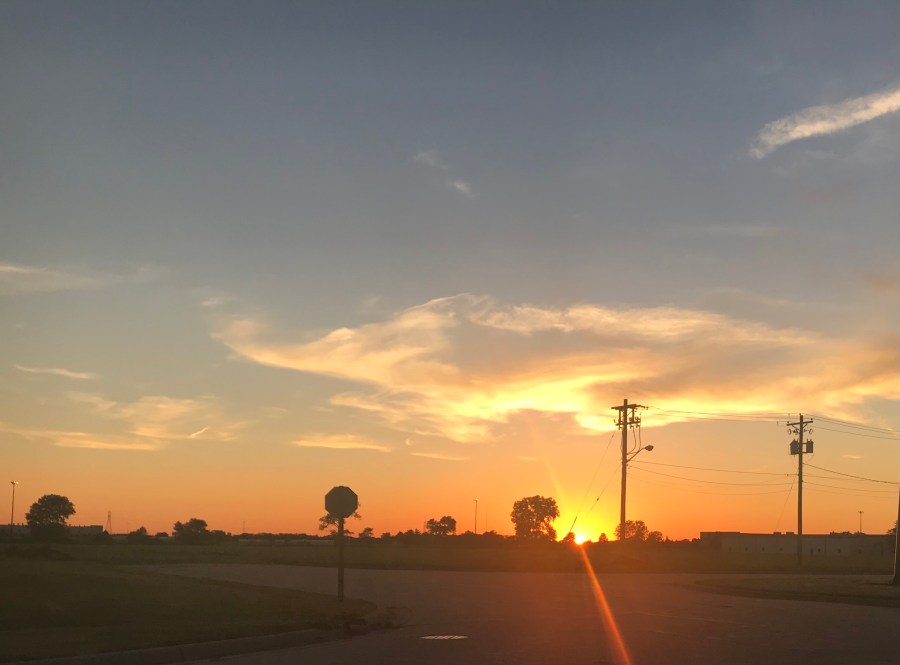
Image: a photo of a sunset, a moment of beauty.

Featured

The story of our families

I have been reflecting this morning on the journey of my grandparents from Italy to Ellis Island, then on to Illinois. My grandmother was born, on this day, December 28, in 1898. She met my grandfather during the war. He traveled here first to get a job and then my grandmother came after. They had three children here. My grandmother lived, caring for her young children after my grandfather’s death, by first working in a factory and then in later years sewing for others. My other grandparents lived in the area as well, after migrating from Slovakia. My great-grandfather died in the Cherry Mine Disaster in 1909, when my grandfather was a young boy. The family name was changed for ease of describing who people were and where they came from while they worked, so the last name on one of the few tombstones in the Cherry Cemetery represents the area in Slovakia that he came from and then the name that became our family name here in the United States.

During the holidays I also recalled so many wonderful family occasions with aunts and uncles that are no longer with us. All families with struggles and accomplishments, just like any other family. My mother and father worked hard, in a variety of occupations, to provide for us. We moved from Illinois to upstate New York then back to Illinois again as my father followed his career and then desire to open his own business. My mom, a nurse, ceased her career to work alongside my father for over 25 years.

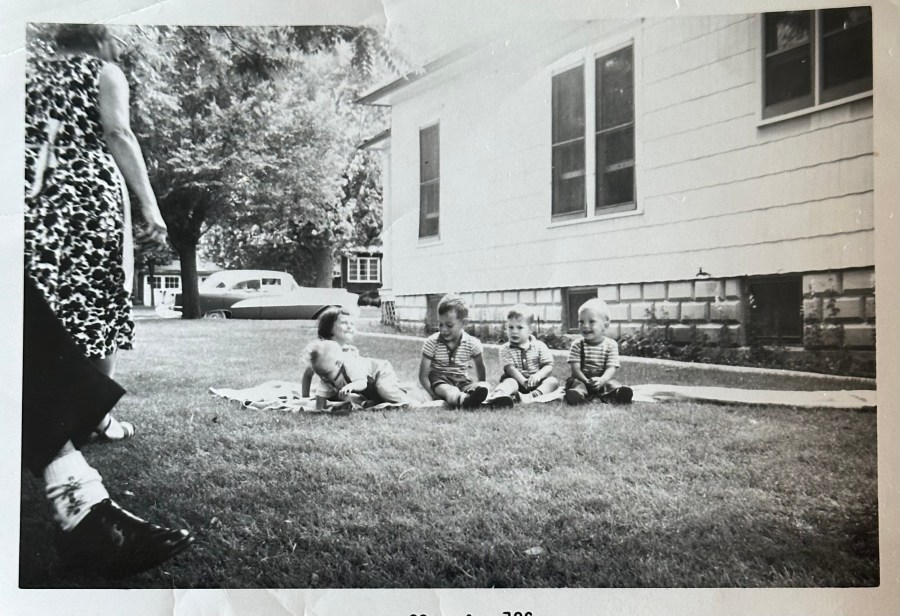
I am sure you have similar stories and history. Parents trying to provide for and do the best that they can for their children. Perfect? No, not by any means. But the family that we are one with and come from, the families that make us who we are, for better, or motivated to change. If you don’t know, or haven’t shared your family story, make a point to do so. There are so many details that I wish I had now, but they are gone with the memories of those who held them. But I am grateful for countless images captured in photos, like the one I share today, before we stored everything on our phones.

Today we celebrate the Feast of Holy Family, a young family also journeying in life, with Joseph doing his best to care for his little family. December 28 also recalls the death of the Holy Innocents, the young boys massacred because of a cruel and jealous king who couldn’t stand the thought of someone having more authority than him. The message that Joseph received, to flee to Egypt, saved Jesus from this horrible persecution.

Today, Pope Leo XIV reminded us that the world “has its ‘Herods,’ its myths of success at any cost, of unscrupulous power, of empty and superficial well-being, and it often pays the price in the form of loneliness, despair, divisions and conflicts.” He asked us to pray for all families suffering due to war and violent conflicts. We can pause and pray for all those families who, like our own families, are trying to find a better place in the world to live and flourish.

So today, reflect on the family that helped form you into the person you are today. Tell stories and share memories, so that they are passed on. If you are lucky enough to have them, spend time with old photos and recall family celebrations and gatherings.

Then as Pope Francis wished in his 2020 encyclical, Fratelli Tutti, “Let us dream, then, as a single human family, as fellow travelers sharing the same flesh, as children of the same earth which is our common home, each of us bringing the richness of his or her beliefs and convictions, each of us with his or her own voice, brothers and sisters all.” (No. 8).

Wishing you abundant joy and peace with the family memories that you hold, Deena

Featured

We wait in hope – First Sunday of Advent

Today is the First Sunday in Advent, the beginning of the Church’s liturgical new year. We begin the year with reminders of the promises of God and with cautions to put aside works of darkness and to stay awake and be ready. We begin the year waiting, not celebrating.

There are certainly different kinds of waiting, some easier to bear than others. We can be excited waiting, as we would waiting for the birth of a child being born to loved ones or excited waiting to leave on a vacation we have been planning. We might feel anxious waiting if we are waiting to hear from the doctor after having tests done or when we sense a change coming to a job due to corporate restructuring. We can wait with nervous anticipation to hear about a job that we really want, sensing that we did well during the interview. I suppose there are as many ways that we wait as there are the personalities of each of us. Waiting isn’t always easy. We all handle waiting differently and as I heard Dr. Arthur Brooks, one of my favorite leadership speakers and authors, say recently, we don’t wait well. We run from waiting, distracting ourselves with our phones, TV or other preoccupations.

Advent waiting is different. Sadly, it is a waiting that often gets muffled and diminished by the preparations for more secular aspects of Christmas such as shopping, decorating and parties. As Advent begins we are invited to look within and prepare our hearts. I haven’t gotten to most of my Advent reflections yet today but one posed a question that stopped me from moving through the morning with a careless disregard for the season that begins today. If this Advent was the last one for the world, or for me personally, would I be ready?

As Christians we do wait with hope in a world that is better than the one we live in. We hope for endless bliss, anticipating the joy in the presence of the God we profess to believe in. But if I wait in hope, I must stop and ask whether I am living a life that reflects hope in God’s eternal promise? Do I live with joy and peace even during the trials that appear in my life? Am I spending my time, money and relationships that reflect my belief that all is gift and that I possess those things as a steward, treating them as the fleeting possessions they are? Do I live with generosity for those less fortunate? Do I make choices that reflect my beliefs and share those beliefs with others?

Advent doesn’t have the same penitential aspects that Lent has but we are invited to spend time each day to look within and assess how we’ve been doing. In whatever little ways we are able, let us wait in hope as we listen to God’s promises, we reflect on the narrative of the coming of Jesus in the world over 2000 years ago, and we review our lives in relation to the beliefs we hold and profess.

If you need suggestions for this Advent, please see my blog from last week with a list of resources, online or book format, that you can use for your daily reflection.

Wishing you a abundant hope in the promises of the Christ this Advent, Deena

A special note of thanks to each of you who have been reading and following me as I begin the fourth year of this blog, whether you began in 2022 or recently. I appreciate your support and that you have read and commented, whether personally or publicly, about my musings each week. It has meant the world to me. May peace be with each of you, and our collective community, as we begin this new year.

Featured

How you start your day

Are your morning routines defined and predictable? Do you have things you do each morning that help you get ready for the day ahead? I have been reading lately that how you start your day, sets your day. I have a pretty reliable and set routine each morning but lately I have been questioning the effectiveness of each morning and also why I am not getting some of the reflection time in that I used to. I miss it and want to find a way to incorporate that quiet morning time back in my schedule.

I listened to Dr. Arthur Brooks, “the Happiness professor, best-selling author and Harvard professor, on YouTube a couple of weeks ago. He described his 6-step protocol each morning that he suggests will create a better day. He begins by getting up at 4:30 a.m. (Dr. Brooks cited a study that showed higher levels of productivity and creativity in those who began their day before dawn), after starting with an early bedtime the night before, exercising first thing (he has a gym in his home or when traveling only selects hotels with 24 hour gyms on premise), having time each morning to spend in spiritual reflection (he goes to daily Mass), delaying his morning coffee (saying that it improves focus and energy throughout the day) and has a high protein breakfast. Then he gets on with his day and makes sure his time is productive time by ignoring emails, the newspaper and social media until later, or checking hourly.

I enjoy listening to Dr. Brooks and his thoughts on happiness, reducing stress and anxiety, and spirituality. But I listened to these six points and felt like such an under-achiever! But to his credit, toward the end of the video, he said try it and adapt it to yourself, even inviting viewer response on how we might have changed it for our lifestyle.

Another routine I read was similar; plan the night before, get enough sleep, limit phone and technology use before bed, practice gratitude, hydrate in the morning, eat a healthy breakfast, move your body or exercise, and practice mindfulness or journaling.

Last week, in an online class, we talked about morning routines and setting daily intentions. Our discussion was about finding a routine that works for us and being aware, or conscious, as we completed all the tasks each morning that feel like an obligation or perhaps even prevent us from doing these things I have listed above. The main point was changing our attitude about those duties that feel as though they are hinder us from doing things we would prefer to do, in my case, my quiet reflection and journaling time.

I tend to get up at 4 or 4:30, feed the cats but don’t always stay up and begin the day at that time. That might be a good place to start, but that also means I have to do a better job of getting to bed early so that I am ready to stay awake at 4:30 a.m. I love watching the sunrise, so I am usually up by then, especially recently as the mornings are darker longer (well, at least until next week). Before daily Mass I do the social media posts for my parish, then get ready for Mass. When I get home the cats usually want more attention, or food if they ate at 4 a.m., and I want my coffee! I do a terrible time with a healthy protein-rich breakfast. At one point I thought about a protein smoothie first thing, but read one natural health practitioner say not to have anything cold first thing in the morning. I hate eggs and don’t eat meat, or very little, so that rules out lots of morning breakfast options. Maybe the better choice is still selecting the smoothie, even though it’s cold, because I would begin the day with protein and fruit.

I have been, over the past few months, working as a social media assistant for two different entrepreneurs, one an independent training and holistic practitioner and the other a retail establishment. I have noticed I get drawn into social media more than I did in prior months by checking out posts and techniques used, which then leads down a rabbit hole of viewing other posts and updates. I would like to discipline myself enough to come home from Mass, make the smoothie (or find a better alternative), make my coffee and sit down to journal before I begin my online work activities. A half hour or so isn’t going to make or break the day for daily sales at the store or online enrollments! Based on Dr. Brooks video, it might make me even more productive and focused.

If you are a pet parent, you also know that you have to be flexible for changes in routine. The cats love the patio as soon as I get home and I am happy to open the doors and windows to get fresh air in the house. The holistic practitioner I mentioned above, regarding the cold breakfast, suggested getting 10 minutes of sunshine early in the day, so it would be nice to step outside with the cats for a bit. That would add 10 more minutes to a routine before beginning work. But seriously, 10 minutes isn’t going to prevent me from getting things done and might even help, by standing outside, taking some deep breaths and reflecting on the day ahead before I sit down to journal.

The gym usually gets delayed until afternoon, if I get there, because I prefer to go when fewer people are there and I can’t imagine adding one more thing to the morning before doing my online work. But that works for me and I guess that is the point of this discussion. My recommendation is take in all the ideas and suggestions about creating a great day and then do what works for you. By all means be flexible and spontaneous too. This Sunday morning I was asked to “play the organ” (i.e., hit the buttons at the right time) on our amazing organ at church, that Fr. Carlson programmed with the music for Mass. I wasn’t in the mood to begin this blog on Saturday evening, my normal writing time is early Sunday morning, but I also wanted to help and relished the idea of attending Mass again this morning after attending Vigil Mass on Saturday. So I am posting it later than normal today. The world isn’t falling apart as a result. Often, on Wednesday mornings after Mass, the ladies invite me to join them for breakfast or a friend might reach out and suggest meeting for coffee. Being social and spending time with people I enjoy is also important to me and my well-being, even if it means other morning activities are delayed a bit. I think the most important thing is that we feel that we are choosing versus reacting to the activities in our day, having a positive attitude and making the most of the time we have been given.

I’d love to hear your thoughts on starting the day in a way that sets you up for a happier, more joyful, day. What routine has been most impactful for you? Do any of these ideas sound like ones you would like to incorporate?

As always, I wish you a week abundant in hope and peace, Deena

Blog image: Bela deciding that he needed to be a part of my morning routine a few years ago.

Featured

Grounded in faith

I started reading Brene Brown’s new book, Strong Ground: The Lessons of Daring Leadership, The Tenacity of Paradox, and The Wisdom of the Human Spirit, the past few days. I have to admit that it is always her personal reflections and application of her work with the Dare To Lead program that I find most thought provoking in my own life. We’re all leaders in some way; family, church or social organizations, the way we interact and care in relationships, but having stepped away from corporate work I am less interested in leadership qualities at that level. Still, I was intrigued with Brown’s new book and thoughts she might have on the current state of our societal relationships and leadership. I am glad I followed the hunch to purchase her book.

She began with a personal story about recovering from a pickleball injury and how her coach helped her find and work from her core, engage her body and mind in the healing process, and connect to her “strong ground.” She suggests that many of us are struggling to find our ground. She proposes that individually, and collectively in our country and in organizations, “we need to push into the source of our strength and sturdiness so we can navigate the world. We need the ground to steady us and at the same time to propel us into purposeful action.”

Brown writes quite a bit about her study of, and personal journey with, the mindfulness work of Jon Kabat-Zinn in relation to finding our center and being grounded. Citing research she did for another book, Brown says that both anxiety and calm are contagious. She reminds us that staying calm is an intention. When we consider those we encounter each day, “Do we want to infect people with more anxiety or heal ourselves and the people around us with calm?” We need to pay attention; to our breath, to what’s going on within as we speak and make decisions. I NEED to reflect on the attitude I have as I leave the house, am I going to contribute to the day that others are having or am I going to be a tornado of worry, concern and anxious thoughts as I venture out? Some days it just might be better to stay in until the calm returns and I feel grounded in the truth of who I am.

So far, my favorite sections of the book have been on transformation and “grounded confidence”. I tend to read the first couple of chapters of a new book, then browse and read selectively to get an idea of the entire book I am reading, then go back and read more slowly and thoughtfully. In writing about transformation, and summarizing her reflections throughout the book, Brown examines the false notion that learning and change are only about effort one applies. She suggests that real change happens when we focus and build our foundation, and operate from that place of being grounded, instead of reacting to a current situation or perhaps even worse, being so set in our ways that we think that the problem is with everyone else, thinking they are the ones that need to change, not us!

Personally, one place that I build my foundation and center myself is in my daily prayer, reflection and journaling. Daily Liturgy of the Hours, Lectio Divina, or scripture reflection remind me of God’s love and presence, no matter what seems to be going on around, or within, me. The Letter of 2 Timothy caution us that there will be people around us that deceive us and will go “from bad to worse”. But remaining faithful to what we have learned and believed, from Christ, we will remain “competent and equipped for every good work.” (2 Timothy: 3)

Remaining faithful to the daily practice of reflecting on the truth of our faith, we will be “strengthened with power through his Spirit in the inner self, and that Christ may dwell in your hearts through faith; that you, rooted and grounded in love, may have strength to comprehend with all the holy ones what is the breadth and length and height and depth, and to know the love of Christ that surpasses knowledge, so that you may be filled with all the fullness of God.” (Ephesians 3: 16-19)

With that as the source of my strength, I am grounded, more capable and willing, to engage with the world with hope and joy.

Wishing you abundant hope and peace this week, Deena

Photo: Taken during a visit to Muir Woods, California