Featured

Led into the desert

In life we are led to places we don’t want to go. I have struggled with a thousand questions this week, none of them with life-giving answers that help me in my grief. The desert provides a vast and stark landscape, with few distractions, so we have room for answers to emerge. I am learning that the answers will have to emerge, in their own time, they do not break through as a result of my willing it. Perhaps that is why we are given the symbolic period of 40 days in our own Lenten journeys to mirror the days that Jesus was led into the desert to pray, fast and be tempted. We need time to “rediscover what our hearts truly desire when the distractions fall away” as so beautifully stated in the opening of the Laudato Si’ reflection for the First Sunday of Lent.

What I desired for Lent was to enter a desert time to be free of the distractions that were filling my time with things other than prayer and reflection. Now the distraction of all my questions is consuming my time, impacting the desire for prayer and reflection, even more than going out for coffee would have done.

Given the temptation of changing this situation, just like a rock into a loaf of bread, I would probably say “yes”, change it. I would not be strong enough to resist the temptation. I want Lent to be different than it is.

If you are finding you have a similar mindset as you look at the distractions in your own life – wishing to change circumstances to be a person more centered in prayer and meditation, to be a person of peace and lovingkindness and more compassionate towards others, to want to give more of your time to those in need – you are not alone. I hope for each of us that the desire for these good works is in itself a grace. As also stated in the reflection by Laudato Si’, the distorted desire for the things (my add – of the world, more fleeting in nature) that are pleasing becomes a distraction, they fragment us, not free us.

This weekend in my journaling and reflection I read something written by Rainer Maria Rilke that I am trying to sit with. He invites us to “have patience with everything unresolved” in our hearts and to love the questions. “Don’t search for the answers, which could not be given now, because you would not be able to live them. The point is, to live everything.” I must have hope in that, to live with the questions so that the answers slowly emerge as part of living into them. Just as I have hoped by writing my “peaceful day” statement every day for months is a slow drip of water smoothing the jagged edges of my heart, I have hope in this guidance by Rilke.

Let each day be what it is. Lean into the questions. Hold hope that they are all part of a larger transformation taking place.

Wishing you a week of peace and hope, Deena

Image created in Canva

Featured

The journey of peace

In today’s Gospel from Matthew (Matthew 5: 1-12a), Jesus gathers his apostles, and the growing crowd of disciples and followers, and shares the familiar Beatitudes with them – these words shared are a radical blueprint for the heart for those of us searching for answers. Although I’ve heard these verses many times, they spoke to me with a new weight this year. Ever since the Vigil Mass on Saturday, words like ‘peacemakers,’ ‘persecuted for righteousness,’ and ‘hunger and thirst’ have been nudging me to spend more time with them. What am I being called to do? How might I move beyond hearing the words and make them become a part of my life? What is my role to help embody the words at a time when our world needs more light and peace? I don’t have the answers, so I have gathered a few favorite quotes from many that I respect and turn to for wisdom, with a prayer that they might help me understand the words Jesus is calling us to live. I also share a personal example at the end of how we are invited to reflect on our own journeys.

As a Benedictine Oblate, I begin with St. Benedict and the peace he advocates in our daily living of The Rule, from the Prologue: “Let peace be your quest and aim.”

Pope Leo XIV, yesterday in his address to participants at the “Political Innovation Hackathon: One Humanity, One Planet” Conference, said “there can be no peace while humanity wages war against itself—by discarding the weak, excluding the poor, and remaining indifferent to refugees and the oppressed.” He said “Only those who care for the least among us are capable of accomplishing what is truly great.” He urged the young people to seek peace always.

Dorothy Day: “If peace is to be built, it must start with the individual. It is built brick by brick.”

St. Mother Theresa: “If we have no peace, it is because we have forgotten that we belong to each other.”

Anthony deMello: “Peace is not the absence of conflict, it is the ability to handle conflict by peaceful means.”

Thomas Merton: “We are not at peace with others because we are not at peace with ourselves, and we are not at peace with ourselves because we are not at peace with God.”

Thich Nhat Hahn: “Peace in every step.”

Lastly, I share the personal experience from my reflection during Adoration this past Wednesday on the Buddhist monks walking for peace. I prayed to let their walk continue to plant seeds of peace in my heart. That they might encourage me to spread a message of peace in my own way. I contemplated the number of people they are influencing by their walk and their daily messages. I continue to write in my journal each morning, “Today is going to be my peaceful day.” I paused and thought about others, like the Peace Pilgrim, who have journeyed for peace. Then God reminded me he has a sense of humor and is listening to all these silent prayers and yearnings.

I reached down and picked up my copy of the new book, Encounter Grace: Moments of Hope, Joy and Peace, by mentor and friend, Becky Eldredge. I opened and turned to pages 36 and 37 and read the two reflections “A Call” and “Healing Power”. In “A Call”, Becky wrote that we are invited to pray for the grace of getting to know Jesus more intimately as we journey through the Spiritual Exercises of St. Ignatius of Loyola. “It means not only hearing the call to follow Jesus but also to WALK with him and be there working with him.” Then in “Healing Power”, Becky reflected on the ways that Jesus healed others and the impact it had on her. She invites us to consider that it is through our connection with Jesus in our “inner chapel” that “his power moves from him to us.” When we do that, we “encounter Jesus the same way Jesus encountered people tangibly when he was WALKING around the earth.” (Using caps for both quotes here is my emphasis.) I laughed out loud, quietly because I was in Adoration, but I thanked God for reminding me of Jesus’ constant effort to be and share peace. I can turn to scripture just as easily as I can turn to YouTube to see where the monks are walking today.

So today, in whatever way is most helpful for you, consider how you are and might be sharing a message of peace to those around you. We all need it so desperately.

Wishing you abundant peace this week, Deena

Image: A photo of a banner at Subiaco Abbey in Subiaco, Arkansas taken during an Oblate conference.

Featured

Make me an instrument of your peace

It’s hard to find words. But I have one, Enough! I saw a post this morning that calmly pleaded, if you have a platform use it. Mine is a small platform but I want to share my prayers and hopes.

I pray for peace. I pray for the people of Minnesota and an elimination of the fear and injustice they are experiencing. I pray for children, like 12 year old Max with a soccer medal around his neck, crying to his mother that another boy told him he was going to be arrested, because they look different even if they were born in the US (and I share Max’ tearful sentiment, “it’s just not nice”). I pray for other states that are beginning to experience the same insane use of discrimination. I pray for our country and a restoration of the values we have held dear for so long. I pray for the honest police, military and elected officials who desire to uphold the laws of our country. I pray for leaders, religious and civil, to step up and do what is right. I pray for a restoration of respect between other countries and the United States. I pray for each of us as we struggle to find a balance between staying informed, knowing what and when to speak up, and still maintain respect, peace and hope in our hearts and minds and with each other.

Please know that this is no longer, if it ever was, about legal deportations. We’ve had those conducted by past administrations and not heard about them. Why? Because each person was given due process. This is also not about legit law enforcement and military doing their jobs. I watched law enforcement calmly arrest clergy and interfaith leaders who were protesting at the Minneapolis-St. Paul airport on Friday. I did not see guns drawn, pepper spray or harassment. This is about unlawful and unjust discrimination and bigotry. It has to stop.

So, today, I turn to one of my favorite prayers, attributed to St. Francis of Assisi. I pray it so that the words make a home in my heart and mind so that then I can, in turn, sow love, pardon, faith, hope, light and joy in my small way.

Lord, make me an instrument of your peace:
where there is hatred, let me sow love;
where there is injury, pardon;
where there is doubt, faith;
where there is despair, hope;
where there is darkness, light;
where there is sadness, joy. 

O divine Master, grant that I may not so much seek
to be consoled as to console,
to be understood as to understand,
to be loved as to love.
For it is in giving that we receive, 
it is in pardoning that we are pardoned, 
and it is in dying that we are born to eternal life.
Amen.

Please dear God, hear our prayers.

I wish you abundant peace, hope and calm this week. Deena

Image: art of St. Francis taken during my pilgrimage to Assisi.

Featured

In the beginning

The Center for Action and Contemplation in New Mexico, published a series this past week on Creation. Each week, Fr. Richard Rohr’s (Franciscan priest and founder of CAC) writings, as well as those of other writers, poets and theologians, are shared in a daily blog. Each day, this week, has challenged me to reflect on creation as an ongoing act of God’s love. Recent events have weighed heavily on some of us. Yet, in the midst of turmoil, there have also been moments of great peace and tranquility, solidarity and hope. Those stories might be harder to find, but they are there.

If you read the Bible, especially the early stories in Genesis, it’s a mess! Lies, deception, betrayal, thousands of Israelites defeated in battle, and exile. We know these stories were passed down to preserve an ancient heritage and the wisdom gleaned through that history. These words carry a truth that despite all of the sin and error committed by our early families in faith, an ultimate truth remains. As Fr. Richard wrote, this story shared through generations “is saying that everything is grace, everything is gift, everything comes from God. God is the one who makes something out of nothing and gives it to us, not only then, but now. God created both the natural universe and our own human nature, and all of it is good. All of it is to be enjoyed, if we can receive it as a gift.”

Brian McLaren’s article in the series invited us to remember that all of creation is good and that in that creation, all matter and each person, are part of the story and are different branches on the tree of life. Later in the week, theologian Elizabeth Johnson shared a more poetic perspective, that existence itself is an ongoing act of God’s love, and that “without the ongoing creative power of God at every moment, all would collapse into … an unimaginable no-thing.” She stated the “Creator gives with great affection; creatures receive. Nothing in the great world would exist but for this constant relationship.”

We are rereading the newer (2010) translation of Sr. Joan Chittister’s commentary on The Rule of St. Benedict in our monthly Oblate gatherings. Sr Joan, in the section on the Prologue of The Rule, which has guided monastics for well over 1,500 years, proposes that in “failing to respond to God everywhere God is around us, we may lose the power of God that is in us.” We have all been failed by the things of this world, the people in our lives, leaders both personal, local and national, security in our work and our homes, things that will not ultimately satisfy us. God is the only “lifeline” when nothing else fulfills and satisfies, and when the world feels to be imploding, it is comforting to remember the source of all goodness continues to create out of love for us.

I do not suggest that a solution is ignorance of current events. I am inspired by those who choose to more actively represent, and speak out for, the just and equitable principles that our country was founded and has been guided by. But when I feel myself reacting with rage and condemnation, I remember the words I reflect on each morning and evening, from the venerable monks walking for peace, unless we have peace in our hearts, we will never have peace in the world. So I pause, mindful of the present moment, and turn inward. I reflect on the warmth of the sun through the window, the tea in my mug, and I send a silent prayer, a prayer for peace in my being and a peaceful solution to what is happening in our country.

I can’t think of a better way to pray for and reflect on the drastic change needed in our country today, than on the eve of Martin Luther King Jr. Day, to share one of his most famous quotes, “Darkness cannot drive out darkness, only light can do that.”

May we be light. May we embody peace. May we be a seed in the ongoing act of creation. May we be a source of inspiration to those seeking answers in a world that will never provide them at the deepest level. Amen.

Wishing you abundant peace and hope this week, Deena

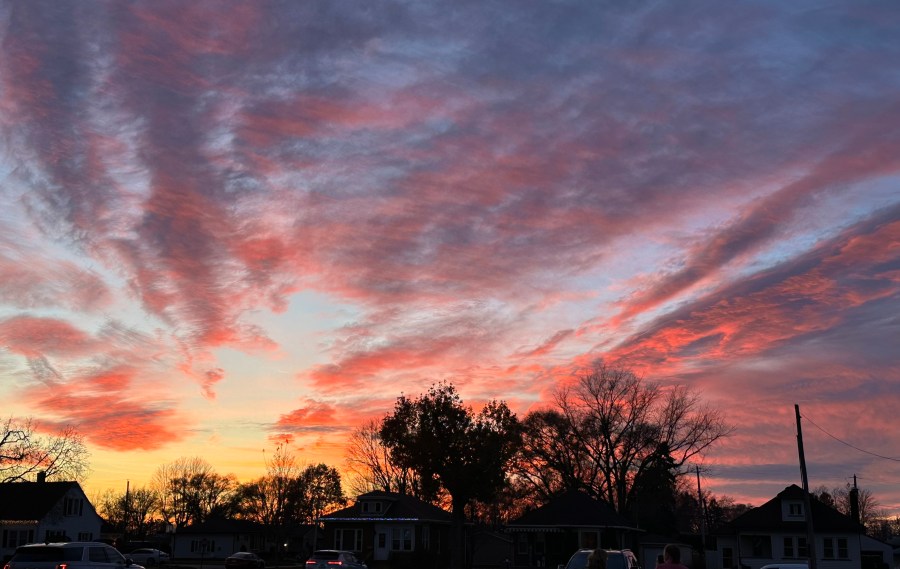
Photo: A recent sunset, a visible sign of the glory of creation.

Featured

Guide our feet into the way of peace

In the very first paragraph of the Introduction of Joan Chittister’s book, The Monastic Heart, she asks “Where do we go now as individuals to find our way out of the shadows and toward a new light?” She says that each of us have within a desire to be more of ourselves, to figure out what is being asked of us when the “pressures of our time seem insoluble and our inherent energy begins to fray.” Her answer to these problems of the world, or the unsettled spaces within our spirit, is monastic living. “Monasticism is the single-hearted search for what matters in life.”

But don’t despair, you don’t have to run off to a monastery to live a life guided by monastic principles. You do it where you are, as you are, but guided by different values.

Granted that isn’t always easy. As a Benedictine Oblate, I have promised to live by monastic values and The Rule of St. Benedict. But, this week has tested my ability to see Christ in the other, to allow solitude to bring calm and clarity when inside my thoughts and feelings are tumbling, and to be thoughtful in speech, knowing what to say and when to say it. Thankfully support comes from many places, most especially during this Christmas season.

Christine Valters Paintner, author and online abbess of Abbey of the Arts, described the “inner monk” in her weekly email this morning. Christine said “The ‘inner monk’ seeks God as the source of all being, searches for a mystical connection to the divine source, longs for what is most essential in life, and cultivates this through a commitment to spiritual practice. The monk is nourished through silence and a commitment to see everything as sacred.” Reminders such as these, to see the world from a contemplative perspective, to find mystery, wonder and awe in daily life, are critical for me, as I attempt to maintain a balance of being informed but not being pulled down in a pit of despondency and hopelessness.

I don’t have blinders on by any means. As a monastic, a Benedictine Oblate, we aren’t called to that. But, I can only watch a limited amount of news (or videos as the case was this week) before I feel it getting too heavy for my spirit. I have chosen updates from sources I trust. I prefer these updates from political historians, like Heather Cox Richardson, or award winning journalist, who worked for 60 Minutes and National Geographic, Jeff Newton. People that have the experience to back their perspective. Although I will also admit to enjoyed the clever, daily updates from Pasture Politics, a farm from Upstate New York. I have no idea of his background, (will admit it’s closer to my political views and not unbiased), but it’s innovative and captivating.

Joan Chittister, in The Monastic Heart, says that “every moment of social tension needs a peacemaker.” But the “truth is that only one thing can really bring peace: the commitment not to destroy other people’s sense of self, of dignity, of value in the name of truth.” That makes keeping up on social media difficult. Every post brings deep and cutting responses, full of malice, contempt and an attempt to demean versus state an opposing opinion. It’s sad. It’s uncalled for. It will not bring peace.

This past two months I found another source of inspiration for compassion and peace, besides my daily prayer and reflection. My friend Maribeth shared with me the journey of the Buddhist monks (@walkforpeaceusa on Facebook) walking a 120 day, 2,300-mile journey from Fort Worth, Texas (the home of their monastery) to Washington D.C. Their only goal is to raise awareness of peace, loving kindness and compassion. It is not to raise money, to convert people to Buddhism, or to mention any specific national event or ideology. I listen to their talks daily and have never once heard an unkind or judgmental statement. This week I had a deeply personal involvement with their journey. Two weeks ago, when Mari and I saw that they would be nearing her home in South Carolina, I asked her if she was going to attend. We began following their daily schedule. I encouraged her to attend, and hoped she would. I said given more time to plan, and care for my cats at home, I would have picked up and flown to make the journey with her. She did attend and after capturing videos and special moments at the Saluda County Courthouse, and accepting a peace bracelet for me from a monk, she admitted to me that the only reason she attended was for me, but was glad that she did have the opportunity to be with them. My heart was overflowing with gratitude for the gift of her friendship and for the ability for both of us to encounter the monks, even if my presence with her was virtual.

It hasn’t altered my Christian beliefs, but it has enriched them. Venerable Bhikkhu Pannakara suggests a practice, in his daily teachings, that I have incorporated into my daily journaling. It is a simple practice. It is to begin the day by writing (with pen and paper, not just thinking or typing it), “Today is going to be my peaceful day.” It is simple, easy but powerful. It helps me desire peace before being exposed to or consuming the thoughts of others or letting thoughts of worry or fear hijack my day.

Imagine if our first thoughts were of peace and if we wished for others what the monks wish for all in each and every post they make on social media; May we be mindful in everything we do throughout the day. May you and all beings be well, happy and at peace.

By the way, a local news channel recorded the Saluda talk. It’s a bit soft and hard to hear at the beginning but well worth sticking with it. It is a wonderful summary of all they are sharing on their journey. You can find it by clicking here. This was the event that Maribeth attended.

As I pray each morning in the Benedictus, I wish and pray “In the tender compassion of our God, the dawn from on high shall break upon us, to shine on those who dwell in darkness and the shadow of death, and to guide our feet into the way of peace.” Amen.

Wishing you abundant peace and happiness this week, Deena

Featured

The story of our families

I have been reflecting this morning on the journey of my grandparents from Italy to Ellis Island, then on to Illinois. My grandmother was born, on this day, December 28, in 1898. She met my grandfather during the war. He traveled here first to get a job and then my grandmother came after. They had three children here. My grandmother lived, caring for her young children after my grandfather’s death, by first working in a factory and then in later years sewing for others. My other grandparents lived in the area as well, after migrating from Slovakia. My great-grandfather died in the Cherry Mine Disaster in 1909, when my grandfather was a young boy. The family name was changed for ease of describing who people were and where they came from while they worked, so the last name on one of the few tombstones in the Cherry Cemetery represents the area in Slovakia that he came from and then the name that became our family name here in the United States.

During the holidays I also recalled so many wonderful family occasions with aunts and uncles that are no longer with us. All families with struggles and accomplishments, just like any other family. My mother and father worked hard, in a variety of occupations, to provide for us. We moved from Illinois to upstate New York then back to Illinois again as my father followed his career and then desire to open his own business. My mom, a nurse, ceased her career to work alongside my father for over 25 years.

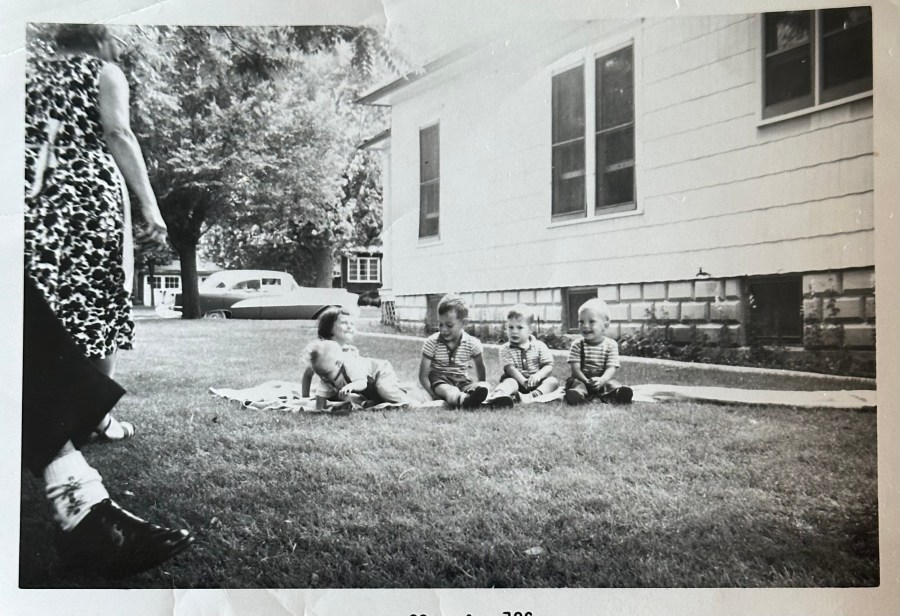
I am sure you have similar stories and history. Parents trying to provide for and do the best that they can for their children. Perfect? No, not by any means. But the family that we are one with and come from, the families that make us who we are, for better, or motivated to change. If you don’t know, or haven’t shared your family story, make a point to do so. There are so many details that I wish I had now, but they are gone with the memories of those who held them. But I am grateful for countless images captured in photos, like the one I share today, before we stored everything on our phones.

Today we celebrate the Feast of Holy Family, a young family also journeying in life, with Joseph doing his best to care for his little family. December 28 also recalls the death of the Holy Innocents, the young boys massacred because of a cruel and jealous king who couldn’t stand the thought of someone having more authority than him. The message that Joseph received, to flee to Egypt, saved Jesus from this horrible persecution.

Today, Pope Leo XIV reminded us that the world “has its ‘Herods,’ its myths of success at any cost, of unscrupulous power, of empty and superficial well-being, and it often pays the price in the form of loneliness, despair, divisions and conflicts.” He asked us to pray for all families suffering due to war and violent conflicts. We can pause and pray for all those families who, like our own families, are trying to find a better place in the world to live and flourish.

So today, reflect on the family that helped form you into the person you are today. Tell stories and share memories, so that they are passed on. If you are lucky enough to have them, spend time with old photos and recall family celebrations and gatherings.

Then as Pope Francis wished in his 2020 encyclical, Fratelli Tutti, “Let us dream, then, as a single human family, as fellow travelers sharing the same flesh, as children of the same earth which is our common home, each of us bringing the richness of his or her beliefs and convictions, each of us with his or her own voice, brothers and sisters all.” (No. 8).

Wishing you abundant joy and peace with the family memories that you hold, Deena

Featured

Grounded in faith

I started reading Brene Brown’s new book, Strong Ground: The Lessons of Daring Leadership, The Tenacity of Paradox, and The Wisdom of the Human Spirit, the past few days. I have to admit that it is always her personal reflections and application of her work with the Dare To Lead program that I find most thought provoking in my own life. We’re all leaders in some way; family, church or social organizations, the way we interact and care in relationships, but having stepped away from corporate work I am less interested in leadership qualities at that level. Still, I was intrigued with Brown’s new book and thoughts she might have on the current state of our societal relationships and leadership. I am glad I followed the hunch to purchase her book.

She began with a personal story about recovering from a pickleball injury and how her coach helped her find and work from her core, engage her body and mind in the healing process, and connect to her “strong ground.” She suggests that many of us are struggling to find our ground. She proposes that individually, and collectively in our country and in organizations, “we need to push into the source of our strength and sturdiness so we can navigate the world. We need the ground to steady us and at the same time to propel us into purposeful action.”

Brown writes quite a bit about her study of, and personal journey with, the mindfulness work of Jon Kabat-Zinn in relation to finding our center and being grounded. Citing research she did for another book, Brown says that both anxiety and calm are contagious. She reminds us that staying calm is an intention. When we consider those we encounter each day, “Do we want to infect people with more anxiety or heal ourselves and the people around us with calm?” We need to pay attention; to our breath, to what’s going on within as we speak and make decisions. I NEED to reflect on the attitude I have as I leave the house, am I going to contribute to the day that others are having or am I going to be a tornado of worry, concern and anxious thoughts as I venture out? Some days it just might be better to stay in until the calm returns and I feel grounded in the truth of who I am.

So far, my favorite sections of the book have been on transformation and “grounded confidence”. I tend to read the first couple of chapters of a new book, then browse and read selectively to get an idea of the entire book I am reading, then go back and read more slowly and thoughtfully. In writing about transformation, and summarizing her reflections throughout the book, Brown examines the false notion that learning and change are only about effort one applies. She suggests that real change happens when we focus and build our foundation, and operate from that place of being grounded, instead of reacting to a current situation or perhaps even worse, being so set in our ways that we think that the problem is with everyone else, thinking they are the ones that need to change, not us!

Personally, one place that I build my foundation and center myself is in my daily prayer, reflection and journaling. Daily Liturgy of the Hours, Lectio Divina, or scripture reflection remind me of God’s love and presence, no matter what seems to be going on around, or within, me. The Letter of 2 Timothy caution us that there will be people around us that deceive us and will go “from bad to worse”. But remaining faithful to what we have learned and believed, from Christ, we will remain “competent and equipped for every good work.” (2 Timothy: 3)

Remaining faithful to the daily practice of reflecting on the truth of our faith, we will be “strengthened with power through his Spirit in the inner self, and that Christ may dwell in your hearts through faith; that you, rooted and grounded in love, may have strength to comprehend with all the holy ones what is the breadth and length and height and depth, and to know the love of Christ that surpasses knowledge, so that you may be filled with all the fullness of God.” (Ephesians 3: 16-19)

With that as the source of my strength, I am grounded, more capable and willing, to engage with the world with hope and joy.

Wishing you abundant hope and peace this week, Deena

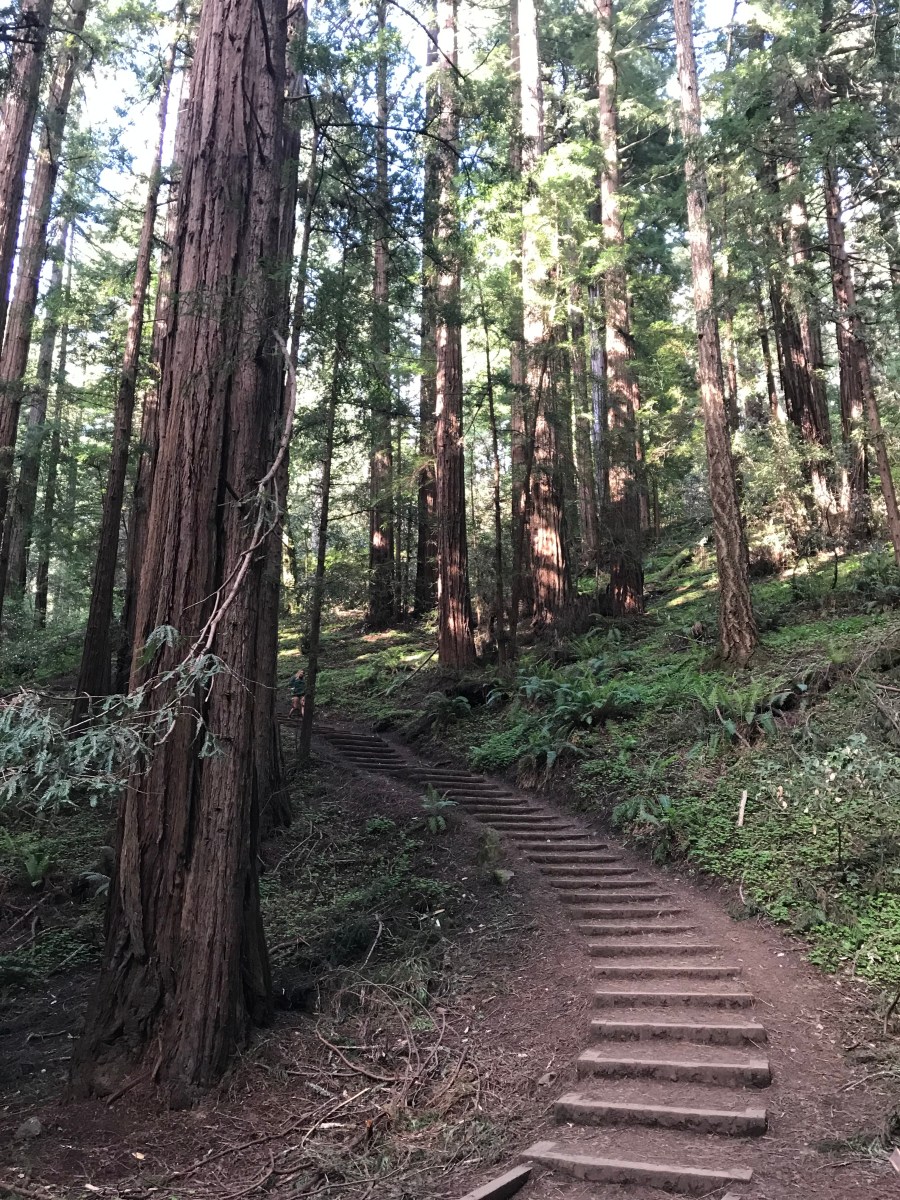
Photo: Taken during a visit to Muir Woods, California

Featured

Real life, real faith

Some days faith is hard. Life challenges us with the state of the world or the events of our own lives and families. We have constant updates from so many sources, so our minds are infiltrated with the news, close to home and beyond. The apostles following Jesus didn’t have iPhones or social media updates and still they said to the Lord, “Increase our faith.” (Luke 17: 5-10, Twenty-Seventh Sunday in Ordinary Time). I pray the same request on many days!

Earlier this week we celebrated the Memorial of our Guardian Angels. I recalled a night, many years ago, walking the dog late in the evening. It was very late, no one out and about, so I chose to walk him in the middle of the street so he would have plenty of room and could survey the neighborhood. We were halfway down the block, but in the still of the night I heard a car turning the corner, speeding with screeching tires, on the street perpendicular to the one I was walking on. My heart raced as I had a feeling the car would turn onto the street I was walking. But I was frozen. In a split second the car did turn and we faced it head on. Suddenly I felt a push on my left side and looking ahead at the dog saw him move in the same way, looking straight ahead but his body being pushed entirely to the right in the same way that I was being moved. The car sped by. I knew in an instant that I didn’t move us and that we had been spared from being hit. I can’t say I thought of my guardian angel much before that night, after giving up the youthful evening prayer of “Angel of God, my guardian dear…” My faith in the presence of my guardian angel grew on that evening and in the many instances I have been protected since.

I read a reflection by Br. Michael Marcotte, OSB, of Conception Abbey on the Gospel for today. He pondered how we continue to find, and grow in, faith when we can’t see the Lord as the apostles did. He quoted Fr. Jacque Philippe and St. Augustine with thoughts to help us grow in faith. He wrote: “Fr. Jacques Philippe maintains that it is through prayer—especially praying with the scriptures—that our faith increases. He wrote “Faith is the capacity of believers to act not according to impressions, preconceived ideas, or notions borrowed from other people, but according to what they are told by the Word of God, who cannot lie.” (Time for God, p. 9). As St. Augustine put it, “Believe in order to understand.” Faith is not a matter of acquiring the right kind of knowledge. It is about entering into a relationship of trust and love.”

Scripture shows us that God is faithful. If we look at our lives over a broader spectrum of time, I believe that we can see that as well. It can be challenging in the moment so I think that Br. Marcotte’s suggestion offers us a roadmap for the journey. He asked, at the end of his article, that we consider how we can deepen our relationship with Jesus and grow in faith.

I need to spend time on that question this week. Maybe you do too? Then perhaps it will begin with the faith of the mustard seed, and over time, grow into a strong and sturdy conviction and confidence.

Wishing you abundant peace and hope this week, Deena

Image: One of the memorials in Portugal where the Angel of Fatima, or the Angel of Peace, visited the shepherd children preparing them for their spiritual mission and teaching them prayers.

Featured

Dawn of a new day

One of the things that I have realized in dealing with, and recently writing about, issues around mental health and well-being is that things always feel worse at night. The darkness, heavy with shadows and devoid of light, seems to forbid seeing possibility. Gloom settles in easily. In January I cancelled all streaming channels and was content to read or work on art projects. The past couple of months required noise from the TV or from YouTube videos, even if they were positive or spiritual talks, as a constant companion, reminding me I wasn’t alone. This week that noise has become a distraction and annoying, TV, especially the news, was intensifying the anxiety instead of calming it. That was a sign, for me, that things are beginning to change. I am beginning to find my way back to peace.

The darkness became a metaphor for the things that I didn’t want to face or deal with. Whatever flaw popped up in my mind became ten times worse when I refused to look at and acknowledge it. As I heard Fr. Ambrose Criste of St. Michael’s Abbey say this weekend as he began the St. Michael the Archangel Novena (preparing for St. Michael’s Sept 29th Feast Day), we need to acknowledge how far we have drifted from the light. We have to recognize and name the darkness, not to be discouraged by it, but rather to be healed. He remarked that only what is named and brought into the light can be healed. “Only what is seen can be surrendered.”

During the Healing the Whole Person Retreat that I attended at the beginning of August, Sr. Miriam Heidland invited us to engage our healing journeys with curiosity and kindness instead of judgment. We were reminded during the retreat that “suffering that is not transformed is transmuted.”

It requires humility to face those areas of our lives that we are not living to our full potential. Qualities that we have been gifted by God to live and express in our being but have been ignoring. To do so, for whatever reason whether doubt and lack of confidence, or due to some harm or damage inflicted by someone, is to ignore what God is calling us to do or be. It’s as if we are saying, I know better than God and my choice to live in fear and lack of trust is more important than trusting that God is leading me to live a certain way. It may also be the divisive voices of the world, the enemy, or the “false spirit” as I prefer to call it. One of those faulty messages is doubt.

Doubt, whether real or imagined, is harmful to our emotional well-being. It can lead us to self-isolate and avoid situations so we don’t have to pretend to act in a way that we aren’t feeling. It can result in procrastination and indecision because we don’t trust that we can make the right decision. We begin to use negative self-talk and criticism about the things we are doing and how capable we feel. We begin to compare ourselves to others, and if we do so through the lens of social media, we will never measure up because the standards we set become unrealistic. Doubt increases stress, anxiety and depression.

When we welcome the light of hope and truth, we can see the flaws as they really are, something to surrender to the grace of change. Then we move forward, yearning to live in trust and peace. We can cast doubt aside, even in difficult situations, and trust that we are not walking alone. I lean in to the words of Psalm 34, “The Lord is close to the brokenhearted”, the Lord delivers us from our troubles.

On Saturday, Pope Leo XIV spoke a message to those suffering with ALS, acknowledging the difficult burden they bear but offering an insight, and reminder, that the disease offers an opportunity to see that the quality of human life is more than achievements, it is dependent on love. He encouraged them to grow in gratefulness, especially for those who care for them, and for the “beauty of creation, of life in this world, and of the mystery of love.” I think this is a message we can all take to heart, no matter what we might be facing in life.

Wishing you abundant peace and hope this week, Deena

Image: Sunlight streaming through the trees and Anderson Japanese Gardens

Featured

A stronghold

This weekend our local area Oblate group met and began our 2025-2026 reading and discussion of Sr. Joan Chittister’s The Rule of St. Benedict: A Spirituality for the 21st Century. Many of us have studied it in our Oblate groups before but it’s a wonderful commentary of The Rule to revisit for anyone desiring to follow this spiritual guidance in our secular world. As we began our study for this month, we read the chapters of The Rule on guidelines and order of praying the psalms in the monastery. Each monastery creates a breviary, or guidebook, for the praying of the 150 psalms. It is similar to the order of praying the psalms in the Liturgy of the Hours, or Divine Office, prayed by clergy and lay people each day in a sequence of four “weeks”. St. Benedict in his Rule said that how and when the psalms are prayed could vary but it was required that monastics pray all 150 psalms. I don’t have a copy of the breviary used by the Monastery that I am an Oblate, so I pray the traditional “Office”. Over the course of 30 years since it was recommended, and that I have tried (my discipline and commitment have varied over the years, so don’t be too impressed!), to pray the Liturgy of the Hours each day, for Morning and Evening Prayer, certain psalms have become favorites. They become like a healing balm or a familiar friend on days that it feels difficult to pray or that nothing I pray or read seems to help.

There have been plenty of those days in recent weeks. The violence seen in our national news and the continued atrocities of war in other countries are hard to ignore, even if we don’t watch the news. I shared with my chiropractor this week that I am worried for the emotional well-being of young people who are bombarded on social media with these images and opinions. We pondered the impact these stories are having or wondered if they are becoming desensitized to it all. As a child of the 60’s I recall the impact of watching the violence of the Vietnam War on evening news, but it was only on the nightly news or in newspapers, we didn’t have constant images thrust upon us on cell phones and computers.

In this week’s blog I would like to continue the discussion about depression and anxiety and ways to deal with it. I am grateful for the abundance of information on social media in September for Suicide Prevention Month. These sites or pages are dedicated to raising awareness and breaking the stigma around mental health issues. It has not only raised my awareness of statistics regarding suicide and depression but helped me feel understood. Symptoms of depression are varied and we may not even associate them with our depression. It’s easy to try to convince ourselves to ‘just snap out of it’ or “get over it”, whatever the “it” is that perhaps we haven’t really identified anyway!

What can compound the stress is adding the belief that, as a Catholic Christian or person of faith, we should be able to pray our way out of it. The internal dialogue of “if I was holy enough,” “if I was faithful enough,” or “if God really loves me” suggest that if I was any of those things, then all of the anxious feelings would magically disappear. But that isn’t the way that it works! I am not saying that prayer isn’t helpful or that even if we don’t feel like it is working that we should give up on it. We have a wonderful model in St Teresa of Calcutta whose writing revealed 40 years of spiritual dryness, desolation and feeling abandoned. But in all of that, she remained faithful to prayer, to service of the poor and to leading her community.

This week I received and began reading a wonderful 30-day guidebook, Anchored in Peace, by the founders of the social media page, Mindful Christianity. The father and son writing duo begin the book by reminding us that our fear and anxiety do not disqualify our faith. The book is a combination of scripture passages, reflection questions, mindful Christian practices and prayers to help us navigate the difficult times we are experiencing. They suggest that we don’t want to hide the anxiety and pretend it doesn’t exist but bring it into the light and presence of God to be there with us. The authors counsel that we can let our guard down, present the honest feelings we are having, and let God be our refuge, anchor and peace, a day at a time.

After our Oblate discussion this weekend, I reflected that there are many psalms that can be prayed during times of anxiety and depression, psalms that can bring comfort and reassurance. I recalled one of those healing psalms for me. Psalm 144 is prayed on Tuesday of Week II, it is a prayer for victory and for peace. In the psalm King David is praying to God as a fellow warrior, defender and protector. As I pray that psalm I pray for the help of a God who can strengthen me in the daily battles I face, whether emotional or spiritual. I offer a few lines as comfort in the battles you may face in life.

Blessed be the Lord, my rock,

who trains my arms for battle,

who prepares my hands for war.

He is my love, my fortress;

he is my stronghold, my savior,

my shield, my place of refuge.

Wishing you abundant peace this week. Deena

Image: the medieval castle walls in the city of Avila, Spain